
How We Handle Different Supplement Flavours and Variants
When a supplement range starts with one product, one flavour and one pack size, fulfilment is fairly straightforward. The picture changes quickly once that same range grows into capsules, powders, gummies, sachets and liquids, each with several flavours, multiple sizes and a few promotional subscription bundles layered on top.
That is where supplement fulfilment becomes an operational discipline rather than a simple pick-and-pack task. At 3PLWOW, the focus is on keeping every variant under control through accurate stock records, regular inventory counting, warehouse management systems, batch tracking and expiry date control. For supplement brands selling in the UK, that control matters just as much as delivery speed.
Supplement variant complexity in UK fulfilment
A supplement catalogue can look tidy on a product page and still be highly complex inside a warehouse, especially when considering the various supplement types available. One protein product might come in vanilla, chocolate and strawberry. Each flavour may appear in 500g tubs, 1kg tubs and subscription bundles. Add retailer packs, influencer bundles and limited editions, and the SKU count rises fast.
This is where errors tend to start. The wrong flavour can be picked because packaging looks similar. An older batch can sit too long if stock rotation is loose. A label change can leave old and new versions mixed together. None of those issues are minor when food supplement stock must be traceable and correctly labelled.
Small differences in flavor profiles and nutrition options create big operational demands.
After that point, strong fulfilment depends on treating each brand, flavour and format as a clearly managed stock unit, rather than seeing them as one product family.
- Powders in multiple flavours
- Capsules in different counts
- Gummies with seasonal packs
- Sachets sold individually and in bundles
- Liquids with short date sensitivity
Warehouse management systems for supplement flavours and variants
A warehouse management system is the backbone of variant control. Each supplement SKU is recorded separately, with its own product code, storage location, batch details and stock movement history. That matters because flavour complexity is not just a merchandising issue. It affects receiving, put-away, picking, counting and dispatch.
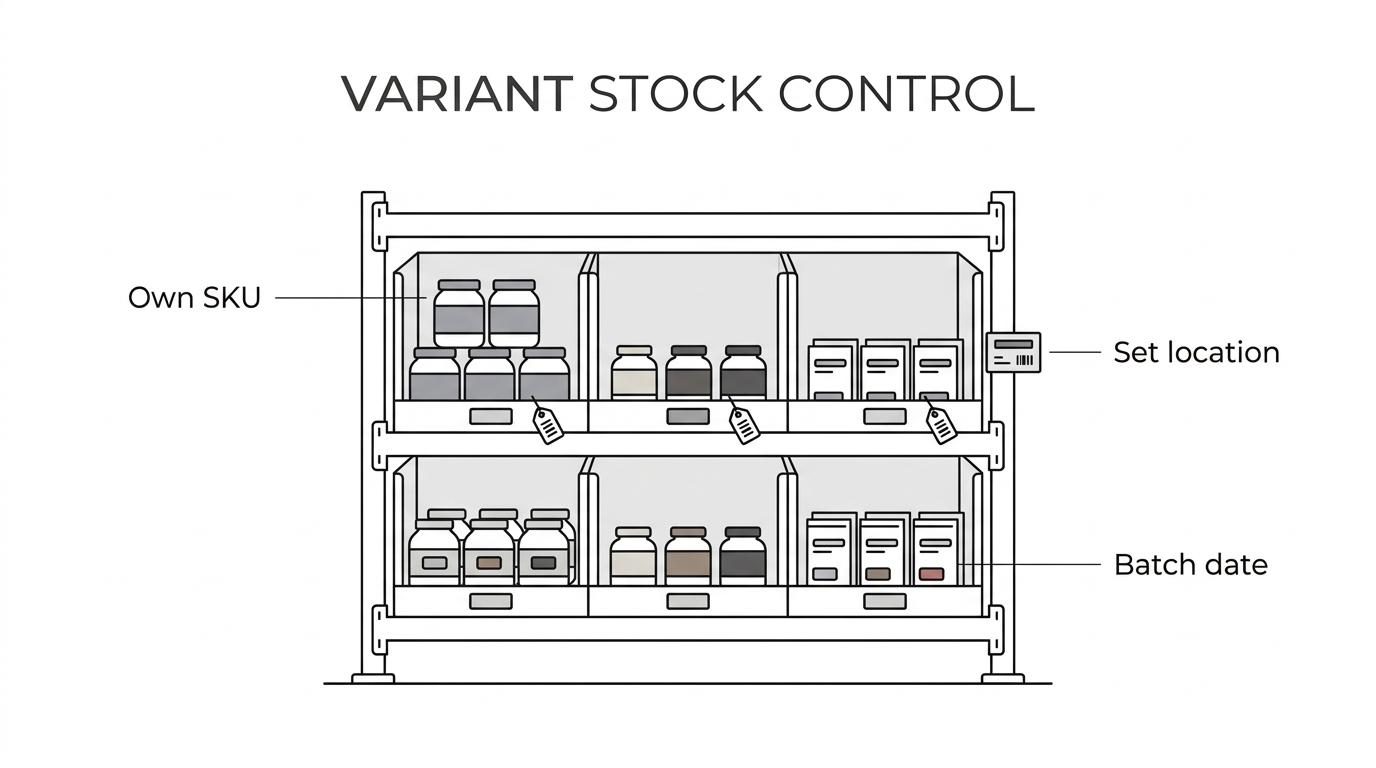
At 3PLWOW, warehouse management is used to separate products at a granular level. Chocolate protein powder is not treated as the same item as vanilla protein powder, even when the brand, tub size and packaging style are similar. The same rule applies to gummies with different strengths, sachets in mixed boxes and bundles built from several component SKUs.
That level of separation supports cleaner operations across multiple brands as well. Different clients may store products in similar formats, yet brand-level stock ownership still needs to stay distinct. A strong system gives each client a clear stock picture without blurring brands, batches or locations.
Accurate stock control for supplement inventory
Accurate stock control starts at goods-in. When stock arrives, the details need to be checked against the purchase order or delivery paperwork, then entered correctly into the warehouse system. If the flavour, size or lot number is recorded wrongly at receipt, the error often follows the product all the way to the customer.
The next step is disciplined location control. Products should be stored in clearly assigned warehouse locations, with scan-based or system-led confirmation where possible. That reduces the chance of two similar variants being placed together and picked incorrectly later.
Regular counting is what keeps the system honest. Fast-moving supplement ranges can shift daily, especially when ecommerce promotions push volume into a few hero products. Cycle counts and routine inventory checks help catch discrepancies early, before they affect order accuracy or reorder planning.
A dependable stock control process usually includes:
- SKU accuracy: every flavour, size and pack format recorded as its own item
- Location control: stock placed and picked from defined warehouse locations
- Inventory counting: cycle counts and checks against system quantities
- Discrepancy handling: variances reviewed and corrected with an audit trail
- Brand separation: stock records maintained clearly across multiple clients
Batch tracking, expiry date control and FEFO stock rotation
For supplements, stock accuracy is only part of the picture. Batch tracking and expiry date control are just as important. A warehouse may have the correct flavour and pack size available, yet still ship the wrong batch if controls are weak.
3PLWOW’s supplement fulfilment setup includes batch tracking and expiry date control, which supports traceability and reduces the risk of avoidable errors. It also supports FEFO stock rotation, meaning first-expiry, first-out. That approach is especially useful where products have shorter shelf life windows or where several deliveries of the same flavour are in storage at once.
The practical effect is simple: the warehouse is not just asking, “Do we have vanilla 1kg in stock?” It is also asking, “Which batch should move first, and is that batch within its date window for sale and dispatch?”
UK supplement labelling and traceability requirements
Food supplements sold in Great Britain must comply with food labelling rules and the Food Supplements (England) Regulations 2003. GOV.UK guidance also makes clear that businesses need traceability records showing who products were bought from and who they were sold to, with documents like invoices and delivery notes retained.
For a fulfilment operation, this shapes day-to-day handling. Labels need to match the product being stored and dispatched. Stock needs to remain traceable by batch or lot number where relevant. If a brand updates packaging, ingredients panel wording or storage guidance, the warehouse process needs to make sure old and new versions are not confused.
It is also important to keep roles clear. The legal responsibility for composition, safety and labelling sits with the business placing the supplement on the market, and with importers for supplements they import into the UK. The fulfilment provider supports that responsibility by maintaining careful stock records, traceability data and controlled handling procedures.
| Variant challenge | Warehouse control used | Why it matters |
|---|---|---|
| Similar flavours in matching tubs | Separate SKU records and locations | Reduces mis-picks |
| Multiple batches of one product | Batch tracking and FEFO rotation | Supports date control |
| Label updates | Version-aware stock handling | Prevents mixed packaging |
| Mixed bundles | Component-level inventory control | Keeps bundle stock accurate |
| Multi-brand storage | Client-specific stock ownership in system | Avoids cross-brand confusion |
Picking and packing accuracy for supplement orders
Picking accuracy is where all the background control either proves itself or fails. A customer ordering berry gummies should not receive orange. A marketplace order for a 30-serving tub should not be fulfilled with a 60-serving tub because both carry the same brand look.
That is why the warehouse process must be built around product-level verification. Clear SKU data, precise bin locations and disciplined picking routines reduce human error. When order volume rises, those controls matter even more, because similar items tend to be handled more quickly and in greater quantity.
Packing also needs to reflect the product type and supplement types to ensure optimal nutrition and quality. Powders, capsules, gummies and liquids each come with different handling needs. A fulfilment setup that works for T-shirts is not automatically suitable for supplements. At 3PLWOW, supplement handling covers storage, packing, dispatch and variant control across those formats, with same-day dispatch available for orders placed before cut-off.
Managing promotional bundles and multi-pack supplement variants
Bundles are often where inventory complexity jumps again. A single promotion can tie together three flavours, two pack sizes and one branded insert, each contributing different flavor profiles to the customer experience. From a customer point of view, it is one product. From a warehouse point of view, it is a controlled assembly made from several stock lines.
That means bundle fulfilment needs rules of its own. The warehouse system has to know whether the bundle exists as pre-built stock, virtual stock assembled at pick stage, or a mixture of both depending on demand. If one component runs out, the whole bundle may need to pause even if the other items remain available.
Well-managed bundle fulfilment tends to rely on a few core controls:
- Pre-built kits for stable promotions
- Component tracking for flexible bundles
- Clear substitution rules where allowed
- Live stock visibility across all parts
Without those controls, bundle sales can create hidden overselling problems, especially during launches, campaign drops or influencer promotions.
Inventory counting methods that keep supplement stock reliable
Inventory counting is not glamorous, but it is one of the strongest protections against fulfilment drift. Supplements often have many visually similar units, and stock can move quickly across direct-to-consumer, wholesale and marketplace channels. A system record that is slightly wrong on Monday can become a real service issue by Friday.
A good counting routine combines scheduled full checks with targeted cycle counting. Fast sellers may be checked more often than slower lines. New launches, short-date items and recently received batches may also need closer attention. The goal is not just to correct variances, but to spot patterns. If one flavour keeps showing discrepancies, the warehouse can investigate whether the issue sits in receiving, location control, picking or bundle assembly.
That discipline supports purchasing decisions too. Brands need confidence in available stock and nutrition considerations before launching offers, setting ad spend or planning repeat production. Accurate warehouse counts give that confidence.
Managing different supplement brands in one fulfilment operation
Handling multiple supplement brands in one warehouse calls for more than shelf space. Each brand may have its own packaging style, product hierarchy, bundle logic, labelling workflow, supplement types, and sales channels. One may specialise in protein tubs with distinct flavor profiles, while another focuses on capsules and gummies. The warehouse process has to respect those differences without losing consistency.
At 3PLWOW, that means combining client-specific stock records with a standard operational framework. Brands can be kept separate in the system while still benefiting from the same warehouse controls: secure storage, batch and expiry tracking, accurate stock handling and organised dispatch routines.
The result is a structure that supports growth without turning added variety into confusion.
What supplement brands need from variant-ready fulfilment
When evaluating supplement fulfilment, brands usually ask about rates, delivery times and courier options first. Those are important. Yet once flavours and formats multiply, the stronger questions are about control.
A useful checklist looks like this:
- Stock accuracy: can each flavour, size and bundle be tracked as its own SKU?
- Batch control: can the warehouse record lot numbers and manage expiry dates?
- Rotation method: is FEFO used where date sensitivity matters?
- Traceability records: can stock movement be tied back to supplier and outbound order data?
- Counting discipline: are there regular inventory counts to catch variances early?
- Brand handling: can different supplement clients be managed cleanly in one operation?
For growing supplement brands, those points are what keep service levels stable as the catalogue gets broader. The challenge is rarely the parcel itself. It is the control behind the parcel: the right variant, the right batch, the right label and the right stock record, every time.