
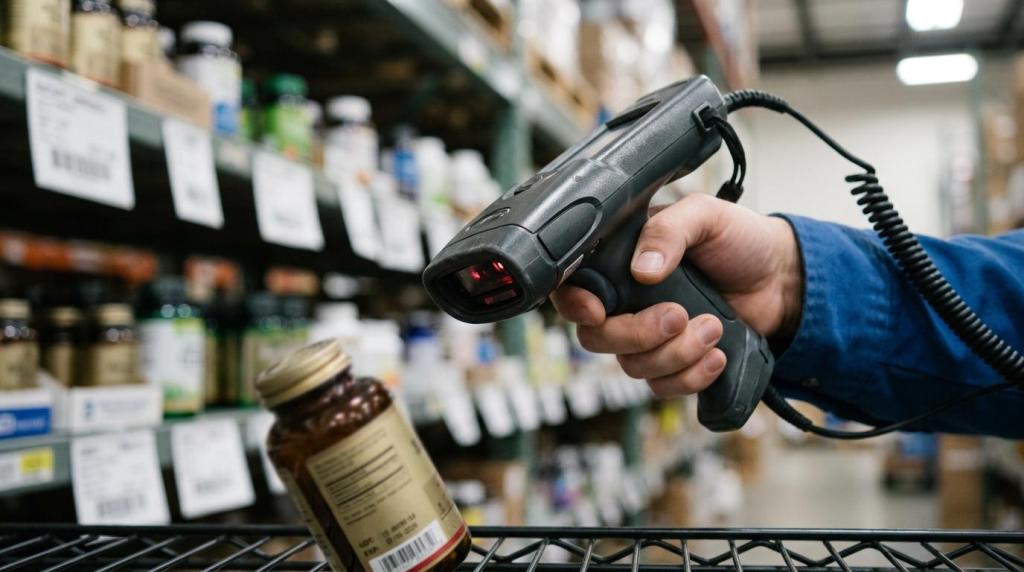
Supplements sit in a category where stock control is tied closely to product quality, customer trust, and traceability. A bottle of capsules is not just another SKU on a shelf. It may carry a lot number, a best before date, an expiry date, and quality records linked to a specific production batch. That changes how it should be stored, picked, and shipped.
This is where FEFO becomes so useful. For supplement brands working with a third-party logistics provider, FEFO is a practical stock rotation method that helps move the right inventory first, lowers the chance of dated stock expiring in storage, and keeps batch records connected to every order.
FEFO meaning in supplement logistics
FEFO stands for First-Expiry-First-Out. It means stock with the nearest expiry date is picked and dispatched before stock with a later expiry date.
That sounds simple, but it is not the same as merely shipping the oldest stock receipt first. FEFO focuses on the product’s usable life, not just when it arrived at the warehouse. If two pallets were received on different days, the pallet with the earlier expiry date should still be used first.
The World Health Organization treats FEFO as the correct picking principle for dated items. That matters because supplements often fall into exactly that category, especially when brands use date coding supported by stability data.
A short comparison makes the distinction clearer:
| Method | What it prioritises | Best suited to | Main risk if used for supplements |
|---|---|---|---|
| FEFO | Earliest expiry date | Dated, batch-sensitive products | Lower risk of out-of-date stock shipping |
| FIFO | Earliest receipt date | Stable goods with little date sensitivity | Older receipt may still have a later expiry date |
| Random picking | Fastest physical access | Low-control environments | High risk of poor rotation and traceability gaps |
Why FEFO is useful for supplements
Supplements can be unusually sensitive from an inventory-control point of view. A brand may have multiple batches of the same product in stock at once, each with its own lot number and shelf-life profile. Gummies, powders, softgels, capsules, sachets, and liquid supplements can all create this pattern.
FEFO helps because it organises stock around what matters most for shipment quality: sending stock that is still well within date while protecting later-dated inventory from being consumed too soon.
It also supports a better customer experience. A consumer who receives a product with a healthy remaining shelf life is far less likely to question freshness, storage quality, or stock management standards.
The commercial benefits are direct as well.
- Reduced write-offs: less stock reaches expiry while still sitting in storage
- Better customer confidence: fresher dated stock reaches the end customer
- Cleaner warehouse rotation: pick faces stay organised by lot and date
- Recall readiness: affected batches can be found faster
- Short-dated inventory control
- Lower chance of accidental date mixing
FEFO and supplement expiry dates: the regulatory context
There is an important nuance here. In the United States, FDA guidance says dietary supplements do not have to carry expiration dates on the label. A company may include one, but only when it has valid data to support that date and the claim is not false or misleading.
So FEFO is not useful because regulations force every supplement to show an expiry date. It is useful because many supplement brands do use date coding, and once they do, the warehouse needs a disciplined way to act on it.
Batch traceability makes FEFO even more relevant. FDA dietary supplement CGMP guidance requires batch production records and links those records to the batch, lot, or control number of the finished goods. That means supplement operations already need strong batch control. FEFO fits naturally into that framework because it uses date and lot information together, rather than treating stock as interchangeable.
In practice, that creates a sensible operating model: if a product is dated, pick by earliest valid expiry; if it is undated, use another approved rotation method, often FIFO.
How FEFO improves supplement order fulfilment and pick and pack
Order fulfilment for supplements is more than placing a bottle in a shipping box. The warehouse has to receive inventory accurately, store it in the correct location, maintain lot visibility, allocate the correct stock to the order, and confirm what was actually shipped. FEFO affects several parts of that chain.
In receiving, the warehouse records lot numbers and expiry dates. In storage, that stock must be placed so each batch remains identifiable. In order allocation, the warehouse management system should reserve the earliest suitable dated stock. During pick and pack, staff scan or verify the right lot before the parcel is packed.
That gives FEFO real value in day-to-day fulfilment:
- Allocation logic: orders are assigned to the earliest good stock, not simply the nearest pallet
- Pick accuracy: scanning confirms the correct batch and date-coded inventory
- Packing control: the shipped item can be tied back to the lot actually used
- Order records: fulfilment data supports customer service and recall response later
A warehouse that skips this discipline may still dispatch quickly, but speed alone is not enough for supplements. The operation also needs date control and lot control.
FEFO in 3PL warehousing for supplements
A third-party logistics provider handling supplements should be set up for dated, batch-sensitive inventory. FEFO is not a slogan in that setting. It is a warehouse rule that has to be built into receiving, storage, system logic, and picking behaviour.
That usually starts with data capture at goods-in. If a pallet arrives without its lot number and date information being logged properly, FEFO breaks down immediately. The warehouse may still know how many units it has, but not which ones should ship first.
Storage design matters too. Mixed pallets, overflow locations, reserve stock, and active pick bins all need clean stock identification. FEFO only works when every physical location matches accurate system records.
A capable supplement 3PL should be able to show discipline in areas like these:
- Receipt controls: batch and expiry details recorded when stock arrives
- Bin-level visibility: each location linked to its lot and date status
- Expiry-led allocation: the warehouse system directs picking from the nearest-expiry valid stock
- Exception handling: quarantined, damaged, or expired units are blocked from usable inventory
- Live stock visibility
- Traceable dispatch records
The WHO also notes that expired stock creates reputational risk and should be removed from usable inventory. That point lands strongly in supplements, where trust and repeat purchase are so closely linked.
FEFO versus FIFO for supplement brands
FIFO, or First-In-First-Out, is often treated as a default stock rotation method. It works well for many products, especially when shelf life is long and consistent across receipts. Yet supplements can break that assumption.
A later delivery might actually have an earlier expiry date if it came from a different manufacturing run, used different packaging timing, or was held elsewhere before receipt. In that case, FIFO can produce the wrong result. The earliest received stock is not always the earliest expiring stock.
That is why FEFO is a stronger fit for supplement fulfilment whenever date-coded stock is involved. It reflects the product’s usable life rather than just warehouse chronology.
One sentence sums it up: FIFO protects arrival order, while FEFO protects remaining shelf life.
How 3PLWOW implements FEFO in supplement operations
For a supplement brand using an external fulfilment partner, the main question is not whether FEFO sounds sensible. It is whether the 3PL actually runs it as part of normal warehouse control.
3PLWOW states that its supplement fulfilment operation includes batch tracking, expiry date control, FEFO stock rotation, secure storage, live stock visibility, and same-day dispatch capability. For supplements, that combination matters because quick despatch is only valuable when it sits alongside accurate batch-sensitive stock control.
The company also describes supplements as requiring short shelf-life handling and tighter inventory control than standard consumer goods. That is the right framing. FEFO works best when it is treated as a core operational discipline, not as an occasional manual check.
Based on the stated process, 3PLWOW applies FEFO through several connected steps:
- Goods-in capture: batch and expiry data are recorded when stock is received
- Bin linkage: each storage location is connected to the relevant lot information
- Expiry-led picking: stock is allocated so the oldest good dated inventory ships first
- Traceability: lot visibility remains live across storage and fulfilment
- Recall readiness: inventory can be identified by batch if an issue arises
This is especially useful in pick and pack. When the system already knows which lot and expiry window should be used, the picker is guided towards compliant stock rotation rather than relying on visual judgement alone. That reduces avoidable errors, especially where several batches of the same SKU are active at the same time.
3PLWOW also highlights marketplace integrations and live stock visibility. For supplement brands, that helps operationally because sales activity, stock status, and batch-sensitive fulfilment can move together in one controlled workflow rather than being managed in isolated spreadsheets.
What supplement brands should ask a 3PL about FEFO
FEFO sounds reassuring in a sales conversation, but the quality of execution varies widely. A brand should ask exactly how the provider records batch and date information, how the warehouse system allocates stock, and what controls prevent expired or quarantined stock being picked.
It is also sensible to ask what happens when multiple batches of one SKU are stored across different locations, and whether the shipped lot can be identified later at order level.
Useful questions include:
- How are lot numbers and expiry dates captured at receipt?
- Is FEFO controlled by the warehouse system, by manual process, or both?
- Can the provider show live stock visibility by batch?
- How are expired, damaged, or quarantined products blocked?
- Can dispatched orders be traced back to the shipped lot?
These are not technical extras. They are basic signs that the 3PL can support supplement-grade inventory control.
FEFO as a practical quality control tool for supplements
FEFO is often described as a warehouse rotation method, but for supplements it does more than rotate stock. It supports quality control, customer trust, and operational clarity at the same time.
When a supplement brand holds several batches with different dates, FEFO creates a clear rule for what should happen next. The earliest suitable dated stock gets picked first. Newer stock stays protected. Expired stock is removed from active inventory. Batch records remain linked to the product as it moves through fulfilment.
That is why FEFO is so useful in supplement logistics, especially within a 3PL model. It reduces waste, supports traceability, and gives structure to fulfilment decisions that would otherwise be left to guesswork. And when a provider like 3PLWOW builds FEFO into receiving, storage, pick and pack, and live stock visibility, it becomes a daily operating standard rather than a policy sitting in a handbook.