
For an ecommerce business, inventory is not just stock on shelves. It is sales potential, customer trust, cash flow, and brand reputation sitting inside a warehouse management process. When that process is handled by a third-party logistics provider, the quality of inventory management often decides whether growth feels controlled or chaotic.
That is why inventory management sits at the centre of modern 3PL fulfilment. Providers like 3PLWOW are not only storing products. They are receiving goods, recording quantities, assigning locations, rotating stock, checking availability before dispatch, and processing returns back into saleable or non-saleable status. When these tasks are handled well, the entire ecommerce operation becomes more reliable.
Industry data backs that up. A major 2025 3PL study reported that 82% of respondents believed using a 3PL improved customer service, while 66% said it reduced overall costs. At the same time, warehouse research continues to show how common inventory problems remain, with 77% of decision-makers and associates saying out-of-stocks and inventory inaccuracy hurt productivity. The message is clear: inventory control is not a background task. It is a commercial advantage.
Why inventory management matters in third-party logistics
A 3PL warehouse sits between inbound supply and outbound customer demand. Every stock movement needs to be recorded correctly, whether that movement is a supplier delivery, a location transfer, a picked order, or a returned parcel. If the stock file is wrong, almost everything downstream becomes harder.
An ecommerce brand may think it has 250 units available online, yet the warehouse may physically hold fewer due to damage, mis-picks, returns awaiting inspection, or items stored in the wrong location. That creates overselling, delayed dispatch, customer complaints, and unnecessary support tickets. Good 3PL inventory management reduces those risks by making stock visible and traceable in real time.
This is where specialist fulfilment providers bring structure.
Published material from 3PLWOW describes a model where the 3PL takes responsibility for storage, picking, packing, carrier booking, dispatch, inventory records, and returns handling. That matters because inventory accuracy is not achieved by one task alone. It comes from connected warehouse disciplines working together.
Goods-in processes and inventory records in a 3PL warehouse
Inventory control starts long before an order is picked. It starts at goods-in.
When stock arrives from a manufacturer, importer, or wholesaler, a 3PL warehouse team checks what has been received against the purchase order or advance shipping notice. Cartons are counted, products are inspected for visible issues, and item data is matched to the warehouse system. If barcodes are missing or unclear, relabelling may take place before stock is put away. This early stage prevents errors from entering the system at the very beginning.
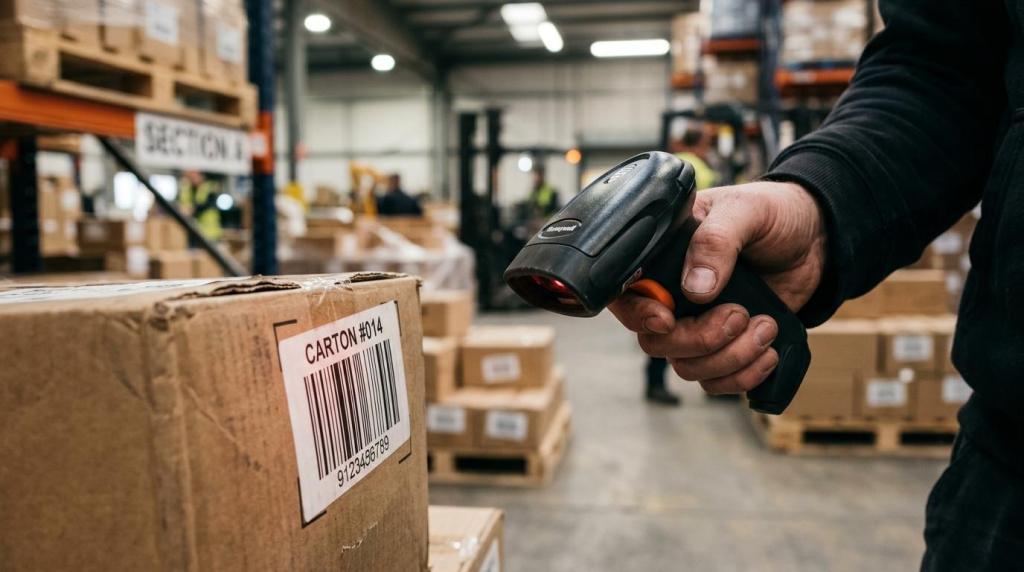
Providers like 3PLWOW describe barcode scanning as part of routine warehouse process, with live inventory control updating stock counts and movements as activity happens. That combination is powerful. Scanning reduces manual entry mistakes, while live updates keep ecommerce sales channels closer to the physical truth inside the warehouse.
A well-run goods-in process often follows a pattern like this:
| Warehouse stage | What happens | Why it matters |
|---|---|---|
| Receipt booking | Incoming delivery is scheduled and expected | Reduces congestion and helps labour planning |
| Quantity check | Cartons and units are counted against paperwork | Stops shortages and overages being missed |
| Quality inspection | Obvious damage, labelling issues, or product faults are identified | Prevents unsaleable stock reaching customers |
| Barcode scan | SKUs are scanned into the warehouse system | Creates accurate item-level records |
| Putaway | Stock is assigned to specific bin or pallet locations | Makes products easier to find and count |
| System update | Available stock is reflected in inventory records | Supports accurate online stock visibility |
Once stock has been received, location discipline becomes the next priority. A 3PL will usually assign products to defined bins, shelves, or pallet spaces based on size, turnover rate, and handling needs. Fast-moving products may be stored in easy-access pick faces. Slower lines may sit in reserve storage. 3PLWOW has published that stock is slotted with order frequency in mind, which is a practical way to improve both speed and repeatability.
FIFO methods for ecommerce stock rotation
FIFO means First In, First Out. In simple terms, the oldest stock received should be picked before newer stock of the same item.
That sounds basic, yet in a busy ecommerce warehouse it requires system rules and physical discipline. Without those controls, teams may pick whatever is easiest to reach, leaving older stock buried in the back of a location. Over time, that can lead to ageing inventory, packaging deterioration, or expiry risk for products with date sensitivity.
FIFO is especially useful for:
- food supplements
- cosmetics
- seasonal lines
- products with batch codes
- packaging that changes over time
In a 3PL setting, FIFO usually depends on accurate receipt dates, batch data where relevant, and organised putaway. The warehouse management system can prompt pickers to select the oldest available stock first. Warehouse layout matters too. If replenishment is careless, the newest goods may accidentally be placed in front of older units, breaking the rotation logic.
For ecommerce brands, FIFO supports more than freshness. It also helps with margin protection. Old stock is less likely to be written off, and product presentation remains more consistent for customers. If a 3PL handles lot tracking as well as FIFO, traceability becomes much stronger, which is useful for regulated categories and recall management.
There are cases where FIFO is not the right rule. Some brands need FEFO, meaning First Expired, First Out, where expiry date overrides receipt date. Others may separate promotional stock or retailer-specific stock. A capable 3PL can apply the method that fits the product rather than forcing one rule onto every SKU.
Stock control systems used by 3PL providers like 3PLWOW
Stock control is broader than counting units. It is the set of checks, system updates, and warehouse routines that keep the inventory file dependable every day.
Live inventory control is one of the biggest advantages a specialist 3PL can offer. 3PLWOW has published that stock counts and movements update as activity happens. For an ecommerce business, that means a sale, receipt, return, transfer, or dispatch can feed into current availability without waiting for an end-of-day batch process.
A strong stock control routine usually includes a few core practices:
- Barcode scanning: records each movement at SKU level
- Cycle counting: checks selected locations regularly instead of relying only on annual stocktakes
- Stock availability checks: confirms sellable stock before order release
- Location control: keeps every SKU tied to known warehouse positions
- Discrepancy handling: investigates gaps between physical and system stock quickly
These routines matter because ecommerce inventory is always moving. Orders may be placed across marketplaces, webshops, retail channels, and B2B accounts at the same time. Without frequent updates and disciplined warehouse execution, one inaccurate number can spread across every sales channel.
Research into warehousing has shown how damaging poor visibility can be. Out-of-stocks and inaccurate inventory remain among the most common barriers to productivity. That is why many 3PL operations use cycle counting instead of waiting for a single annual count. By checking inventory in smaller, scheduled portions, errors can be found earlier and corrected before they grow into service issues.
3PLWOW’s published material also refers to a stock availability check and a just-in-time stock approach. In practice, that means keeping a close eye on what is sellable now, what is committed to orders, and what needs replenishment into active pick locations. It is not just about holding more stock. It is about holding the right stock in the right place, with reliable data behind it.
Returns receipt and reverse logistics in third-party logistics
Returns receipt is one of the most overlooked parts of inventory management, even though it has a direct effect on cash recovery and customer experience.
When a return arrives at a 3PL warehouse, it cannot simply be added back into available stock. The parcel needs to be booked in, matched to an order or return reference, opened, inspected, and given a status. Only then can the inventory record be updated properly. This is the heart of reverse logistics.
A structured returns receipt process usually covers several decisions:
- Resellable: item is unused, intact, and can return to available stock
- Repack required: product is fine but outer packaging needs attention
- Quarantine: item needs review because of damage, mismatch, or suspected fault
- Reject: product cannot be resold and must be written off, recycled, or returned to the brand
Fast returns handling matters because returned goods often still have value. If inspection takes too long, saleable stock sits idle while the ecommerce business buys replacement units or misses potential orders. Published case material from 3PLWOW reports returns processing time falling from 6 days to 2 days after fulfilment outsourcing, alongside higher order accuracy. That is a useful example of how warehouse process design can improve both stock recovery and customer service.
Reverse logistics has become more important as ecommerce volumes have grown. Fashion, beauty, consumer goods, and gifting brands all deal with returns patterns that can materially affect stock availability. A 3PL with disciplined returns receipt can separate good stock from non-saleable stock quickly, feed that information into the inventory system, and help the merchant make decisions on refund timing, resale, or disposal.
Inventory visibility and ecommerce scaling with a 3PL
Accurate inventory records create confidence across the whole business. Marketing can promote products without fearing oversells. Finance can trust stock values more closely. Customer service teams can answer availability questions with fewer caveats. Purchasing can reorder with better timing.
That confidence becomes even more valuable when order volumes rise.
3PLWOW’s published case study states that one client increased monthly order capacity from 15,000 to more than 35,000 within 90 days of fulfilment outsourcing, while order accuracy improved from 96.2% to 99.4%. Those figures point to a familiar truth in logistics: scale is difficult when inventory control is weak, yet scale becomes far more manageable when stock locations, system updates, picking standards, and returns processes are all working from the same logic.
For ecommerce brands, the attraction of a capable 3PL is not only warehouse space. It is operational discipline.
A mature inventory operation tends to give brands several commercial benefits:
- fewer oversells
- faster dispatch
- cleaner returns handling
- stronger traceability
- better use of working capital
The best 3PL relationships are built on visibility. Brands need clear reporting, dependable stock records, and confidence that FIFO, stock control, and returns receipt are being handled with consistency. When those foundations are in place, inventory stops being a source of friction and starts acting like a growth system that supports the wider business every day.