
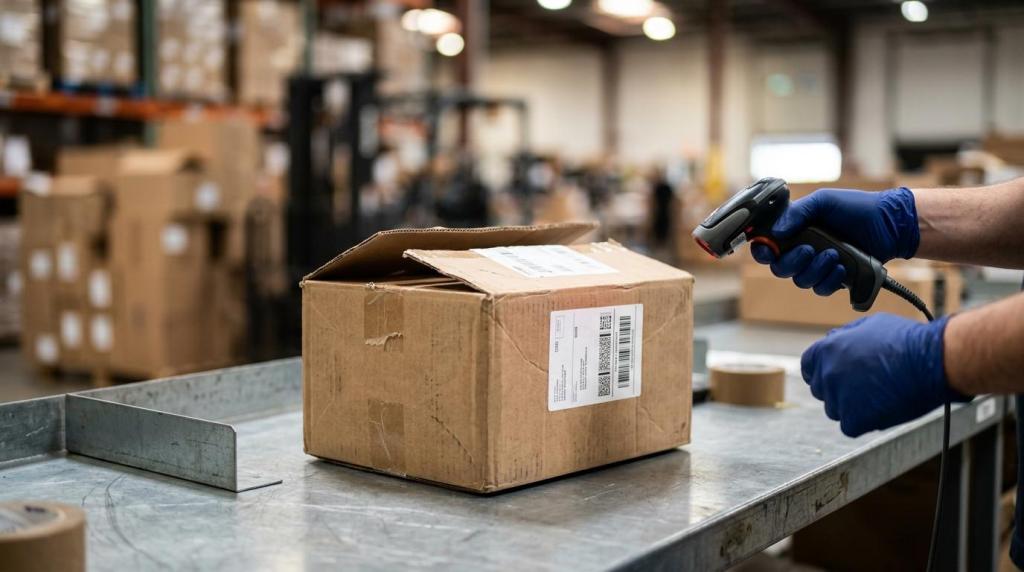
Returns management with Third Party Logistics
Returns are often treated as the untidy corner of fulfilment. Orders go out, revenue comes in, and the reverse flow gets pushed to the side until it starts causing visible friction. That friction shows up quickly: stock sits in limbo, replacements take too long, customer service teams spend more time chasing updates, and finance teams lose sight of what can be sold again.
A strong third party logistics model changes that picture by integrating freight management effectively. When returns management sits inside the same operation that handles warehousing, picking, packing, shipping, and inventory control, the process becomes far more controlled. A provider like 3PLWOW can receive returned goods, process them, place saleable items back into stock, and arrange for replacement orders to go out on the same day the return is received when the workflow is set up for it.
Why returns management matters in third party logistics
Third party logistics, or 3PL, means outsourcing core logistics functions to a specialist provider. That usually includes warehousing, transport coordination, inventory management, order fulfilment, and reverse logistics. Returns are not a side task in that model. They are part of the operating system.
That matters because a return is not just a parcel coming back through the door. It is a stock event, a customer service event, and often a revenue recovery event as well. If the item can be checked and resold quickly, the business avoids unnecessary delay. If it cannot, the item needs the right status so the stock file stays accurate.
When returns are handled poorly, several problems build up at once.
- Stock tied up in quarantine
- Slower exchanges
- Higher support demand
- More manual admin
- Less confidence in stock figures
Industry data supports the wider value of outsourcing logistics to specialist providers. A 2025 third party logistics study by NTT DATA, Penske Logistics, and Penn State reported that 82% of shippers using 3PLs agreed that 3PL use contributed to improved customer service, while 66% said it helped reduce overall costs. Returns are part of that service picture, not separate from it.
How third party logistics returns processing works
A good returns operation starts with control at the point of receipt. When a returned parcel arrives at the warehouse, it needs to be logged into the system quickly, matched to the order or return reference, and directed to the right inspection flow. That first step sets the pace for everything that follows.
The next stage is physical assessment. Is the item unopened, resalable, damaged, incomplete, or in need of further checking? The answer determines whether it goes straight back into available stock, into a separate holding area, or into a process for disposal, repair, or supplier review. The point is not speed alone. It is accurate speed.
Once the item has been graded, inventory records can be updated. This is where a 3PL can offer real value, because the same warehouse team and system that fulfil outgoing orders are also controlling inbound returns. That keeps the stock file closer to reality. A returned unit that is approved for resale can become available again without waiting for a separate internal team to catch up.
If the return is linked to an exchange or replacement, the process can move forward immediately. With the right rules in place, a 3PL can trigger a replacement order as soon as the returned item is received and validated. That means the customer does not have to wait for a slow chain of emails between support, warehouse staff, and dispatch.
Returns management steps inside a 3PL warehouse
| Stage | What happens | Why it matters |
|---|---|---|
| Return receipt | Parcel is booked in and linked to the order | Creates traceability from the start |
| Inspection | Item is checked for condition and completeness | Prevents incorrect restocking |
| Status update | Product is marked as saleable, damaged, or on hold | Keeps inventory records accurate |
| Restocking | Approved items go back into available stock | Recovers sellable inventory quickly |
| Replacement fulfilment | Exchange or replacement order is picked and packed | Cuts waiting time for the customer |
| Reporting | Return reason and item outcome are recorded | Supports stock, service, and product analysis |
That sequence sounds simple, and in the best operations it is simple. The reason it works is that each step has clear ownership and system visibility.
How 3PLWOW supports returns management and reverse logistics
3PLWOW states that its service covers order fulfilment, warehousing, inventory management, shipping, and return handling. It also describes 3PL operations as including receiving inventory, warehousing, picking, packing, shipping, and returns, with reverse logistics forming part of the normal fulfilment cycle. That is the right foundation for efficient returns, because the returned item is handled inside the same operational environment as outbound stock.
For a business, that can remove a major source of delay. Returned items do not need to wait for a separate department, a separate warehouse, or a manual spreadsheet update before anything useful happens. The return is received, assessed, updated in the inventory system, and moved to the next action point.
A provider set up in this way can support several return-related tasks in one flow.
- Returns processing: receiving returned parcels, checking condition, and updating return status
- Restocking: placing saleable goods back into available inventory
- Replacement dispatch: sending a new order out on the same day the return is received when the agreed rules allow it
- Inventory visibility: keeping stock records current after each return
There is also published evidence that this approach can produce measurable gains. A 3PLWOW case study reported monthly order capacity rising from 15,000 to more than 35,000 within 90 days, order accuracy improving from 96.2% to 99.4%, and average return processing time falling from 6 days to 2 days. The exact outcome will depend on the business, product type, and process design, though the direction is clear: tighter fulfilment operations tend to produce faster reverse logistics as well.
In-house returns management versus 3PL returns management
Many growing businesses begin with returns handled in-house. That makes sense at an early stage. The team knows the products, the founders can oversee exceptions directly, and return volumes may still be manageable. The pressure arrives when volume rises. What was once a workable back-office task turns into a chain of small delays.
A third party logistics provider offers a different structure, with integrated inventory control and freight management to manage returns efficiently. Returns can be treated as part of the warehouse workflow rather than an interruption to it. The table below shows the practical difference.
| Area | In-house returns process | 3PL returns process |
|---|---|---|
| Parcel intake | Often manual or handled when time allows | Booked in as part of warehouse intake |
| Inspection speed | Depends on staff availability | Managed by trained fulfilment teams |
| Stock updates | May wait for manual admin | Updated through inventory tracking |
| Replacement orders | Can sit behind internal approval steps | Can be triggered quickly after validation |
| Space management | Returns compete with normal storage | Returns handled within warehouse process |
| Reporting | Often fragmented across teams | Usually centralised within fulfilment data |
This is not just about convenience. It affects customer trust. If a replacement is dispatched quickly and the stock record updates on the same day, the customer sees a business that is organised and responsive. That impression matters every bit as much as the original delivery.
Why same day replacement orders depend on warehouse integration
Same day replacement dispatch is one of the strongest arguments for using a 3PL to manage returns.
To make it happen, the warehouse and the stock system need to work as one process. The returned item must be received, checked, and classified fast enough for the replacement order to be released before the daily carrier cut-off. If these steps sit in different teams or different systems, time disappears.
This is where order-tracking software, freight management, carrier coordination, and live inventory tracking become especially valuable. A 3PL is already set up to pick and despatch orders at pace. When the returns process is connected to that same operation, approved exchanges do not need to be treated as unusual exceptions.
A few practical conditions tend to make same day replacement possible.
- Clear return rules
- Fast intake scanning
- Agreed inspection criteria
- Accurate stock availability
- Carrier cut-off discipline
For brands selling apparel, footwear, accessories, health products, consumer goods, or any line where exchanges are common, that speed can change the customer experience completely. A return becomes part of an active service model rather than a long pause.
Inventory accuracy and restocking after returned goods are received
Restocking is where much of the financial value sits. A returned item that is still saleable should not spend days waiting in a holding area if it could be listed as available inventory the same afternoon. The longer it sits idle, the greater the cost.
Good 3PL returns management protects that value by combining inspection rules with inventory control and discipline. Saleable stock goes back into the live count. Non-saleable stock is isolated properly. Partial kits, damaged packaging, or missing components can be flagged for a defined action instead of being left as a vague warehouse problem.
This also improves planning. Purchasing teams rely on stock accuracy to decide what to reorder. Sales teams rely on it when products are promoted. Customer service teams rely on it when promising an exchange. If returned goods are restocked properly, the business gets a cleaner view of true availability.
What to ask a third party logistics provider about returns management
Not all providers handle returns with the same depth, so the right questions matter. A business choosing a 3PL should look beyond basic storage and shipping and ask how the reverse flow works in practice.
A useful discussion should cover timing, stock treatment, system updates, and customer impact. If replacement orders are important, that needs to be stated early and built into the operating rules.
- Inspection rules: How are saleable, damaged, incomplete, and quarantine items separated?
- Restock timing: When does approved stock become available for sale again?
- Replacement dispatch: Can exchange orders ship the same day the return is received?
- System updates: How quickly do return and inventory statuses refresh?
- Reporting: What data is captured on return reasons, item outcomes, and processing time?
Those questions tend to reveal whether the provider sees returns as a true logistics function or just a necessary extra. For businesses with growing order volumes, that difference can shape customer service levels, stock accuracy, and how quickly revenue is recovered from returned goods.