
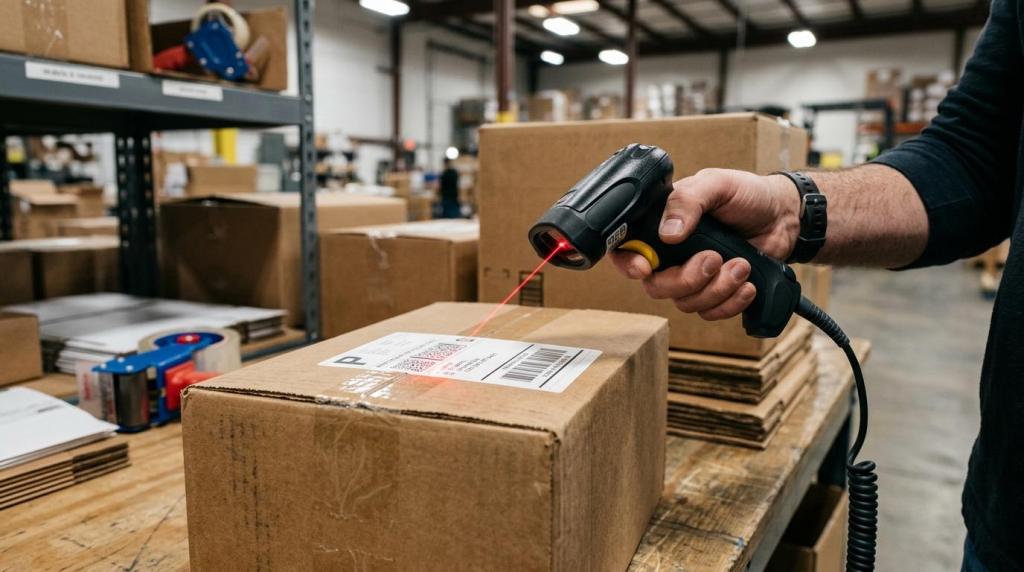
Rapid order growth is the kind of problem most businesses want to have, right up until the packing benches are full, stock is spread across every spare corner, and customer emails start asking where their parcel is.
A spike can come from a flash sale, a strong paid campaign, a seasonal peak, a retail mention, or simply the welcome pressure of rising demand. What matters is not only how many orders arrive, but how effectively managing rapid order growth can enable the operation to absorb them without damaging speed, accuracy, margins, or customer trust. This is where a 3PL like 3PLWOW can take real pressure off the business.
Why rapid order growth creates fulfilment pressure
Order growth sounds commercial. In practice, it is operational first.
When volume rises sharply, in-house fulfilment often hits limits that were not obvious at lower levels. A team that coped well at 50 orders a day may struggle at 200. Stock locations that made sense in one room become inefficient in a crowded warehouse, affecting operational efficiency. Cut-off times tighten. Returns pile up. Management time moves away from trading and into firefighting.
This pressure is part of a wider trend. The U.S. Census Bureau reported that U.S. retail e-commerce sales reached $326.7 billion in Q1 2026, up 9.8% year on year, and made up 16.9% of total retail sales. In Great Britain, the Office for National Statistics reports internet sales accounted for 27.4% of total retail sales in 2025. Online demand is not a side channel anymore. It is a central trading model, and fulfilment has to be built for that reality.
Common signs that growth is outpacing in-house fulfilment include:
- Missed same-day dispatch cut-offs
- Picking errors and incorrect items
- Temporary staff who need constant supervision
- Stockouts caused by poor location control
- Rising shipping queries
- Founders and senior staff packing orders late into the evening
None of these issues means a business has failed. They usually mean the logistics of the business have succeeded faster than its current operation was built to support.
Why more brands are using 3PL fulfilment for order growth
A 3PL gives a business access to warehouse and distribution capability, ensuring a consistent supply without having to build everything alone.
That matters because growth rarely arrives in a smooth, predictable line. Demand can double in a week. Promotions can distort SKU mix. Peak periods can change labour requirements overnight. A good 3PL is built around variable volume, with trained teams, warehouse processes, systems integration, and shipping capacity already in place.
The wider market reflects this shift. CBRE reported that 3PL providers accounted for 34.1% of U.S. bulk industrial leasing activity through Q3 2024, up from 30.6% a year earlier, with 498 bulk leases recorded. Much of that demand came from retailers and wholesalers outsourcing warehouse and distribution operations. Businesses are choosing specialist fulfilment support because capacity has become a competitive issue.
How a 3PL team helps manage picking and packing at scale
One of the first weak points in rapid growth is labour capacity.
An in-house team may be committed and capable, but it is often small. If orders jump suddenly, the business must recruit, train, schedule, and supervise extra people while also trying to maintain dispatch performance. That is a lot to ask during a busy trading period.
A 3PL like 3PLWOW brings a larger team of trained warehouse staff whose work is focused on picking, packing, stock handling, and dispatch. That changes the operating model immediately. Rather than pulling office staff into the warehouse or asking management to cover packing benches, the business can rely on people who do this work every day.
The benefit is not just more hands. It is process discipline. Trained fulfilment teams work to defined picking methods, barcode checks, packing standards, and dispatch cut-offs. Accuracy improves because the workflow is designed for repeatability under pressure.
That can have a direct customer impact:
- Faster dispatch: orders move through a team built for volume
- Higher accuracy: fewer mis-picks and fewer replacement shipments
- Lower internal pressure: the brand team can focus on sales, stock planning, and customer service
- Better resilience: sickness, holidays, and peak demand are less disruptive when labour is shared across a larger operation
How Shopify integration supports high-volume order flow
Technology matters just as much as warehouse labour.
Many growing brands sell through Shopify, and once order volume rises, manual exports, spreadsheet checks, and hand-keyed updates start to create delays. A proper Shopify integration helps orders move into fulfilment automatically, with much less manual intervention.
That means the warehouse can receive orders quickly, status updates can flow back into the store, and customer communications can stay current. It also reduces the risk of duplicated orders, missed orders, or dispatch confusion during a busy campaign.
For a fast-growing business, this creates a cleaner operating rhythm. The store captures demand. The integration passes it into fulfilment. Stock and shipping updates return to the sales channel. The result is better control without adding admin to every spike in demand.
Why warehouse space becomes a growth issue sooner than expected
Space runs out quietly, then all at once.
At first, a business might use spare shelving, overflow tables, and creative stacking. After that, replenishment slows down, receiving becomes awkward, and the risk of misplaced stock rises. Rapid growth does not only create more orders; it also puts pressure on supply chains to meet increased demand. It creates more pallets, more inbound deliveries, and more SKU complexity.
A 3PL solves this with larger warehouse storage capacity and a layout designed for stock movement. 3PLWOW states that it operates from a facility of more than 30,000 square feet, with capacity for over 10,000 pallets. That kind of scale gives growing brands room to hold more stock, prepare for peak periods, and manage logistics to separate fast movers from slower lines in a more practical way.
Here is where the difference becomes clear.
| Fulfilment factor | In-house operation | 3PL operation like 3PLWOW |
|---|---|---|
| Storage capacity | Limited by current premises | Access to larger warehouse space |
| Labour flexibility | Recruit and train during the surge | Trained team already in place |
| Shopify order flow | Often partly manual at lower maturity | System-led integration and order routing |
| Carrier volume | Lower bargaining power and fewer options | Higher throughput and established carrier processes |
| Peak resilience | Can depend on overtime and temporary fixes | Built to absorb volume changes |
| Management focus | Time pulled into daily fulfilment issues | More time for trading and growth |
A bigger warehouse is not just about fitting more stock in. It supports cleaner goods-in processes, better bin locations, faster replenishment, and fewer stock errors at the point of pick.
How a 3PL increases shipping capacity during sales and peak periods
Shipping pressure is usually where fulfilment problems become visible to customers.
A business can be selling brilliantly, but if dispatch slips by even a day or two during a promotion, support tickets rise quickly. Customers are less forgiving when expectations have been set by fast delivery norms across e-commerce.
A 3PL typically brings stronger outbound shipping capacity because it handles larger parcel volumes every day, enhancing overall efficiency. This can mean later cut-off handling, better courier coordination, and more efficient parcel processing during busy periods. The warehouse is set up for throughput, not occasional spikes.
That difference is especially useful during:
- Flash sales
- Black Friday and Christmas peaks
- Product launches
- Influencer or PR spikes
- Ongoing month-on-month sales growth
Shipping scale also supports supply consistency and efficient logistics. A brand does not have to rebuild its dispatch process every time demand rises. It can plug into an operation that is already designed around high order flow.
What 3PLWOW case study results say about outsourced fulfilment
The practical value of outsourced fulfilment is easiest to see in performance outcomes.
A 3PLWOW case study describes a brand whose monthly order volume rose from roughly 4,000 orders to more than 14,000. After moving to outsourced fulfilment, the same case study reports monthly order capacity increasing from 15,000 to over 35,000 within 90 days.
The operational gains are just as telling:
- Order accuracy: improved from 96.2% to 99.4%
- Same-day dispatch: increased from 71% to 94%
- Returns processing: reduced from 6 days to 2 days
- Shipping-related support contacts: reduced by 38%
Those numbers show what tends to happen when growth moves from an overstretched internal process into a fulfilment environment built for scale and increased efficiency. The business does not only gain capacity. It often gains speed, accuracy, and a better customer experience at the same time.
When in-house fulfilment still makes sense, and when it starts to hold growth back
There is nothing wrong with in-house fulfilment in the early stages. In fact, many brands benefit from doing it themselves first. It keeps the operation close, teaches the team how products move, and gives direct feedback on packaging, returns, and customer preferences.
The challenge comes when managing rapid order growth causes the fulfilment model to stop matching the sales model.
If the business is growing steadily, running promotions more often, or carrying more SKUs, the warehouse operation needs to keep pace. Once leadership time is swallowed by labour scheduling, stock movement, carrier chasing, and packing issues, the cost is no longer only operational. It becomes strategic too. Growth work gets postponed because fulfilment keeps demanding urgent attention.
A useful way to think about the change is this:
- In-house suits: low to moderate volume, simple SKU ranges, stable order patterns
- 3PL suits: fast growth, promotional spikes, wider product ranges, tighter service expectations
How to prepare for rapid order growth before the spike arrives
The best time to fix fulfilment strain is before the next big campaign lands.
A business does not need to wait for a crisis. If growth is already visible, planning early with a 3PL can make the next sales surge much easier to handle. That usually starts with realistic forecasting, SKU analysis, system checks, and a review of current dispatch performance.
A sensible preparation plan often includes:
- Review current order volumes, peak days, and likely promotional spikes.
- Check how many orders the existing team can process accurately without overtime.
- Map stock storage limits, inbound receiving constraints, and replenishment bottlenecks.
- Assess whether Shopify integration, carrier capacity, and returns handling can support higher demand.
This kind of preparation changes the conversation from “How do we cope?” to “How much can we grow?”
That shift matters. When fulfilment is stable, sales campaigns can be more ambitious, stock can be bought with more confidence, and customer promises can be made with far less risk. A 3PL like 3PLWOW gives growing businesses the chance to move from reactive fulfilment to a structure built for larger order volumes, stronger dispatch performance, and a calmer internal team.