When an ecommerce business starts to grow, the first signs of success often appear in sales dashboards, advertising results and customer demand. The strain usually appears somewhere else.
It appears in the warehouse, in late dispatches, in stock errors, in customer emails asking where an order is, and in the pile of returns waiting to be checked. That is why third-party logistics, usually shortened to 3PL, is so often tied to growth. A specialist fulfilment partner does far more than move boxes. It can remove the operational ceiling that stops a promising brand from turning demand into revenue.
For an ecommerce business that wants to scale up sales, the value of a 3PL is simple: more capacity, faster dispatch, steadier service, cleaner returns handling and a cost base that can move with volume rather than fight against it. Providers like 3PLWOW are part of that picture because they offer a model built around flexible fulfilment rather than fixed warehouse burden.
Why ecommerce growth puts pressure on fulfilment operations
A business can cope with fulfilment in-house for quite a while, especially in the early stage. Founders pack orders, a small team books shipments, and stock lives in a modest unit or back office space. That can work well enough while order volumes are stable.
The problem starts when sales campaigns begin to work consistently. One successful product launch, one marketplace promotion, or one strong seasonal peak can push a business beyond the limits of its own setup. At that point, growth creates friction instead of momentum. More orders do not always mean more profit if the operation behind them starts to buckle.
Common pressure points tend to show up quickly:
- Stock inaccuracies
- Missed courier cut-off times
- Packing teams stretched during peaks
- Delays in booking goods in
- Slow returns back into sellable stock
- Customer service teams chasing warehouse issues
When these issues pile up, sales growth becomes risky. A business may hold back on paid media, postpone marketplace expansion, or limit stock intake simply because fulfilment cannot cope. That is a major reason why third-party logistics becomes a growth decision, not just a warehouse decision.
How third-party logistics increases order capacity and dispatch speed
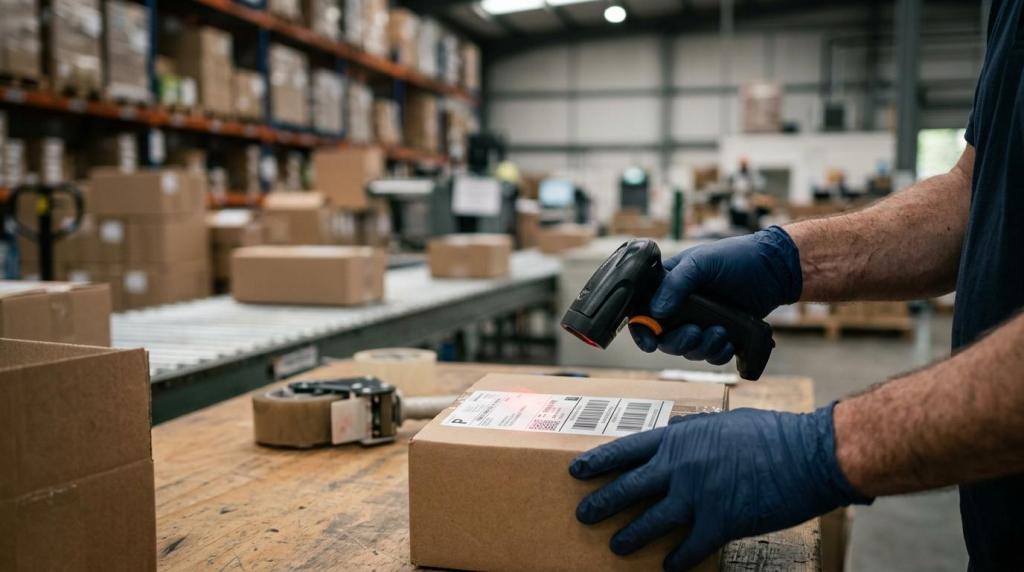
A capable 3PL gives an ecommerce business access to infrastructure that would take serious time and capital to build internally. That includes warehouse space, trained fulfilment staff, shipping workflows, scanning systems and carrier relationships. Instead of recruiting and expanding every time order volume rises, the merchant plugs into a setup that is already built for throughput.
Capacity is one of the biggest gains. If the in-house team can process only a certain number of orders per day, sales growth has a natural cap. A 3PL can raise that cap sharply, which means marketing, marketplaces and promotions can run with fewer operational brakes.
One published 3PLWOW case example gives a useful snapshot of what this can look like after a move to outsourced fulfilment.
| Metric | Before outsourced fulfilment | After 90 days with 3PL model |
|---|---|---|
| Monthly order capacity | 15,000 | 35,000+ |
| Order accuracy | 96.2% | 99.4% |
| Same-day dispatch | 71% | 94% |
| Average return-processing time | 6 days | 2 days |
Those figures matter because they improve together. More capacity on its own is helpful, but not if accuracy falls. Faster dispatch is attractive, but not if returns become messy. In this case, the reported improvement covered the full operating picture: volume, speed, precision and reverse logistics.
That combination gives a business room to sell more with greater confidence.
How faster fulfilment supports ecommerce sales growth
Sales growth is not driven by advertising alone. It is also shaped by the customer experience that sits behind the checkout button. Delivery promises, dispatch reliability and order accuracy all affect conversion, repeat purchasing and review quality.
A 2025 industry study reported that 82% of respondents agreed that using a 3PL contributes to improved customer service. The same study found that 66% said 3PLs contribute to reducing overall costs. That first figure is especially important for ecommerce brands because customer service is often where fulfilment performance becomes visible. Buyers may never think about your warehouse, but they certainly notice if an item arrives late, damaged or incorrect.
Speed matters too. The same study found that 48% of shippers and 53% of 3PLs said customers expect deliveries in less than two days. A brand that cannot meet modern expectations may still win traffic, yet lose conversion or repeat orders to a competitor with better fulfilment.
A stronger logistics model can support sales in several ways:
- Checkout confidence: clearer delivery promises can reduce hesitation at the point of purchase
- Repeat purchase rates: accurate, on-time orders give customers a reason to buy again
- Marketplace performance: quick dispatch and lower error rates can support seller ratings
- Campaign freedom: promotions can run without fear of creating an operational backlog
- Customer service capacity: support teams spend less time solving warehouse mistakes and more time helping customers buy
This is where a 3PL becomes part of revenue growth. When fulfilment stops creating friction, sales teams and marketing teams can push harder.
Why returns handling affects customer retention and future sales
Returns are often treated as a side issue in ecommerce, yet they can shape customer loyalty just as strongly as initial delivery. A poor returns process makes a business feel difficult to buy from, even when the original order arrived on time.
The scale of the issue is large. The National Retail Federation projected that 15.8% of annual retail sales in the United States would be returned in 2025, with online sales expected to see a 19.3% return rate. That is a large share of revenue moving back through the supply chain rather than out to customers.
Customer behaviour makes the point even clearer. The same NRF data reported that 71% of consumers were less likely to shop with a retailer again after a poor returns experience. Separate 2025 research from DHL eCommerce found that 79% of global shoppers abandon their cart if their preferred returns option is not offered, while 75% say they will not shop with a brand if they do not trust the returns provider.
Returns are not a minor warehouse task.
A strong 3PL can improve this part of the customer experience because returns are processed through defined workflows rather than ad hoc manual handling. That means stock is checked faster, status updates are clearer, and resaleable inventory returns to available stock more quickly.
Good returns handling often includes:
- Fast inspection and grading
- Clear return status updates
- Quicker refunds or exchange processing
- Resaleable stock returned to inventory sooner
- Better data on return reasons
When a 3PL shortens the returns cycle, it does two valuable things at once. It protects customer trust, and it puts working stock back into circulation faster. Both outcomes support future sales.
How third-party logistics can reduce cost pressure while scaling
Many ecommerce businesses hesitate before outsourcing because they assume a 3PL is only an added expense. In reality, the more useful comparison is not in-house cost versus 3PL invoice in isolation. It is total cost to serve, especially during growth.
Running fulfilment internally often brings fixed costs that rise in lumpy steps. A business may need a larger warehouse before it fully needs the space. It may recruit ahead of demand to avoid service problems. It may buy equipment, software and packing materials in ways that tie up cash. During quieter periods, those costs remain.
A 3PL model can shift more of that burden into variable operating cost. That gives the business more flexibility. If volumes rise sharply, the fulfilment partner can absorb more of the labour and space challenge. If volumes soften, the merchant is less exposed to underused infrastructure.
Providers like 3PLWOW position this flexibility as part of the value proposition, especially for businesses trying to avoid heavy fixed warehouse fees while keeping service standards high. That does not mean every order becomes cheaper in every situation. It means the cost base can become more manageable, more predictable and better matched to the pace of growth.
There is also an indirect financial effect. Fewer mis-picks, fewer late orders and faster returns processing all reduce hidden costs that rarely sit neatly on one line of a profit and loss statement. They still erode margin if left unchecked.
What to look for in a 3PL partner for ecommerce scaling
Not every third-party logistics provider is the right fit for a scaling ecommerce brand. The goal is not merely to outsource work. The goal is to remove sales friction while protecting brand experience.
That means asking practical questions about operations, systems and commercial structure. A provider should be able to show how it handles peak demand, how it measures accuracy, how quickly it dispatches, how it processes returns and what visibility the merchant gets into stock and order status.
A sensible checklist includes the following:
- Capacity model: can the provider handle spikes without forcing you into oversized fixed commitments?
- Dispatch performance: what are the cut-off times, same-day dispatch rates and service-level targets?
- Accuracy controls: how are picking, packing and stock movements scanned and verified?
- Returns workflow: how quickly are returns processed and placed back into available inventory where appropriate?
- System visibility: will you have real-time access to stock levels, order status and delivery visibility?
- Pricing structure: are fees transparent enough to model margin as volumes grow?
A business should also pay attention to the partner’s fit with sales channels. A brand selling through Shopify, Amazon, TikTok Shop, eBay and wholesale accounts has different fulfilment needs from a single-channel store. The right 3PL should support that mix rather than complicate it.
The strongest partnerships tend to share one feature: fulfilment becomes an engine for growth rather than a constant operational limit. When that happens, the ecommerce business can focus more time on product, customer acquisition and retention, with less energy drained by warehouse bottlenecks.
A scaling brand does not need to own every shelf, scanner and dispatch bench. It needs a fulfilment setup that can keep pace with demand, protect service quality and leave room for the next stage of sales growth. That is the real commercial value of third-party logistics.