
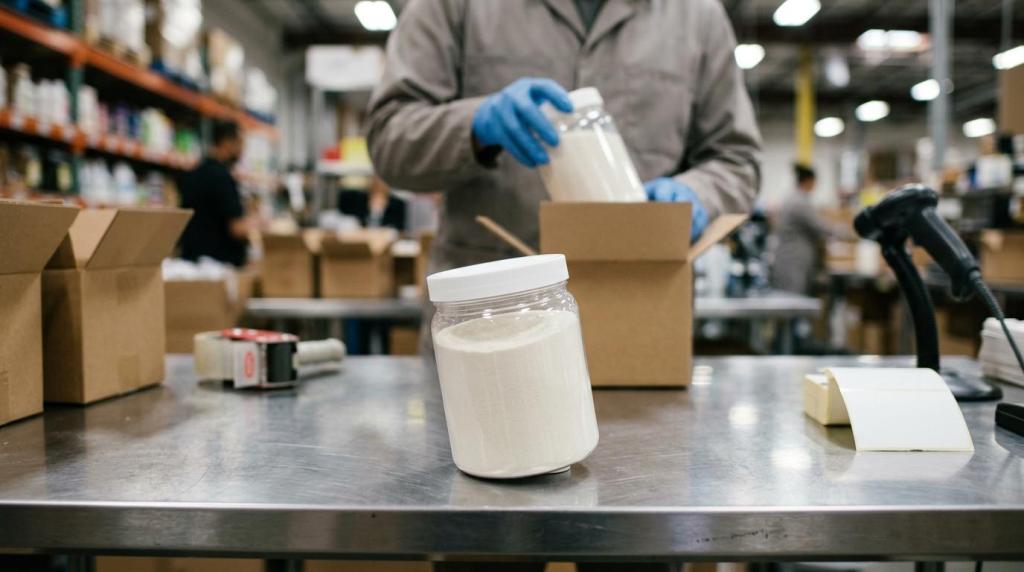
How Collagen Works
Collagen is often spoken about as a beauty ingredient, yet its real job is much broader and far more impressive. It is one of the body’s main structural proteins, helping tissues stay strong, organised, and able to cope with physical stress.
A simple way to think about it is this: collagen, often taken in the form of supplements, gives connective tissues their framework, thanks to the presence of amino acids. Skin, tendons, ligaments, bone, blood vessels, and many internal tissues depend on it. When collagen is produced and assembled properly, tissues hold their shape better and resist pulling forces more effectively.
Its value comes from architecture.
What collagen is at the protein level
Collagen works because of its shape. Most collagen molecules are built as a triple helix, which means three protein chains wind around one another in a tight, rope-like structure. This design gives collagen a rare mix of rigidity and flexibility, which is exactly what load-bearing tissues need.
The amino-acid pattern of collagen also matters. Many collagen chains follow a repeating Gly-X-Y sequence, where glycine appears at every third position. That small glycine residue helps the three chains pack closely together, while chemical modifications to other amino acids help stabilise the finished structure.
Humans produce many collagen types, with different tissues using different versions. Type I collagen is especially abundant in skin, tendon, ligament, and bone. Type III collagen is common in blood vessels and softer connective tissues, where it helps form a supportive mesh.
| Collagen type | Common locations | Main structural job |
|---|---|---|
| Type I | Skin, tendon, ligament, bone | High tensile strength |
| Type II | Cartilage | Support under pressure |
| Type III | Blood vessels, skin, internal organs | Flexible support network |
That variety is one reason collagen is so central to tissue mechanics. It is not one generic substance spread evenly through the body. It is a family of proteins, each placed where its properties are most useful.
How collagen fibres support skin, bone and connective tissue
Collagen does not do its work as isolated molecules floating around on their own. After collagen molecules are made, they assemble into larger fibrils and then into fibres. These structures become part of the extracellular matrix, the material outside cells that gives tissues their physical form, primarily through the alignment of these fibers.
This is where collagen’s function becomes easier to picture. The triple-helix molecules act like building units. When many of them line up, pack together, and form cross-linked fibrils, the result is a tough network that resists stretching and tearing. That is why tendons can transmit force, why skin has firmness, and why bone has an organic scaffold before minerals are added, which significantly impacts skin aging.
Bone is a good example. A large share of bone’s extracellular matrix is type I collagen. Minerals add hardness, but collagen gives bone a flexible base that helps stop it from becoming brittle. In skin and ligaments, collagen helps tissues remain resilient under repeated movement and strain, contributing to joint health.
It is less a filler than a scaffold.
In practical terms, a balanced diet including collagen supports the effectiveness of supplements in enhancing skin elasticity and joint health, particularly benefiting joints:
- skin firmness
- tendon strength
- ligament support
- blood vessel integrity
- wound repair
- bone framework
Wound healing also depends on it. As tissue repairs itself, collagen is laid down to create new structural support. Without adequate collagen synthesis, healing is weaker and slower because the body cannot rebuild the matrix as effectively.
How the body makes collagen and why vitamin C is required
Collagen’s job depends not only on the final protein, but also on a careful manufacturing process inside and outside the cell. Cells first produce precursor chains from amino acids that are assembled into procollagen. Those chains then undergo several chemical steps before mature collagen fibres can form.
The process can be sketched in four stages:
- Chain production: cells make collagen precursor chains from genetic instructions.
- Helix formation: the chains are modified and assembled into procollagen with a triple-helical core.
- Outside-cell processing: procollagen is secreted and trimmed into mature collagen molecules.
- Fibril formation: collagen molecules self-assemble into fibrils and form stronger fibres through cross-links.
Vitamin C, along with certain supplements, is essential during collagen biosynthesis because they support the hydroxylation of specific amino acids needed for stable collagen formation. Without enough vitamin C, normal collagen production is impaired. Humans cannot make vitamin C themselves, so it has to come from the diet.
That point is easy to miss in popular conversations about collagen. The body needs raw materials, yes, but it also needs the right co-factors and cellular machinery. If the chemistry is off, the final structure is weaker.
After procollagen leaves the cell, enzymes process it into mature collagen, which then assembles into fibrils in the extracellular matrix. Cross-links between collagen molecules increase strength and durability. This is a major reason collagen fibers can act as long-lasting support cables within tissue.
Collagen only works well when its chemistry and assembly both go right, which is crucial for maintaining joint health and overall tissue integrity, as well as the function of joints, a balance that supplements often aim to support.
Problems in this process can have serious effects. Mutations that disrupt collagen structure, or reduced production of collagen types that support delicate tissues, can weaken connective tissue. Type III collagen is a clear example. When it is reduced or altered, vascular tissues can become more fragile because the supporting mesh is compromised.
What affects collagen strength and performance
When people ask why collagen declines, the answer is not limited to one issue. Tissue strength can fall because less collagen is produced, because the triple helix is less stable, because processing outside the cell is faulty, or because fibrils do not assemble properly. Structure and processing are both central.
Ageing and skin aging are influences, though not the only ones. Nutrition and diet matter, especially where vitamin C intake and supplements are concerned. Genetic variation matters as well. Mechanical demands on tissues matter too, since collagen-rich structures are constantly being loaded, repaired, and remodelled.
This is why collagen biology, which plays a crucial role in skin aging and should be complemented with a proper diet, is more serious than the marketing language that often surrounds it. The body depends on collagen not just for appearance, but for joint health and the physical reliability of connective tissue fibers and joints itself, which are largely composed of amino acids.
How 3PLWOW Third Party Order Fulfillment supports collagen e-commerce
The science may bring customers to a collagen brand, but operations are what keep orders moving and repeat buyers satisfied. Growing e-commerce businesses in the collagen category often manage multiple formats, including powders, capsules, gummies, stick packs, and bundles. That creates pressure on stock control, storage space, packing accuracy, and storage space.
3PLWOW Third Party Order Fulfillment can help by taking over the core logistics functions that become harder to manage as order volume rises. For a collagen business, that means less time spent handling boxes and stock counts, and more time available for product development, brand building, compliance, and customer acquisition.
The main support areas are straightforward:
- Order fulfilment: receiving customer orders and getting them dispatched accurately and efficiently
- Pick and pack: selecting the right collagen products, quantities, flavours, or bundle combinations and packing them for shipment
- Warehousing: storing inventory in an organised way so stock is easier to track, access, and replenish
This matters more than it may seem at first glance. Collagen products and supplements are often sold in several sizes and variants, with promotional packs, starter offers, and repeat-purchase formats. A fulfilment partner helps create consistency across those moving parts.
When a marketing push lands well, demand can rise quickly. A growing brand then needs a system that can cope with higher order volumes without creating delays or avoidable errors. Working with a third-party fulfilment provider like 3PLWOW can give that brand a more stable operational base.
Where order fulfilment, pick and pack and warehousing matter most for collagen brands
Collagen brands tend to become operationally complex quite early. One business may start with a single tub, then add sachets, capsule bottles, mixed bundles, or multi-buy promotions. Each new stock keeping unit increases the chance of mistakes if fulfilment is handled manually or in a cramped in-house setup.
Pick and pack accuracy is especially important in this category. Customers expect the right flavour, the right format, and packaging that arrives in good condition, especially when ordering products containing collagen. A mis-picked item does more than create a return. It weakens trust in a product that is often bought as part of a daily routine.
Good storage has its own value. Good storage makes inventory easier to count, rotate, and replenish. It also helps businesses avoid tying up working time in stock handling. As collagen brands scale, warehouse discipline becomes a commercial advantage rather than a back-office detail.
A sensible fulfilment setup can support:
- Product launches: cleaner handling of new SKUs and promotional bundles
- Seasonal demand: better readiness for peaks driven by campaigns or retail moments
- Brand reputation: fewer packing errors and a more reliable customer experience
- Growth capacity: more room to expand without constantly rebuilding internal operations
For a collagen company selling online, the operational question is simple: can the business keep pace when interest turns into daily order volume? If not, outsourcing fulfilment, pick and pack, and warehousing to a specialist like 3PLWOW can help turn growth into something more manageable and more repeatable.
For a growth-stage collagen brand, good logistics turns demand into dependable service.