
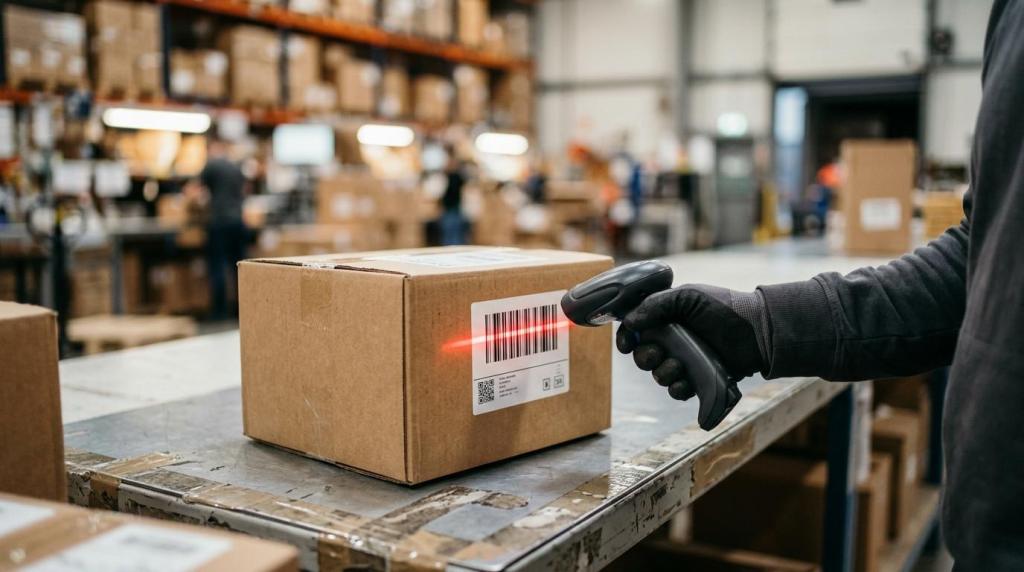
Trust in e-commerce is rarely built by advertising alone. It is built in the quiet, repeatable moments after a customer clicks “buy”: the confirmation email that arrives promptly, the parcel that leaves the warehouse through a seamless supply chain when promised, the box that contains exactly the right items, and the delivery that lands when expected.
That is why fulfilment sits so close to brand reputation. A customer may be attracted by price, product range, or marketing, but trust is won through dependable execution.
For many online retailers, a Third Party Logistics partner, often shortened to 3PL, becomes the engine behind that execution.
Why reliable fulfilment builds ecommerce customer trust
Customers do not judge fulfilment as a back-office activity. They experience it as part of the brand itself, highlighting the importance of effective communication throughout the process. If delivery is late, unclear, or inaccurate, the customer does not blame warehouse workflows. They blame the shop they bought from.
Research often points to a simple truth: accuracy matters as much as speed, and often more. PwC has described fulfilment accuracy as getting the right order to the right place at the right time. That definition is useful because it moves the discussion away from vague ideas of “good service” and into outcomes that customers can actually feel.
Academic evidence supports the same pattern. A 2025 paper in PLOS ONE found that order accuracy has a significant positive influence on customer trust. That makes intuitive sense. When a retailer sends exactly what was ordered, in the promised condition and timeframe, the customer learns that the business is dependable.
Trust becomes habit, and customer satisfaction grows when those outcomes repeat.
A reliable fulfilment operation sends several signals to customers, even if they never think about the warehouse directly:
- Fast dispatch
- Accurate picking
- Clear tracking
- Predictable delivery windows
- Fewer support issues
- Confidence to order again
How a 3PL partner improves fulfilment operations
A strong 3PL does more than store stock and hand parcels to carriers. It adds structure, process control, labour capacity, warehouse systems, and shipping discipline that many growing retailers struggle to maintain alone.
This is where a specialist partner can change the customer experience. Instead of trying to build every process in-house, an e-commerce business can plug into an established fulfilment operation with trained teams, set cut-off times, inventory controls, carrier links, and service reporting.
Published 3PLWOW material gives a useful picture of what that can look like in practice. The company states that it operates a fulfilment warehouse with capacity for more than 15,000 pallets, offers pick and pack from £0.40 per order, and shipping from £2.00 for next-day delivery. Those figures matter not only on cost grounds, but because scale and process maturity often support more stable service.
The connection between operations and trust is easier to see when broken into parts.
| Trust signal for the customer | What the customer notices | What a capable 3PL manages behind the scenes |
|---|---|---|
| Fast dispatch | Order moves quickly after checkout | Cut-off times, pick queues, packing workflows |
| Accurate orders | Correct items and quantities arrive | Barcode checks, stock control, picking standards |
| Delivery visibility | Tracking updates are easy to follow | Carrier integrations, tracking events, exception handling |
| Peak consistency | Service still works during promotions | Labour planning, space allocation, volume forecasting |
| Predictable delivery | Parcels arrive when promised | Carrier performance monitoring, route selection |
Fast dispatch times and delivery visibility increase customer confidence
Speed matters, but speed with reliability, customer satisfaction, and a robust supply chain matters more. A same-day dispatch promise is valuable only when it is achieved with assurance, consistently and at scale.
Published case material from 3PLWOW reports one improvement in same-day dispatch from 71% to 94%. That type of movement is significant because it changes the customer experience almost immediately. Orders begin moving through the system faster, shipping confirmations arrive earlier, and customers spend less time wondering whether their purchase is stuck in a queue.
That earlier movement also supports better communication. PwC notes that track-and-trace has become standard. Customers now expect visibility, not just delivery. They want to know that the order has been picked up, where it is, and when it is likely to arrive. A reliable 3PL helps deliver that visibility through carrier integrations and regular tracking events.
When fast dispatch and live progress updates work together, the customer sees competence.
For an e-commerce business, that confidence shows up in practical ways:
- Faster confirmations: customers receive proof that the order is moving
- Better visibility: tracking reduces uncertainty between checkout and delivery
- Lower support demand: fewer “Where is my order?” contacts
- Stronger credibility: promises begin to feel believable, not promotional
Order picking accuracy and inventory accuracy protect brand credibility
A wrong item in the box can undo months of careful marketing. Few fulfilment mistakes feel small to the person receiving them. If a customer orders a gift, a refill, or a time-sensitive item, the cost of an error is not just inconvenience. It can be frustration, delay, or a decision not to buy again.
That is why picking accuracy and integrity are among the clearest trust builders in fulfilment. A good 3PL creates controls that reduce mistakes before parcels leave the building. That may include scanning, pick verification, location discipline, stock reconciliation, and packing checks.
Published 3PLWOW material refers to “precision-checked” same-day shipped orders, and one service example reports inventory accuracy approaching 100% after moving to its fulfilment model. Inventory accuracy may sound technical, yet its impact is customer-facing. If stock records are wrong, businesses oversell, undersell, or delay dispatch while items are searched for or substituted. If stock records are right, promises are easier to keep.
Accuracy is not a luxury. It is the customer promise in operational form.
PwC’s framing is useful again here: the right order, at the right time, to the right place. Each part matters. A parcel that arrives quickly but contains the wrong product is still a failure. A parcel with the correct item but sent to the wrong address is also a failure. Reliable fulfilment is about precision across the full chain, not isolated speed.
Peak season fulfilment consistency supports customer loyalty
Many retailers perform well in normal trading weeks and then fall short when volume spikes. Sales events, payday promotions, seasonal peaks, influencer campaigns, and product launches all place sudden pressure on the warehouse. That is often where trust is either reinforced or damaged.
Customers do not lower their expectations just because a business is busy. If anything, they become less patient during high-demand periods because they are ordering with urgency, watching promotions closely, or buying gifts to a deadline.
A specialist 3PL can help absorb that pressure through shared infrastructure, labour planning, carrier capacity, and repeatable processes. Published 3PLWOW case material reports one example where monthly order capacity increased from 15,000 to more than 35,000 within 90 days after switching to a 3PL model. That kind of scaling matters because it reduces the risk that growth turns into service failure.
Consistency during peak periods builds a different kind of trust. It tells customers that the business is not only good when conditions are easy. It is dependable when demand rises.
Common peak-time risks become easier to control with the right fulfilment partner:
- Stock bottlenecks
- Dispatch backlogs
- Picking errors from rushed teams
- Carrier cut-off misses
- Slow customer updates
Reliable fulfilment benefits both the customer and the e-commerce business
The customer benefit is obvious: orders arrive faster, more accurately, and with better visibility. Yet the commercial benefit for the retailer is just as important, hinging on the assurance and integrity of the entire fulfilment process.
When fulfilment is reliable, support teams spend less time apologising and more time helping. Refunds and reshipments tend to fall. Reviews become more positive. Repeat purchase rates often improve because the buying experience feels safe. A customer who trusts delivery is more willing to place a second order, or a larger one.
This is where the customer-business relationship strengthens. Trust removes friction. If shoppers believe that a retailer will dispatch promptly, pick accurately, and handle busy periods well, they do not feel they are taking a risk at checkout.
Published 3PLWOW case material also reports on-time delivery above 99% in one example. That figure matters because on-time performance sits at the centre of expectation management. A customer can tolerate many things, but missed promises are harder to forgive than clear, honest commitments that are kept.
The benefits tend to compound over time:
- Customer loyalty: dependable orders encourage repeat business
- Brand reputation: fewer fulfilment errors protect reviews and word of mouth
- Operational focus: internal teams can spend more time on product, marketing, and growth
- Scalable service: promotions and sales spikes become easier to handle
- Cost control: predictable fulfilment processes reduce waste from errors and returns
What to look for in a 3PL fulfilment partner
Not every 3PL will deliver the same level of trust-building value. The strongest partners do not rely on broad claims. They show measurable performance and clear operational standards.
A retailer assessing a partner should look for evidence in four areas: dispatch speed, order accuracy, visibility, and peak resilience. If those areas are weak or vague, customer trust will rest on hope rather than process.
Published metrics and case studies can be especially useful here. Same-day dispatch rates, on-time delivery performance, inventory accuracy, warehouse capacity, and examples of scaling during growth are all more convincing than generic service language. 3PLWOW’s published figures, including same-day dispatch improvements, near-100% inventory accuracy in one case, and growth in monthly order capacity, show the sort of proof points retailers should look for from any provider.
It is also sensible to ask practical questions. What happens when order volume doubles for a week? How are picking mistakes prevented? Which tracking updates are shared with customers? How are carrier issues managed? How quickly can new SKUs be brought into the process? Good fulfilment partners answer these directly because reliability is built on routine, not improvisation.
For e-commerce brands, effective communication and customer satisfaction matter more with each order placed. Trust is not formed by a promise on a website. It is formed when fulfilment works, again and again, in ways the customer can see and the business can measure.