
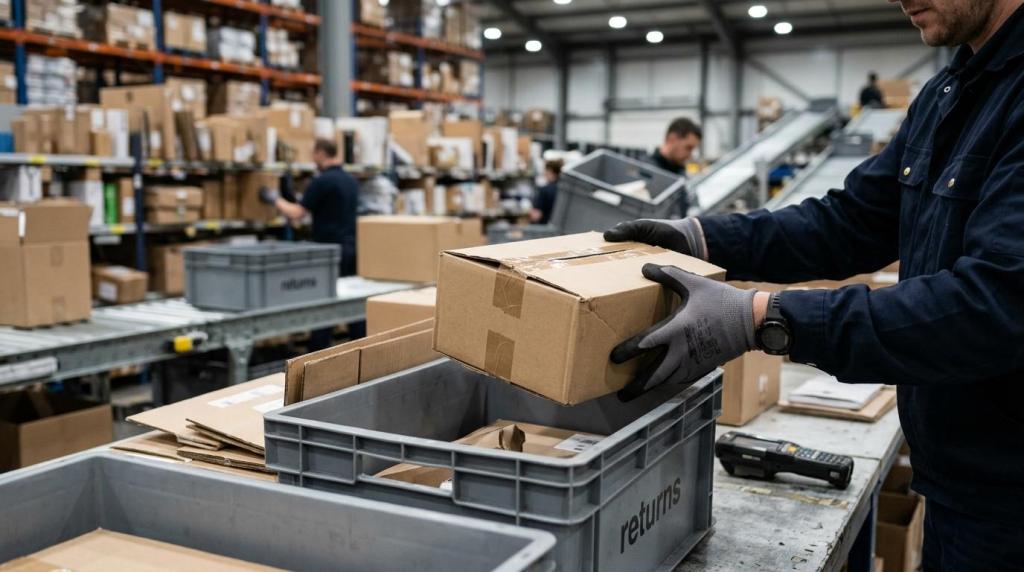
Peak trading periods can be brilliant for revenue and brutal for operations. A Christmas rush, an Easter promotion or a Black Friday campaign can multiply daily orders in a matter of hours, while customers still expect fast dispatch, accurate picking and clear updates.
That is why peak season fulfilment is no longer just about working harder. It is about building enough capacity before the rush arrives. For many growing brands, 3PLWOW Third Party Fulfillment offers that capacity in a practical form: warehouse space, trained staff, established processes, returns handling and the ability to keep orders moving when sales volumes climb sharply.
Peak season order volumes put in-house fulfilment under pressure
Many businesses manage well in steady trading months, then find their systems stretched when a major sales event lands. Shelving fills up, overflow stock ends up in unsuitable areas, packing benches become congested and dispatch cut-off times start to feel uncomfortably close. What looked efficient in October can feel very different in late November when the demand for efficiency becomes paramount.
The pressure rarely sits in one place. Stock intake, picking, packing, shipping, customer service and returns all rise together. If one part slows down, the rest follows.
A peak period often creates problems like these:
- Stock arriving earlier than usual
- Limited storage locations
- Packing stations under strain
- Carrier collections becoming a bottleneck
- Returns building up just after the sale
Developing an effective sales strategy is one reason outsourced fulfilment has become a more strategic choice for retailers and wholesalers. CBRE reported that 3PL providers’ share of bulk industrial leasing activity rose to 34.1% through Q3 2024, up from 30.6% a year earlier, with 498 bulk leases recorded. That increase points to a clear market shift: more brands are turning to specialist logistics operators when they need space and distribution capacity that can grow with demand.
Scalable warehouse space supports peak season stock levels
Peak periods are often won before the first customer order is placed. Brands need stock in position early, with enough room to receive, organise and access it quickly. That sounds simple, yet warehouse space is one of the first limits an in-house operation hits.
3PLWOW can help by providing warehouse capacity that lets a business increase stock holdings ahead of key trading periods. Instead of trying to fit Christmas volumes into a warehouse set up for average weeks, a business can hold more inventory in a proper fulfilment environment, ready for rapid picking and dispatch. That matters when product lines widen for gifting, bundles, seasonal packaging or promotional campaigns.
More space also creates better stock control. Products can be stored in a way that supports speed rather than improvisation, which helps reduce picking errors and delays. The goal is not just to store more, but to store more in a way that keeps the operation efficient when order volume rises.
| Peak season pressure point | How 3PLWOW can help | Likely operational effect |
|---|---|---|
| Extra stock before a major sale | Flexible warehouse space for larger inventory holdings | Better product availability and fewer stock handling compromises |
| Sudden daily order spikes | Fulfilment workflows built for higher throughput | Faster picking, packing and dispatch |
| Limited internal labour capacity | Access to a trained warehouse team | More consistent output across long peak periods |
| Post-sale returns surge | Structured returns handling | Quicker turnaround and clearer stock visibility |
The wider logistics market reflects the value of planning for capacity rather than reacting late. USPS has said that its preparation for peak delivery season starts every January. Over five years, it added 614 package sorting machines and lifted daily package processing capacity from 60 million to 88 million. The lesson is clear: strong peak performance comes from capacity built in advance, not from last-minute improvisation.
Trained fulfilment staff keep sale orders moving
Space matters, but space alone does not ship orders. Peak performance depends on people, process and pace.
A business can have healthy stock levels and still struggle if it lacks enough trained staff to receive goods, pick accurately, pack consistently and hand over parcels on time. Seasonal promotions tend to compress demand into a short window, so minor inefficiencies in efficiency become major issues very quickly. Every extra minute spent looking for stock, correcting errors or clearing a backlog affects customer experience.
3PLWOW can help here by providing access to a well trained warehouse staff body that is already working within fulfilment systems and routines designed for volume. That means a business does not have to recruit, train and coordinate a temporary team from scratch each time a sales spike appears. It can plug into an operation built to handle larger order flows.
In its published case study, 3PLWOW reports a brand growing from roughly 4,000 monthly orders to more than 14,000, as their sales strategy improved and monthly order capacity increased from 15,000 to over 35,000 within 90 days of moving to outsourced fulfilment. The same case study reports order accuracy improving from 96.2% to 99.4% and same-day dispatch rising from 71% to 94%. Those figures show what many brands need during peak season: not just more output, but better control while output rises.
A strong fulfilment operation during peak periods usually depends on several moving parts working together:
- Labour coverage: trained warehouse staff can be scheduled around promotional peaks and later dispatch cut-offs
- Process consistency: standard picking, packing and shipping routines help accuracy hold steady when volume jumps
- Operational visibility: organised stock locations and clear workflows reduce time lost inside the warehouse
- Dispatch discipline: faster handover to carriers supports same-day dispatch performance where available
That combination can make the difference between a sales event that builds loyalty and one that generates apology emails.
Returns management matters just as much after the sale
Peak season does not end when the last parcel leaves the warehouse. In many sectors, the real aftershock comes in the days and weeks that follow.
Christmas gifting, Easter bundles and Black Friday impulse purchases often create a higher volume of returns. If those returns are not processed quickly, stock remains unavailable, customer refunds slow down and the service team gets pulled into avoidable chasing. A returns backlog can quietly damage the gains made during the sales spike itself.
3PLWOW can support this part of the cycle by managing returns within the fulfilment operation. That may include receiving returned goods, checking their condition, updating stock records and helping products move back into available inventory where appropriate. For businesses with fast-selling lines, that speed matters. Returned stock that is processed promptly can become sellable stock again, instead of sitting in limbo.
There is also a brand value angle here. Customers often judge a retailer just as strongly on the returns experience as on the original delivery. During peak periods, a reliable reverse-logistics process helps protect reputation when order volumes are highest and patience is lowest.
Peak season planning with 3PLWOW starts earlier than many expect
A strong peak season is usually the result of good preparation in late summer or early autumn, and sometimes even earlier, depending on the product cycle. The businesses that perform best tend to map stock intake, promotional timing, packaging requirements and dispatch expectations before volume arrives.
That approach mirrors what large delivery networks already do. USPS has made clear that its peak planning begins at the start of the year, not at the start of the holiday rush. The same mindset works at brand level. If Christmas is treated as a December issue, much of the advantage has already gone.
3PLWOW can support businesses by giving structure to that planning. Warehouse space can be allocated for stock build-up. Inbound deliveries can be handled in a way that prevents pre-peak congestion. The warehouse team can be prepared for expected surges around Black Friday, Christmas, Easter or campaign-led launches. Returns processes can be set before they are tested at scale.
A practical peak-season plan often covers the following:
- Forecasting: expected order volumes by week, by promotion and by SKU range
- Stock build: how much inventory needs to be in place ahead of the sales window
- Dispatch targets: what same-day or next-day service levels are realistic during the busiest periods
- Returns flow: how post-peak returns will be received and processed without disrupting outbound work
This preparation matters because seasonal demand is not standing still. NRF forecast U.S. holiday retail sales for November and December 2025 to grow by 3.7% to 4.2% year on year, reaching $1.01 trillion to $1.02 trillion. While that is a U.S. projection, it reflects a broader retail pattern: major seasonal events continue to drive huge order volumes, and fulfilment operations need to be ready for them.
Why outsourced fulfilment can turn seasonal spikes into repeatable growth
For a growing business, peak season should be a commercial opportunity, not an operational gamble. The challenge is that promotions and festive periods magnify every weak point in fulfilment. Limited space becomes stock disorder. Limited labour becomes slower dispatch. Limited returns capacity becomes customer friction.
3PLWOW addresses those constraints in the areas that matter most, ensuring efficiency in operations. It can provide warehouse room for larger stock holdings, a trained team that can process high order volumes, fulfilment workflows that support speed and accuracy, and returns handling that protects service after the rush. That gives businesses more confidence to plan ambitious campaigns without fearing that success will overwhelm the warehouse.
There is also a wider business benefit. When fulfilment capacity is stable, internal teams can spend less time firefighting and more time focusing on merchandising, marketing, customer retention, sales strategy, and forecasting. Peak season becomes easier to manage, and sales events become easier to repeat.
Black Friday, Christmas, Easter and other high-volume periods will always test an operation. The advantage comes from being ready with the right space, the right people and the right processes before the orders start landing. With that foundation in place, growth is far easier to handle.