
How Better Fulfillment Improves Customer Reviews
Customer reviews are often treated as a verdict on the product alone. In practice, many reviews are really a verdict on what happened after the customer clicked “buy”.
If the parcel arrives quickly, with proper packaging, correctly packed, and exactly when promised, offering a delightful unboxing experience, the brand feels dependable. If it arrives late, contains the wrong item, or becomes difficult to return, the same product can attract a much colder response. That gap matters because reviews do more than reflect satisfaction. They shape future sales, trust, and repeat purchase behaviour.
For growing e-commerce businesses, optimizing the supply chain by offering various shipping options and efficient fulfilment is one of the clearest ways to influence customer sentiment at scale. A capable third-party provider can help turn delivery from a risk into a strength, especially when speed, accuracy, and returns management are all managed with discipline.
Customer reviews depend on fulfilment performance
Customers rarely separate the warehouse from the brand, viewing it as an integral part of the overall supply chain success. They do not think, “the retailer was good, but the fulfilment process was poor”. They think the business let them down.
That is why fulfilment has such a direct effect on review quality; it’s a prime example of how better fulfillment improves customer reviews. Academic research published in the Journal of Business Logistics, based on archival data from 260 online retailers, found that satisfaction with physical distribution quality and cost was positively related to customer purchase satisfaction and customer retention. Put simply, the way an order is fulfilled helps shape how the whole retailer is judged.
Recent consumer research points in the same direction. Narvar’s 2025 post-purchase report, based on 3,461 US consumers, states that delivery accuracy is what earns customer trust and inspires repeat purchases. The same report says half of consumers are less likely to shop again after a late delivery, while 6% stop shopping with the brand altogether.
That is not a small operational issue. It is a review issue, a loyalty issue, and a revenue issue at the same time.
Faster shipping improves customer reviews before the parcel arrives
Speed has a psychological effect long before the package reaches the doorstep. A fast dispatch email reassures the customer that the order is real, active, and moving. Silence creates doubt.
This matters because a large share of negative review language comes from uncertainty. Customers do not just complain that something arrived late; they also criticize the lack of transparency in the communication process. They complain that they “heard nothing”, “had to chase”, or “didn’t know where the order was”. Better fulfilment reduces that friction by shortening the waiting period and making order progress more visible.
A strong 3PL can help here by improving the time between order placement and dispatch. In one published 90-day case study from 3PLWOW, same-day dispatch rose from 71% to 94% after the move to a 3PL model. The same case study also reported a 38% fall in shipping-related support contacts. That pairing is telling. Faster dispatch did not just move parcels quicker. It also reduced the number of reasons customers had to complain.
Customers tend to reward that kind of experience in reviews through:
- fast dispatch
- reliable delivery windows
- clear tracking updates
- fewer “where is my order?” moments
There is also a practical knock-on effect. When fulfilment teams dispatch orders earlier in the day and more consistently, carrier performance tends to become easier to manage. A business can give more believable delivery estimates, which matters because customers are often more forgiving of a three-day service delivered on time than a next-day promise that slips.
Order accuracy reduces negative reviews and refund requests
A wrong item is one of the fastest ways to turn a satisfied buyer into a disappointed reviewer. It creates inconvenience, delay, and doubt in a single moment.
Even when the error is corrected, the review damage may already be done. Customers remember the missed birthday gift, the duplicated SKU, the wrong size, or the missing item more vividly than the later apology email. That is why picking accuracy has an outsized impact on ratings.
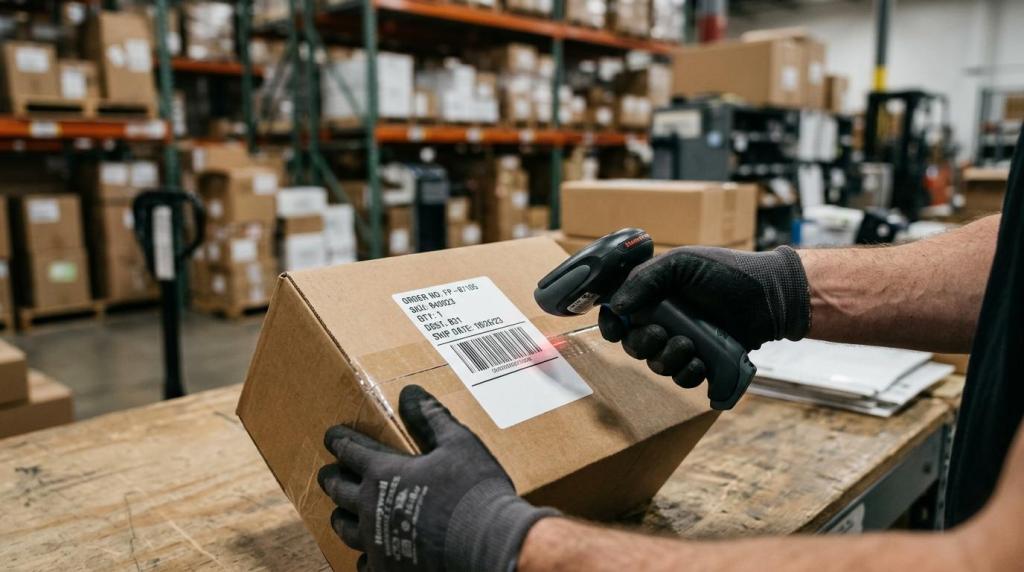
A specialist fulfilment provider usually brings tighter stock control, repeatable pick-and-pack processes, efficient packaging procedures, and staff dedicated to warehouse accuracy. These are operational disciplines, though the customer experiences them as professionalism.
Again, the 3PLWOW case study offers a useful illustration. It reported order accuracy improving from 96.2% to 99.4%. That change may look modest on paper. In real order volumes, it is significant. At 10,000 monthly orders, 96.2% accuracy means 380 orders with an error. At 99.4%, that falls to 60. Each prevented mistake is not just a saved reshipment or refund. It is a negative review that may never be written.
| Fulfilment metric | Customer experience | Likely review effect |
|---|---|---|
| Faster dispatch | Less waiting and less uncertainty | More positive comments about service |
| Higher order accuracy | Correct items arrive first time | Fewer one and two-star reviews |
| Better delivery accuracy | Trust in promised dates | Higher repeat purchase confidence |
| Efficient returns | Problems feel manageable | Fewer angry public complaints |
| Lower support contact volume | Less chasing for updates | Calmer, more favourable sentiment |
When customers receive exactly what they ordered, on time, and in good condition, with various shipping options, the review often becomes shorter and warmer. The brand feels organised. The buying decision feels validated.
Efficient returns keep a bad order from becoming a public complaint
No fulfilment operation is perfect all the time. Returns are where competence becomes visible.
A poor returns process lacking transparency can turn a minor issue into a reputational problem. Slow approval, unclear instructions, delayed refunds, or weak communication often create stronger emotions than the original mistake. This is where many businesses lose control of the story the customer tells in a review.
Parcel satisfaction data supports this point. Ofcom’s 2025 customer satisfaction survey found clear differences between parcel companies when customers needed help. The least satisfied customers were linked to firms that were harder to contact. That finding matters beyond the carrier itself. When customers struggle to get answers during delivery problems or returns, the retailer absorbs the frustration.
A well-run fulfilment partner can make returns feel orderly rather than chaotic. That changes the tone of customer feedback in a very practical way.
A strong returns process does three valuable things:
- Cuts frustration: customers know what to do and how long it will take.
- Protects star ratings: a resolved issue is less likely to become a one-star review.
- Builds trust: fair handling after a mistake can still leave a positive impression.
This is one of the least discussed review drivers in ecommerce. Many customers do not expect everything to be perfect. They do expect problems to be handled competently.
Why a 3PL partner like 3PLWOW can improve review scores
The link between outsourcing and customer reviews is not magic. It comes from better systems, better throughput, and fewer avoidable errors.
When a business fulfils orders in-house, review quality can suffer during growth spurts. Staff become stretched, dispatch cut-off times slip, stock locations get messy, and support queues grow. Customers do not see the strain behind the scenes, highlighting the need for transparency in operations. They only see the late parcel or the incorrect order.
A specialist 3PL can absorb that pressure more effectively by offering a variety of shipping options. Warehouse management systems, standardised workflows, packaging processes, supply chain coordination, and dedicated operational staff create consistency, which is exactly what good reviews tend to reflect. A provider like 3PLWOW is especially relevant where a business wants to improve dispatch speed, accuracy, and communication without building a larger internal warehouse function.
The same 3PLWOW case study reported monthly order capacity rising from 15,000 to more than 35,000 within 90 days. That matters because review quality often drops when volume grows faster than fulfilment capability. If capacity expands with demand, the customer experience has a much better chance of staying stable.
There is another benefit here. Better fulfilment lowers support friction. If shipping-related contacts fall, customer service teams can spend more time helping with real exceptions rather than answering repetitive tracking questions. That tends to improve the tone of both private conversations and public reviews.
Fulfilment metrics that connect strongly with customer sentiment
Review scores are useful, though they are lagging indicators. By the time the review appears, the damage or goodwill has already happened.
The more useful approach is to monitor the fulfilment metrics that tend to show up in review language a few days later. If those numbers improve, customer sentiment often improves with them.
The most revealing measures include:
- Order accuracy: whether customers receive the correct items first time.
- Same-day dispatch rate: how quickly paid orders begin moving.
- Delivery promise accuracy: whether estimated dates match real outcomes.
- Returns turnaround time: how long it takes to process a return and refund.
- Support contact volume: how often customers need to ask about shipping issues.
These metrics also help explain why reviews are changing. A business may see an uplift in star ratings after moving to a 3PL, though the real driver could be fewer picking mistakes, clearer dispatch communication, or faster returns. Measuring both reviews and fulfilment performance together gives a cleaner picture of what customers are responding to.
Descartes reported in 2024 that 67% of consumers surveyed had experienced a delivery failure. That figure is a reminder that fulfilment problems are common enough to shape buyer expectations. Brands that avoid those failures do more than meet a baseline. They stand out.
Better fulfilment turns service quality into visible customer proof
Reviews are public evidence of private operational choices. Customers may never see the warehouse layout, the barcode scans, the cut-off schedule, or the carrier routing logic. They will see the result.
That is why better fulfilment can have an outsized effect on reputation, demonstrating how better fulfillment improves customer reviews. Faster shipping reassures customers early. Accurate picking prevents the most memorable complaints, and an effective returns management strategy ensures that any issues are resolved swiftly. Efficient returns stop disappointment from hardening into resentment. When these elements improve together, review quality often follows.
For businesses considering a third-party provider, that makes fulfilment more than a cost centre. It becomes part of brand perception. A capable partner such as 3PLWOW may help strengthen that perception by improving same-day dispatch, reducing order errors, and lowering support friction, all of which create the kind of buying experience customers are more willing to praise in public.
In e-commerce, the parcel is often the brand’s most visible promise, and a memorable unboxing experience can further enhance customer satisfaction. Fulfilment decides whether that promise feels ordinary, frustrating, or worth five stars.