
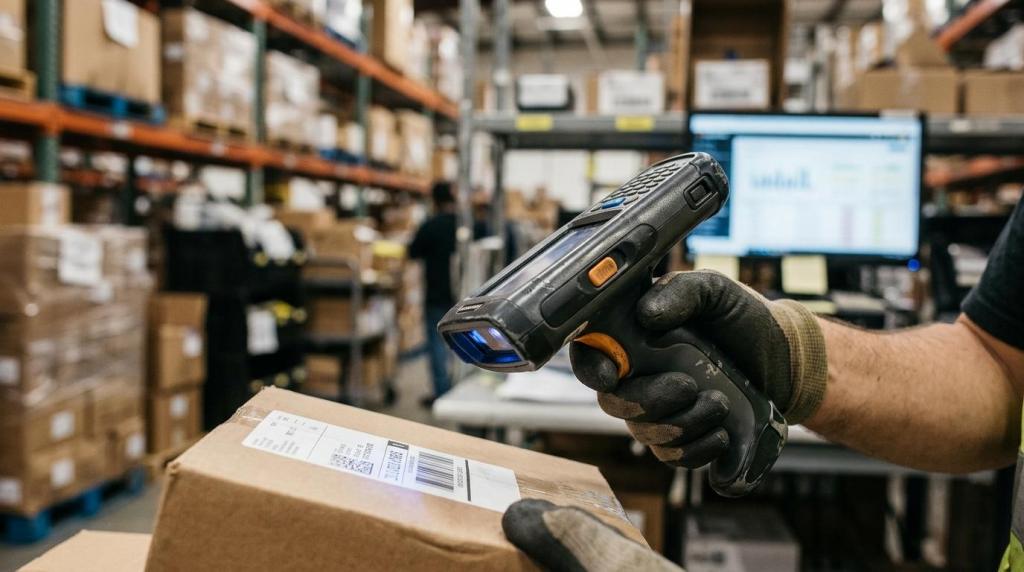
Choosing an order fulfilment partner is one of the most practical growth decisions a business can make. The right provider does far more than ship parcels. It gives a brand room to sell more, stock more, and serve customers with greater consistency, without having to build a warehouse operation from scratch.
That matters because fulfilment affects almost every part of the customer experience. Stock accuracy, dispatch speed, returns handling, delivery reliability, and even finance reporting all sit close to the warehouse floor. A great partner brings these moving parts together in a way that feels controlled rather than stretched.
Order fulfilment partner qualities that separate good from great
A decent fulfilment provider can store products and send orders out. A great one becomes a genuine operational asset.
The difference usually shows up in a few places. First, there is capacity. Can the provider take receipt of inbound goods efficiently, count them accurately, and put them away without confusion? Second, there is people and process. Is there a trained team in place to pick, pack, label, check, and manage exceptions at scale? Third, there is visibility. Can the business see what stock is available, what has been committed, what has shipped, and what has come back?
A strong fulfilment partner also removes friction from growth. Instead of hiring warehouse staff, leasing extra space, buying equipment, and setting up systems internally, the business gains access to an operation that is already built and running.
That shift can be especially valuable for brands with uneven demand, promotional spikes, marketplace sales, or seasonal peaks.
Warehouse space and trained fulfilment staff create immediate operational relief
One of the clearest benefits of working with a capable fulfilment provider is access to warehouse space. Businesses often outgrow their own storage long before they are ready to commit to a larger premises. Stock starts filling office corners, back rooms, or temporary overflow areas. That is usually a sign that growth is starting to pressure the operation.
A great fulfilment partnership solves that pressure early. It offers organised storage, structured goods-in procedures, and a team whose day-to-day job is to handle stock properly. That includes receiving goods, checking delivery notes, counting stock, identifying discrepancies, booking inventory into systems, and placing products into the correct storage locations.
The staffing advantage is just as important as the space. A business may be able to manage a modest order volume with a small in-house team, yet that model often becomes fragile very quickly. Annual leave, sickness, sales campaigns, and supplier delays can all create bottlenecks. A larger, well-trained team gives resilience.
After a business has moved to a strong 3PL model, the gains often include:
- More warehouse capacity
- Better stock control
- Faster goods-in processing
- Trained pick and pack teams
- Admin support for order and stock queries
That last point is easy to underestimate. Administrative duties linked to fulfilment can consume significant time. Booking in deliveries, reconciling stock counts, monitoring order exceptions, handling courier issues, and managing returns all create workload that distracts commercial teams from sales and brand building.
Technology integration and real-time inventory visibility reduce costly errors
Warehouse labour matters, yet technology is what turns warehouse effort into a reliable system. A great order fulfilment partner should integrate cleanly with ecommerce platforms, marketplaces, and internal systems so that orders flow in automatically and stock data stays in sync.
This is one of the strongest signals of quality. Shopify’s guidance on 3PL selection highlights the value of native platform integrations, real-time inventory visibility, order status syncing, returns visibility, reporting dashboards, and API quality. Those are not nice extras. They are part of the operating standard a growth-focused brand should expect.
When inventory visibility is weak, errors multiply. Overselling becomes more likely. Customer service teams start chasing answers manually. Purchasing teams lose confidence in stock records. Finance teams spend more time reconciling discrepancies. A strong fulfilment partner reduces these problems by giving the business a live view of what stock is genuinely available to sell.
A useful way to judge this is to ask what the system can show in real time. Great providers should be able to support visibility across stock on hand, stock committed to orders, goods in transit, and returned inventory that is still under assessment.
The practical checks often include:
- Integration quality: direct connections with ecommerce platforms, marketplaces, and order management tools
- Inventory sync: live stock updates rather than delayed batch uploads
- Order status visibility: clear tracking from order receipt through dispatch
- Returns visibility: a transparent reverse logistics process with status updates
- Reporting access: dashboards that help teams spot trends, issues, and service performance
This kind of visibility is not only about convenience. Shopify has cited research estimating that even a small reduction in inventory record inaccuracy can carry major financial value for retailers. The principle is straightforward: better records mean better decisions.
Scalability for peak season and business growth is a core test
A fulfilment partnership should fit the business as it is now, though that is only the starting point in an effective supply chain. The better question is whether the provider can still support the business when order volume doubles, when a promotion lands harder than expected, or when a new marketplace channel starts performing strongly.
That is where many arrangements start to show strain. Some providers handle average weekly volumes well enough, yet struggle when inbound deliveries and outbound orders rise at the same time. Others can cope operationally but lose accuracy under pressure.
A great partner plans for peaks and integrates efficient order processing rather than merely reacting to them. That means labour planning, storage planning, carrier planning, and service level planning. It also means being willing to share measurable peak-season data. Shopify’s advice is clear here: merchants should ask about order volumes handled during busy periods, same-day fulfilment rates, and accuracy figures, and should get service level commitments in writing.
The contrast is easy to see.
| Area | Basic fulfilment support | Great fulfilment support |
|---|---|---|
| Storage | Limited space with little flexibility | Expandable space that can absorb stock growth |
| Staffing | Small team, stretched at peak | Large trained team with planned peak cover |
| Order flow | Manual intervention common | Automated order flow across channels |
| Stock visibility | Delayed or partial updates | Real-time inventory visibility |
| Peak handling | Reactive | Capacity planned in advance |
| Returns | Slow and unclear | Structured reverse logistics with clear status |
| Reporting | Minimal | KPI dashboards and service reporting |
Published case study data can help when judging scalability. One 3PLWOW case study reports monthly order capacity rising from 15,000 to more than 35,000 within 90 days of moving to a 3PL model. That same case study reports order accuracy improving from 96.2% to 99.4%, which suggests that scale and quality do not have to work against each other when the operation is set up properly.
Accuracy, dispatch speed and customer experience should be measured
A great order fulfilment partner should be able to prove performance, not just promise it. Accuracy rates, dispatch times, stock record accuracy, and returns turnaround should all be measurable.
Accuracy is central because small errors create outsized damage. The wrong item in the parcel, missing units, incorrect quantities, or poor packaging can quickly lead to refund requests, repeat shipping costs, negative reviews, and pressure on customer support teams. A high pick accuracy rate is one of the clearest operational indicators to ask for.
Dispatch speed matters too. Customers may tolerate modest delivery windows, though they rarely tolerate uncertainty. A fulfilment partner needs disciplined cut-off processes, carrier collections that match order profiles, and enough labour on the floor to keep service levels steady even during spikes.
Customer experience is linked to the wider parcel network as well. In the UK, Ofcom monitors parcel delivery customer experience through regular survey work, which underlines an important point: delivery performance is not vague or unmeasurable. It can be tracked, compared, and reviewed. A fulfilment partner that takes carrier management seriously should care about those outcomes because the warehouse and the delivery network are tightly connected.
Useful performance signals include:
- Pick and pack accuracy
- Same-day or next-day dispatch rate
- Inventory record accuracy
- Returns processing time
- Courier performance by service level
A business does not need hundreds of metrics. It needs the right ones, reported consistently.
Returns handling and reverse logistics show how mature the operation really is
Returns are often treated as an afterthought during provider selection. That is a mistake. Reverse logistics is one of the clearest tests of operational maturity because it involves inspection, system updates, customer communication, and inventory decisions all at once.
A great partnership should be able to receive returns promptly, identify the condition of the goods, restock sellable items, quarantine damaged products, and update the system without delay. Slow returns handling ties up stock, delays refunds, and creates frustration for customers who are already in a sensitive part of the buying cycle.
Strong reverse logistics can also recover value. Products that are returned in good condition should move back into available inventory quickly. That improves stock efficiency, optimizes the supply chain, and reduces unnecessary reordering.
This is another area where published evidence is useful. In the same 3PLWOW case study noted earlier, average return processing time fell from 6 days to 2 days after moving to the external fulfilment model. That kind of improvement affects both customer satisfaction and cash flow.
Cost transparency and service level agreements protect the relationship
Price matters, though the cheapest quote is rarely the best value. A low entry price can hide weak systems, slow receiving, poor reporting, or expensive exception charges later on.
A strong fulfilment partner should be open about how fees are structured. Common cost areas include setup fees, monthly charges, transaction fees, storage costs, and shipping costs. What matters is not only the rate card, but also whether the pricing makes operational sense for the order profile and growth plan.
Good commercial clarity usually includes:
- Storage charges: how pallet, shelf, or bin space is billed
- Receiving fees: what applies when goods arrive and are counted in
- Pick and pack fees: whether charging is per order, per item, or per activity
- Shipping costs: carrier rates, surcharges, and packaging assumptions
- SLA commitments: written service targets for accuracy, dispatch, and issue resolution
Service level agreements deserve careful attention. If a provider talks confidently about speed and reliability, those commitments should appear in writing. That gives both sides a shared operating standard and a sensible basis for review.
Questions that help identify the right order fulfilment partner
The selection process becomes much stronger when the questions are practical and evidence-based. Rather than asking whether the provider is “good at ecommerce”, it is better to ask how the operation handles the specific work that matters to the business.
Ask what happens when inbound stock arrives late in the day and how order processing is adjusted to accommodate such scenarios. Ask how discrepancies are flagged. Ask how often inventory counts are performed. Ask what staffing model covers peak weeks. Ask which integrations are native and which require middleware. Ask how returned goods are assessed and how quickly they can be restocked.
A strong provider should be comfortable answering these questions clearly. It should also be willing to show performance data, system views, and examples of how exceptions are handled.
The strongest signs tend to be simple: organised processes, transparent reporting, realistic commitments, scalable space, trained staff, clean integrations, and measurable results.
When those elements are in place, a fulfilment partner becomes more than a warehouse. It becomes a platform for steadier service, lower operational strain, and confident growth.