
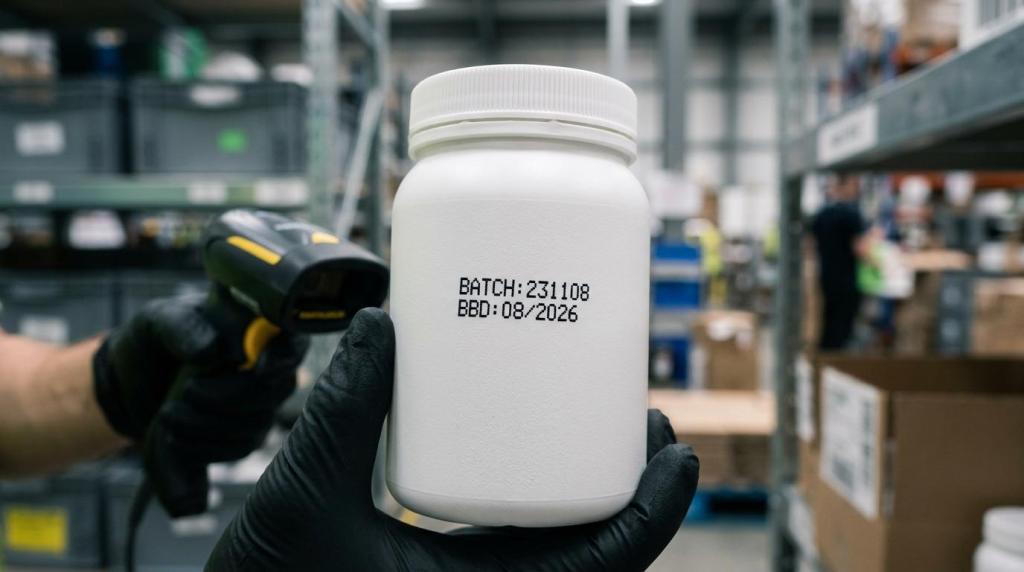
Selling supplements online looks straightforward from the outside, but the logistics involved are complex. A customer places an order, order processing begins, a warehouse packs a box, and a courier collects it. Yet anyone operating in the supply chain for this B2B category knows the reality is more exacting. Capsules, powders, gummies, sachets, vitamins, vitamin supplements, and wellness bundles bring together strict stock control, careful labelling, traceability records, expiry-date awareness and customer expectations for rapid delivery.
That is why ecommerce supplement fulfilment is a specialist service rather than a basic storage arrangement. A capable pick and pack operation protects brand reputation, supports compliance, ensures proper vitamin handling, and gives growing supplement businesses the confidence to scale across the UK and beyond.
Why ecommerce supplement fulfilment requires specialist handling
Food supplements in the UK are regulated as food, which immediately raises the health standard required from a fulfilment operation. This is not only about keeping products on shelves and shipping parcels on time. It is also about handling stock in a way that supports the broader duties around labelling, traceability and product records.
GOV.UK guidance makes the position clear. Supplement labels need key information, including a use-by or best-before date, relevant business details and other required product information. Alongside that, food traceability rules mean businesses should be able to identify suppliers, customers, quantities, dates and batch or lot information where available. Records must be accurate and accessible if requested.
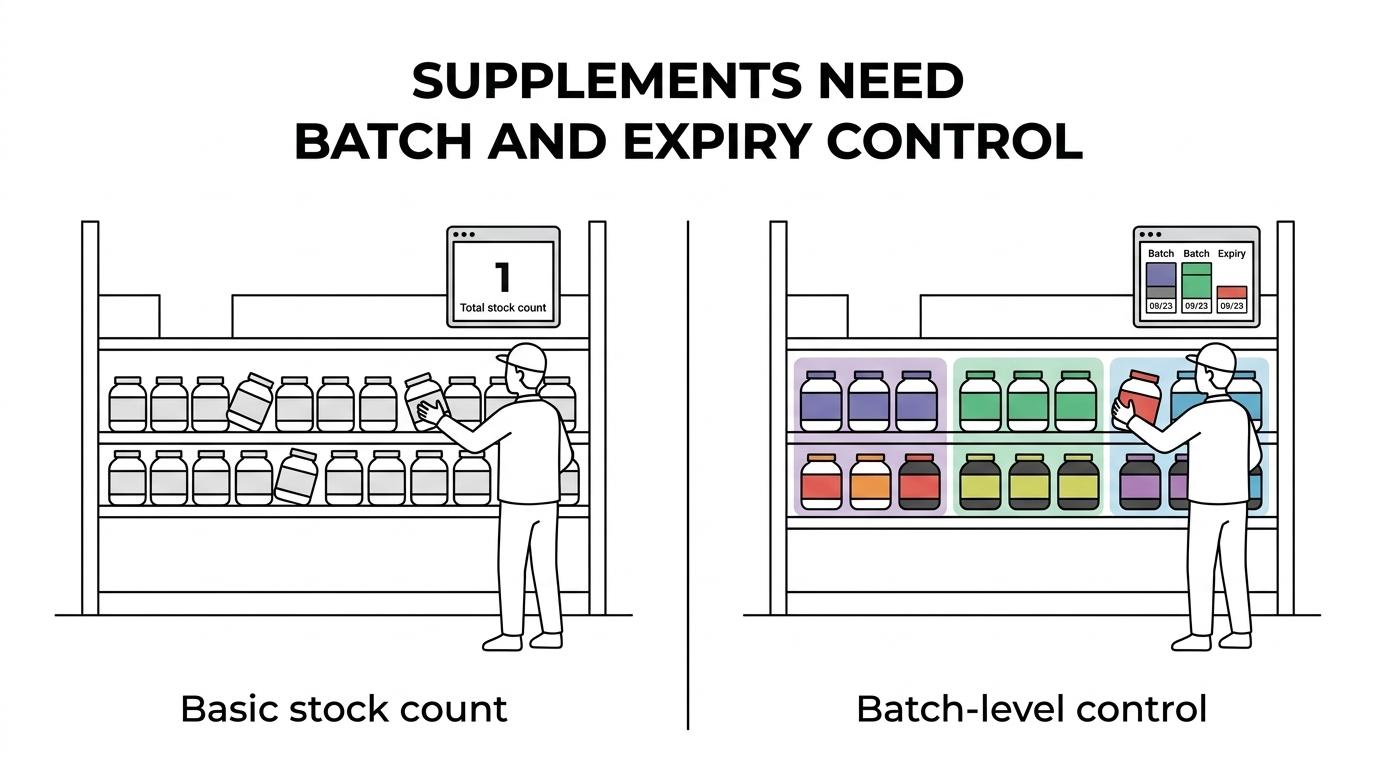
That has a direct impact on ecommerce fulfilment. A warehouse serving supplement brands needs to know more than how many units are left. It needs to know which units are left.
The rise in online shopping demand also keeps pressure on fulfilment performance. Retail sales data from the Office for National Statistics continues to show how significant internet shopping is in the wider market. For supplement brands, that means the back end of the business must work as well as the front end. Paid media, product development and a polished storefront are valuable, though they do not rescue poor fulfilment.
Supplement pick and pack services versus general ecommerce fulfilment
General ecommerce fulfilment can work well for simple products with long shelf lives and low compliance sensitivity. Supplements are different. The warehouse process has to support stock rotation, batch traceability and product presentation at the same time.
A specialist provider is usually set up to receive inventory with the right references, store it by batch, allocate picking locations intelligently and move orders through dispatch with fewer errors. This matters for single-SKU orders, multi-buy promotions, subscription packs and influencer campaign spikes.
The contrast is easier to see side by side.
| Area | General fulfilment focus | Supplement fulfilment focus |
|---|---|---|
| Goods-in | Count stock and book it in | Count stock, verify batches, note expiry or best-before dates |
| Storage | Use any available location | Organise locations around batch control and SKU movement |
| Picking | Pick correct SKU | Pick correct SKU from the correct batch where required |
| Packing | Box and label | Box, label and support presentation, inserts and compliance needs |
| Traceability | Basic order history | Supplier, customer, quantity, date and batch-linked records |
| Stock visibility | Total units on hand | Real-time units, batch status, ageing and replenishment signals |
| Scaling | More bins and labour | More bins and labour with process discipline for regulated goods |
When supplement brands outgrow in-house fulfilment, this difference becomes obvious very quickly. A standard warehouse can ship parcels. A supplement-aware warehouse supports control.
Batch control and expiry-date management in supplement fulfilment
Batch control is often the dividing line between a warehouse that merely stores stock and one that is genuinely prepared for supplement fulfilment. If a brand needs to isolate a batch, review ageing stock or answer a traceability query, the response cannot rely on spreadsheets and memory.
The stronger setup links each intake to the relevant batch or lot details, then preserves that connection through storage, picking and dispatch. If the operation also records quantities, supplier information, dispatch dates and customer destinations, the brand is in a much better position to respond quickly when questions arise.
That level of order has commercial value as well. It supports cleaner inventory visibility, fewer write-offs and better visibility when planning promotions or subscription cycles.
A supplement fulfilment workflow should usually support:
- Batch records: clear links between inbound stock, warehouse location and outbound orders
- Expiry monitoring: visibility of use-by or best-before dates before stock becomes a problem
- Traceability: supplier details, customer details, quantities and transaction dates
- Accurate goods-in checks
- Organised quarantine procedures
- Faster issue resolution
These are not fringe extras. They are part of doing the job properly.
Inventory control for ecommerce supplement brands
Inventory control in this category needs more depth than a simple stock count. Supplement ranges often include different flavours, strengths, vitamin content, pack sizes and bundle combinations. Add subscription demand, marketplace orders and direct-to-consumer campaigns, and the stock picture becomes far more fluid.
A good b2b fulfilment setup should show what is available, what is committed, what is in reserve stock and what is moving fastest, all while ensuring the health standards of the products are maintained. It should also help a brand see which lines deserve front-line picking locations and which can sit deeper in storage until needed.
Publicly available information from 3PL providers in this niche often highlights this point well. 3PLWOW, for example, presents its supplement fulfilment around organised storage, batch traceability, inventory visibility, accurate pick and pack, vitamin handling, and UK or international dispatch. That positioning reflects what serious supplement brands tend to need from a fulfilment partner.
Warehouse layout and SKU velocity for supplement orders
Warehouse layout may not sound exciting, though it has a major effect on speed and accuracy. Fast-moving SKUs should be easier to access. Slow movers should not block core pick paths. Bundles need to be assembled without creating friction. Reserve stock must be easy to replenish into forward pick locations.
This is where SKU velocity matters. If a vanilla protein powder sells ten times faster than a niche herbal capsule, both products should not be treated the same way in the warehouse. Smart slotting reduces walking time, lowers error rates and shortens cut-off pressure during peak periods.
It also helps during promotions. If a brand runs a flash sale on gummies or launches a new starter bundle, the warehouse can adjust space and labour around that activity rather than react too late.
Pick and pack services for powders, capsules, gummies and bundles
Supplement brands rarely sell one format only. Many carry a mix of tubs, pouches, pots, cartons, and sample sachets to meet varying demands from customers, making efficient product delivery crucial. Pick and pack services need to account for that range while keeping the customer experience consistent.
Powders may need sturdier outer packaging. Gummies can be vulnerable to temperature conditions during parts of the year. Capsules and tablets often sit within repeat-purchase cycles, so subscription accuracy matters. Sachets may be light and efficient to ship, though they can complicate counting if processes are loose.
The warehouse also needs to pack orders in a way that suits the sales channel. A subscription order may need a predictable monthly format. A marketplace order may need channel-specific data. A direct-to-consumer order might include inserts, promotional material or bundle presentation that supports retention.
Common supplement pick and pack tasks include:
- Single-item order picking
- Bundle assembly
- Subscription replenishment
- Kitting promotional packs
- Gift-with-purchase inserts
- Returns handling
Those details influence customer perception more than many brands expect. The parcel arriving at the door is the physical proof that the online promise was real.
UK supplement labelling support and dispatch readiness
Labelling compliance starts before fulfilment, though the warehouse still has an important part to play. If labels are missing critical information or if stock arrives with inconsistencies, problems can spread quickly once dispatch begins.
At a practical level, fulfilment teams need clear product data, barcode discipline and a reliable method for separating stock if anything requires review. That is especially relevant when running multiple versions of a product, changing pack artwork or introducing revised formulations.
A robust process often includes checks around:
- Business details: correct name and address information on product labelling
- Date coding: visible use-by or best-before information
- Storage instructions: requirements that must remain associated with the product
- Courier label accuracy
- Customs data for export parcels
Brands selling internationally have another layer to manage. Dispatch files, customs descriptions and product information need to be right before parcels leave the building. A fulfilment partner does not replace legal advice, though it can reduce operational errors by producing cleaner order data and more reliable shipping workflows.
What to look for in a supplement fulfilment partner
Choosing a fulfilment provider is partly about cost, though price alone is a poor guide in a category where one stock or dispatch problem can damage trust quickly. The stronger question is whether the partner’s operating model fits the demands of supplement ecommerce.
Look closely at onboarding, stock accuracy, system visibility and how the team handles vitamin batch-referenced products. Ask how reserve stock is managed, how subscriptions are supported and what happens when a product recall, relabel or hold is required.
A useful shortlist might include:
- Batch capability: stock tracked in a way that supports traceability and rotation
- Channel integration: links with platforms like Shopify, WooCommerce, Amazon or TikTok Shop
- Pick and pack flexibility: single units, bundles, inserts and subscription orders
- Clear returns process
- UK and international carrier options
- Real-time or near real-time inventory visibility
Provider communication matters too. Supplement brands need timely answers on stock intake, exceptions, dispatch cut-offs and performance trends. Quiet confusion in a warehouse becomes noisy customer service very quickly.
Ecommerce growth, subscriptions and international dispatch for supplement brands
Supplements are well suited to repeat purchasing. Daily vitamins, sports nutrition and wellness routines often create regular buying cycles, which makes subscription fulfilment especially valuable. Yet subscriptions only work when fulfilment is dependable. One missed shipment can disrupt the customer’s routine and invite cancellation.
That is why repeat-order accuracy matters just as much as speed. The warehouse should be able to process recurring orders predictably, manage stock reservations sensibly and maintain a consistent packing experience month after month.
International dispatch can also become a strong growth path. Many UK supplement brands build demand abroad through marketplaces, social channels and direct storefronts. When that happens, fulfilment needs to produce customs-ready order data and dependable carrier handover without losing sight of the basics back home.
Specialist 3PL operators often frame this as a combination of organised storage, flexible pick and pack, accurate inventory control and dispatch capability. That is a sensible way to view it. Growth is rarely blocked by one dramatic failure. More often, it is slowed by hundreds of small operational weaknesses that compound over time.
For supplement ecommerce, fulfilment is not only a warehouse function; it is also tied to maintaining the health and quality of the vitamin product. It is part of product integrity, customer retention and brand confidence. When batch control, labelling discipline, stock visibility and packing quality work together, the business is in a far stronger position to grow with control rather than scramble to catch up.