
Online shoppers have grown used to speed, largely driven by the rise of next-day delivery. What once felt like a premium service is now often treated as a normal part of buying online, especially when the purchase feels urgent. A forgotten birthday gift, a replacement household item, a last-minute work need, or a fast-moving seasonal trend can all push consumers towards the “arrives tomorrow” option without much hesitation.
That shift matters because next-day delivery is no longer just a checkout feature. It shapes conversion, customer confidence, and the way an e-commerce business must run its fulfilment operation. For many retailers, meeting that demand consistently becomes much easier with the support of a third-party logistics provider such as 3PLWOW.
Why next-day delivery is becoming a standard e-commerce option
Customer expectations have moved quickly over the past few years. Faster parcel networks, stronger fulfilment technology, and the influence of large online marketplaces have changed what “good service” looks like. Shoppers may not demand next-day delivery on every order, yet they increasingly expect it to be available when timing matters.
Research supports that picture. McKinsey reported that average parcel delivery speed improved from 6.6 days in the first quarter of 2020 to 4.2 days in the second quarter of 2023. When delivery gets faster across the market, customers reset their expectations. A service that used to stand out starts to feel ordinary.
There is also a wider cultural signal in the UK postal market. Ofcom’s 2025 reforms showed that, even while lower-urgency mail is being treated differently, next working day service still matters for urgent items. Royal Mail is still required to deliver First Class letters the next working day, Monday to Saturday. That says something important: urgency has not disappeared. If anything, it has become more concentrated.
For e-commerce businesses, this means next-day delivery is increasingly seen as a baseline option for time-sensitive orders, not a novelty.
What customers value beyond pure delivery speed
Speed is powerful, but it does not act alone. Many shoppers want fast delivery only when the price and reliability feel fair. That balance is what makes next-day delivery commercially interesting. It can drive orders, yet only if it sits inside a delivery offer that customers trust.
Ofcom found that affordability and reliability matter more than speed for most people, even though next-day service remains important for occasional urgent purchases. McKinsey found that 90% of consumers surveyed were willing to wait two or three days if it helped them avoid shipping costs, and more than 95% preferred free standard shipping over paid expedited shipping. Those findings point to a clear pattern: customers like speed, but they dislike feeling overcharged even more.
DHL’s research adds another layer. It found that 66% of shoppers abandon purchases when the delivery offering does not meet their expectations. That expectation might be speed, but it could just as easily be the convenience of free shipping, simple returns, or confidence that the parcel will arrive when promised.
In practice, customers tend to judge the whole delivery proposition, not one metric in isolation, and same-day delivery options can become a key differentiator in meeting urgent needs.
- Free or low-cost delivery
- Reliable arrival dates
- Clear tracking updates
- Realistic next-day cut-off times
- Easy returns
A useful way to think about this is to separate customer desire from operational meaning.
| Customer expectation | What it means operationally |
|---|---|
| “I need it tomorrow” | Late order cut-offs, same-day picking, fast carrier injection |
| “I do not want to pay too much” | Cost-controlled carrier mix and margin discipline |
| “I need to trust the date shown” | Accurate stock data and dependable fulfilment workflows |
| “I want updates” | Tracking integration and proactive exception handling |
| “I may return it” | Reverse logistics process that is quick and visible |
The commercial impact of next-day delivery on e-commerce sales
When next-day delivery is offered well, it can increase conversion because the rise of next-day delivery reduces hesitation. A shopper who is unsure whether to buy today or wait often chooses today if same-day delivery or tomorrow delivery is available. This is especially true in categories where urgency is emotional or practical, including gifts, fashion, beauty, homewares, health products, and replacement items.
It can also lift average order value. Consumers who trust a retailer’s fulfilment promise may add more to the basket rather than splitting purchases across sites. That trust has a direct commercial value.
There is a warning here, though. A weak next-day promise can damage a brand faster than no next-day promise at all. If the website advertises tomorrow delivery but the warehouse misses the dispatch window, the result is not merely a delayed parcel. It becomes a broken promise, and the customer service cost rises with it.
That is one reason late-order complaints tend to carry disproportionate weight. They affect reviews, repeat purchase behaviour, and internal workload at the same time.
The warehouse and fulfilment requirements behind next-day delivery
The phrase “next-day delivery” sounds simple to the customer. Operationally, it is anything but simple. It depends on stock accuracy, pick efficiency, packing speed, dispatch cut-offs, carrier handover, label accuracy, and constant visibility across the order flow.
A retailer trying to manage this in-house often reaches a tipping point. Order volume grows, SKU counts increase, more sales channels are added, and cut-off times become harder to hold. What worked for 50 orders a day may start to fail at 500.
That pressure usually shows up in familiar places:
- Inventory accuracy: oversells, stock mismatches, and backorders create immediate risk for next-day promises.
- Cut-off discipline: orders placed late in the day must still be processed fast enough to meet carrier collections.
- Warehouse layout: poor slotting increases walking time and slows picking.
- Carrier coordination: one missed collection or routing error can affect an entire day’s dispatch.
- Exception handling: address issues, damaged items, or out-of-stock problems need intervention before the order misses the window.
The core point is straightforward. Fast delivery is built in the warehouse long before it appears on the checkout page, offering unmatched convenience to customers.
How a 3PL provider like 3PLWOW supports next-day fulfilment
A third-party logistics provider gives e-commerce brands access to warehouse space, fulfilment systems, labour, carrier relationships, and process structure that would take significant time and capital to build internally. That matters most when next-day demand starts rising faster than operational capability.
Rather than treating every order the same way, a good 3PL operation can prioritise fast-turnaround orders, maintain stricter dispatch workflows, and create a more dependable cut-off process. This is valuable not only for large retailers. Mid-sized and growing brands often gain the most because they are large enough to feel pressure, yet not large enough to run a highly tuned multi-carrier fulfilment network alone.
The case evidence linked to 3PLWOW offers a useful example of what operational improvement can look like. In a published homeware brand case study, the move to a larger warehouse setup helped raise the next-day on-time rate to 98.8%. The cut-off time for next-day orders moved from 15:00 to 17:30, and customer service tickets about late orders fell by 47% in the first quarter.
Those numbers matter because they connect warehouse process control with real customer outcomes. A later cut-off gives shoppers more flexibility. Higher on-time performance protects trust. Fewer late-order tickets reduce service strain and free internal teams to focus on growth.
Warehouse process control for next-day delivery performance
Much of the value a 3PL brings sits in repeatable daily discipline. Fast fulfilment is not only about working harder. It is about reducing avoidable friction inside the order path.
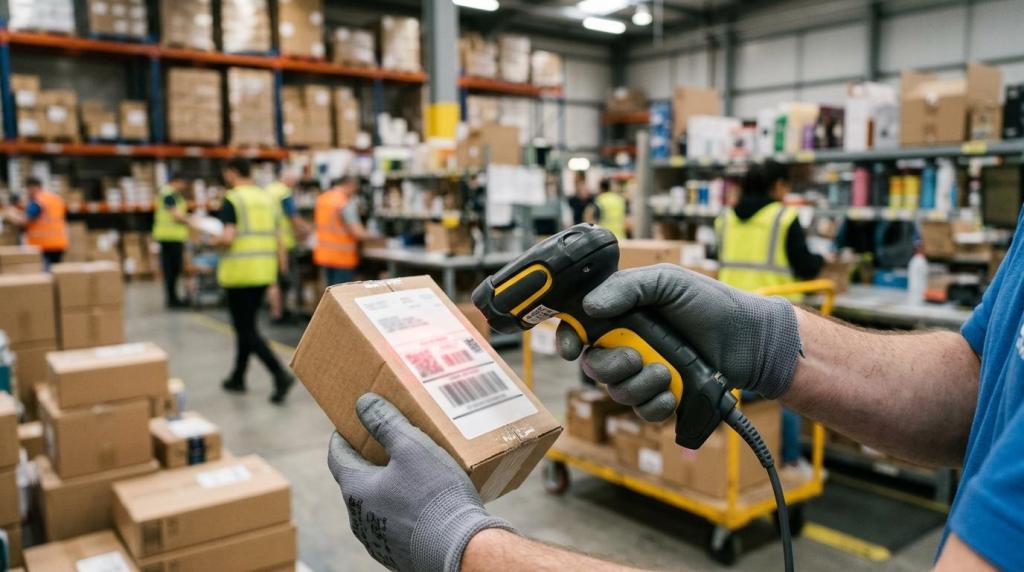
A stronger warehouse process often includes clearer pick routes, barcode scanning, better location management, carrier-based packing logic, and tighter dispatch windows. These may sound like back-end details, yet they decide whether a 4:45 pm order leaves the building on time.
For brands with promotional spikes or seasonal peaks, this matters even more. Next-day demand rarely arrives in a smooth line. It clusters around launches, payday periods, Black Friday, Christmas, and weather-driven demand. A 3PL is often better placed to absorb those swings because labour planning, storage configuration, and daily throughput are already built around variable volume.
Carrier management and delivery performance for next-day orders
Carrier choice is another major part of the equation. Not every order should move through the same delivery service, and not every postcode behaves the same way. A capable 3PL can select carriers based on parcel profile, destination, service level, and cost tolerance rather than forcing all orders into a single route.
This helps retailers keep next-day and same-day delivery available without allowing shipping costs to spiral. It also supports service resilience. If one carrier faces disruption, a multi-carrier setup offers alternatives.
After all, the customer does not care which depot handled the parcel. The customer cares whether it arrives when promised.
Why next-day delivery often becomes easier to scale with outsourced fulfilment
Scaling next-day delivery internally usually demands investment in warehouse management systems, more space, more people, more carrier contracts, and tighter operational leadership. Some retailers are happy to make that investment. Many others would rather put capital into stock, marketing, product development, or international sales.
That is where outsourced fulfilment becomes attractive. It can shift fixed logistics overhead into a more flexible operating model while giving access to processes that are already designed for speed.
A 3PL relationship can help in several practical ways:
- Later order cut-offs: more chance to convert shoppers who buy in the late afternoon or early evening.
- Order accuracy: fewer mis-picks and fewer avoidable delays.
- Peak capacity: better support during promotions and seasonal peaks.
- Carrier options: stronger control over cost, transit times, and regional performance.
- Reporting visibility: clearer insight into dispatch rates, exceptions, and service levels.
The strongest benefit is often consistency and convenience. One-off fast days are not enough. E-commerce brands need a fulfilment setup that can deliver tomorrow, tomorrow, and the day after that.
Questions e-commerce brands should ask before promising next-day delivery
Before promoting next-day delivery more aggressively, retailers should test whether the full operation can support the promise at scale. That means looking beyond website messaging and into the detail of fulfilment performance.
A practical review should include technology, warehouse flow, stock accuracy, and carrier reliability, alongside margin impact. Next-day delivery can increase sales, but the economics only work if failed deliveries, support tickets, and rushed manual fixes are kept under control.
Useful questions include:
- What is the real cut-off time: not the advertised one, but the last point at which orders still leave on time?
- How accurate is inventory: can the business trust stock data across all channels?
- What is the on-time dispatch rate: measured daily, not assumed?
- How often do late orders create customer service tickets: and what are the main causes?
- Can the current setup handle peak volume: without reducing service quality?
For many e-commerce businesses, those questions lead to the same realization: the rise of next-day delivery is shaping operational strategies. Customer demand for next-day delivery is growing among consumers, but meeting it well depends on operational strength. When that strength is supplied by a specialist 3PL such as 3PLWOW, next-day delivery becomes far more than a marketing line. It becomes a dependable part of the customer experience and a stronger base for growth.