
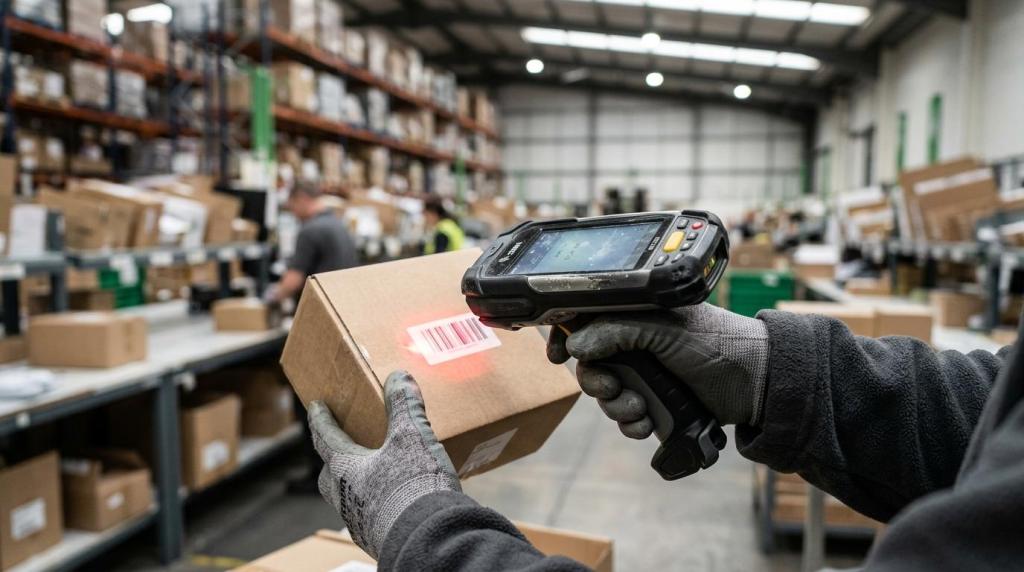
Customers rarely care whether a late parcel was caused by stock errors, a missed pick wave, or a warehouse team stretched too thin. They remember one thing: the promised delivery window was missed.
That is why warehousing and shipping delays are often a fulfilment problem before they become a courier problem. A strong 3PL provider can reduce that risk by improving delivery management within the supply chain, making the warehouse faster, more disciplined, and better staffed than many in-house operations can manage on their own. When order picking is quicker, order processing is tighter, and labour capacity can flex with demand, more parcels leave on time and more customers receive what they expected.
The pressure is only getting stronger. UPS reported in 2025 that average retail delivery speeds improved from 6.6 days in 2020 to 4.2 days in 2023. Faster delivery has shifted from a nice extra to a normal expectation, heavily influencing overall customer satisfaction. In that setting, a warehouse that falls behind by even a few hours can start a chain reaction that reaches the customer by the next morning.
Why shipping delays start before a parcel leaves the warehouse
Most delayed shipments are not created on the road. They are created inside the fulfilment process.
An in-house operation often begins with good intentions and a workable setup. That can hold steady at low order volume. Yet as order counts grow, manual checks, limited packing benches, and small teams begin to slow down the flow. What worked at 300 orders a month may become unreliable at 3,000.
A 3PL changes that equation by treating fulfilment as a dedicated operating model rather than a supporting task inside the business. That shift matters because dispatch performance depends on consistency, not occasional heroic effort.
Common early causes of delay include:
- Missed courier cut-off times
- Manual stock checks
- Picking queues
- Understaffed packing stations
- Returns taking up space and attention
Retail Economics, in its 2026 UK delivery benchmark, reported that larger operators are slower on average. That sounds surprising at first, though it makes sense when complexity outpaces process control. Scale by itself does not solve delays. Scale with structure does.
How a 3PL provider improves order picking speeds
Order picking is one of the clearest places where a 3PL can outperform an in-house team. Picking speed depends on layout, slotting, training, scanning, and labour planning. A business handling fulfilment in-house may have one stockroom, one route through the shelves, and a team splitting time across several jobs. A 3PL warehouse is built around movement.
That difference can be dramatic during growth. In a published 3PLWOW case study, a brand that moved to a 3PL model increased monthly order capacity from 15,000 to more than 35,000, partially due to the implementation of real-time tracking. Within 90 days, same-day dispatch improved from 71% to 94%, while order accuracy rose from 96.2% to 99.4%. Those numbers matter because slow picks and wrong picks both create delay. If an item is picked late, dispatch slips. If it is picked incorrectly, the customer receives the wrong order and the fulfilment cycle starts again.
Picking speed improves when the warehouse team is not improvising. A well-run 3PL usually has defined pick zones, optimised SKU placement, regular checks, and staff whose role is fulfilment all day, every day. That focus is difficult to match in a smaller in-house setting where staff may be switching between customer service, stock counting, packing, and admin.
A 3PL can usually support faster picking through a few practical controls:
- Dedicated picking teams: Staff are assigned to picking rather than pulled into unrelated tasks.
- Warehouse slotting: Fast-moving products are placed where they can be reached quickly.
- Flexible labour cover: More staff can be placed on the floor when order volume spikes.
Even a modest gain in pick speed can protect the entire day’s dispatch schedule.
How quicker order processing reduces shipping delays
Fast picking helps, but it is only one part of the path. Orders also need to be managed through logistics, imported, checked, allocated to available stock, packed, labelled, and released before the carrier arrives.
This is where many in-house operations lose time without noticing it. Orders may sit in separate systems, wait for manual review, or move through a process shaped by habit rather than service level targets. A few minutes lost at each step can easily turn into missed dispatch.
A 3PL provider usually brings tighter order processing through supply chain efficiencies, integrations, a warehouse management system, and live inventory visibility. That means orders can enter the queue quickly, stock can be confirmed against real availability, and labels can be generated without repeated handling. When a provider offers same-day dispatch and next-day delivery options, the promise rests on this kind of process discipline rather than wishful thinking.
3PLWOW’s service information also points to operational controls that support speed: shipping solutions such as live inventory visibility, same-day shipping on precision-checked orders, next-day delivery options, and 24/7 access for queries or urgent logistics issues. Those details matter because delay prevention is often about catching problems early, not apologising later.
| Fulfilment stage | Typical in-house delay risk | 3PL control that reduces delay |
|---|---|---|
| Order capture | Manual imports or platform lag | Direct system integration |
| Stock allocation | Unclear stock position | Live inventory visibility |
| Picking | Small team, inconsistent routes | Dedicated pick teams and organised slotting |
| Packing | Limited benches and bottlenecks | Multiple stations and defined workflows |
| Dispatch release | Missed cut-off windows | Same-day dispatch discipline |
| Returns | Backlogs affecting space and stock | Faster returns processing |
Speed in processing is valuable on its own, though its real strength is predictability, including optimized transit times.
Why larger staffing levels matter during peak fulfilment periods
Many shipping delays happen when a business is not operating under normal conditions. A promotion lands, a social campaign performs better than expected, a marketplace order burst arrives, or seasonal traffic doubles within days. The in-house team suddenly has the same shelves, the same benches, and the same number of hands.
A 3PL provider usually has a larger labour base, trained warehouse staff, and established shift planning. That gives a client access to capacity that would be expensive and awkward to maintain internally all year round. Instead of hiring ahead of uncertain peaks, a brand can plug into an operation already built for volume swings.
This is one of the strongest arguments for outsourcing fulfilment to third-party logistics providers.
More people on the floor does not mean disorder if the process is right. It means faster picking waves, shorter packing queues, better cover for sickness or holidays, and less reliance on overtime late in the day. It also reduces the risk that one absent team member can throw the whole dispatch schedule off course.
Retail Economics made another useful point in its delivery benchmark: expectation management and credible alternatives are critical. That fits well with the 3PL model. A capable provider is not only supplying labour; it is also implementing delivery management strategies that help create a fulfilment operation capable of supporting realistic delivery promises. If a same-day cut-off is 2 pm, the warehouse should be staffed and structured to hit it consistently. If next-day delivery is offered, the order processing rhythm must support that promise every day, not only when volume is light.
How 3PL inventory visibility prevents avoidable delays
Stock visibility is one of the quieter causes of delay, though it is one of the most damaging.
If a business believes stock is available when it is not, orders stall due to the lack of real-time tracking. Customer service then has to step in, replacements may be needed, and the original delivery estimate becomes unreliable. A 3PL with live inventory visibility can reduce that problem by giving the client a clearer view of available stock, low-stock risk, and order status.
That can improve decision-making across the business, not only inside the warehouse but also in warehousing operations as a whole, thanks to the implementation of a robust warehouse management system. Marketing can time campaigns with greater confidence. Purchasing teams can react earlier to supply changes. Customer service can give better updates because the data is fresher and easier to trust.
The practical gains usually look like this:
- fewer backorders
- earlier replenishment signals
- cleaner available-to-sell numbers
- fewer manual stock investigations
When stock accuracy improves, effective supply chain and logistics solutions, including avoiding shipping delays with a 3PL provider, usually lead to enhanced shipping performance by optimizing transit times.
How faster returns processing supports outbound shipping performance
Returns are often treated as a separate issue from dispatch, yet the two are closely linked.
If returned stock sits unprocessed for nearly a week, it ties up space, distorts inventory records, and absorbs staff time that could be used on outbound orders. In the same 3PLWOW case study, average return processing time fell from 6 days to 2 days after moving to a 3PL setup. Customer support contacts about shipping also dropped by 38%.
That reduction is significant. Faster returns processing can place saleable stock back into availability sooner, keep pick faces cleaner, and reduce the confusion that comes from half-processed inventory. It also protects the customer experience after delivery, enhancing customer satisfaction, which matters because a poor returns process often turns one late or incorrect order into a lasting trust problem.
A strong fulfilment operation is not just about getting parcels out. It is about keeping the entire stock cycle moving cleanly.
What to look for in a 3PL provider if shipping delays are the concern
Not every 3PL will solve the same problems in the same way. If delay reduction is the priority, the right questions are operational.
A client should look for evidence of same-day dispatch performance, order accuracy, staffing resilience, and stock visibility. Published service standards help. So do case studies showing measurable gains after onboarding. A provider that can point to better dispatch rates and faster returns handling is showing more than sales language.
Useful selection criteria include:
- Dispatch performance: Ask what percentage of orders leave the warehouse the same day.
- Order accuracy: Check how accuracy is measured and how often it is reviewed.
- Staffing depth: Ask how peak demand, sickness, and seasonal spikes are covered.
- System visibility: Confirm whether live inventory and order tracking are available.
- Carrier cut-off control: Review how late orders can be accepted without risking delay.
- Support access: Check whether urgent issues can be addressed outside standard office hours.
It is also sensible to ask how the provider handles exceptions. Delays are not only caused by average volumes. They are often caused by unusual days. The best 3PL relationships are built around predictable routines plus calm handling when volumes jump or data fails.
For businesses that have outgrown an in-house setup, the shift is rarely about handing over boxes. It is about putting order flow into a structure that can keep pace with customer expectations. Faster picking, quicker processing, and access to a larger trained workforce give a business a better chance of making the delivery promise it puts in front of the customer.
And that promise is where shipping performance becomes commercial performance.