

Supplement fulfilment costs in the UK rarely come down to one simple fee. A headline pick-and-pack rate might look attractive, yet the real spend is shaped by storage space, intake, packaging choice, carrier pricing, returns handling and the compliance demands that come with selling food supplements.
That matters because supplements are not just another small parcel product. They often involve expiry dates, batch control, label checks and first-expiry-first-out rotation, all of which can add handling steps behind the scenes. For a growing brand, the smartest way to look at pricing is not “What is the cheapest fulfilment fee?” but “What is the true cost to store, process and ship each order reliably?”
What shapes supplement fulfilment costs in the UK
UK supplement fulfilment pricing is usually variable rather than flat. Many providers price around the operational profile of the brand, not simply the number of parcels sent. A single-SKU vitamin brand with lightweight letterbox shipments will have a very different cost base from a sports nutrition range shipping tubs, bundles and subscription orders.
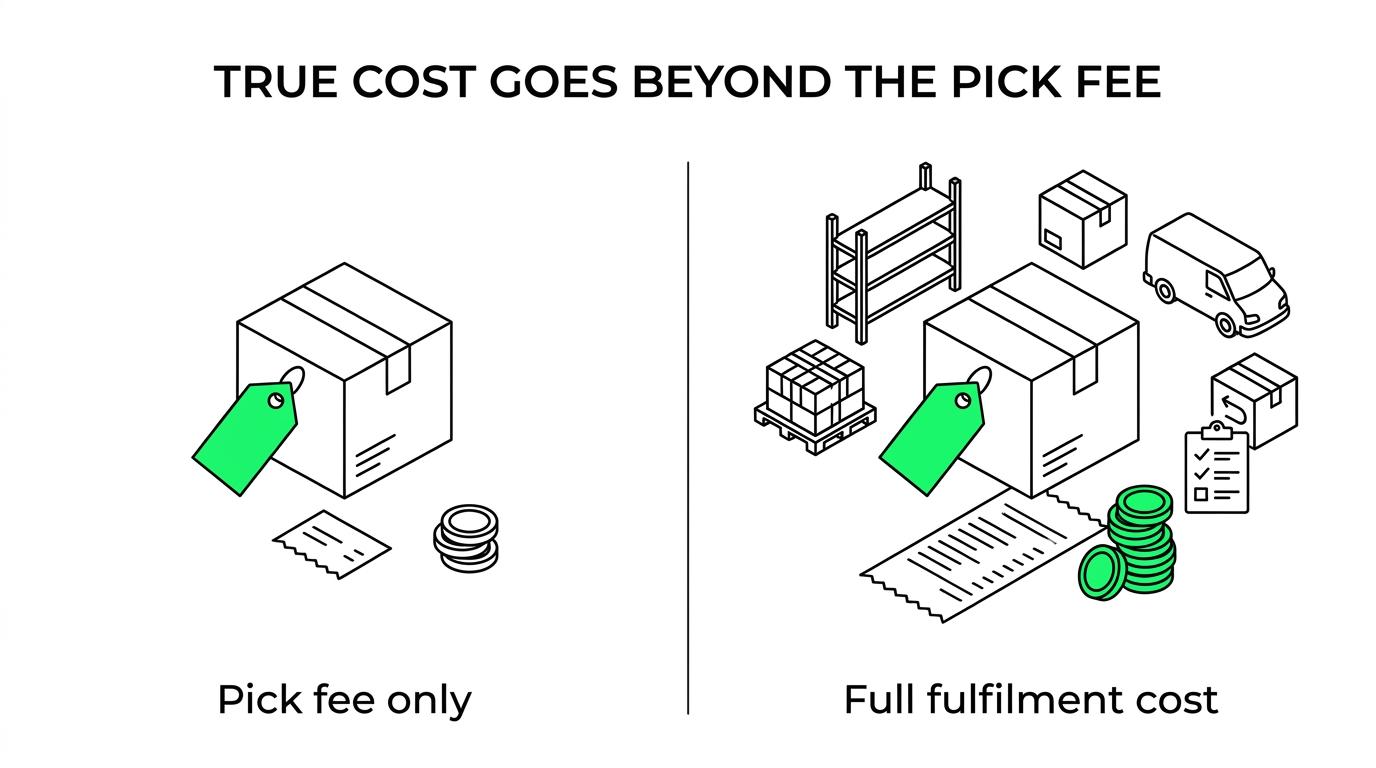
The biggest drivers tend to be straightforward once you see them together:
- storage footprint
- number of order lines
- packaging materials
- postage profile
- returns handling
- compliance handling
A useful rule is this: the more touches an order needs, the higher the fulfilment cost is likely to be. A one-item order picked from a shelf and posted in a mailer is quick. A bundle that needs batch-aware picking, branded packaging, an insert, protective fill and tracked delivery takes longer and costs more.

Some fulfilment businesses openly state that there is no one-size-fits-all price, and that is a sensible starting point. Products, order profile, shipping mix, sales channels and packaging all change the economics. In supplements, these differences show up quickly because even slight changes in pack size, weight or storage rules can ripple into storage and shipping costs.
Typical supplement fulfilment pricing ranges in the UK
Published UK fulfilment guides give a useful benchmark, even though final quotes depend on the account. One commonly cited market view places standard ecommerce fulfilment at roughly £2 to £6 per order before postage. That broad range makes sense for supplements, where simple single-item orders sit at one end and multi-line or customised orders sit at the other.
The table below brings together indicative UK ranges often seen in the market for outsourced fulfilment.
| Cost element | Indicative UK range | What affects the price |
|---|---|---|
| Onboarding | £500 to £5,000 | Setup complexity, systems integration, SKU count, compliance process |
| Goods-in | £3 to £8 per pallet | Delivery profile, booking accuracy, inspection requirements |
| Storage | £2 to £8 per pallet per week | Pallet count, shelf/bin use, stock turn, climate considerations |
| Pick fee, first line | £0.80 to £1.80 | Order handling method, SKU profile, service level |
| Additional lines | £0.20 to £0.60 per line | Basket size, picker efficiency, bundling |
| Packaging materials | £0.10 to £1.50 | Mailers, boxes, void fill, branding, inserts |
| Kitting or assembly | £0.30 to £3.00 per unit, or £20 to £35 per hour | Subscription kits, promotional packs, bundle prep |
| returns processing | £1.00 to £4.00 per return | Inspection, restocking, quarantine, disposal |
| Postage | Variable | Weight, dimensions, destination, carrier, service level |
These figures are best treated as guide rails rather than promises. One provider may bundle parts of the process into a single rate, while another separates every activity into its own line item. A quote with a lower pick fee can still work out more expensive if storage, packaging or carrier margins are high.
How pick and pack costs work for supplement orders
Pick-and-pack is often the first number people ask about, but it is only one part of the picture. In UK fulfilment, there are three common pricing models: a flat per-order fee, a first-item-plus-extra-items structure, or a labour-based method for more complex operations.
A published example from the UK market shows how that can work. If the first item costs £2.50 to pick and pack and each extra item costs £0.40, a three-item order would cost £3.30 before packaging and postage. That sounds simple, yet even this model changes once inserts, fragile packing, subscription assembly or branded presentation are introduced.
The detail that matters most is not just “pick fee” but “pick fee for what kind of basket?”
- Single-line orders: Often the lowest-cost profile, especially for one bottle or pouch per parcel.
- Multi-line orders: Costs rise as more SKUs are picked, checked and packed.
- Bundles and kits: May attract kitting charges if items are assembled in advance or at the point of order.
- Promotional inserts: Branded leaflets, samples or custom inserts add material and labour cost.
Supplement brands should also check whether the pricing is based on items, lines or total labour time. A two-line order with six units can be priced differently from a six-line order with six units, because line complexity often drives more warehouse effort than unit count alone.
Supplement storage costs and stock handling requirements
Storage costs are easy to underestimate, especially in the early stages. A brand might look at a pallet rate and assume the cost is fixed, yet supplements often need more structured stock control than standard consumer goods. Best-before dates, batch records, first-expiry-first-out rotation and damage checks all influence how the stock is stored and managed.
That is one reason storage should be viewed as both space and process. A dense, fast-moving SKU that turns quickly can be relatively efficient. Slow-moving lines that take up shelf locations for long periods can push the effective cost upward, even if the weekly storage fee looks modest.
Regulation is part of this picture too. In the UK, food supplements are regulated as food under general food law. Businesses selling them must register as a Food Business Operator with their local authority. Labels must carry required information, including storage instructions and date information where relevant. Those are product and business responsibilities, yet they often affect how a fulfilment operation receives, stores and dispatches stock.
This does not always translate into a visible “compliance surcharge”. More often, it appears in the way a provider scopes the work:
- Batch visibility: Systems may need to record and track lot numbers.
- Expiry management: Stock rotation policies reduce the risk of aged inventory shipping.
- Label checks: Inbound controls can take longer where packaging accuracy matters.
- Quarantine handling: Damaged or questionable units may need separate treatment.
For supplement brands, the practical question is whether the warehouse process supports these controls cleanly. A slightly higher storage or intake fee can represent strong value if it reduces stock risk, customer complaints and write-offs.
Shipping costs for supplements in the UK
Postage can be the single biggest swing factor in total landed fulfilment cost. Two brands with identical pick fees can end up with very different economics if one ships lightweight daily vitamin packs and the other sends heavy protein tubs to a national customer base on a tracked service.
Royal Mail’s business pricing makes the point clearly: postage depends on how much you are sending, and business rates are available for customers sending more than 20 parcels a week. In other words, shipping is volume-sensitive. As order volume builds, access to better rates can improve the per-order margin materially.
Carrier surcharges also matter. Royal Mail announced that its Fuel and Energy Surcharge would rise from 11% to 16% from 3 May 2026. That kind of adjustment can change the cost stack even if your pick, pack and storage fees stay unchanged. For supplement brands working on tight contribution margins, carrier reviews should be part of routine cost control.
Several operational details have an outsized effect on shipping cost:
- Weight bands: A small change in product pack size can tip parcels into a higher rate bracket.
- Dimensions: Large but light items can still cost more if packaging is inefficient.
- Service level: Tracked, signed or premium delivery options carry different margins.
- Destination mix: Mainland UK, Highlands, Northern Ireland and international zones price differently.
There is a positive side to this. Shipping is often the most negotiable and optimisable part of the fulfilment bill. Packaging redesign, service-level segmentation and volume consolidation can all improve cost per order without reducing customer experience.
How compliance affects supplement fulfilment pricing
A supplement fulfilment operation is not a regulated manufacturing environment, yet the product category still carries obligations that shape cost. Because supplements are classed as food in the UK, accuracy around labelling, stock rotation and handling standards matters more than it might for many general merchandise items.
That tends to affect pricing in subtle ways. An inbound delivery may need more careful checking. Returns may need stricter inspection before restocking. Warehouse teams may need clear batch and date management rules. If the provider is handling inserts, relabelling activity or promotional multipacks, those tasks may also require tighter process controls.
This is why a quote that looks “higher than average” is not always expensive. It may simply reflect the operational reality of handling a product category where stock integrity matters. The stronger question is whether the price matches the process you actually need.
Estimating your real supplement fulfilment price per order
A reliable cost estimate starts with order data, not assumptions. Average order value is useful, but it is not enough. What matters more is average basket composition: how many items per order, how many lines, what parcel sizes, how many subscription orders, what return rate, and which carrier services customers choose.
A practical way to estimate the real fulfilment cost is to build it from the ground up.
- Calculate fixed monthly operational costs, including storage, software if charged separately, and any account management or minimum fees.
- Add variable order costs, including pick-and-pack, packaging, inserts, kitting and returns processing.
- Layer in carrier charges based on actual weight, dimensions and destination mix.
Once you have that, divide by expected monthly order volume and compare scenarios. The exercise often reveals that the “headline” fulfilment fee is only part of the equation.
A simple example helps. Imagine a supplement brand shipping 1,000 orders a month with an average basket of 1.6 lines. If the first-line pick fee is £1.20, extra lines average £0.30, packaging is £0.35, and average postage is £2.90, the base operational cost per order is already around £4.63 before storage and returns. Add storage allocation, goods-in and a modest return cost, and the true figure may sit closer to £5.00 to £5.50 per order.
That is not a problem if the pricing is known and the margin supports it. It becomes a problem only when brands budget off a partial figure.
Questions to ask about supplement fulfilment pricing in the UK
A good quote is clear about what is included, what is variable and what can change as volume grows. Clarity here makes forecasting much easier, and it helps avoid the common situation where a low initial rate becomes expensive once hidden extras appear.
When reviewing providers, these questions tend to produce useful answers:
- What is included in pick-and-pack?: Ask whether fees cover first line only, extra lines, inserts, basic packaging and dispatch confirmation.
- How is storage charged?: Check pallet, shelf, bin or cubic-foot methodology, plus any minimums.
- What happens with expiry-dated stock?: Confirm batch, date rotation and quarantine processes.
- How are carrier costs passed through?: Ask about business rates, surcharges and annual price reviews.
- What are the returns rules?: Clarify inspection, restocking, disposal and customer-return fees.
- Are there onboarding or integration costs?: These can be material in the first months.
For supplement brands, the most useful pricing conversations are rarely about chasing the lowest single fee. They are about building a cost model that matches the product, the order profile and the growth plan. When that model is clear, fulfilment stops being a fuzzy overhead and becomes a system the business can scale with confidence.