

A fulfilment quote can look simple on the surface and still leave plenty unsaid. Many UK ecommerce brands focus on the headline pick fee, only to find that storage bands, extra item charges, packaging choices and carrier surcharges do most of the work when the invoice arrives.
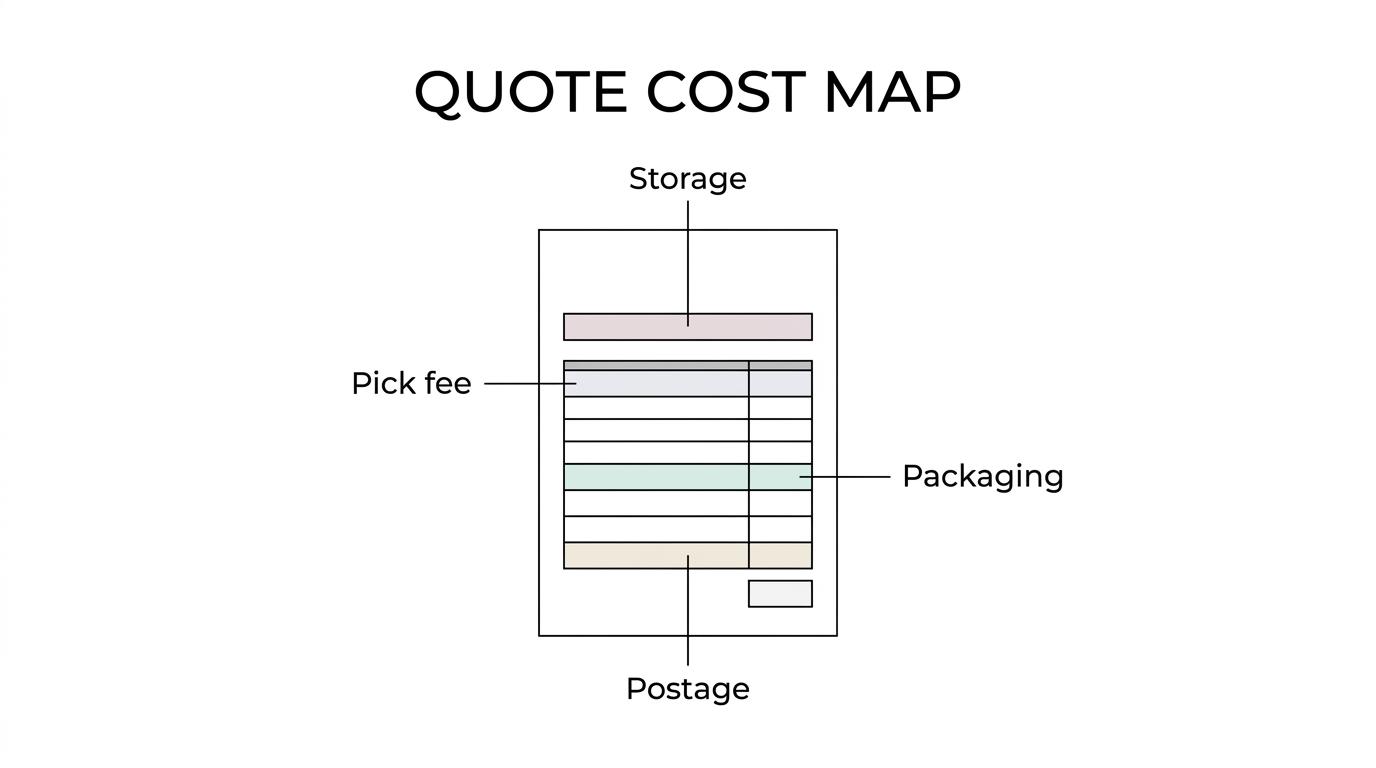
That is why a strong quote should read less like a sales summary and more like a cost map. If you can see each charge clearly, it becomes much easier to compare providers on equal terms, model margin by order type, and avoid surprises when volumes rise.
UK fulfilment quote pricing is rarely a single rate
Ecommerce fulfilment pricing in the UK is usually shaped by order volume, SKU count, packaging format, storage profile and delivery mix. A business shipping 500 identical letterbox parcels each month will not be priced the same way as a business shipping 5,000 multi-line orders with fragile items, inserts and international destinations.
That matters because one provider may look cheaper on pick and pack costs UK businesses care about most, yet prove more expensive once storage, packaging and returns are added in. Another may have a higher base pick fee but lower postage rates, fewer monthly add-ons and better terms for slow-moving stock.
Cross-border orders add another layer. Import VAT, duty and customs clearance are not operational fulfilment charges in the usual sense, but they can still affect the total landed cost of getting orders into the warehouse or to the end customer. A useful quote should separate those items clearly.
Ten cost lines every UK fulfilment quote should show
Before signing anything, it helps to see the main charges in one place.
| Cost line | What it usually covers | What to check |
|---|---|---|
| Goods-in / receiving | Booking in stock, counting cartons, pallet unloading, SKU checks | Charged per delivery, carton, pallet, hour or unit? |
| Storage | Pallet, shelf, bin or cubic space used each month | Minimums, long-term storage fees, peak season rates |
| Pick fee for first item | Picking the first SKU on an order | Is this per order or per item? |
| Extra item pick fee | Picking second, third or later items on the same order | Cost for multi-line baskets |
| Packing labour | Packing, void fill, sealing, paperwork insertion | Included in pick fee or separate? |
| Packaging materials | Boxes, mailers, tape, labels, branded packaging | Plain pack included or always billed extra? |
| Postage and carrier charges | Domestic and international delivery costs | Fuel, remote area, residential and peak surcharges |
| Returns processing | Receiving, inspecting, grading and restocking returns | Charged per return, per item or per action? |
| Value-added services | Kitting, bundling, labelling, subscription assembly, inserts | Hourly rates and minimum charge blocks |
| Customs, VAT and admin charges | Import VAT, duty, customs clearance, courier admin fees | Are these estimates or pass-through charges? |
A quote that misses several of these lines is not always poor, but it is incomplete. Some fees may be bundled together. That is fine, provided the provider explains exactly what is and is not included.
Storage costs in a UK fulfilment quote need more than a single monthly figure
Storage is one of the easiest lines to underestimate. A quote might show a tidy monthly warehouse charge, yet the real bill depends on how stock is measured and how long it stays in place.
Some providers bill by pallet space, which can work well for carton-heavy inbound stock. Others use shelf, bin or cubic-foot pricing, which may suit smaller products with faster turns. Neither model is automatically better. The useful question is whether the charging method matches the physical reality of your stock.
Slow-moving lines deserve special attention. A product that sells well in Q4 and then sits for months can produce a very different storage bill from a steady best-seller. Ask whether there are aged stock surcharges, minimum storage fees or peak-period uplifts between October and January.
Goods-in charges also sit close to storage and should be checked at the same time. If a warehouse charges a low monthly storage rate but bills heavily for each inbound pallet, carton or hour of unloading, your actual warehouse cost may land much higher than expected.
Pick and pack costs UK brands should compare line by line
Pick and pack pricing is still the core of most fulfilment quotes, since it directly affects order processing costs. It is also a key part of 3pl pricing, where different pricing structures can make two quotes look similar while producing very different monthly totals.
When comparing a fulfilment quote UK providers offer, check the pick and pack costs UK businesses pay for the first item and each additional item, as these are key parts of ecommerce fulfilment pricing. That structure is sensible, but only if you know your basket profile. A brand with an average order value built on bundles or multi-SKU baskets can see extra-item charges build quickly. A single-SKU brand may care much more about the first-item rate and the parcel format.
Packing labour should also be separated from materials. Some quotes include standard packing within the base fee and bill only for branded boxes or unusual protection. Others split labour and materials into separate lines. That difference changes how easy it is to forecast cost by order type.
Look closely at the operational detail behind the charge:
- First pick fee: the base cost to process an order
- Extra item fee: the add-on for each extra SKU in the basket
- Packing labour: whether assembly, paperwork and sealing are included
- plain pack allowance
- branded packaging cost
- insert or flyer insertion fee
If your product needs special handling, say so at quote stage. Fragile glass, cosmetics with compliance labelling, apparel needing folding, or subscription boxes needing collation all change the labour profile. A quote built for a simple single-line order will not hold up if the real operation is more involved.
Packaging and postage costs often decide the real winner
Postage is often the largest single variable cost after product cost itself. That means a fulfilment quote should not simply say “from £x per parcel” and leave it there.
Carrier pricing depends on size, weight, service level, destination and delivery mix. Large letter, small parcel and medium parcel thresholds can change margin dramatically. So can next-day services, signature options and premium weekend delivery. A fulfilment partner with strong carrier buying power may offset a slightly higher pick fee through better parcel rates.
Surcharges deserve the same scrutiny as base rates. Fuel surcharges, remote area delivery, Northern Ireland service differences, residential surcharges and peak season carrier uplifts can all sit outside the neat headline price.
A short check-list can save a lot of time here:
- Rate basis: zone, weight band, parcel dimensions and service speed
- Surcharges: fuel, remote area, oversized parcels, peak periods
- tracking level
- delivery claims support
- lost parcel admin fee
Packaging choices feed into postage too. A lighter mailer may reduce carrier cost but increase damages. A stronger box may raise material cost but lower claims and replacement spend. The right answer is rarely about the cheapest unit price in isolation.
Returns processing charges can quietly reshape fulfilment economics
Returns are easy to ignore at quote stage, especially for brands with low return rates. Yet for fashion, footwear, gifting and subscription products, returns can become a meaningful operational line.
A clear quote should show what happens when a parcel comes back. Is there a flat fee per returned order? A charge per item inspected? A separate fee to restock saleable inventory? What about photo evidence, quarantine handling, disposal or customer-specific checks?
The difference between “returns included” and “returns processed” matters. Included may simply mean the warehouse accepts the parcel. It does not always mean the stock is inspected, graded and returned to sellable inventory without extra cost.
This is one area where service quality matters as much as price. Slow returns handling ties up working capital, delays refunds and can distort stock accuracy across sales channels.
Additional charges in ecommerce fulfilment pricing need careful attention
The small-print fees are often the ones that break comparability between quotes. They may be valid charges, but they should never sit in the background.
Common extras include account management fees, software or integration charges, inventory reporting fees, stock transfer charges, subscription box assembly, relabelling, barcode application, cycle counts, photo requests and project work billed by the hour. Some providers also apply monthly minimums, which can be reasonable for low-volume accounts, though they need to be stated plainly.
Watch for the charging unit. An hourly rate sounds modest until it is paired with a one-hour minimum for a five-minute task. A monthly platform fee may look harmless until it sits alongside several other fixed charges.
Useful quote questions include these:
- Minimum monthly charge: what spend floor applies if order volume drops?
- Project work rate: hourly charge and minimum time block
- stock count fee
- integration or onboarding fee
- storage overage rules
If you sell bundles, seasonal gift sets or influencer campaign packs, value-added service pricing should be especially clear. Kitting can be efficient and profitable, but only when the labour assumptions are visible from the start.
Customs, import VAT and duty should be separated from core fulfilment fees
For brands importing stock into the UK or shipping cross-border, customs-related charges can materially change the final cost base. They should not be mixed loosely into pick and pack rates.
Official UK guidance makes this clear in practice. Goods sent from abroad can attract VAT, duty and delivery-company charges before the parcel is released. HMRC also treats packing, transport and insurance up to the first destination in the UK as relevant when working out import VAT in certain cases. Customs clearance charges, handling, loading and storage can also form part of the value used for import VAT.
That means tax is not always calculated only on the goods themselves. Postage, packaging, insurance and duty can all affect the total amount due.
A sound quote or landed-cost estimate should identify:
- Import VAT: whether shown as an estimate, deferred amount or pass-through cost
- Duty: based on the correct commodity code and origin of goods
- customs clearance fee
- courier admin charge
- customs warehousing option if relevant
Commodity codes matter here because they help determine the duty treatment and whether any reduction or suspension applies. If a quote includes international fulfilment or import support, ask whether customs assumptions are based on confirmed commodity codes or rough estimates. There is a big difference.
For businesses importing in bulk, customs warehousing may also be relevant. This can allow duty and import VAT to be suspended while goods remain under the procedure, which may help cash flow. It is not a universal fit, but it is worth asking about when imports are regular and stock holding periods are meaningful.
Quote inputs that help you compare fulfilment providers fairly
The quality of the quote depends on the quality of the input. If two warehouses are pricing two different versions of your operation, the comparison will be misleading from the start.
The strongest briefing packs usually include monthly order volume, average items per order, SKU count, inbound frequency, product dimensions and weights, packaging requirements, channel mix, domestic versus international split, and expected return rate. If your business has seasonality, include peak-month assumptions rather than annual averages alone.
One practical step helps more than almost anything else: ask every provider to price the same sample basket of orders. Include a single-item order, a two-item order, a bundle, a return, and one awkward case like fragile packing or a subscription assembly. This turns abstract pricing into something far easier to compare.
A useful fulfilment quote should let you answer a simple question with confidence: what will it cost to process the real orders your customers place, not the idealised version of them. When the quote shows storage, picking, extra items, packaging, postage, returns and customs-related charges in clear lines, that answer becomes much easier to reach.