
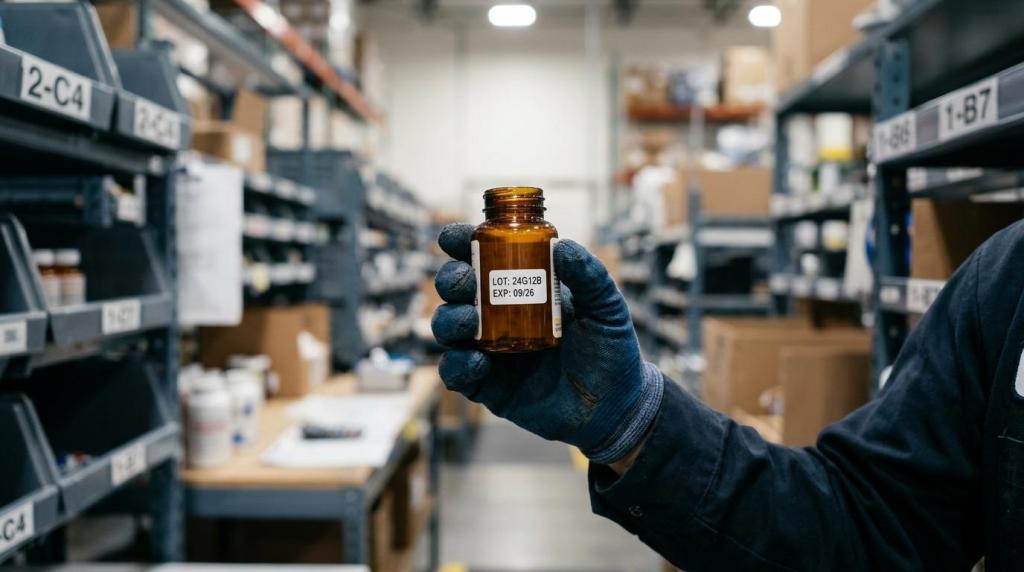
Choosing a fulfilment partner for food supplements is not the same as choosing one for T-shirts, books, or homeware. Supplements sit in a more demanding category. Customers expect fast delivery and pristine packaging, yet the real test happens behind the scenes: storage discipline, traceability, stock rotation, and the ability to respond quickly if a batch needs to be withdrawn.
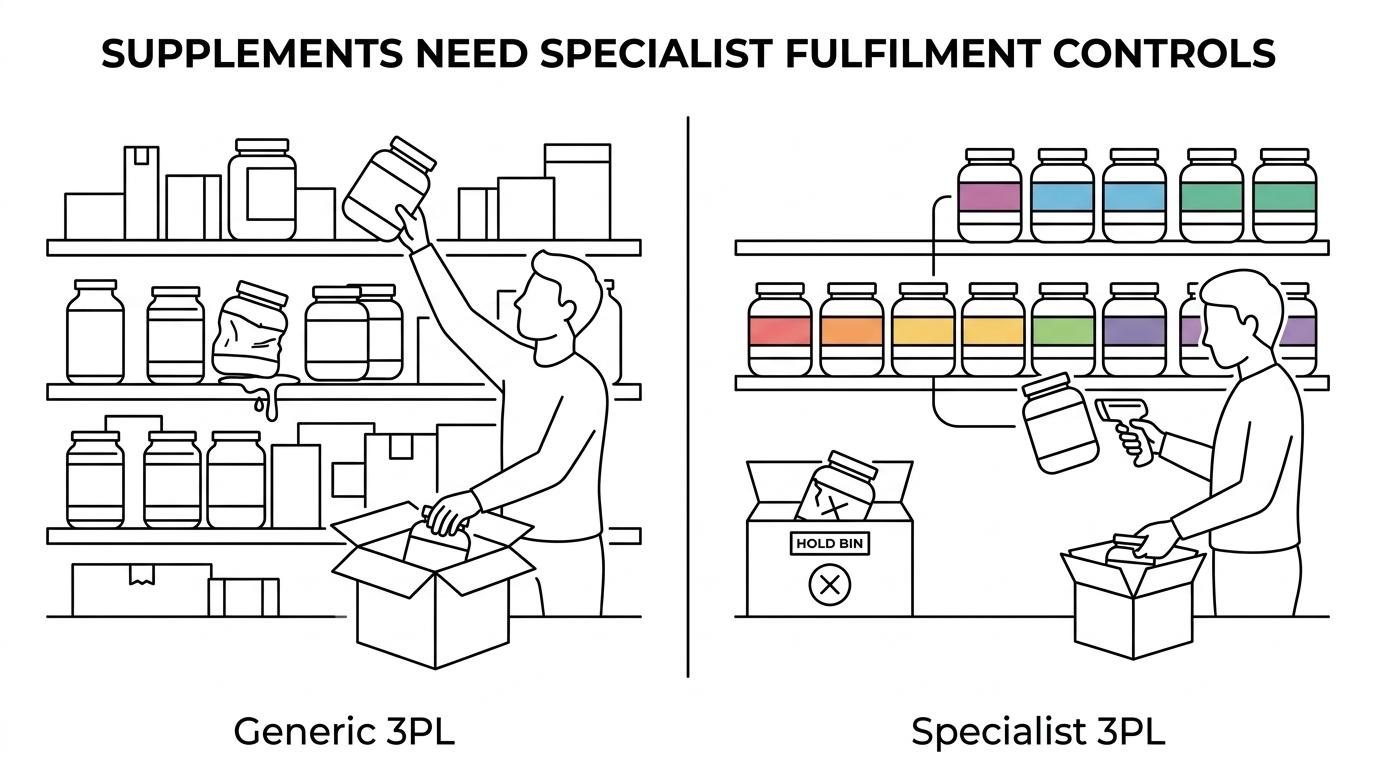
That is why the strongest food supplement fulfilment services in the UK tend to look less like generic pick-and-pack operations and more like food-focused logistics partners. Speed still matters. Cost still matters. Even so, the best providers pair commercial efficiency with controls that support food-law compliance and protect brand reputation.
Why UK food supplement fulfilment needs specialist controls
In the UK, food supplements are regulated as food, not medicines. That single point shapes almost every fulfilment decision. Warehousing, storage, transport, records, and despatch processes all need to support general food law rather than pharmaceutical handling rules.
Official guidance defines food supplements as foods sold in dose form, designed to supplement the normal diet, and made up of concentrated sources of vitamins, minerals, or other substances with a nutritional or physiological effect. They are commonly sold as tablets, capsules, gummies, powders, and liquids. Each of those formats brings its own handling needs.
A warehouse that performs well for standard e-commerce may still be a poor fit for supplements if it cannot manage batch codes, expiry dates, contamination risk, or recall records with confidence.
Labels matter too. UK guidance for businesses says supplement labels should include the term “food supplement”, a best-before or use-by date, storage instructions, the recommended daily dose, and a warning not to exceed it. A fulfilment company may not draft those labels, yet it does need systems that keep the right stock in the right place and prevent the wrong batch or outdated unit being sent out.
Core food supplement fulfilment requirements to look for
The best services are built around repeatable controls, not sales language. They should be able to explain exactly how stock is received, checked, stored, picked, packed, and traced if there is a problem later.
A strong provider should be comfortable discussing the practical routines that sit behind food safety and stock integrity.
- Goods-in checks: quantities, packaging condition, batch codes, and expiry dates are verified when stock arrives
- Batch and expiry control: inventory is managed by lot and date, with clear rules for stock rotation and blocked stock
- Traceability records: products can be tracked from supplier to despatch, and back through the supply chain if required
- Storage hygiene: warehouse areas are fit for purpose, clean, and managed to reduce contamination risk
- Transport controls: vehicles and containers do not put product safety or quality at risk
- Recall readiness: records and workflows support rapid withdrawal if a batch has to be removed from sale
These are not optional extras dressed up as premium features. They are the foundation of reliable supplement fulfilment. The more clearly a provider can show them in practice, the stronger the fit is likely to be.
There is also a wider discipline at work here. Food businesses are expected to apply HACCP principles and related prerequisite controls. Even where a fulfilment company is not manufacturing the supplement, it still needs sensible systems around hygiene, storage, cleaning, staff training, and product handling.
Food supplement storage and transport standards that protect product quality
Storage conditions sit near the top of the checklist because poor warehousing can quietly damage product quality long before a customer notices. Powders may clump, labels may degrade, gummies can suffer in unsuitable temperatures, and outer packaging can arrive looking tired or compromised.
Not every supplement needs chilled storage, yet every supplement needs conditions that match the product’s label and do not create contamination risk. That means asking direct questions about temperature monitoring, cleaning schedules, segregation of stock, and what happens to damaged or quarantined units.
A provider that gives clear, practical answers is usually far more reassuring than one that talks only about low rates and fast despatch.
| Fulfilment capability | Why it matters for supplements | What good looks like |
|---|---|---|
| Clean, organised storage | Reduces contamination risk and picking errors | Defined locations, tidy aisles, routine cleaning |
| Temperature monitoring | Protects products that are sensitive to heat or variable conditions | Recorded checks and escalation procedures |
| Quarantine process | Stops damaged or questionable stock entering live inventory | Isolated areas and clear hold statuses |
| Batch-level stock control | Supports traceability and recall readiness | System visibility by lot and expiry |
| Suitable transport | Preserves safety and quality in transit | Clean vehicles, secure loading, protected packaging |
| Stock rotation rules | Helps prevent old stock being shipped | FIFO or batch/expiry logic matched to the SKU |
Transport deserves more attention than it often gets. Official food premises guidance states that vehicles and containers used for transport should not present a risk to product safety or quality. For supplement brands, that means the fulfilment process cannot stop at the packing bench. The delivery chain matters too.
Batch, expiry, and traceability systems for supplement fulfilment
Traceability is one of the clearest signs that a fulfilment provider takes supplements seriously. Food traceability guidance in the UK centres on “one step back and one step forward”. In plain terms, a business should know where stock came from and where it went.
That sounds simple until volumes rise, multiple batches are live, and bundles or subscription orders mix several SKUs into one parcel. At that stage, a weak inventory system turns a routine process into a risk.
The best providers make batch and expiry data part of everyday operations rather than an afterthought.
- Batch-level stock visibility
- Expiry-date rules by SKU
- Despatch history by order
- Quarantine and hold workflows
- Recall reporting at short notice
This matters because, in a food safety incident, a whole batch or consignment may be treated as unsafe unless it can be shown otherwise. Good traceability limits waste, narrows the scope of a recall, and helps a brand act with speed and credibility.
Record retention matters as well. Food Standards Agency guidance says keeping traceability records for the shelf life of pre-packed food plus 12 months is good practice. A fulfilment partner does not carry the whole legal burden alone, though it should still support that standard through accessible, accurate records.
Operational performance metrics that separate the best services from average providers
Compliance controls are essential, yet they are only half the picture. The best food supplement fulfilment services also perform well in the areas that customers notice immediately: speed, accuracy, stock availability, and parcel presentation.
A supplement brand can have excellent formulations and polished marketing, but repeated picking errors or delayed subscription orders will erode trust quickly. This is why operational discipline matters just as much as warehouse hygiene.
Published case studies can be helpful here. Some providers present real operational outcomes rather than relying on broad claims. 3PLWOW, for example, positions itself as a specialist UK 3PL for supplement brands and describes processes that include goods-in checks, batch and expiry control, stock rotation, traceability records, hygiene routines, temperature monitoring, and staff training. Its supplement fulfilment material also points to improved order capacity and picking accuracy after outsourcing. That kind of evidence gives buyers something more concrete to assess, even if each brand still needs to test the fit against its own product range, volumes, and sales channels.
When assessing performance, a few metrics tend to reveal the true standard of service:
- Order accuracy
- On-time despatch
- Inventory accuracy
- Damaged parcel rate
- Returns handling speed
Strong providers can usually discuss these measures without hesitation. Better still, they can explain what happens when something goes wrong, how exceptions are logged, and how recurring issues are prevented.
Questions to ask when comparing food supplement fulfilment providers
Good selection starts with good questions. A provider may sound polished on a call, yet the real value lies in how specifically it answers operational points. Vague reassurance is rarely enough for a regulated food category.
Ask whether the warehouse already handles supplement formats similar to yours. Capsules, powders, sachets, gummies, liquids, and wellness bundles all introduce slightly different storage and packing needs. If subscription boxes or promotional kits are part of the model, check whether the provider can build these consistently at scale.
You should also ask about goods-in procedures, damaged stock handling, expiry thresholds, and recall support. If a batch is quarantined, how is it blocked from sale? If stock arrives with incomplete data, who investigates it? If a retailer or marketplace needs lot information, can the fulfilment team produce it promptly?
The commercial model matters too. A brilliant process can still be the wrong fit if minimum volumes are unrealistic or if pricing becomes unpredictable during peak periods. Clear charging, clear service levels, and clear ownership of exceptions make the relationship much easier to manage.
Customer experience and growth in food supplement fulfilment
A specialist fulfilment service does more than move boxes. It shapes the customer’s impression of the brand. Supplement buyers are often repeat buyers, which raises the standard. They remember whether subscriptions arrive on time, whether pouches and tubs are clean, whether bundles are assembled properly, and whether replacement orders are handled with care.
That is why fulfilment for supplements is closely linked to retention. Accurate picks, secure packing, and orderly stock control create a sense of trust that marketing alone cannot deliver.
There is also a growth advantage. When fulfilment is handled by a capable specialist, internal teams gain time for product development, retailer relationships, compliance work, and customer acquisition. The warehouse stops being a bottleneck and becomes a support system for expansion.
For brands selling in the UK, the most convincing option is usually the one that combines food-law discipline with visible operational competence. When a provider can show sound storage practices, batch and expiry control, reliable traceability, and measurable service performance, it moves from being a simple logistics supplier to a genuine part of the brand’s infrastructure.