
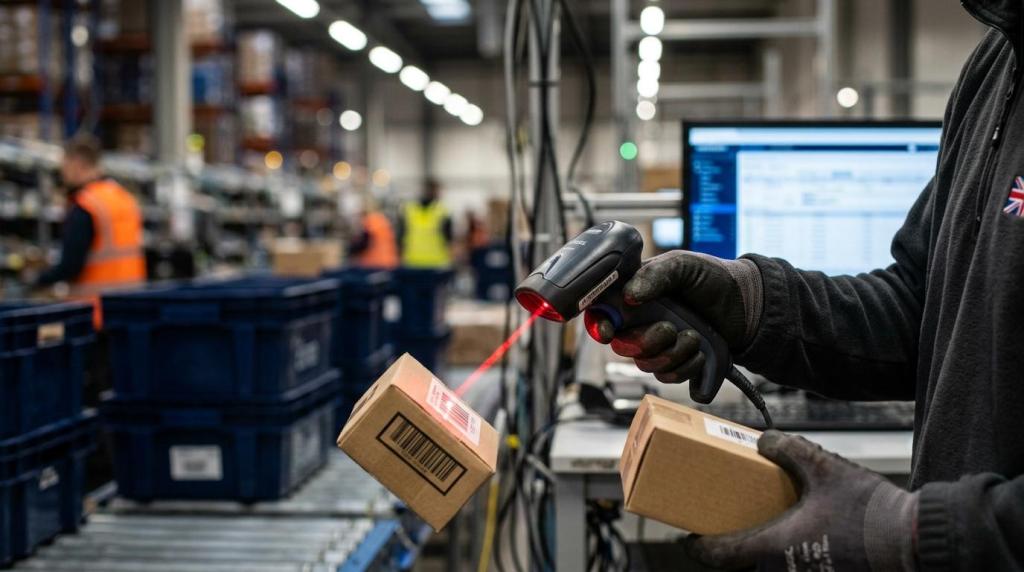
Strong fulfilment is no longer a back-office concern for UK ecommerce brands. It shapes margin, customer loyalty, review scores, repeat purchase rates and the ability to scale during seasonal peaks. A business can market brilliantly, attract traffic efficiently and still lose momentum if orders leave late, stock data is wrong or returns drag on for days.
The UK market gives that point real weight, especially for ecommerce brands relying on fulfilment centres to manage rising online demand. According to the Office for National Statistics, 29.4% of retail sales in Great Britain were made online in June 2026, the highest share since April 2021. In the same period, online spending values rose by 3.8% against the previous quarter and by 11.7% against the same quarter a year earlier. Demand is there. The question is whether fulfilment operations can keep pace without draining time and working capital.
UK ecommerce demand is increasing pressure on fulfilment operations
When almost a third of retail sales are online, fulfilment has to cope with both scale and volatility. Product launches, influencer spikes, paid-media wins and holiday trading can all produce sudden surges. That puts pressure on stock accuracy, warehouse labour, carrier cut-off times and customer support.
Parcel volume adds another layer. Ofcom reported that people in the UK sent and received a record 4.2 billion parcels in the previous year, 7% more than the year before. It also found that 68% of parcel recipients had experienced a delivery issue in the previous six months. Average satisfaction stood at 78%, which is decent, though far from perfect.
That gap matters. If delivery issues are common, fulfilment quality is not just about getting parcels out of the door. It is also about carrier selection, tracking visibility, packing consistency and complaints handling when something goes wrong.
What UK order fulfilment services usually cover
Most fulfilment services include shipping services and cover the full order lifecycle. A retailer sends stock into a warehouse, inventory is booked in, orders flow from the sales channel, products are picked and packed, labels are generated, parcels move through carrier networks, and returns come back into a managed process. The best providers make this feel controlled rather than improvised.
A good setup also streamlines order processing, reduces internal distractions and improves stock management, giving small businesses more time to focus on growth. Teams can spend less time chasing warehouse issues and more time on product range, marketing, wholesale, finance and customer growth.
Typical fulfilment activities include:
- Goods-in and inventory checks
- Secure warehousing
- Pick and pack
- Labelling and inserts
- Carrier selection and booking
- Tracking updates
- Returns receipt and inspection
- Stock reporting
Some providers go further with channel integrations for marketplaces such as ebay, subscription-box assembly, kitting, custom packaging and support for marketplace compliance. The right service depends on order profile, SKU complexity, product size, return rates and how often demand spikes.
Key UK fulfilment metrics shape customer experience
It is easy to focus on cost per order and overlook the operational indicators that protect revenue. In practice, a retailer needs a short set of numbers that reveal whether the service is steady, fast and accurate.
Those numbers should be reviewed regularly, not only when problems become visible in reviews or support tickets.
A strong scorecard often includes the following:
- Order accuracy: the share of orders picked and packed correctly, without item, quantity or address errors.
- Same-day dispatch: the proportion of eligible orders sent on the day they are placed, based on agreed cut-off times.
- Stock visibility: whether inventory data stays current across the warehouse and sales channels.
- Returns turnaround: how quickly returned goods are received, checked and recorded.
- Complaints handling: how quickly delivery issues are investigated and resolved.
Published case studies show why these metrics matter. In a 3PLWOW case study, monthly order capacity rose from 15,000 to more than 35,000 within 90 days after moving to outsourced fulfilment. The same case study reports order accuracy improving from 96.2% to 99.4%, while same-day dispatch improved from 71% to 94%. As with any company case study, the results reflect one business and one operating context. Even so, they show how much operational change can happen when fulfilment is rebuilt around process discipline and available capacity.
Small percentage gains can have outsized financial effects. A few points of improvement in order accuracy may mean fewer reships, fewer refunds, less support time and fewer disappointed first-time buyers.
In-house fulfilment versus outsourced fulfilment in the UK
Many UK retailers, including small businesses, start by handling orders in-house. That can work well in the early stage, especially when order volumes are predictable and founders want direct control over stock and packing. The model often becomes harder to manage when growth arrives unevenly, storage costs rise or service expectations tighten.
Outsourcing changes the cost structure and operating model. It does not remove responsibility, though. It shifts day-to-day execution to a specialist while the retailer keeps ownership of customer promise, stock planning and commercial direction.
| Area | In-house fulfilment | Outsourced fulfilment |
|---|---|---|
| Fixed costs | Warehouse rent, staff, equipment and systems sit on the retailer | More variable charging tied to stock, picks and despatch activity |
| Peak trading | Extra labour and space can be difficult to arrange quickly | Existing warehouse teams and process capacity may absorb spikes more easily |
| Systems | Retailer manages integrations and inventory logic directly | Provider may offer established integrations and reporting tools |
| Carrier access | Rates and service levels depend on the retailer’s own contracts | Larger fulfilment firms may offer broader carrier options |
| Management time | Internal team handles operational detail daily | More time can shift towards sales, product and planning |
| Process control | Immediate physical control over goods and packing | Control comes through service levels, reporting and account management |
There is no universal winner. A business with specialist handling needs, stable order levels and available warehouse talent may prefer to stay in-house. A brand facing rapid growth, rising parcel complexity or multi-channel expansion may gain more from outsourcing to specialist fulfilment centres.
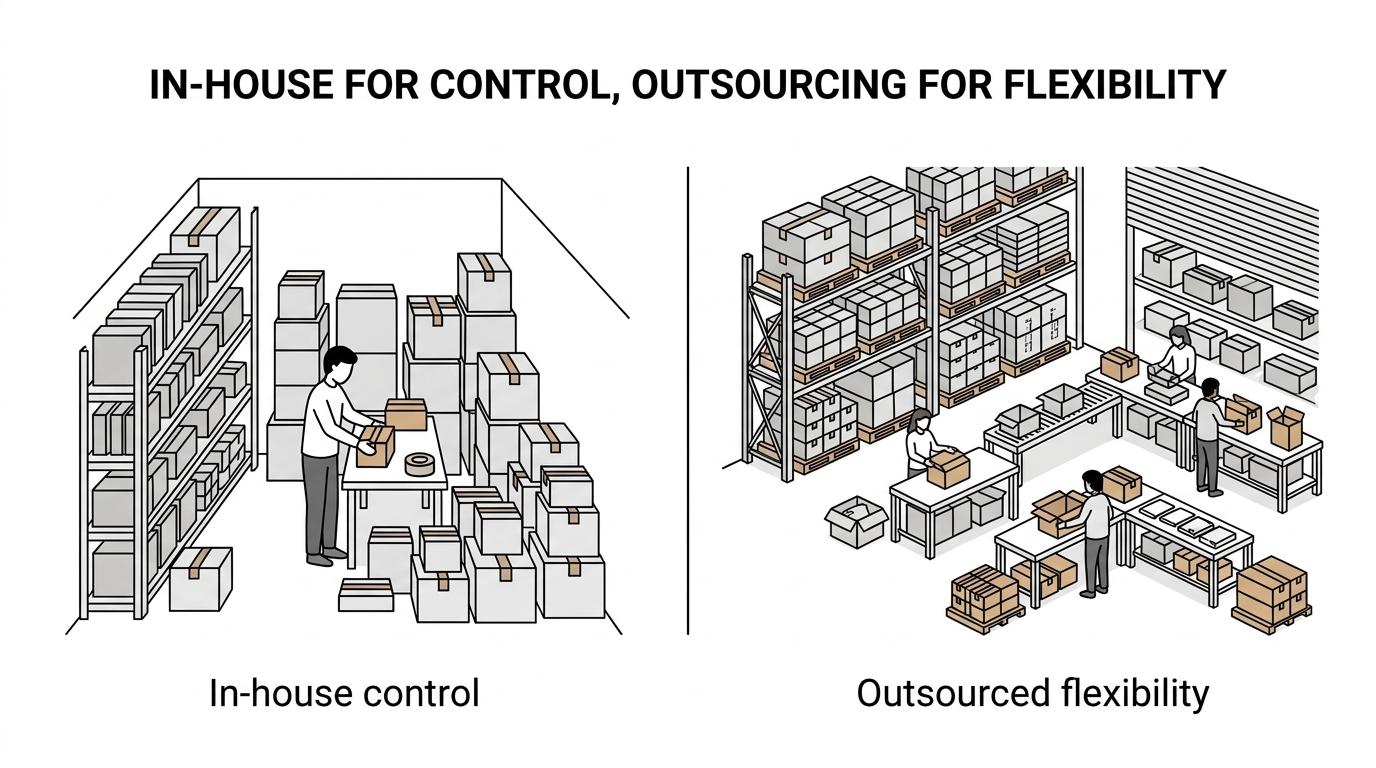
The key is to compare real operating costs across the distribution process rather than headline storage or pick fees. Rent, labour cover, packaging procurement, shrinkage, software, training and the cost of service failure all belong in the same picture.
UK returns management and consumer rights affect fulfilment design
Returns are not a side process. They are part of the core customer offer, especially in apparel, gifting, health and beauty, homeware and other categories where fit, colour, expectation or gifting timing can affect whether an order is kept.
UK law also sets clear expectations. According to GOV.UK, customers who buy online, by mail order or by telephone usually have a right to cancel for a limited period even when an item is not faulty. After telling the seller they want to cancel, they have another 14 days to return the goods. It is illegal to restrict or remove statutory return and refund rights.
That means fulfilment design must include reverse logistics from the start. Returns need clear authorisation steps, reliable parcel routing, fast receipt, accurate inspection and prompt stock updates. If that process is slow, the impact lands in several places at once: delayed refunds, frustrated customers, inflated stock figures and extra pressure on service teams.
A well-run returns process can still protect margin. Items can be graded quickly, put back into saleable stock where suitable, or routed to the correct path for refurbishment, liquidation or disposal. Speed matters here, but consistency matters just as much.
Carrier performance and parcel delivery issues need active management
Even the best warehouse operation depends on the final mile. Ofcom’s finding that 68% of recipients experienced a parcel delivery issue in the previous six months is a reminder that carrier performance should be reviewed with discipline rather than assumed.
Retailers should not rely on a single headline metric. A carrier may perform well nationally while struggling in certain postcode areas, product categories or peak periods. The strongest fulfilment setups track delivery success by service level, destination profile and claims pattern, then adjust carrier mix where needed.
This is also where customer communication earns its place. Accurate tracking messages, realistic delivery windows and fast action on exceptions can soften the commercial cost of disruption.
How to choose UK fulfilment services for growth
Choosing a provider is less about glossy promises and more about fit. A warehouse that works well for simple, low-SKU products may be a poor match for fragile items, bundles, subscriptions or multi-line orders with custom inserts. The shortlisting process should test operational detail, reporting quality and service accountability.
It helps to ask practical questions early, before pricing becomes the main focus.
- Can the operation support current order volumes and realistic peak scenarios?
- Are integrations available for the channels and systems already in use?
- What service levels apply to goods-in, dispatch, stock checks and returns?
- How are delivery exceptions, claims and complaints handled?
- What reporting is available on order accuracy, same-day dispatch and inventory status?
A useful provider review should also cover a few softer points:
- Communication style: clear, direct and easy to act on
- Escalation process: named contacts and response expectations
- Billing clarity: charges that are easy to audit
- Operational discipline: evidence of repeatable processes, not improvised fixes
Site visits, sample orders and reference checks can reveal far more than a proposal document. If the process feels vague before onboarding, it rarely becomes sharper once live trading begins.
Technology and visibility matter in UK fulfilment services
Software does not replace good warehouse practice, though it does make good practice easier to sustain. Inventory synchronisation, order routing, address validation, tracking events and returns status all depend on connected systems that keep data current across channels.
That matters even more when a business sells through its own website, marketplaces such as ebay, and wholesale accounts at the same time. One stock error can create oversells, split shipments and awkward customer conversations. Strong fulfilment systems reduce that exposure and give commercial teams a clearer view of what can be sold confidently.
The most valuable reporting is often simple. Stock on hand, aged inventory, unshipped orders, carrier performance and returns reasons can tell a retailer where service and margin are drifting. With that visibility, fulfilment becomes less reactive and far easier to plan around.
For growing UK ecommerce brands, that is the real opportunity. Fulfilment services are not only about packing boxes faster. They are about building a more dependable operating model, one that can absorb growth, protect customer trust and keep the business moving when order volume rises.