
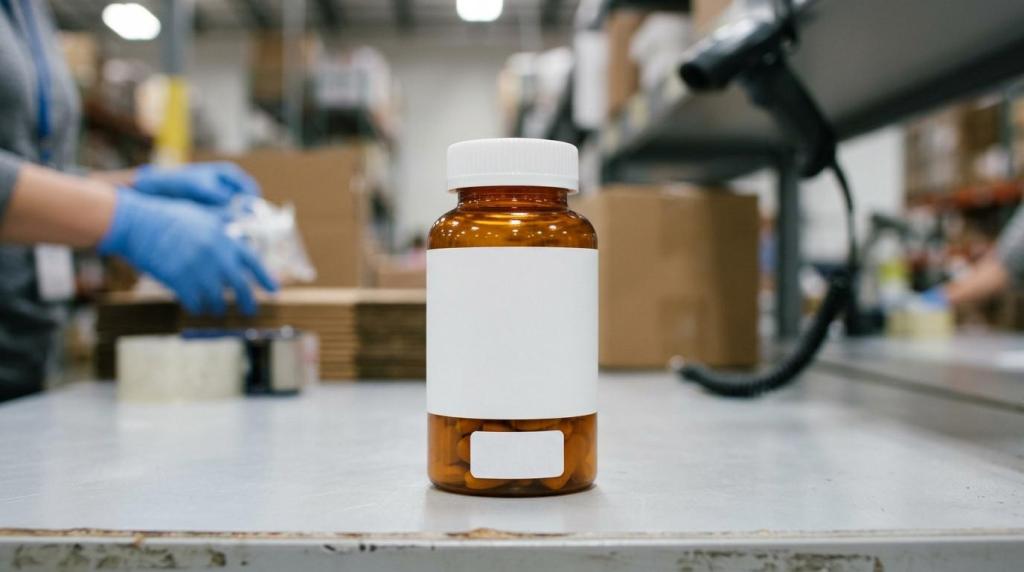
Multivitamin Supplement E-Commerce Trends UK
The UK market for multivitamin supplements is becoming more digital, more competitive, and more operationally demanding at the same time, underscoring the importance of ecommerce and vitamins in everyday health. That mix creates real opportunity for ambitious e-commerce brands, though it also raises the standard for service, stock control, and customer trust.
Multivitamins are already a mainstream purchase in Britain, and online buying is now a normal route rather than a specialist one. When a category moves from niche to habit, success stops being only about product formulation or attractive branding. It becomes just as much about fulfilment accuracy, delivery speed, review quality, and the confidence a customer feels at checkout.
UK multivitamin e-commerce demand is gaining strength
Recent consumer data points to a healthy online market for multivitamin sales and other supplements in Britain, reflecting the considerable market size in this sector. YouGov reported in June 2025 that 44% of British adults had bought vitamins in the previous six months, making vitamins the most commonly purchased supplement category in its survey. That is a strong base of demand before any brand-level marketing even begins.
The digital channel is also firmly established. The same YouGov research found that 52% of supplement buyers purchase online. For multivitamin brands, that matters because it confirms two things at once: there is broad demand, and a large share of that demand is already comfortable being captured through e-commerce rather than only in-store retail.
Wider retail data supports the same direction of travel. The Office for National Statistics reported that online sales accounted for 27.8% of total retail sales in July 2025, up from 27.5% in June. It also recorded rising online spending values and growth in non-store retail sales volumes. In plain terms, online retail remains a growing part of British shopping behaviour, and supplement brands are well placed to benefit.
This is not a passing spike.
Consumer trust in supplement e-commerce matters as much as price
Supplements occupy an interesting space in online retail. Customers may buy them regularly and at accessible price points, yet they still treat them with a higher level of care than many everyday consumer products. Health-related purchases invite more scrutiny, and that shapes how multivitamin brands need to present themselves online.
Research from the Food Standards Agency found that many consumers prefer mainstream retailers and avoid unknown online sellers because of concerns around provenance and adulteration. Reviews and recommendations were also identified as key drivers of purchase decisions. That means trust is not a soft branding issue. It directly affects conversion.
A buyer comparing two near-identical multivitamin listings will often look beyond the label design and price. They are checking whether the business appears established, whether delivery is reliable, whether packaging arrives in good condition, and whether previous customers report a consistent experience. A brand can lose a sale long before the product itself is judged.
After that first impression, these trust signals tend to matter most:
- Verified customer reviews
- Clear product information
- Reliable delivery windows
- Professional packaging
- Recognisable checkout and returns processes
Value for money is shaping multivitamin brand choice
The supplement category is not driven by premium positioning alone. YouGov found that 41% of recent supplement buyers say value for money drives brand choice, while 40% named price specifically. For multivitamin e-commerce brands, this changes the growth model.
A business cannot rely only on paid acquisition and glossy branding if fulfilment costs , delivery errors, or stock waste are eating into margin. Customers want sensible pricing, but they still expect a polished experience. That makes operational efficiency central to commercial performance.
A brand that manages stock well, avoids unnecessary reships, and keeps dispatch moving quickly can often protect margin without forcing pricing out of reach. In a category where repeat purchase is common, that balance is powerful. Small operational gains can lead to stronger review scores, better retention, and lower customer acquisition pressure.
Key UK multivitamin e-commerce trends and what they mean
Several nutritional trends are shaping how supplement brands are building and scaling online in Britain. They are commercial trends on the surface, though each one has a logistics implication underneath.
| Trend | What it means for brands | Fulfilment implication |
|---|---|---|
| More supplement purchases happening online | Higher competition for conversion and retention | Faster, more reliable order handling |
| Value-conscious shoppers | Margin discipline matters | Lower error rates and smarter stock control |
| Trust-led buying behaviour | Reviews and reputation affect sales | Consistent delivery experience |
| Demand for repeat purchase | Subscription and replenishment models can grow | Stable inventory and dependable dispatch |
| Concern about provenance | Product confidence influences conversion | Good batch control and accurate handling |
| Rising online retail share in the UK | More room for digital-first brands | Scalable systems and courier performance |
The message is clear: ecommerce growth in multivitamins is not just about getting more traffic; understanding the market size is crucial to optimizing operational strategies. It is about building an operation that supports customer confidence every single day, especially as nutritional trends continue to evolve.
Supplement fulfilment requirements in the UK are more demanding than standard e-commerce
Not every product category can be treated the same in the warehouse. Vitamins and supplements bring their own handling demands, and these demands become more visible as order volumes rise. What works for apparel, home accessories, or low-risk impulse products may not be enough here.
According to specialist fulfilment providers in the sector, supplement operations depend heavily on stock accuracy, batch control, expiry date management, suitable storage conditions, and packaging standards. That makes sense. A customer buying multivitamins expects the right product, in the right condition, with enough shelf life left to use confidently.
Errors can become expensive very quickly. A simple mis-pick is not only a returns issue. It can damage trust in a category built around routine and wellbeing. The same applies to slow dispatch, crushed packaging, stockouts on popular SKUs, or poor visibility across sales channels.
For supplement brands, core operational priorities often include:
- Batch control: keeping traceability clear across inventory movements
- Expiry date management: reducing waste and protecting customer confidence
- Stock accuracy: preventing oversells and back-order frustration
- Packaging standards: protecting product integrity in transit
- Courier performance: keeping delivery promises credible
A growing business usually reaches a point where these tasks can no longer be managed well through a generalist setup or an improvised in-house process. That is where third-party logistics becomes far more than a storage decision.
Why third-party logistics can unlock growth for multivitamin brands
A good 3PL gives an e-commerce supplement business room to grow without forcing the brand to build warehouse capability from scratch. That matters when sales volumes are rising, product lines are expanding, and customers expect a dependable service from the first order to the fifth repeat purchase.
The first benefit is scale. A fulfilment partner can absorb volume changes more easily than a small internal team. Seasonal peaks, promotional periods, influencer campaigns, and subscription cycles all create pressure on picking, packing, and dispatch. When those spikes are handled well, such as during high multivitamin sales periods, growth feels controlled rather than chaotic.
The second benefit is focus. Brand teams should spend more time on product range, customer experience, retention strategy, and channel growth, instead of firefighting stock issues or chasing courier exceptions all day. Outsourcing fulfilment can free that capacity.
The commercial case is often practical rather than glamorous:
- Fewer dispatch errors
- Better stock visibility
- Faster order turnaround
- Less time spent on warehouse management
- More confidence when scaling marketing
How a specialist 3PL such as 3PLWOW can support supplement e-commerce
A specialist provider is different from a standard fulfilment operator because category knowledge changes daily handling. In supplements, those details matter. A provider that already works with health products is more likely to treat batch data, expiry dates, packaging standards, and stock rotation as normal operational disciplines rather than awkward exceptions.
According to its own service pages, 3PLWOW positions itself as a UK fulfilment partner for supplement and vitamin brands that need faster dispatch, accurate tracking of vitamins, stock control, and handling intended to protect product integrity. The company also states that supplement fulfilment depends on factors such as batch control, storage conditions, expiry date management, courier performance, and fast stock visibility.
That focus is relevant for growing multivitamin businesses because it maps closely to the category’s real demands. A brand selling daily vitamins online does not only need pallets stored and parcels shipped. It needs a process that helps preserve trust and supports repeat ordering at scale.
A specialist 3PL relationship can help in several ways:
- Operational discipline: supplement stock is handled with category-specific controls in mind
- Growth support: brands can increase order volume without rebuilding fulfilment processes every quarter
- Customer confidence: faster and more accurate delivery supports reviews and repeat purchase
- Margin protection: fewer errors and better inventory management can reduce avoidable costs
This is where logistics starts to influence marketing results. If a multivitamin brand invests in acquisition but order fulfilment is inconsistent, the cost of winning each customer rises in real terms. Better fulfilment can improve the return on the traffic a business already pays for.
Multichannel supplement selling increases operational pressure
Many UK supplement brands do not sell through one route alone. They may combine a Shopify store with online marketplaces, social commerce activity, subscription tools, and wholesale or retail supply. That creates a richer sales mix, though it also makes inventory management far more demanding.
When stock visibility lags, the risk of overselling increases. When systems do not update quickly enough, popular products can disappear on one channel while sitting unsold on another. For multivitamins, where repeat customers may reorder on a set schedule, these issues can quickly erode loyalty.
This is why fulfilment capability should be viewed as part of the commercial stack rather than a back-office function. A strong 3PL setup supports better stock data, faster channel coordination, and more confidence when launching promotions or adding new sales routes.
Even a well-designed storefront struggles if the operation behind it is fragile.
What growing multivitamin brands should look for in a fulfilment partner
The right logistics fulfilment partner is not simply the cheapest quote or the nearest warehouse. Supplement brands need to assess whether the provider can match the expectations of a category built on routine, reliability, and trust.
Questions worth asking include service speed, stock accuracy standards, batch tracking capability, packaging processes, integration options, and the provider’s familiarity with health-related products. A general warehouse can store almost anything. A useful supplement fulfilment partner should be able to support the rhythms and risks of this specific market.
A sensible shortlist will usually favour providers that can offer insights into nutritional trends, along with an understanding of the market size,
- Clear inventory visibility
- Strong picking accuracy
- Reliable same-day or next-day dispatch options
- Confident handling of batch and expiry information
- Processes suited to subscription and repeat-order models
As ecommerce continues to expand in the UK, multivitamin brands have a valuable opening, especially given the increase in multivitamin sales during the covid-19 pandemic. Demand is already there. Consumer behaviour is already digital. The brands that convert that demand into lasting growth will often be the ones that treat fulfilment as part of the customer experience, not merely the final step after the sale.