
Peak season is exciting for a growing ecommerce business. It is also the moment when weak inventory habits and inventory management, as well as inventory control, become painfully visible. A campaign can outperform expectations by lunchtime, then collapse into backorders by dinner. A late container, a missed stock count, or a pile of unprocessed returns can turn strong demand into missed revenue.
The businesses that handle Black Friday, Christmas, Easter and other high-volume trading periods well usually prepare far earlier than customers realise. Large delivery networks start holiday planning months in advance, and retail demand during November and December now reaches enormous levels. That same discipline matters for smaller brands too.
For many ecommerce teams, the smartest way to get ready is to pair demand planning with a Third Party Logistics provider. A 3PL like 3PLWOW can provide warehouse capacity, inbound processing, inventory management, stock control and returns handling that would be difficult to build quickly in-house.
Why peak season inventory planning must start early
Peak season rarely arrives as a surprise, yet many businesses still treat it like a short-term rush. That is risky. The pressure is not just on customer orders, shipping, but on maintaining high levels of customer satisfaction. It hits purchasing, inbound freight, storage space, picking capacity, packaging supplies, carrier collections, supply chains, and returns. If one part falls behind, the rest soon follows.
The scale of holiday demand shows why early preparation matters. In the United States, the National Retail Federation forecast 2025 holiday sales of more than $1 trillion across November and December. Major parcel networks also plan for peak long before autumn. USPS has said its peak delivery planning begins every January. The message is clear: if national networks prepare that early, growing ecommerce brands should not wait for the final quarter.
There is another reason to start ahead of time. Research into retail inventory errors has linked inaccurate records with stockouts. A business may believe it has units available, only to find that some stock was miscounted, stored in the wrong place, or tied up in returns. During normal weeks that is frustrating. During peak weeks it can be expensive.
What changes for ecommerce inventory during Black Friday, Christmas and Easter
Peak season is not simply “more orders”. The shape of demand changes. Customers buy faster, more impulsively, and with tighter expectations on delivery speed. Promotions can shift product mix overnight. Gift-driven buying also creates unusual spikes in certain SKUs, bundles and accessories.
That means your inventory plan has to cover far more than forecast volumes. It has to cover where stock will sit, how quickly it can be received, whether fast-sellers can be replenished at pick faces, and how returned items will be handled when the first wave of orders comes back.
Common peak season pressure points include:
- sudden SKU spikes
- stock depletion within hours
- packaging shortages
- delayed goods-in processing
- more customer service queries
- higher returns volumes
How a 3PL fulfilment warehouse supports peak season inventory
A strong 3PL gives a growing business room to scale before, during and after a peak event. That starts with physical space. 3PLWOW describes a fulfilment warehouse operation near Newcastle with more than 30,000 square feet of space and pallet capacity above 10,000, while its seasonal planning material references capacity for more than 15,000 pallets. For an ecommerce brand, that extra room can remove one of the biggest barriers to peak readiness.
Space matters because peak stock is rarely just standard replenishment. Businesses often need extra buffer stock, promotional inventory, gift packaging, inserts, outer cartons and returns segregation areas. If all of that is squeezed into an already full warehouse, errors become more likely and productivity drops. A 3PL with available capacity can build cleaner storage plans before the rush begins.
It also gives flexibility in fulfillment. Instead of forcing every inbound pallet straight into active picking space, stock can be staged, counted, labelled, and stored in a controlled layout. That creates a calmer flow when daily order volumes rise.
| Peak season need | How a 3PL can help | Likely business benefit |
|---|---|---|
| Buffer stock | Hold deeper inventory in reserve locations | Fewer mid-promotion stockouts |
| Promotional lines | Create space for campaign-specific stock | Faster launch of bundles and offers |
| Packaging materials | Store cartons, mailers and inserts in volume | Less risk of packing disruption |
| Returns segregation | Keep returned goods separate from saleable stock until checked | Better stock accuracy and cleaner resale decisions |
How to prepare inbound stock before peak season
The quality of your peak season often depends on what happens before the first order is placed. If purchase orders arrive late, arrive mixed, or arrive with poor carton data, the warehouse pays the price later. A good 3PL relationship starts with cleaner inbound planning, which is essential for effective inventory management and control.
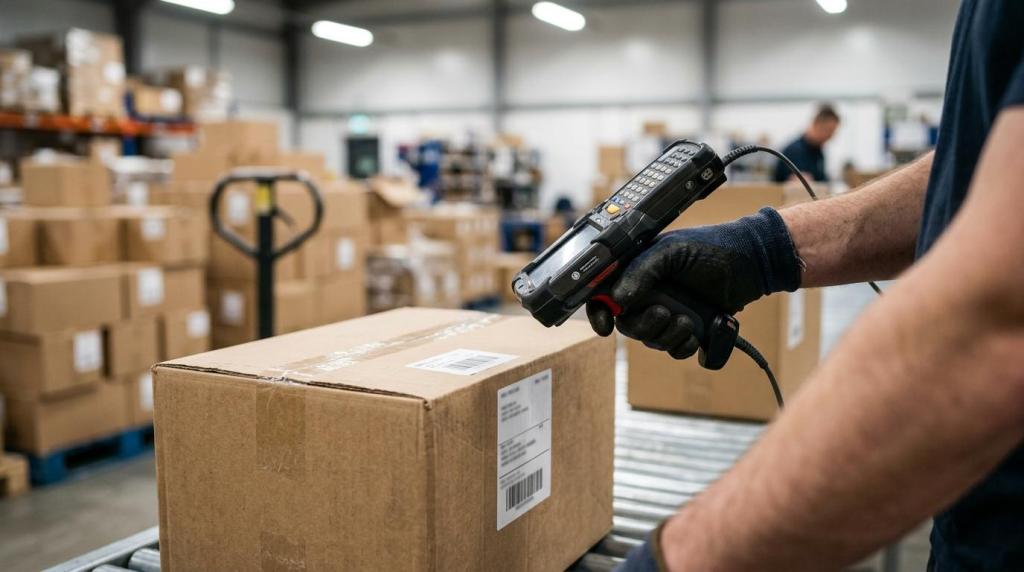
This is where many ecommerce brands gain confidence from using a fulfilment partner. 3PLWOW states that it receives client stock, checks it into the system, and stores it in a controlled way ready for future orders. That sounds simple, yet it is one of the most important parts of the whole process. If inbound stock is not booked in correctly, later order picking can be wrong even when demand forecasting was sound.
Before the peak period, it helps to agree a clear inbound routine with your 3PL:
- Book inbound windows early: reserve receiving capacity before promotional stock starts arriving in volume
- Separate core stock from campaign stock: keep evergreen items distinct from limited-time lines and gift bundles
- Send carton and pallet data ahead: let the warehouse plan labour, locations and equipment before the vehicle arrives
- Plan buffer stock locations: decide what stays in reserve and what moves straight into pick faces
- Confirm labelling rules: avoid delays caused by unreadable or inconsistent barcode formats
Those steps reduce friction on day one. They also help the warehouse process goods in without constant exceptions.
How goods-in processing and stock counting prevent stockouts
Peak season inventory preparation is not only about buying enough units. It is about knowing exactly what you have, where it is, and whether it is saleable.
A disciplined goods-in process usually includes receiving, checking quantities, inspecting packaging condition, recording discrepancies, applying labels where needed, and putting stock away into defined locations. When this is done well, inventory data becomes more trustworthy. When it is rushed, the problems usually surface later as short picks, incorrect stock availability, or cancelled orders.
That is why stock counting matters so much before and during peak. Research has shown that inventory discrepancies can drive stockout behaviour, including cases where the system says stock exists but the shelf does not. In ecommerce, that can lead to overselling, split shipments, and frustrated customers.
Even a brief counting routine can protect revenue and enhance customer satisfaction.
A 3PL can support this with cycle counts, exception checks and tighter inventory visibility across inbound stock, active picking locations, reserve storage, and supply management. If a fast-selling SKU starts drifting away from system balance, the issue can be caught earlier. That is far better than finding out after hundreds of orders have already been released.
There is a practical side to this as well. When a fulfillment provider handles stock counting as part of a repeatable warehouse process, internal ecommerce teams gain time for trading decisions, supplier management and marketing, resulting in greater operational fulfillment. They stop using valuable hours to chase stock mysteries.
How returns handling protects inventory availability after peak
Returns and shipping are often treated as afterthoughts in peak planning. They should not be. For many ecommerce categories, the post-peak returns wave can be substantial, especially after Christmas. If returned items are not processed quickly, the business loses visibility and ties up working capital.
A capable 3PL can set aside space for returns segregation, which 3PLWOW highlights as one of the uses for additional warehouse capacity. That matters because returned inventory should not simply be dumped back into live stock. It needs to be checked, graded and routed correctly.
A practical returns flow often covers:
- Receipt: each parcel is logged against the order or reference
- Inspection: packaging, product condition and resale status are checked
- Disposition: stock is returned to saleable inventory, quarantined, repacked or rejected
- Reporting: the merchant can see trends by SKU, reason code or condition
This process helps in two ways. First, it protects customer service by making refunds and exchanges more orderly, thereby improving customer satisfaction. Second, it recovers stock that can be resold quickly. During a long seasonal trading period, that recovered stock can still support live demand.
What to agree with your 3PL before peak season starts
A 3PL relationship works best when expectations are written down early. Peak season exposes vague agreements very quickly. If your team assumes same-day processing but the warehouse expects a different cutoff, tension appears when order volumes are highest.
A short operational checklist can prevent most of that. It does not need to be complicated, but it should be specific enough that everyone is working from the same plan.
- SKU priorities and top sellers
- Inbound booking deadlines
- Goods-in turnaround targets
- Cutoff times for order release
- Packaging requirements for promotions
- Returns grading rules
- Reporting frequency during peak weeks
- Escalation contacts for urgent issues
It is also wise to review a few “what if” scenarios. What happens if a container is delayed? What happens if a campaign doubles forecast? What happens if a best-seller needs emergency replenishment from reserve stock? A warehouse partner with scale and experience can often absorb these shifts far better than a cramped in-house setup.
How growing ecommerce brands can use 3PLWOW for peak season control
For a business that is scaling quickly, outsourcing fulfillment is not only about reducing internal workload. It is about building a more reliable operating model before demand becomes intense. 3PLWOW’s stated strengths in warehouse capacity, inventory management, receiving stock into the system, counting inventory and handling returns fit directly into the areas that tend to fail first under seasonal pressure.
Large warehouse space gives room for buffer stock and campaign planning. Goods-in processing and effective inventory management help supply stock accurately and faster. Counting routines reduce the risk of phantom inventory and hidden shortages. Returns handling protects visibility after the sales spike has passed.
That combination can change the tone of peak season. Instead of reacting to stock issues every day, a business can focus on buying well, running promotions with confidence and keeping customers happy when order volumes climb. When the warehouse foundation is solid, peak season becomes less about firefighting and more about making the most of demand.