
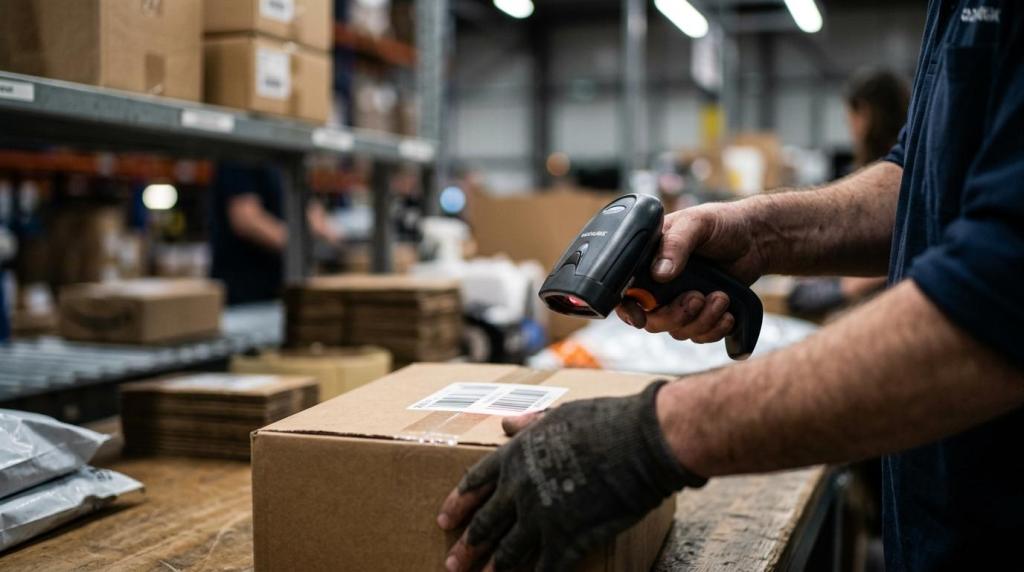
Five Tasks Every Growing Business Should Outsource
Growth is exciting for small businesses and entrepreneurs right up to the moment operations, marketing strategies, and sales start setting the pace. Orders rise, product lines widen, seasonal peaks arrive, and a business that once handled fulfilment neatly from a small unit suddenly finds itself spending too much time on stock, packing, courier issues, and returns.
That shift is common, and it’s crucial to incorporate strong accounting practices to manage the financial implications effectively. Recent U.S. Census Bureau figures show e-commerce continuing to take a significant share of retail sales, with online sales still rising faster than total retail. When demand grows at that speed, fulfilment can stop being a back-office task and become a daily constraint on cash flow, customer experience, and team capacity.
This is where outsourcing to a third-party logistics and order fulfilment provider can make a real difference. A specialist partner such as 3PLWOW can take over the operational work that often slows a growing business down, while giving access to warehouse space, trained staff, shipping processes, and stock control systems without the fixed cost of building everything in-house.
Why outsourced fulfilment matters for growing businesses
A 3PL is not simply extra storage; it is a prime example of outsourcing. It is an external operational partner that can receive stock, store it, pick orders, pack them, dispatch them, track inventory, and process returns. For businesses moving from early traction into sustained growth, that matters because fulfilment pressure rarely stays in one place. A storage issue becomes a picking issue. A picking issue becomes a shipping delay. A shipping delay becomes a customer support problem.
Industry material from Shopify reports that most brands see their 3PL relationships as successful, and many believe those partnerships improve the customer experience. That makes sense. When a specialist team handles routine fulfilment tasks all day, every day, speed and accuracy tend to improve.
The gains are usually practical rather than dramatic, reducing administrative burdens:
- More storage capacity
- Less internal admin
- Better dispatch consistency
- Fewer stock discrepancies
- More time for sales and planning
The five tasks below are often the first ones a growing business should hand to a 3PL.
| Task to outsource | What the 3PL handles | Main business benefit |
|---|---|---|
| Warehousing and storage | Goods intake, storage locations, overflow stock | More room, especially in peak periods |
| Inventory control | Stock counts, system updates, discrepancy checks | Better stock accuracy and fewer oversells |
| Picking and packing | Order assembly, packaging, labelling | Faster fulfilment and improved order accuracy |
| Shipping and carrier coordination | Carrier bookings, dispatch, tracking | Time savings and lower shipping friction |
| Returns processing | Returns receipt, inspection, restocking | Quicker turnaround and cleaner stock records |
Outsource warehousing and storage management for flexible capacity
One of the first warning signs of growth pressure is lack of space. Stock begins filling offices, corridors, spare units, or temporary shelving. New purchase orders are delayed because there is nowhere sensible to receive them. Peak trading periods make this worse, since the business may need extra storage for only a few weeks or months, not permanently.
A 3PL solves that problem by providing warehouse space designed for stock movement rather than improvised storage. That means clearer receiving procedures, better organisation, and more room to hold product lines safely with greater efficiency. For a business working through rapid sales growth and increasing content creation needs, this can remove the need to lease larger premises too early or invest in warehouse equipment before volumes truly justify it.
The value is not only physical space. It is breathing room.
Outsourcing warehousing can also protect cash. Renting extra units, fitting out shelving, hiring warehouse staff, and managing utilities all add fixed overheads. A fulfilment partner spreads those operational costs across many clients, which often gives a growing business access to a better setup at a lower effective cost than building one alone.
This matters most during busy periods. Seasonal campaigns, product launches, promotional spikes, and wholesale arrivals can all stretch internal storage beyond sensible limits. A 3PL gives the business the ability to absorb those surges without forcing a permanent property decision.
Outsource inventory control and stock tracking to reduce errors
Stock accuracy is one of the quiet drivers of growth. If inventory records are unreliable, almost every other function suffers, including customer support. Purchasing becomes guesswork. Marketing pushes items that are not available. Customer service handles avoidable complaints. Finance struggles to trust stock value and margin reporting.
A specialist fulfilment provider can take ownership of inventory control through receiving checks, stock location management, cycle counts, discrepancy investigation, and system updates. Many 3PLs also integrate with e-commerce platforms, giving the business more current visibility over stock positions.
That creates several advantages:
- Fewer stockouts: inventory counts are updated more consistently
- Lower overselling risk: stock records are less likely to drift from reality
- Better purchasing decisions: replenishment can be planned on firmer data
- Cleaner customer experience: fewer cancelled or delayed orders
For entrepreneurs running a growing business, this is often where outsourcing fulfilment and effective marketing starts paying for itself. A stock discrepancy is rarely just a stock discrepancy. It can trigger wasted ad spend, rushed courier costs, refund admin, and damaged trust with repeat buyers.
A larger fulfilment team also helps. In-house operations often rely on a small number of people juggling several administrative roles. A 3PL has dedicated warehouse staff, established checking routines, and clearer accountability for stock handling. That makes errors easier to catch before they become expensive.
Outsource picking and packing for better order accuracy
Picking and packing is the most visible part of fulfilment because it turns inventory into a customer promise. As volumes rise, it becomes harder for a small internal team to maintain the same standard that worked at lower order counts. Rush periods can lead to wrong sizes, missed items, incorrect labels, or packaging that does not protect the product properly.
A 3PL brings trained pick and pack staff whose entire workflow is built around accuracy and speed. Orders are processed using repeatable methods, organised storage locations, and fulfilment systems that support correct item selection and dispatch preparation. That tends to reduce the inconsistency that appears when office staff, founders, or temporary workers are drafted in to help.
Accuracy matters commercially as much as operationally. Every mis-picked order carries a cost: replacement stock, extra postage, service time, and a possible lost customer. When a business hands this task to a provider with a broader staff base and established processes, it often sees fewer avoidable errors and more dependable output.
This is especially valuable during promotions and peak periods, when a small team can be overwhelmed by order volume in a matter of days.
There is also a brand benefit. Packaging standards are easier to maintain when fulfilment is handled professionally. Orders arrive looking consistent, complete, and well packed, which supports trust even when the brand itself is still growing.
Outsource shipping and carrier coordination to save time
Shipping is often underestimated because it looks simple from the outside. In practice, it includes booking collections, printing labels, selecting services, managing cut-off times, tracking parcels, dealing with failed deliveries, and handling courier exceptions. Once order volume rises, this becomes a sizeable daily workload.
A 3PL takes on that dispatch coordination and runs it within an established shipping operation. That can save small businesses a surprising amount of management time. Instead of chasing labels, checking service levels, and resolving administrative courier issues internally, entrepreneurs can focus on trading activity, product development, marketing, supplier relationships, or customer acquisition, ultimately enhancing efficiency.
The time saving is matched by process stability. A fulfilment provider already works with carrier systems and daily dispatch routines, so the risk of orders missing collection windows or being delayed by ad hoc internal handling is reduced. For brands promising fast despatch, that consistency matters.
A business may also benefit from stronger shipping options than it could arrange alone. While exact pricing and service levels vary, 3PLs often have established carrier relationships and the operational structure to support faster dispatch. That does not remove all shipping costs, though it can reduce friction and help the business avoid expensive mistakes caused by rushed manual processing.
Outsource returns processing and reverse logistics to protect margins
Returns can quietly drain a growing business, making accounting more complex. They take time, require inspection, affect stock records, and often create uncertainty about what can be resold. When returns pile up, they tie up working capital and distort inventory visibility at the same time.
A 3PL can manage returns as a structured workflow rather than an occasional interruption. Items are received, checked, recorded, and either restocked, quarantined, or flagged for follow-up according to agreed rules. That creates a much cleaner process than having returns stacked in boxes waiting for someone to deal with them at the end of a busy week.
The operational benefits are clear:
- Faster turnaround: returns are processed sooner, so sellable stock goes back into circulation more quickly
- Better stock integrity: returned items are assessed and recorded through a standard process
- Lower admin pressure: internal teams spend less time on return-by-return decisions
There is a customer angle too. Returns are part of the buying experience, especially in e-commerce categories where exchanges and change-of-mind purchases are common. A business that handles returns promptly is more likely to retain confidence, even when the original order did not stay with the customer.
For growing brands, this can be one of the most sensible tasks to consider for outsourcing because it removes a repetitive, operationally heavy activity that often gets delayed when the team is focused on outbound orders.
How these five outsourced tasks support growth strategy
The real benefit of outsourcing these tasks is not simply that someone else does the work. It is that the business regains decision-making capacity. Leadership time stops being consumed by stock discrepancies, courier chasing, content creation, storage improvisation, and returns backlogs. Internal teams can spend more time on the activities that actually push the business forward.
That shift often improves cost control as well. Instead of adding warehouse leases, shelving, labour, training, and operational systems all at once, the business can plug into a specialist setup already built for fulfilment. This helps limit fixed overheads while still giving access to storage, staff, and process discipline.
When assessing whether the timing is right, the signs are usually easy to spot:
- Late despatches
- Frequent stock count issues
- Overflow storage in temporary spaces
- Customer service and customer support time dominated by delivery queries
- Management attention pulled into daily fulfilment problems
For a growing business, outsourcing warehousing, stock control, picking and packing, shipping coordination, and returns processing is often less about handing over control and more about creating the conditions for better control. With the right 3PL partner, operations become more stable, order accuracy improves, storage pressure eases, and the business gets back the time needed to grow with confidence.