Competing with a major retailer is not about mimicking its size. It is about matching the parts of the customer experience that shape trust, repeat purchases, and word of mouth.
For many small businesses, the real contest happens after a customer clicks “buy”. Dispatch speed, packing quality, stock accuracy, and returns handling often decide whether a brand feels polished or fragile. That is exactly where a strong third-party logistics partner can shift the balance.
The timing matters. According to the Office for National Statistics, online sales accounted for 27.0% of total retail sales in Great Britain in December 2024, up from 26.5% in November. Online spending values also rose by 1.5% over the month. Small retailers are not competing in a niche channel any more. They are competing in a market where ecommerce service standards are visible every day, highlighting the fierce competition they face.
Why small businesses can compete with big retailers on fulfilment
Large retailers have obvious advantages: buying power, warehouse networks, and dedicated operations teams. Yet smaller brands often hold strengths that bigger rivals struggle to copy. They can move faster, foster innovation, shape a sharper product offer, develop strong branding, and build a closer relationship with customers.
The weak point is usually operations, a vital area where a clear strategy is often lacking.
When fulfilment is run in-house, growth can create strain very quickly. A team that packs fifty orders before lunch may struggle badly at five hundred orders a day, especially during promotions, payday peaks, or seasonal surges. Orders go out late, returns pile up, stock counts drift, and customer support ends up spending time apologising instead of selling.
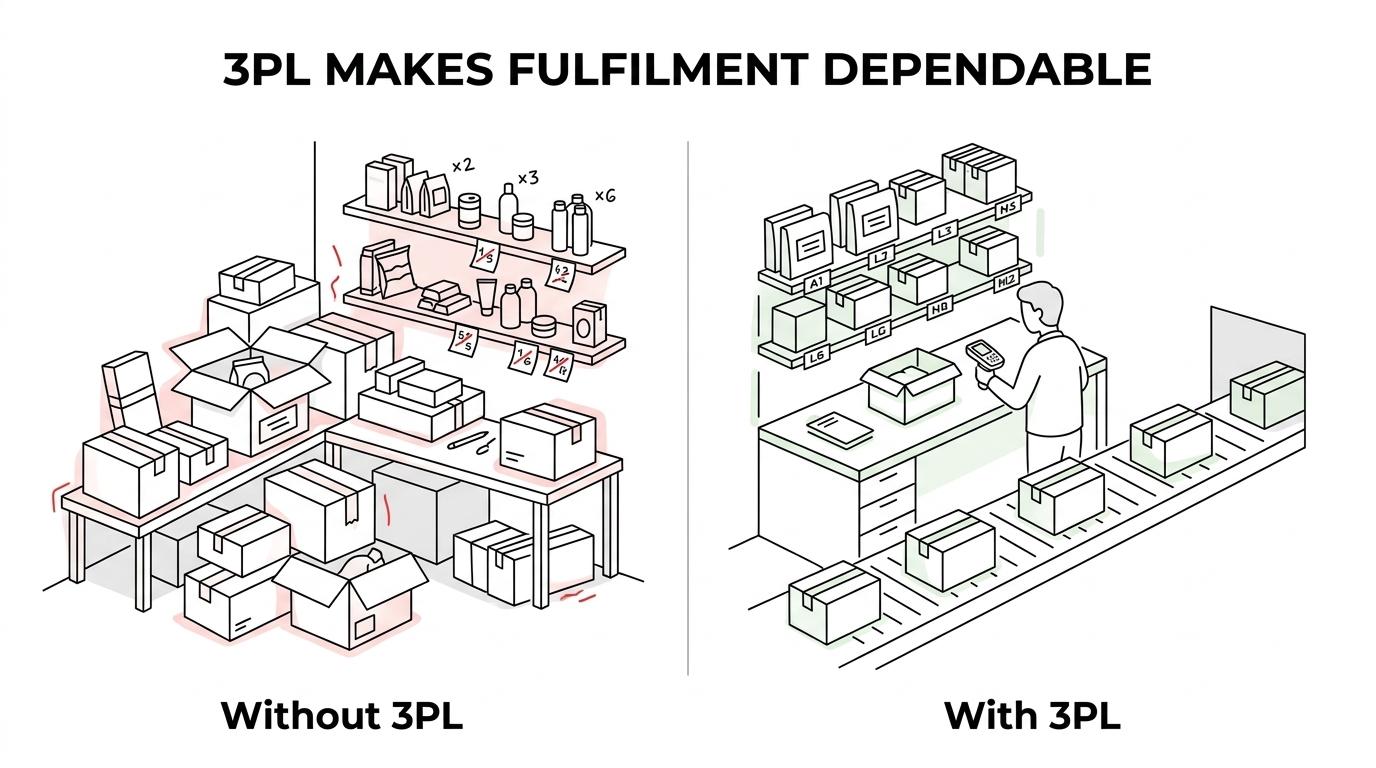
A capable 3PL changes that equation. It allows a small business to keep its brand identity and customer focus while outsourcing the warehouse discipline needed to operate like a much larger retailer.
How a 3PL helps small ecommerce brands compete with big retailers
A third-party logistics provider handles core fulfilment tasks on behalf of the merchant. That usually includes goods-in processing, storage, pick and pack, dispatch, returns handling, and stock management through warehouse systems.
That sounds operational, but the commercial effect is direct. Faster fulfilment means shorter wait times. Better order accuracy means fewer complaints and fewer replacement costs. Reliable stock control means fewer oversells and fewer cancelled orders. Quick returns processing means customers receive refunds or exchanges sooner, which has a clear effect on confidence.
The 2025 Third-Party Logistics Study from CSCMP points in the same direction. It reports that 82% of shippers said 3PLs contribute to improved customer service, while 68% said 3PLs bring new ways to improve logistics effectiveness and reduce overall supply chain costs. It also found that 87% of shippers reported increased use of outsourced logistics services. That is not a passing trend. It reflects a practical response to rising service expectations.
Small brands do not need to own large warehouses to compete. They need access to warehouse performance.
Same-day dispatch gives small retailers a serious service advantage
Customers often compare delivery speed across brands without thinking much about the business behind the order. A small independent retailer can lose a sale simply because its dispatch promise looks slower or less reliable than a national chain.
Same-day dispatch helps close that gap.
If a 3PL has the people, workflow, and systems to process orders quickly, a small business can offer cut-off times and dispatch standards that feel much closer to a big retailer’s experience. That matters at checkout, but it matters even more after the sale, when the customer is watching for tracking updates and delivery notifications.
A provider like 3PLWOW is relevant here because published case studies point to faster daily dispatch after moving to an outsourced fulfilment model. One case study says a small ecommerce brand scaled from roughly 1,000 to 10,000 orders a month, with key gains including quicker dispatch, more consistent packing quality, and stronger stock control during growth.
That kind of result speaks to a common small business problem: growth is welcome, but growth without operational support can damage the customer experience.
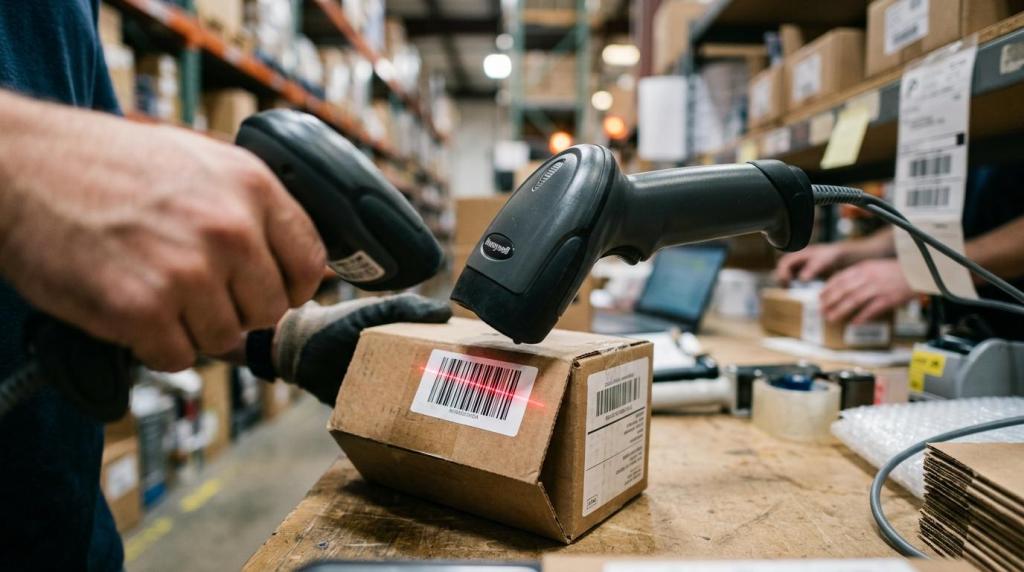
Fast order processing and pick and pack protect the customer experience
Dispatch speed is only part of the picture. Orders also need to be processed correctly, packed well, and handed over without friction.
Pick and pack is often underestimated by growing brands. It sounds simple until order volumes increase, SKU counts expand, bundles become more common, and marketplace orders sit alongside website orders. Then every weak process starts to show.
A well-run 3PL should create discipline across each step:
- Order flow: rapid release of orders into the warehouse queue
- Pick paths: efficient movement that reduces wasted time
- Packing checks: fewer incorrect items, missing units, or damaged parcels
- Branding: through branded inserts
- Multi-item orders
- Marketplace compliance
- Carrier label accuracy
For a small business, this is how operational consistency becomes a competitive tool. A beautifully designed product loses impact if it arrives late, damaged, or incomplete. By contrast, an ordinary parcel that arrives quickly and accurately builds trust in a very practical way.
Strong warehouse management improves order accuracy at scale
Warehouse management is where many small retailers either gain control or lose it.
In the early stage, stock can often be managed with spreadsheets, manual counts, and a lot of memory. That may work for a while. It rarely works well once sales channels multiply and order volumes rise. The result is familiar: items shown as available are not actually on the shelf, popular products run out unexpectedly, and staff waste time searching for stock that should be there.
A strong warehouse management strategy driven by innovation reduces those failures. Clear locations, disciplined goods-in processes, live stock movements, scan-based checks, and consistent exception handling all support higher order accuracy.
The value becomes obvious when the numbers improve. A 3PLWOW case study reports order accuracy rising from 96.2% to 99.4% after a transition to outsourced fulfilment, with monthly order capacity growing from 15,000 to more than 35,000 within 90 days. That difference may look small at first glance, yet the practical effect is large. At 10,000 orders a month, a move from 96.2% to 99.4% means far fewer wrong or incomplete orders reaching customers.
Here is how that operational shift often looks in practice:
| Fulfilment area | In-house under strain | 3PL-enabled model |
|---|---|---|
| Order cut-off | Inconsistent during busy periods | Clear same-day dispatch windows |
| Pick and pack | Manual, variable, person-dependent | Standardised workflows and checks |
| Stock control | Periodic updates, higher drift risk | Structured warehouse management |
| Capacity | Hard to scale during peaks | Easier to flex with volume |
| Returns | Backlogs during busy weeks | Faster, dedicated processing |
| Customer service impact | More “where is my order?” tickets | Fewer service failures |
Big retailers win when smaller competitors look unreliable. A solid warehouse operation makes a small brand feel dependable amid growing competition.
Fast returns processing matters more than many brands think
Returns are often treated as an afterthought, especially by smaller retailers focused on getting orders out the door. Customers do not see it that way. They judge the full buying experience, and returns are part of it.
A slow return can erase the goodwill created by a fast dispatch.
If a customer has to wait days for an item to be logged, inspected, and refunded, the brand begins to feel difficult to buy from. That feeling spreads quickly, particularly in categories with size variation, gifting, seasonal demand, or frequent exchanges.
This is another area where specialist fulfilment support can help a smaller merchant outperform its size. Fast returns processing keeps inventory moving, refunds flowing, and support queues shorter. It also helps finance teams and stock planning because returned units are identified and put back into saleable status more quickly when appropriate.
One 3PLWOW case study reports average return processing time falling from 6 days to 2 days after fulfilment changes were put in place. That is a meaningful improvement for both customer satisfaction and working rhythm inside the business.
Using outsourced fulfilment without losing brand control
Some founders hesitate because they fear outsourced fulfilment will make the brand feel generic. That concern is fair, but it is not inevitable.
A good 3PL relationship should preserve the parts of the experience that matter most to the customer while taking pressure off the operational parts that do not need founder involvement. Packaging rules, branding elements such as branded materials, kitting instructions, channel requirements, and service-level expectations can all be documented and managed.
The aim is not to hand over the brand. The aim is to hand over repeatable warehouse tasks to a specialist team.
That distinction matters.
Many of the best partnerships work because the retailer keeps control of product, marketing, pricing, and customer promise, while the 3PL provides the execution discipline needed to fulfil that promise every day.
What small businesses should look for in a 3PL partner
Choosing a 3PL is not only a cost decision. It is a customer experience decision and a growth decision.
Before making a move, it helps to assess the provider against practical performance questions rather than polished sales language.
- Dispatch performance: same-day dispatch cut-off times, peak capacity, carrier options
- Order handling: pick and pack process, barcode checks, accuracy reporting
- Returns speed: average return processing time and exception handling
- System visibility: stock reporting, order status updates, integrations
- Flexibility during peaks
- Clear pricing structure
- Experience with similar product types
It is also wise to ask how onboarding works. One published 3PLWOW case study notes that a brand kept a short overlap period with some in-house shipping while the new model ramped up. That kind of transition planning can reduce risk and protect service levels while the handover settles.
A practical growth model for small retailers using 3PL fulfilment
For many small businesses, the best time to move is not when operations have already broken down. It is when order volume is rising, service pressure is visible, and the team is spending too much time packing boxes instead of growing the brand.
The switch to outsourced fulfilment can create room for stronger trading decisions. Marketing can scale with more confidence. Product launches become easier to manage. Promotional activity becomes less risky because dispatch capacity is less constrained by office space or a tiny back-room stock area.
This is where the competitive story changes with innovation at its core. A small retailer does not need hundreds of stores or a national warehouse estate to compete more effectively. It needs reliable fulfilment, accurate stock, fast returns, and a delivery promise customers can trust.
When those foundations are in place, size starts to matter less than service. And service, unlike scale, is something a small business can improve much faster.