
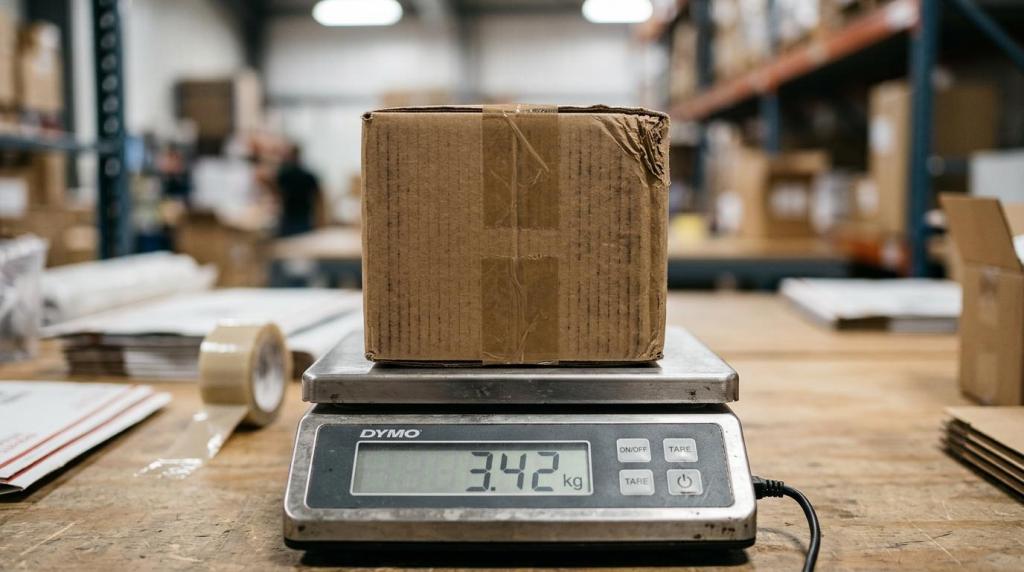
A UK fulfilment quote can look simple at first glance: a pick fee, a storage rate and a postage line, but comparing order fulfilment costs UK providers charge also means checking pick and pack pricing, ecommerce fulfilment prices and other 3PL costs UK businesses may face before requesting a fulfilment quote. Yet once two proposals sit side by side, the totals often tell a very different story.
That gap is usually not random. Order fulfilment costs in the UK are shaped by labour time, storage profile, parcel size, packaging choices, carrier mix, inbound handling and compliance needs. Public pricing examples from 3PLWOW make that clear, with entry points for pick and pack and storage visible online, while still stressing that there is no single rate card that suits every ecommerce operation.
If you want a fulfilment quote that is useful rather than vague, it helps to know how each 3PL cost line works, where extra fees tend to appear, and which details a provider needs before pricing your account properly.
Why UK order fulfilment quotes vary
The biggest reason quotes differ is that fulfilment is a labour business wrapped around a logistics network. A warehouse team receives stock, stores it, picks products, packs parcels, books carrier labels, handles exceptions and often processes returns. Even small changes in order profiles can alter the time spent processing orders.
That labour backdrop matters more than ever. GOV.UK states that the National Living Wage for workers aged 21 and over rises to £12.71 per hour from April 2026, and those rates change each April. The Office for National Statistics also recorded average weekly earnings in transport and storage at £760 in 2025. Those figures help explain why a quote for easy, single-item orders can look very different from one covering gift sets, subscription boxes or fragile items.
Storage costs are equally variable. One brand might turn stock quickly and need only a couple of pallet spaces. Another might hold deep inventory across many SKUs, with slow sellers taking up space for months. The quote has to reflect that reality.
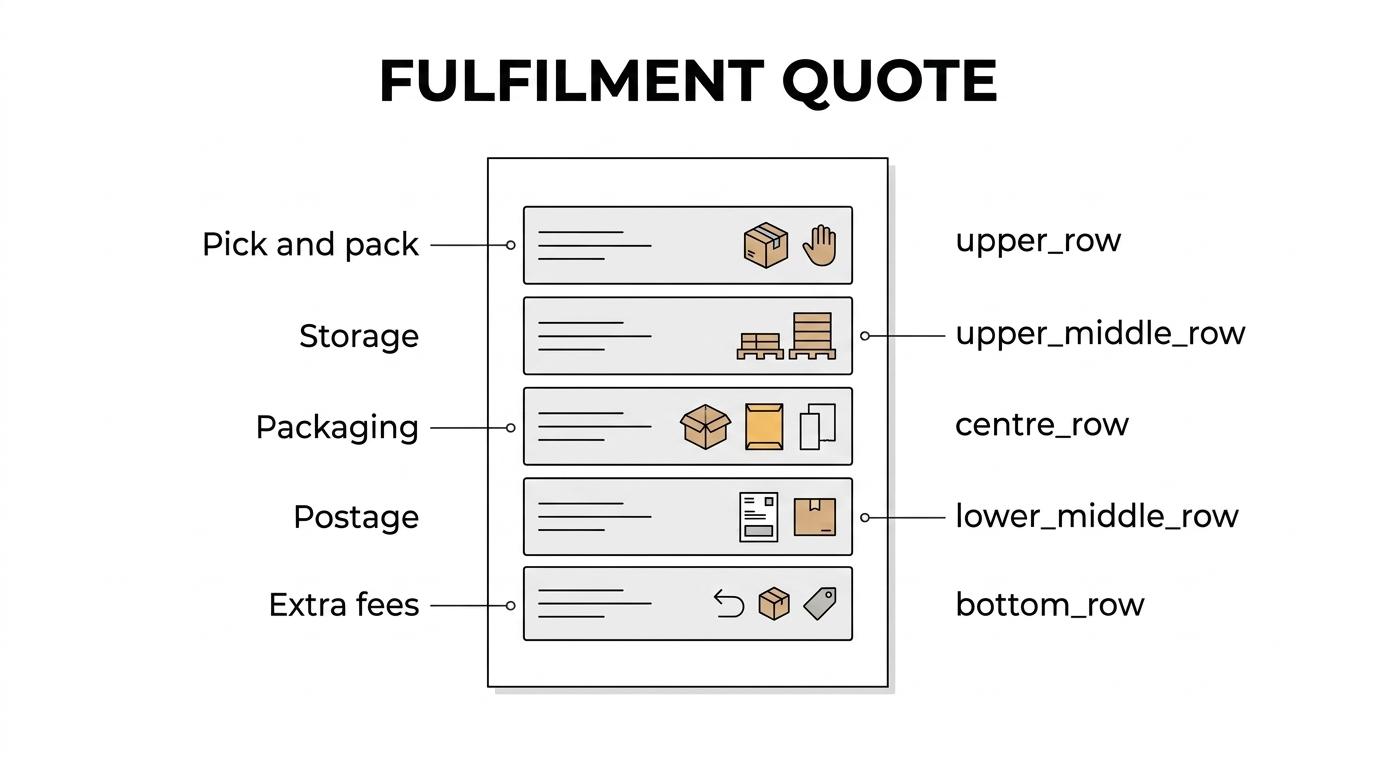
Public examples help set expectations. 3PLWOW publishes sample pricing inputs, including pick and pack from around £0.80 to £0.85 per order in some scenarios, plus posted examples for pallet storage and parcel shipping. Those figures are useful for early modelling, though they are only starting points.
Pick and pack pricing in the UK
Pick and pack pricing is usually the first line brands look at, and often the one they compare least accurately.
In most UK fulfilment models, the core fee covers the first item in an order. That means receiving the order from your store or marketplace, picking one SKU, packing it into suitable packaging, adding paperwork if needed and moving it to dispatch. If your average basket is one item, the base pick fee carries a lot of weight across your orders.
If your orders regularly contain two, three or more items, the extra-item charge becomes just as important. A quote with a low first-item fee can still be more expensive overall if every added SKU is billed aggressively. This is why average items per order is one of the most valuable data points you can supply.
A second issue is product complexity. A T-shirt in a mailer takes little time. A bundle with sleeves, inserts, barcodes and branded tissue takes more handling. The quote needs to reflect the real packing process, not just the order count.
| Charge area | What it usually covers | What pushes the price up |
|---|---|---|
| First item pick fee | Picking and packing the first SKU in each order | Fragile products, packing complexity, low order volume |
| Additional item fee | Picking each extra SKU in the same order | High basket size, mixed locations, bundled orders |
| Storage fee | Space used by pallets, shelves or bins | Slow stock turn, many SKUs, bulky cartons |
| Packaging fee | Boxes, mailers, void fill, inserts | Branded materials, oversized packs, presentation requirements |
| Postage charge | Carrier label and parcel movement | Weight, dimensions, service speed, remote areas |
| Special handling | Kitting, labelling, FBA prep, returns | Manual work, compliance steps, exceptions |
3PLWOW’s public examples also show that volume can change the price. One example shows pick and pack starting at £0.80 per order for the first 500 monthly orders, with each further 500-order block priced 10% below the previous block. That kind of tapering is common in fulfilment, though the breakpoints and mechanics vary by provider.
Storage charges in ecommerce fulfilment prices
Storage is often underestimated because it looks small on a rate card. Over a full year, it can become one of the largest cost areas.
Many warehouses charge by pallet, shelf, bin or cubic space. The right method depends on your products. Dense, carton-packed stock may suit pallet pricing. Small cosmetics or supplements often fit better into bin or shelf charging. Apparel may need a different layout again if sizes and colours create many pick faces.
3PLWOW’s published examples show how different storage views can appear even within one provider’s public information. One pricing example says the first pallet is free and each additional pallet costs £8 per month. Another public page lists storage from £2.00 per week per pallet load. Neither figure should be read as a universal promise. They show how storage may be modelled, while the actual quote depends on how much space you use and how often stock moves in and out.
Location also affects price. A regional warehouse base can help keep overhead lower than premium warehouse locations. That matters, though brands should also weigh cut-off times, carrier collection performance and proximity to inbound freight routes.
A healthy storage discussion should cover more than the rack rate. Ask how storage is measured, when the count is taken, whether part-pallet usage is recognised, and how seasonal stock spikes are billed.
Packaging and postage charges in 3PL costs UK
Packaging and shipping deserve more attention than they usually get. They are not just pass-through charges.
Packaging can include plain boxes or mailers, void fill, tape, labels, paperwork, inserts and branded presentation elements. Some providers wrap standard materials into the pick fee. Others bill each component separately. Neither approach is wrong, but the quote needs to spell it out clearly.
Postage is even more sensitive because carrier pricing changes with weight, dimensions, destination and service level. A large letter, small parcel and medium parcel can sit in very different cost bands even when the item value is similar. Public 3PLWOW pricing includes postage starting from £1.20 per parcel or large letter in certain cases, which is helpful for planning, though actual rates depend on the final shipping mix.
Carrier choice matters beyond price. Ofcom reported that 71% of parcel recipients experienced a delivery issue in the previous six months, with delays and parcels left in an inappropriate location among the most common complaints. When the UK is sending and receiving 4.6 billion parcels a year, dispatch quality and carrier selection are part of the cost conversation, not a separate topic.
When reviewing packaging and shipping terms, these are usually worth checking:
- Parcel size bands
- Dead weight and volumetric weight
- Branded packaging costs
- Cut-off times for same-day dispatch
- Surcharges for remote postcodes
A quote that looks cheaper on pick and pack can quickly lose that advantage if your box choice pushes parcels into a higher carrier band, especially as orders grow.
Extra fees to check in a fulfilment quote
Most surprises appear outside the headline rates.
A 3pl fulfilment proposal may include one-off onboarding work, integration setup, inbound receiving, stock checks, relabelling, returns handling, subscription box assembly, retail compliance work, account management charges or fees for processing orders. None of these are unusual. Problems start when they are hidden in small print or left too vague to model.
This is where a fair quote becomes a detailed quote. If you know which exceptions are likely, you can ask for them to be priced in advance rather than debated later.
Common extra fees include:
- Inbound receiving: unloading, counting and booking stock into the system
- Returns processing: inspection, grading, repacking and putting stock back into saleable inventory
- Kitting work: assembling bundles, gift packs or promotional sets before dispatch
- Marketplace prep: barcoding, bagging or carton labelling for channels with strict compliance rules
- Minimum charges: monthly minimums, storage minimums or order volume floors
- System fees: onboarding, integrations, EDI links or portal access
Imported stock, customs warehouse rules and compliance costs
If you import goods from outside the UK, your fulfilment setup may involve extra admin and compliance steps. HMRC states that goods can be stored in a customs warehouse so duty and VAT are delayed until release for free circulation, though the warehousekeeper must be authorised and strict inventory records are required.
That does not mean every ecommerce brand needs a customs warehouse model. It does mean import setup can affect cost, timing and documentation. If stock arrives with special customs or labelling requirements, your provider needs to know before quoting.
How to compare order fulfilment costs UK quotes fairly
The strongest way to compare ecommerce fulfilment prices is to build a like-for-like basket of assumptions and send it to every 3pl provider.
If one quote includes plain packaging, another excludes it, and a third assumes only single-item orders, the pick fee alone tells you very little. Ask each warehouse to price the same order profile, stock profile and shipping mix. Then compare the totals, not just the first line.
A simple review process helps:
- Normalise the order data: monthly order count, average items per order, SKU count, parcel sizes, dispatch destinations and typical orders.
- Separate fulfilment from postage: compare labour and storage on one line, shipping on another, then look at the combined monthly total.
- Stress-test exceptions: ask what happens with returns, peak weeks, extra pallets, relabelling or late carrier collections.
- Check service assumptions: cut-off time, same-day dispatch rules, carrier claims process and stock accuracy expectations.
This approach makes weak quotes obvious quite quickly. A provider with a slightly higher base rate may still offer better value if the storage method is fairer, the shipping mix suits your parcels better, or the exception handling is more realistic.
Details needed for an accurate 3PLWOW quotation
The best fulfilment quote is built from real trading data, not broad estimates.
3PLWOW’s public pricing pages are useful because they give brands a starting point before requesting a tailored quotation. To move from rough benchmark to credible monthly forecast, the warehouse needs detail. Good input usually shortens the sales process and produces a quote you can trust.
| Detail to provide | Why it matters | Effect on the quote |
|---|---|---|
| Monthly order volume | Shows labour scale and possible volume discounts | Changes base pick and pack pricing |
| Average items per order | Indicates how often extra-item fees apply | Alters handling cost per order |
| SKU count | Affects storage layout and stock control workload | Can change storage and inventory pricing |
| Product dimensions and weights | Determines storage footprint and parcel bands | Changes both storage and postage |
| Sales channel mix | Website, Amazon, TikTok Shop, wholesale and others may need different workflows | Can add compliance or integration charges |
| Inbound profile | Pallets, cartons, container deliveries, delivery frequency | Shapes receiving and booking-in charges |
| Packaging requirements | Plain packs, branded boxes, inserts, gift notes | Changes packaging and labour cost |
| Shipping mix | UK mainland, Highlands, NI, EU, express services | Alters carrier pricing and service design |
| Returns volume | Tells the provider how much reverse logistics work to expect | Can add handling fees or process rules |
| Import and customs setup | Needed if stock arrives from outside the UK | May introduce compliance and record-keeping work |
It also helps to share seasonality. If your peak month is four times busier than your average month, say so early. The same applies to product launches, subscription drops, promotional bundles and retail prep work. A quote built around a calm month can look attractive, then prove unreliable when demand rises.
If you are comparing 3PL costs in the UK with real intent to switch, the most useful question is not “what is your cheapest rate?” It is “what will my operation actually cost each month, with my products, my order profile and my customer promise?” That question tends to produce better answers, better proposals and far fewer billing surprises.