
When a customer clicks buy now, the visible part of selling—and the start of order fulfillment—is over. The operational part starts immediately, including order fulfilment.
For UK ecommerce store owners using Shopify, that moment sets off two connected systems that work together to support order fulfillment. Shopify manages the order record, payment state, and customer communication. A fulfilment partner or in-house warehouse handles the physical work: stock allocation, picking, packing, dispatch, and the return of tracking data to the store. When those two sides work well together, customers experience fast, reliable delivery and clear updates without needing to ask where their parcel is.
Shopify order statuses after checkout
A new Shopify order does not begin life as “shipped”. It starts as an active task. Shopify treats newly placed orders as Open, which simply means there is still work to do around payment, fulfillment, returns, or all three.
By default, the fulfilment status begins as Unfulfilled. That matters because it tells the merchant or fulfilment provider that nothing has yet left the warehouse. Payment may also need to be captured, depending on the store setup. In some cases, merchants review fraud analysis before releasing the order, especially where order value, location, or behaviour raises concern.
Once the order is accepted for warehouse handling, Shopify can show In progress while the merchant or fulfilment team is preparing it. That is the period where real warehouse activity begins: locating items, confirming stock, packing parcels, and booking carrier services.
| Shopify stage | What it usually means | Who mainly acts |
|---|---|---|
| Open | The order has been placed and still needs action | Shopify store team |
| Unfulfilled | Nothing has been dispatched yet | Warehouse or fulfilment partner |
| Payment captured | Funds are approved or collected | Shopify payments setup |
| In progress | The order is being prepared for shipment | Warehouse team |
| Fulfilled | Goods have been dispatched | Warehouse plus carrier |
| Tracking active | Tracking details are live for the customer | Shopify and carrier |
That sequence is simple on paper, though the hand-off between software and warehouse is where performance is won or lost.
Shopify store integration and order import in UK fulfilment
A smooth Shopify fulfilment UK and warehousing setup—whether handled in-house through self-fulfillment, through a Shopify fulfilment network, or as part of a dropshipping operation—starts long before the first same-day dispatch target is hit. It starts with integration, including accurate shipping rates and service options.
When a store is connected to a third-party logistics provider (3PL), the order data can be imported from Shopify into the warehouse system as soon as the customer checks out. According to the published case study from 3PLWOW, that process can include order import, SKU mapping, stock matching, stock allocation, service selection, and exception handling before the order is released for picking. That early sequence is easy to overlook, yet it supports accurate inventory management, helps the warehouse manage order volume, and decides whether the rest of the day runs calmly or turns into a queue of avoidable problems.
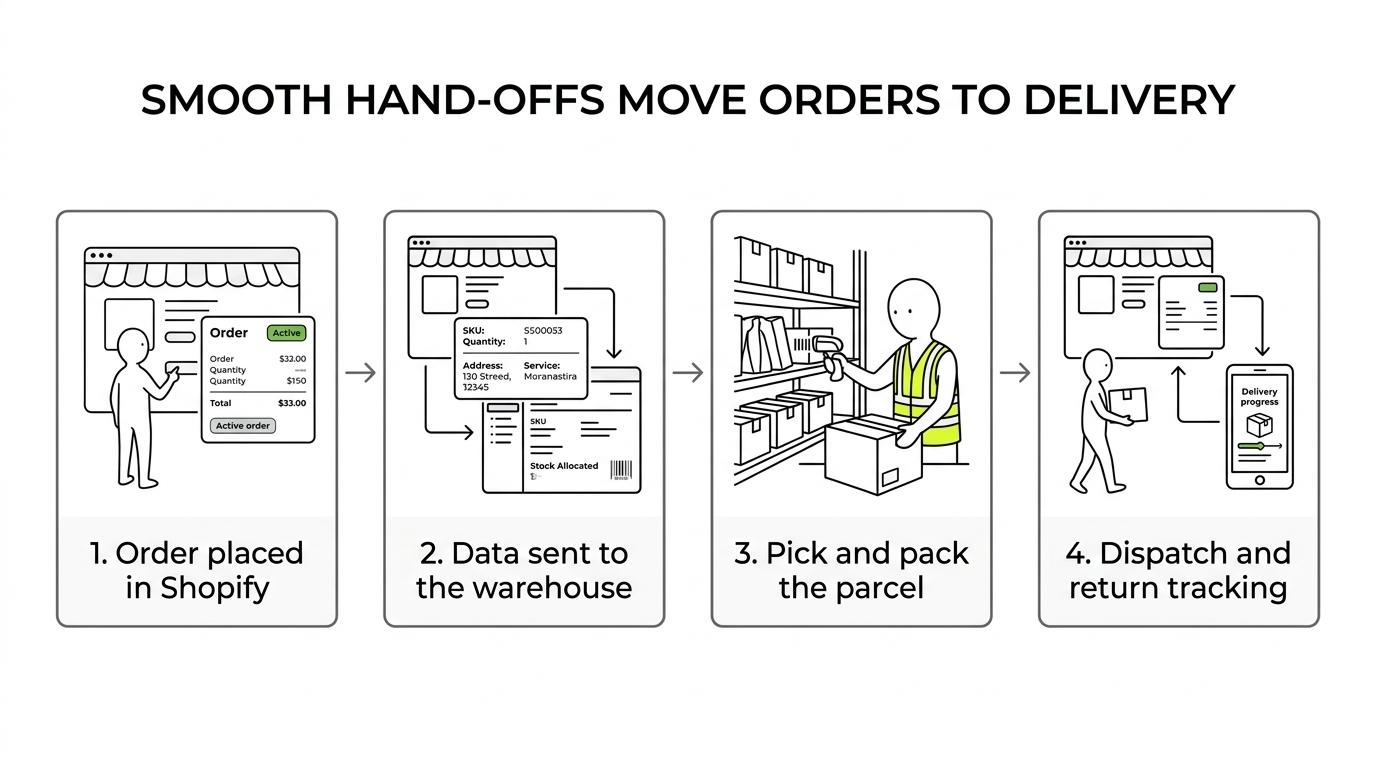
The best integrations do more than “pull orders through”. They make sure customer orders reach the warehouse with the right SKU, quantity, service level, and delivery address, supporting fast, reliable UK delivery.
A reliable integration should pass across:
- order number
- SKU and quantity
- delivery address
- shipping service selected
- tracking return fields
It should also be able to handle the less tidy side of ecommerce, where orders do not fit the standard path.
- SKU mapping: matching Shopify product codes to the warehouse item codes
- Stock allocation: reserving available stock against live orders
- Service selection: choosing the right carrier method for speed, weight, or destination
- Exception handling: pausing orders with missing data, stock issues, or other flags
This is the point where a UK merchant starts to feel the benefit of fulfilment outsourcing. Instead of staff manually copying order details from a Shopify store into another system, the flow becomes far faster and far less exposed to human error.
Picking and packing in the warehouse
Once an order is cleared for fulfilment, the warehouse takes over to manage order fulfillment through efficient inventory management.
At this stage, the practical objective is straightforward: pick the right products from inventory, in the right quantities and from the right storage locations, then pack them in a way that protects the goods and reflects the brand well. Yet each of those steps carries risk. A wrong colour, a missing unit, poor packaging, or the wrong parcel size can turn a paid order into a return, a complaint, or a refund.
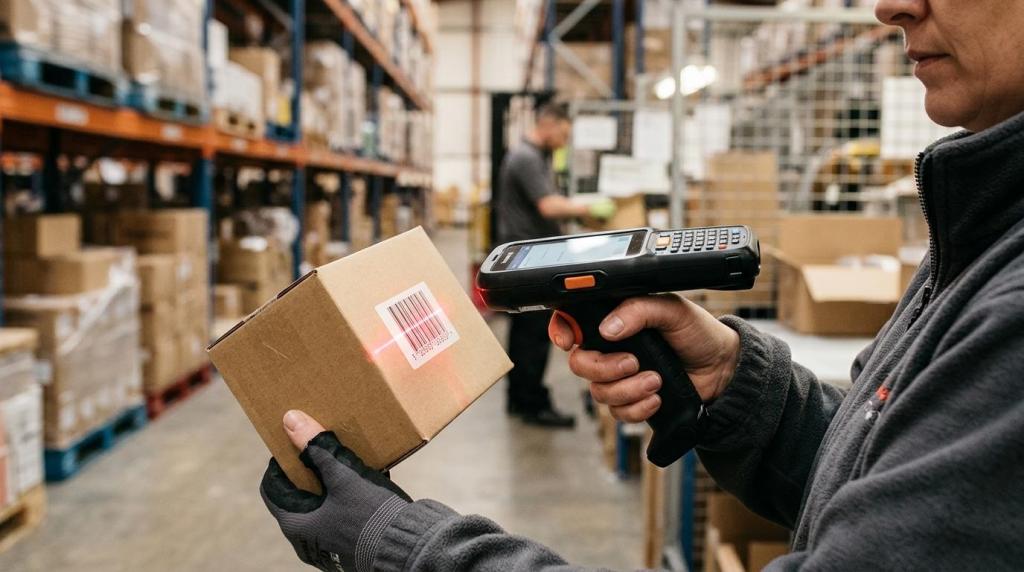
For a Shopify ecommerce store, the status In progress makes sense operationally, marking the stage when order fulfillment is underway. It represents the span of time during which the order is being physically prepared. In warehouse terms, that may mean pick lists are generated, barcodes are scanned, cartons are selected, inserts are added, labels are printed, and checks are completed before dispatch.
Small improvements here often have a visible effect on customer satisfaction.
A disciplined pick and pack process often includes:
- barcode scans at the pick stage
- parcel size checks
- branded inserts or paperwork
- weight verification before dispatch
For merchants shipping across the UK, this stage also influences carrier cost. Packaging that is too large increases spend. Packaging that is too weak increases damage rates. Packaging that is inconsistent makes forecasting and service-level planning harder.
Dispatch and shipping confirmation in Shopify
Dispatch is the point where a warehouse action becomes a customer-facing event.
Once the parcel is handed to the chosen carrier and a tracking number is added to the fulfilled order, Shopify can send shipment updates to the customer. That changes the experience immediately. Instead of waiting in uncertainty, the customer can check progress on the order status page, through shipping confirmation emails, and in the Shop app where applicable.
This matters because delivery communication is part of fulfilment, not an extra. Fast dispatch without clear tracking still creates inbox traffic and support pressure. Clear tracking without timely dispatch creates disappointment. Customers want both.
When the tracking information is returned correctly, the post-purchase experience becomes much stronger:
- Order status page: live progress after dispatch
- Shipping confirmation: email update with tracking details
- Tracking number: a direct reference for the carrier network
- Shop app visibility: another place for customers to follow the parcel
There is an operational nuance here worth noticing. If an order is marked fulfilled but has no carrier and no tracking number, the order may still be moving through a third-party fulfilment process. That means customer expectations need careful handling. From the shopper’s point of view, “fulfilled” should feel real, not premature.
Common exceptions in Shopify fulfilment UK
Not every order follows the ideal route from checkout to doorstep, but effective fulfillment keeps the process moving smoothly. The strongest fulfilment operations are not defined by having zero issues. They are defined by how quickly and clearly issues are handled.
A payment may need review before capture. A fraud analysis flag may prompt a manual hold. A SKU may be oversold or incorrectly mapped. A postcode may fail validation. A customer may choose a next-day service after the warehouse cut-off time. Each of these situations interrupts the standard flow and, if ignored, can create a poor delivery experience.
The operational answer is not panic. It is visibility.
When integration, warehouse systems, and Shopify statuses are kept in step, teams can see which orders are ready, which are blocked, and which need intervention. That keeps the bulk of orders moving while exceptions are isolated and fixed.
Common fulfilment exceptions include:
- payment review pending
- stock not available
- address problem
- shipping service mismatch
- tracking not yet returned
In practical terms, merchants should expect a small percentage of orders to require attention every day. The aim is not perfection at all costs. The aim is a dependable process that keeps disruption contained.
What published 3PL results can tell UK merchants
Performance data is useful because it shows what operational improvement looks like in numbers, not just in theory.
In a published case study, 3PLWOW reported a rise in monthly order capacity from 15,000 to more than 35,000 within 90 days. The same case study reported order accuracy moving from 96.2% to 99.4%, same-day dispatch improving from 71% to 94%, and average return processing time reducing from 6 days to 2 days.
| Metric | Earlier figure | Reported later figure |
|---|---|---|
| Monthly order capacity | 15,000 | 35,000+ |
| Order accuracy | 96.2% | 99.4% |
| Same-day dispatch | 71% | 94% |
| Return processing time | 6 days | 2 days |
Those figures are significant because they reflect the full chain, not one isolated task. Accuracy comes from sound stock control, clean order data, and disciplined checking. Same-day dispatch comes from clear cut-offs, fast release to picking, and reliable carrier collection. Faster returns processing points to organised intake, inspection, and system updates.
For Shopify merchants in the UK, that is the real value of a strong order fulfillment workflow. It creates a post-checkout process that can cope with growth rather than stall because of it.
How Shopify and a 3PL split the work after an order is placed
The division of responsibility is simple, though each side needs to be tightly connected.
Shopify handles the digital side of the order. It records the sale, shows payment and fulfilment statuses, stores customer details, and sends notifications. The warehouse or 3PL handles the physical side. It receives the order data, allocates stock, picks the goods, packs the parcel, dispatches it, and returns tracking details.
That split is exactly why integration quality matters so much. If the data moving from Shopify to the warehouse is accurate and timely, the operational team can act with speed and confidence. If tracking data moves back just as cleanly, customers stay informed and support teams face fewer “where is my order?” messages.
A strong Shopify fulfilment UK setup is not only about getting parcels out the door; it also helps streamline order fulfillment. It is about creating a chain of events that remains clear from the first order notification to the final delivery scan. When that chain is in place, growth feels a lot more manageable, and customers notice the difference.