
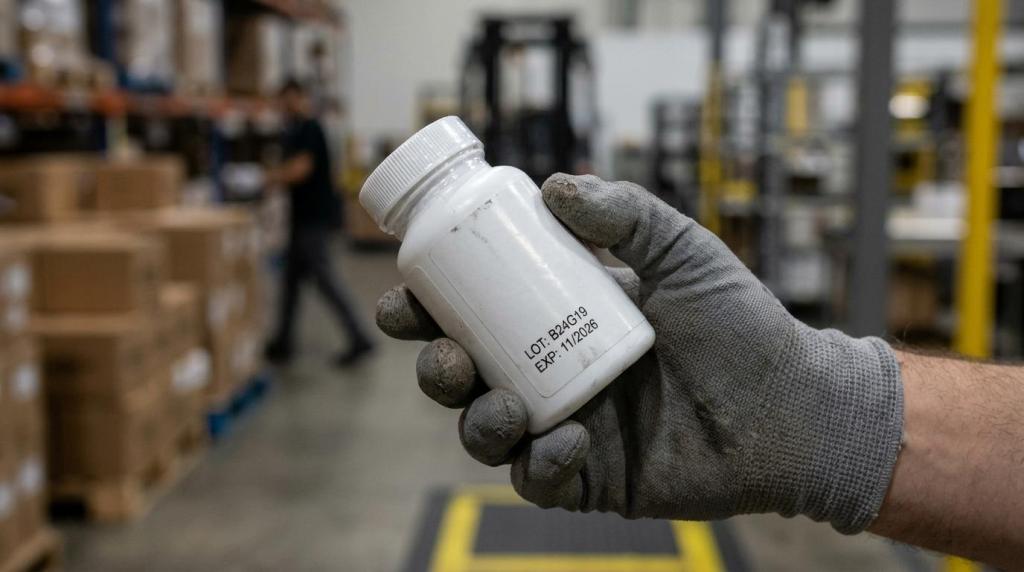
A fulfilment centre that stores food supplements is doing far more than holding boxes on racking. It is handling a regulated food product, often in small dose formats, with clear expectations around hygiene, traceability, stock rotation and dispatch accuracy. That changes the standard for warehouse operations and logistics straight away.
In the UK, food supplements such as vitamins are treated as foods sold in dose form, intended to supplement the normal diet. That means storage and handling should sit within a food-safety framework, not a general merchandise model. A supplement brand may have capsules, powders, gummies, sachets and bundles under one roof, yet every item still needs clean handling, documented checks and reliable records from goods-in to despatch.
Why food supplement storage in a fulfilment centre needs specialist control
A standard warehouse can store consumer goods perfectly well. Food supplements ask for something tighter. Labels may include storage instructions, and effective batch tracking and expiry-date control help guide picking logic and replenishment. If the operation also serves retail, wholesale and direct-to-consumer channels, effective inventory management becomes essential to maintaining stock accuracy.
UK food businesses are expected to work to a food safety management system based on HACCP principles. In practice, that means the fulfilment environment should have defined procedures for storage, hygiene, cleaning, allergen control where relevant, staff training, temperature checks and corrective actions when something falls outside the agreed limits.
This is why specialist supplement fulfilment is often built around a few non-negotiables:
- Batch control
- Expiry date rotation
- Clean goods-in checks
- Traceable stock movements
- Controlled pick-and-pack
- Documented hygiene routines
When those basics are in place, a fulfilment centre becomes part of the brand’s quality system, helping protect product quality rather than acting as just an outsourced warehouse.
Food safety procedures for supplement warehousing in the UK
A supplement operation should begin with risk assessment, not shelving plans. HACCP-based procedures give the warehouse a working method for identifying hazards, setting controls and keeping records. That sounds formal, yet it is also very practical. It shapes how incoming pallets are inspected, how damaged stock is quarantined, how cleaning is scheduled and how incidents are recorded.
The main point is consistency. If the same checks happen every day, stock is easier to trust. If checks are ad hoc, problems can sit unnoticed until a customer complaint, a retailer query or an inspection brings them to the surface.
A well-run site will usually document controls around the following areas:
- Goods-in checks: seal condition, packaging integrity, batch details, expiry information and quantity verification
- Hygiene routines: cleaning schedules, handwashing rules, waste control and pest monitoring
- Temperature checks: regular monitoring in storage and any flagged action if readings move outside agreed parameters
- Stock segregation: quarantine processes for damaged, returned, expired or non-conforming goods
- Training records: evidence that staff know the procedures for food handling and safe picking
This kind of structure also helps with inspections. UK guidance expects food businesses to show how food is stored, handled and kept hygienic. A warehouse that can produce records quickly is in a stronger position than one that relies on informal habits.
Storage conditions and warehouse layout for food supplements
Not every supplement needs chilled storage, yet storing food supplemrnts in a fulfilment centre still requires stable, appropriate conditions. Heat, moisture, sunlight and poor housekeeping can all affect product quality or shelf life. Even where labels only say “store in a cool, dry place”, the fulfilment centre still needs a clear internal rule on what that means in day-to-day operation.
Some specialist providers describe storage from 2°C upwards for relevant products, while many ambient supplement lines are held in organised, dry warehouse conditions with monitoring in place. The right answer depends on the product format, packaging and label instructions. A gummy product may behave differently from a capsule, and its vitamins may require specific storage conditions. A powder in a foil pouch may have different sensitivities from a bottle with a desiccant.
Warehouse layout matters just as much as climate. Fast-moving SKUs should be easy to access. Slow movers and reserve stock should be positioned so that replenishment does not create confusion. A specialist setup may arrange reserve and pick locations around SKU velocity, pack size and order patterns, supporting efficient inventory management, order processing and logistics, as well as speed and control.
| Storage area or process | What needs control | Why it matters |
|---|---|---|
| Goods-in | Delivery condition, paperwork, batch capture | Stops damaged or untraceable stock entering saleable inventory |
| Bulk storage | Temperature, cleanliness, pallet condition | Protects stock quality during longer holding periods |
| Pick faces | FIFO or FEFO logic, label visibility | Reduces picking errors and avoids old stock being left behind |
| Quarantine area | Segregation of suspect or returned goods | Prevents accidental resale |
| Packing benches | Hygiene, order checks, packaging suitability | Maintains product presentation and dispatch accuracy |
| Dispatch zone | Carrier labelling, parcel checks, export documents | Keeps orders moving and supports compliance |
A centre storing supplements should also think about cross-contamination risks as part of its wider storage and logistics controls. Even sealed products need sensible separation rules where allergens, spillages or damaged packs are involved. Good housekeeping is never a cosmetic detail in food operations. It protects the stock and the records behind it.
Batch numbers, expiry information and supplement traceability
Traceability is one of the clearest signs that a fulfilment centre understands supplement storage properly. If a brand needs to identify which orders contained a given batch, the answer should be quick and documented. If the site cannot link receipts, storage locations and despatches, the risk profile changes immediately.
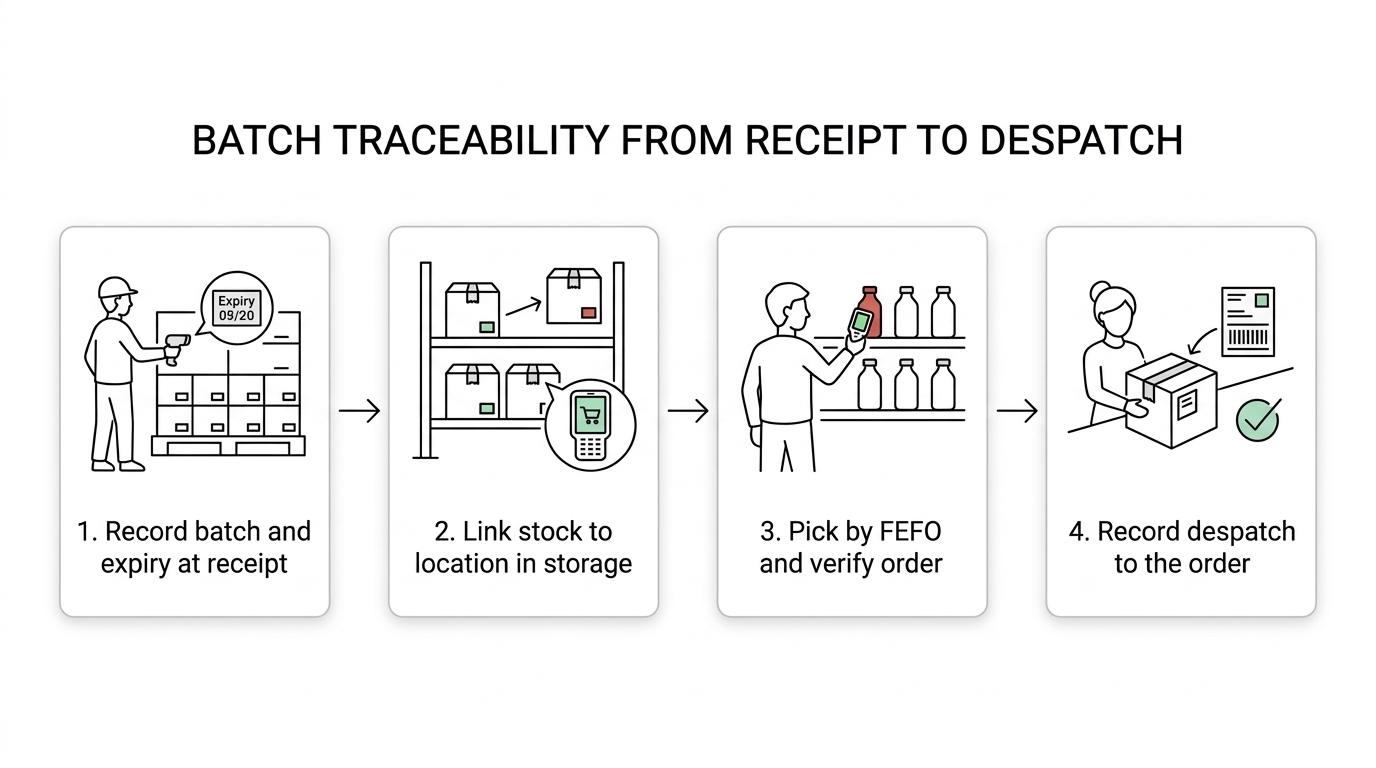
Batch numbers and expiry information should be recorded at the right point, usually when stock is booked in. After that, the warehouse management system and handling process need to preserve that link through storage, picking and shipping. For many supplement brands, FEFO, first expiry, first out, is more useful than simple FIFO because the shelf-life profile can vary by inbound lot.
A strong traceability process often includes:
- Batch capture: recorded at receipt and linked to stock records
- Expiry control: visible in the system and active in picking rules
- Recall readiness: ability to identify affected stock and shipped orders quickly
- Audit trail: time-stamped records of movements, adjustments and quarantines
This is also where specialist fulfilment becomes commercially valuable. Traceability supports customer confidence, retailer compliance and sensible stock rotation all at once. It can limit waste, reduce write-offs and make problem resolution far faster if a product issue appears.
Some supplement fulfilment providers, including 3PLWOW, describe recording batch numbers and expiry details so stock can be traced and rotated through an agreed process. That reflects what many brands now expect as standard rather than a premium extra.
Picking, packing and dispatch for food supplement orders
Storage is only half the story. The quality of supplement fulfilment is judged at the point the customer opens the parcel. If the wrong batch, flavour, size or bundle configuration is packed, excellent warehouse hygiene will not rescue the customer experience.
Accuracy starts with slotting and clear SKU identification. It then carries through to scanning, pick verification, packing checks and labelling. This matters even more when ranges include visually similar products, subscription repeat orders or promotional bundles.
The best operations keep the process simple for staff and strict in control. Goods remain sealed in their original packaging until dispatch where required. Pickers follow a defined method. Packers confirm the order content before the parcel is closed. If international orders are involved, customs documents need to match product descriptions and contents, including any vitamins, cleanly.
A practical packing routine often looks like this:
- Pick to verified order
- Check batch and expiry rules
- Inspect product packaging
- Pack with suitable outer materials
- Apply carrier and channel labels
- Record dispatch against the order
International shipping adds another layer. Some specialist providers position themselves as customs-ready for overseas supplement dispatch, which can help brands avoid delays caused by weak documentation or inconsistent product data.
What to ask a fulfilment centre before storing food supplements
Choosing a fulfilment partner is not only about rate cards and parcel discounts. A lower storage price can become expensive if it brings weak stock discipline, poor hygiene records or limited recall visibility.
The strongest conversations tend to focus on process, evidence and exceptions. A warehouse should be able to explain not just what normally happens, but what happens when something goes wrong.
Useful questions include:
- How are batches recorded: at pallet level, case level or item level?
- How is expiry rotation managed: FIFO, FEFO or a manual rule?
- What hygiene records are kept: cleaning logs, pest checks, temperature checks and incident reports?
- How are damaged or returned supplements handled: immediate quarantine or mixed with regular returns?
- What traceability can be produced: stock on hand, shipped orders and batch history?
- How are labels and storage instructions respected: especially for temperature-sensitive or moisture-sensitive products?
Those answers reveal a great deal. A centre that thinks in terms of food-safety controls and documented routines is usually better prepared than one that speaks only about speed and space.
UK compliance expectations for supplement storage and handling
The compliance picture in the UK is straightforward in principle, even if execution takes discipline. Food businesses need a written food safety management system that meets HACCP principles. They are expected to manage hygiene, storage, transport, allergen risks where relevant, staff training and checks with records of action taken.
For supplement brands using a fulfilment centre, this means the warehouse becomes part of the operational compliance chain. The stock may be owned by the brand, yet the day-to-day storage and despatch controls still need to support legal and commercial expectations.
A few practical themes stand out:
- clear supplier and goods-in checks
- documented storage procedures
- regular review of food safety processes
- traceability for food bought and sold
- clean separation of non-conforming stock
Food supplements, including vitamins, also carry label instructions for storage and use, and those instructions should not be treated as box-ticking text. If a product must be kept dry, protected from heat or otherwise handled with care, the warehouse process should reflect that instruction in its own controls.
That is why supplement fulfilment works best when warehousing, logistics, quality discipline and dispatch accuracy are treated as one connected system. Shelf space matters, of course. The real value comes from what sits behind it: the checks, records and handling standards that keep products saleable, traceable and ready to ship with confidence.