
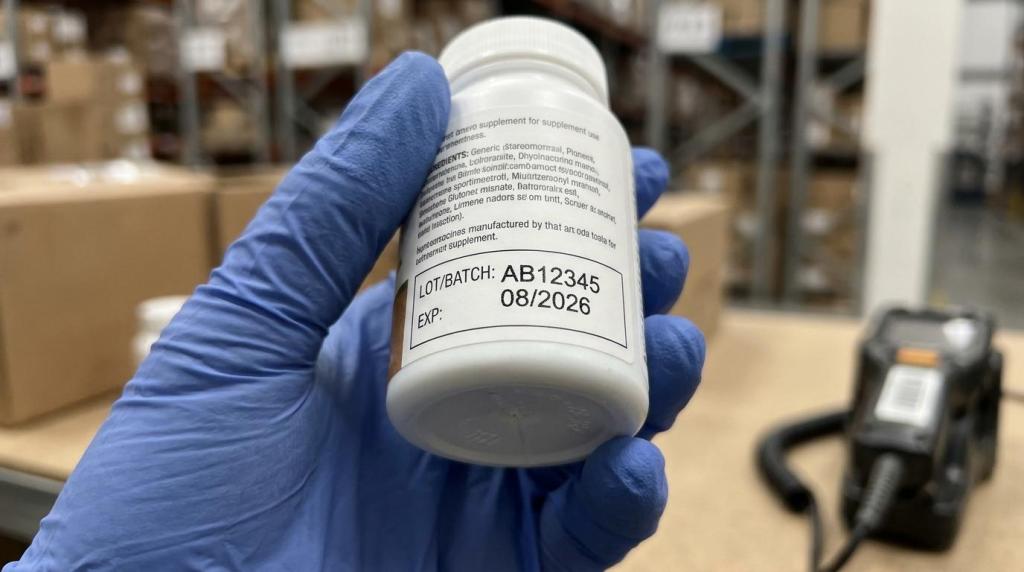
Growth changes the meaning of fulfilment.
When a supplement brand is small, dispatch can look like a stock room, a courier collection and a spreadsheet. Once volumes rise, that model starts to strain. Vitamins, collagen powders and gummies move into a category where fulfilment touches food-law compliance, traceability, batch control, labels, allergens and recall readiness.
That is why supplement fulfilment in the UK is not simply a warehousing decision. It sits inside the rules that apply to food businesses and prepacked products, which means the operational detail matters just as much as shipping speed.
Why supplement fulfilment in the UK is different
A food supplement is treated as a food product, not just a consumer good with a health angle. UK guidance describes a food supplement as a food sold in dose form to supplement the normal diet, with a concentrated source of vitamins, minerals or other substances with a nutritional or physiological effect. That scope is broad. It covers tablets, capsules, gummies, powders and liquids.
For fulfilment, that changes the brief. A provider is not only storing units and printing labels. It may also be handling ingestible products that need controlled stock rotation, clear batch identification, accurate picks and records that can be produced quickly if there is a query from a customer, retailer or authorised officer.
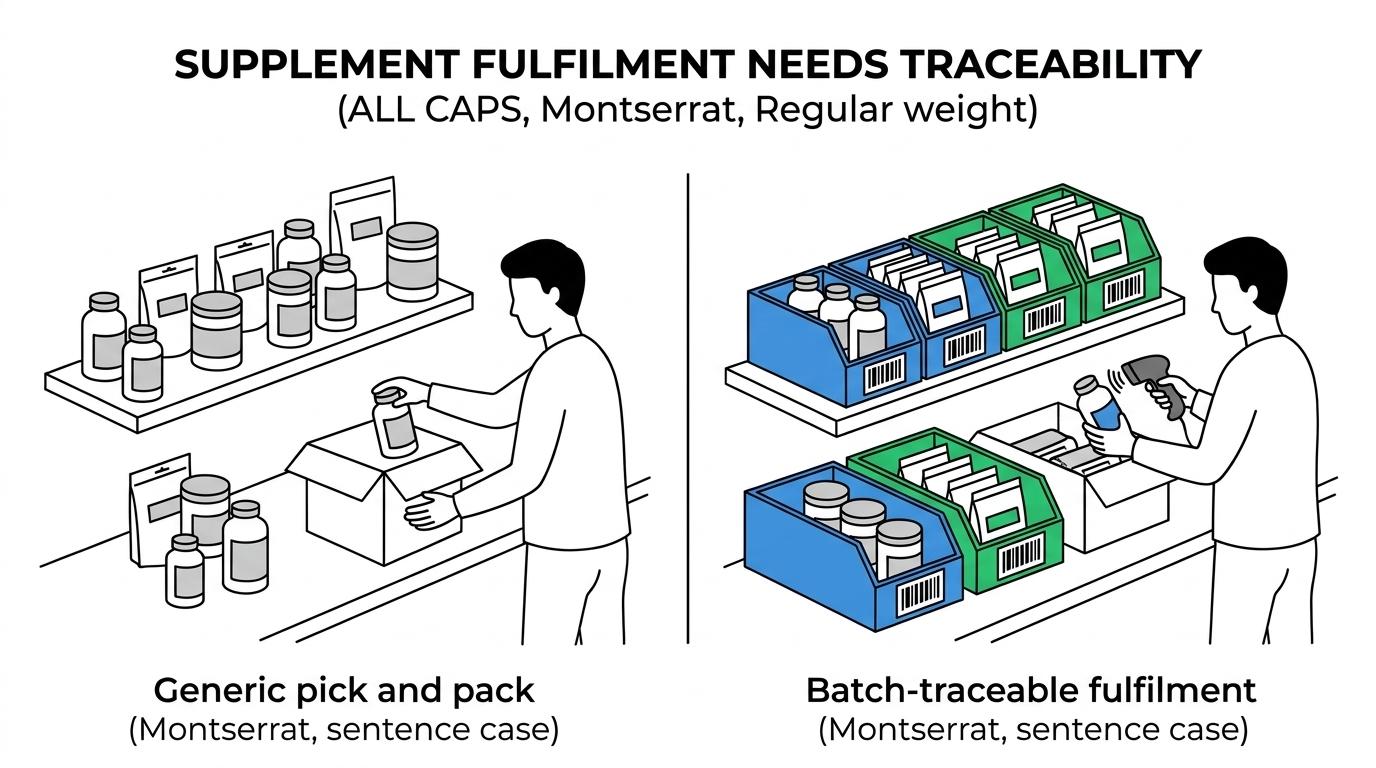
This is the point many growing brands reach when they realise that a standard ecommerce setup may no longer be enough.
UK supplement fulfilment requirements that shape operations
Any business storing or handling food is treated as a food business. In practical terms, supplement fulfilment has to be built around food-business controls from the start, whether stock is held in-house or by a third-party logistics provider.
That means the basics are not optional. Registration with the local authority, staff hygiene training, food-safety procedures, supplier records and the ability to withdraw or recall unsafe stock all sit in the operational background. These are not abstract legal points. They shape daily warehouse work, system design and customer service processes.
A sound setup usually includes the following:
- Food business status: storage and handling of supplements falls within food-business rules
- Local authority registration: relevant sites should be properly registered where required
- Hygiene controls: staff training, cleaning routines and handling standards need to be documented
- Recall capability: unsafe product must be capable of being withdrawn or recalled quickly
- Record keeping: supplier and customer records should be accurate and readily available
For a brand trying to scale subscriptions, bundles or retail replenishment, those controls create stability. They also reduce the risk of a costly scramble later, when a label issue, quality complaint or batch query lands without warning.
Batch traceability in supplement fulfilment UK operations
Traceability is where mature supplement fulfilment stands apart from generic pick-and-pack.
UK food traceability guidance is often described as “one step back, one step forward”. A business should be able to identify who supplied the food, ingredients or relevant materials, and which business the food was supplied to. Where available, records should include batch, lot or consignment information.
For supplement brands, that is essential because batch-level questions are common. A customer may ask about an expiry date. A retailer may query a lot code. A quality issue may affect one production run rather than every unit in stock. If the fulfilment system cannot isolate the affected inventory fast, the commercial and compliance risk rises at once.
Useful traceability data typically includes:
- supplier details
- customer or trade account details
- product identity
- quantities received and dispatched
- delivery and dispatch dates
- batch, lot or consignment code
- expiry or best-before information where relevant
This is one area where software matters, though paper records can still be valid if they are accurate and easy to retrieve. The key question is not whether a system looks sophisticated. It is whether stock can be traced quickly enough to support a hold, withdrawal or investigation without confusion.
Labelling rules for prepacked supplement products
Labelling is another point where fulfilment and compliance meet.
Prepacked supplements can fall under both general food-labelling rules and supplement-specific requirements. At the same time, claims are tightly controlled. A supplement should not be marketed as preventing, treating or curing a disease or medical condition. That rule affects product pages, inserts, outer packaging and relabelled units, not just the front of pack.
For growing brands, this matters in several common situations: a packaging update, a promotional sleeve, a retailer-specific barcode, a translated export sticker or a warehouse-led kitting project. Every change introduces the chance of version confusion. If old and new stock are not separated clearly, the wrong unit can be dispatched even when the physical pick is accurate.
Nutrition labelling rules can also apply to prepacked products, with limited exemptions for some very small businesses supplying direct to consumers or local retailers. Once a brand is scaling through multiple channels, it is wise to assume labels need careful review before stock enters the fulfilment flow.
Product-specific handling for vitamins, collagen and gummies
Not every supplement format behaves the same in storage or dispatch. A warehouse that is effective with bottled capsules may still struggle with powder tubs, refill pouches or heat-sensitive gummies.
The operational differences are often simple, though they matter a great deal in volume. Gummies may be more sensitive to temperature swings and compression during packing. Collagen powders often create more complexity in pack formats, from tubs and sachets to multipacks and subscriptions. Vitamin lines can look deceptively similar, which raises the chance of picker error when SKU counts rise.
The table below shows how format affects fulfilment planning.
| Product format | Common fulfilment risk | Practical control |
|---|---|---|
| Vitamin tablets or capsules | Similar SKUs picked incorrectly | Barcode checks, clear bin locations, image-led pick verification |
| Collagen powder tubs | Lid damage, label scuffs, bulkier carton planning | Stronger packing standards, carton rules by weight, QC at goods-in |
| Collagen sachets | Miscounts in multipacks or bundles | Count controls, kit templates, final pack verification |
| Gummies | Heat sensitivity, clumping or deformation | Temperature-aware storage, faster dispatch windows, reduced compression in packing |
| Liquid supplements | Leakage and courier damage | Upright storage, seal checks, absorbent packing materials where needed |
| Mixed subscription boxes | Batch-mix errors across multiple lines | Order logic, batch scanning, controlled assembly workflow |
A provider does not need a different warehouse for every format. It does need procedures that reflect the product in front of it. That includes goods-in inspection, stock rotation, packing standards and exception handling when damaged units are found.
This becomes even more valuable when brands start offering bundles and subscriptions. The order may look like a simple ecommerce parcel to the customer, yet behind the scenes it can involve several batches, several expiry dates and several label versions moving through one order line.
Allergen controls and claim discipline in supplement fulfilment
Allergen management deserves specific attention because supplement ranges increasingly overlap with free-from positioning, flavoured formats and functional ingredients. UK rules cover 14 allergens, including milk, nuts, soybeans, sesame and cereals containing gluten.
A fulfilment operation is not expected to invent allergen policy from scratch, though it does need to respect the label, the product specification and the way stock is handled. If a brand makes allergen-free or free-from claims, the control standard becomes more demanding. Stock accuracy, segregation and cleanliness all matter more.
A practical warehouse approach often includes:
- Label accuracy: the correct allergen declaration must stay linked to the correct stock version
- Stock segregation: similar-looking units with different allergen profiles should not be mixed
- Damaged stock handling: split, leaking or compromised units need quarantine procedures
- Returns policy: ingestible returns are usually unsuitable for resale once they leave controlled stock
- Recall support: allergen errors need fast batch identification and customer contact routes
Precautionary allergen labelling is its own area and should be handled with care. It is not simply a marketing choice, and it should reflect real risk management rather than habit. Fulfilment teams should work from approved label data rather than assumptions made on the warehouse floor.
Supplement fulfilment UK for direct-to-consumer and retail channels
Many supplement brands now sell through several routes at once: direct-to-consumer ecommerce, marketplaces, wholesale, retail drops and subscription models. That mix is where fulfilment pressure builds fastest.
Direct-to-consumer orders demand speed, presentation and flexible packing. Retail or wholesale orders demand tighter carton compliance, pallet discipline, outer-label accuracy and cleaner documentation. A warehouse serving both channels needs rules for each, especially when the same SKU can appear as a single-unit web order one hour and a retailer case pick the next.
This is also where stock visibility becomes valuable. A brand may need to reserve a specific batch for one retailer, hold another batch pending a query and continue dispatching unaffected stock online. Without reliable inventory status controls, stock can be sold in the wrong channel or released before an issue is closed.
Questions to ask a UK supplement fulfilment partner
Choosing a fulfilment partner is not only about rates, cut-off times and parcel carriers. Those matter, though supplement brands usually gain more by testing operational discipline early.
The right questions are often direct:
- Batch control: can stock be received, stored and dispatched by batch or lot code?
- Expiry management: how are short-dated units flagged and rotated?
- Label version control: how is obsolete packaging prevented from re-entering picks?
- Recall readiness: how quickly can affected customers or trade accounts be identified?
- Format handling: what procedures exist for gummies, powders, liquids and bundled kits?
- Food-business controls: what hygiene, training and record systems are in place?
It also helps to ask how exceptions are handled. What happens when inbound stock arrives damaged? What if a label mismatch is spotted at goods-in? What if a customer reports a leaking bottle or missing safety seal? Strong fulfilment is often most visible when something goes wrong and the response stays calm, documented and fast.
For brands planning the next stage of growth, that is the real opportunity. Good supplement fulfilment creates room to scale without losing control of the basics: compliant labelling, traceable stock, product-appropriate handling and reliable dispatch across every channel. When those foundations are in place, vitamins, collagen and gummies can move through the UK market with far more confidence.