
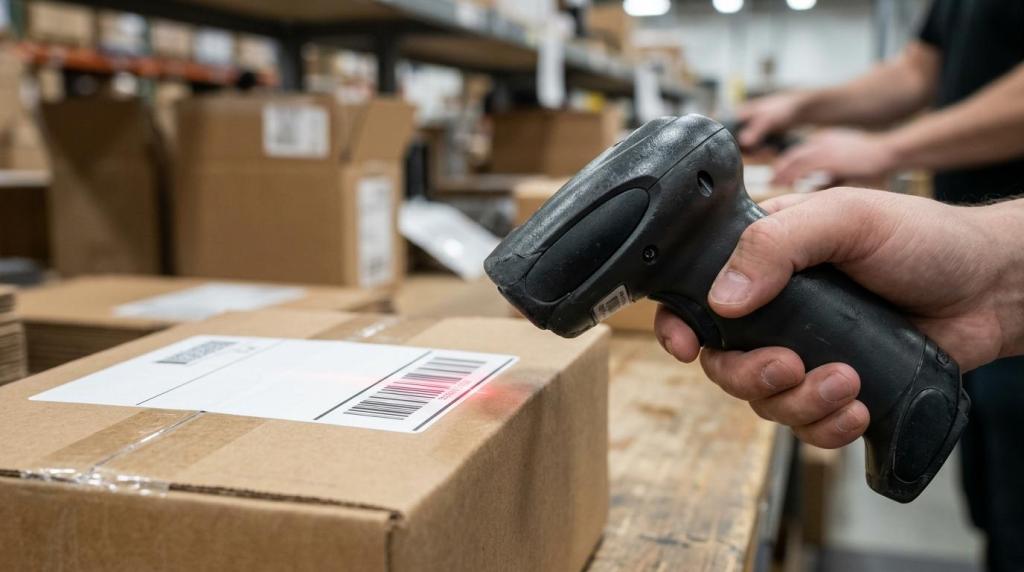
As soon as an ecommerce brand moves past a modest order flow, pick and pack stops being a back-room chore. It becomes a growth function, a customer service function, and a margin function all at once.
That shift is happening in a market where online demand is still significant. UK Office for National Statistics data shows internet sales accounted for 27.2% of total retail sales in September 2025, while online spending made up 50.5% of total card spending. When that much buying activity happens online, fulfilment quality is no longer a side issue. It shapes repeat purchase rates, reviews, returns, and the brand’s ability to scale.
At the same time, warehousing and logistics labour has not become easier to manage. Official indicators and OECD commentary both point to sustained pressure on logistics hiring, with rising demand for workers who can handle both physical operations and digital systems. That makes the case for outsourcing pick and pack much stronger than it was when online sales were smaller and internal teams had more slack.
Why ecommerce demand makes pick and pack outsourcing more relevant
A few years ago, many growing brands could run fulfilment in-house for longer. A small warehouse unit, a handful of packing benches, and a motivated team were often enough. Today, customers expect faster dispatch, accurate stock information, clean packaging, branded packaging where appropriate, and reliable tracking as standard.
That is a high bar when order volumes rise unevenly.
The pattern is familiar. Sales spike after a promotion, a new marketplace launch, a social campaign, or a seasonal period. Internal teams then stretch to keep up, temporary labour is added, quality slips, and leadership spends more time fixing dispatch issues than building the business. What looked efficient at lower volume starts to look fragile.
There is also a skills issue. OECD reporting has described “Warehouse 2.0” roles that combine logistics and digital capability. Pick and pack now depends on inventory systems, channel integrations, scanning processes, returns data, and carrier selection as much as it depends on people moving products around shelves. If a business does not want to build that infrastructure or invest in the resources to run it itself, outsourcing becomes a practical answer.
What outsourced pick and pack actually fixes in daily operations
Outsourcing is often framed as a space problem. In reality, it is usually an operating model problem.
A specialist third-party logistics (3PL) partner can act as a reliable fulfilment partner, supporting scalability by taking on receiving stock, inventory storage, order import, picking, packing, shipping, and returns handling at a dedicated fulfillment center designed for throughput. That matters because small internal setups often become inefficient in ways that are not obvious at first. The owner may still see parcels going out, yet the hidden costs keep growing: overtime, stock mismatches, mis-picks, delayed dispatch, rising rework, and staff pulled away from sales or product development.
The strongest outsourced setups also improve visibility. 3PLWOW, for example, says its service includes live order status, 24/7 stock visibility, tracking details, returns information, and downloadable reports. That kind of access changes the relationship between brand and warehouse. The business is no longer relying on manual updates or end-of-day spreadsheets to know what is happening in its order processing.
A simple way to assess the issue is to look at what breaks first when volume increases.
| In-house warning sign | Likely business impact | What outsourced pick and pack can improve |
|---|---|---|
| Orders pile up after promotions | Lost sales and slower dispatch | More labour capacity during peaks |
| Stock counts drift from reality | Overselling or stockouts | Better scanning and inventory control |
| Team members swap constantly between roles | Lower productivity | Dedicated fulfilment workflows |
| Accuracy falls as order volume rises | Replacements, refunds, poor reviews | Standardised picking and packing processes |
| Dispatch cut-off times are missed | Slower delivery promises | Structured carrier and warehouse operations |
| warehouse space becomes cramped | Picking errors and slower movement | Access to larger fulfilment space |
The point is not that every 3PL solves every problem. The point is that a good provider is built around those problems from the start, helping brands understand why and when you need to outsource your pick and pack.
When to outsource pick and pack: the clearest warning signs
The right time to outsource is rarely the moment when operations fully collapse. The stronger move is to act when strain becomes measurable.
If order volumes are now material, and fulfilment is putting pressure on speed, accuracy, or management time, the decision deserves serious attention. A published 3PLWOW case study gives a useful example of what that change can look like. In that case, a growing direct-to-consumer retailer moved from in-house fulfilment in a small warehouse unit to an outsourced model as demand climbed. According to the published figures, monthly order capacity rose from 15,000 to more than 35,000 within 90 days, order accuracy improved from 96.2% to 99.4%, and same-day dispatch rose from 71% to 94%.
Those numbers are provider-published, so they should be treated as case-study evidence rather than a guaranteed result. Even so, they reflect the core reason brands make the switch: internal fulfilment can become the bottleneck.
Common signals tend to show up well before a crisis:
- late dispatch after sales peaks
- repeated picking errors
- rising overtime costs
- founders packing orders at night
- limited warehouse space
- customer service time consumed by tracking queries
There is another trigger that gets less attention. If senior staff are spending their best hours solving fulfilment issues, the business is paying a strategic cost. Marketing slows down. Product range planning slips. Wholesale or international expansion gets delayed. In that situation, keeping pick and pack in-house may be cheaper on paper, yet more expensive in practice.
How outsourced pick and pack changes cost, speed and accuracy
The financial case is not only about reducing warehouse payroll and labor costs. It is about moving from a fixed structure to one that can flex with volume.
An in-house model usually comes with rent, equipment, packing stations, software, staff scheduling, sickness cover, training, insurance, carrier relationships, and spare capacity for peaks. A 3PL spreads many of those costs across multiple clients. That shared infrastructure can make higher service levels available earlier than a single brand could justify on its own.
Speed matters because customer expectations have hardened. Same-day dispatch, clear tracking, and fast returns processing influence whether a brand feels dependable. If an outsourced provider already has the people, systems, and carrier processes to protect those service levels, a business gains resilience as well as capacity.
Accuracy matters just as much. A warehouse that is 96% accurate sounds strong until order count rises sharply. At 10,000 orders a month, 4% error means 400 problems. At 30,000 orders, it means 1,200. That scale turns “small” operational mistakes into a major drain on support time and margin.
When reviewing the business case, it helps to separate what outsourcing can improve:
- Capacity: extra headroom for promotions, seasonality, and growth
- Accuracy: fewer mis-picks, less rework, lower returns linked to fulfilment errors
- Dispatch speed: better same-day or next-day performance
- Visibility: stronger stock control and order tracking data
- Management focus: more time for sales, product, and customer growth
Not every benefit shows up as a direct line-item saving. Some appear as fewer missed opportunities and fewer operational setbacks.
What to ask a pick and pack provider before switching
A provider may sound impressive in a sales meeting, yet the real test is how well its operation fits your order profile, channels, and customer promise.
The first area to check is systems. If orders come from Shopify, Amazon, marketplaces, wholesale portals, or multiple storefronts, integration quality matters. A provider that supports connected sales channels and automated order flow can reduce manual work and stock friction. 3PLWOW says its onboarding covers sales-channel connections, stock transfer, packaging rules, carriers, pricing, and go-live planning. That kind of structure is a good sign because it shows the switch is treated as an operating project, not just a storage agreement.
The second area is service discipline. Ask how stock discrepancies are handled, how returns are processed, what the cut-off times are, and what happens during spikes. Some providers are set up for predictable volume and struggle when promotions hit. Others are built to absorb fluctuation. 3PLWOW says it can handle seasonal or promotional peaks, which is exactly the sort of claim a growing brand should test in detail.
Key questions should include:
- Systems: Does the provider integrate with your sales channels and carrier stack?
- Stock control: How are goods received, counted, and reconciled?
- Packing rules: Can branded inserts, bundles, gift notes, or special instructions be handled accurately?
- Dispatch performance: What cut-off times and same-day targets are realistic?
- Returns process: How quickly are returns checked, restocked, and reported?
- Pricing model: Which charges vary by volume, destination, storage, and extra warehouse work?
A good outsourcing decision is not based on the lowest pick fee. It is based on the total operating outcome.
How to move from in-house fulfilment to outsourced pick and pack without losing control
Handing over fulfilment does not mean giving up standards. It means codifying them.
The brands that switch well usually document their SKU data, barcode rules, packaging standards, bundle logic, return categories, and carrier preferences before stock moves. That preparation makes onboarding faster and reduces unpleasant surprises in the first weeks after go-live.
It also helps to phase the move with discipline. Some businesses transfer all fulfilment at once. Others start with a defined range, a single sales channel, or a quieter period of the year. The right choice depends on complexity, order volume, and how much internal process is already documented.
Control comes from visibility, not from standing next to the packing bench. If the provider offers live order status, stock reporting, tracking information, and clear exception management, leadership can stay close to performance without being trapped inside day-to-day warehouse work.
That is the real shift.
When a business reaches the point where online sales are meaningful, labour is tight, and fulfilment quality affects customer trust, pick and pack stops being something to “manage somehow”. It becomes infrastructure. For many brands, outsourcing is the point where that infrastructure becomes strong enough for the next stage of growth.