
Every online return begins long before a refund is issued or an item appears back on a shelf. Once a parcel re-enters the operation, it becomes part of a tightly managed workflow that affects stock accuracy, customer service speed, margin protection, and future demand planning.
For brands selling online, ecommerce returns management in the UK is not just about taking products back; it also means following a clear returns policy. It is about identifying each parcel correctly, assessing condition against agreed rules, recording the result, and deciding what happens next. When that process is clear, customer queries are answered faster and returned stock management becomes far more reliable.
Industry data from the United States gives a sense of the scale involved. The National Retail Federation reported a 17.6% online return rate in 2023, while the US Postal Service Office of Inspector General noted that online returns are large enough to drive competition between carriers and third-party logistics providers. The same operational pressures apply in Britain: returns volume can quickly shape warehouse capacity, labour planning, and service expectations.
Ecommerce returns management UK begins with accurate return identification
When a returned parcel arrives at a warehouse or fulfilment centre, the first task is simple in principle and vital in practice: match that parcel to the correct order, customer, and return request.
That usually means checking a returns label, barcode, order reference, or pre-approved return authorisation to keep the returns process moving smoothly. If the item cannot be matched quickly, the whole process slows down. Refunds pause, customer service teams have less visibility, and stock remains in limbo.
A strong fulfilment returns service treats identification as a control point, not a basic admin step. The warehouse team needs to know what should be in the parcel, why it was sent back, and how the brand’s returns policy applies to that product category. Apparel, cosmetics, consumer electronics, and subscription items may all follow different inspection standards.
In practical terms, the receiving stage often aims to answer four questions before the parcel is opened:
- Order matched
- Customer verified
- Return reason logged
- Processing priority assigned
Receiving returned parcels in reverse logistics UK operations
Reverse logistics UK operations work best when the inbound flow is organised in the same disciplined way as outbound despatch. Returns may arrive in bulk from multiple carriers, from drop-off networks, or from retail locations if a brand offers store-based return options.
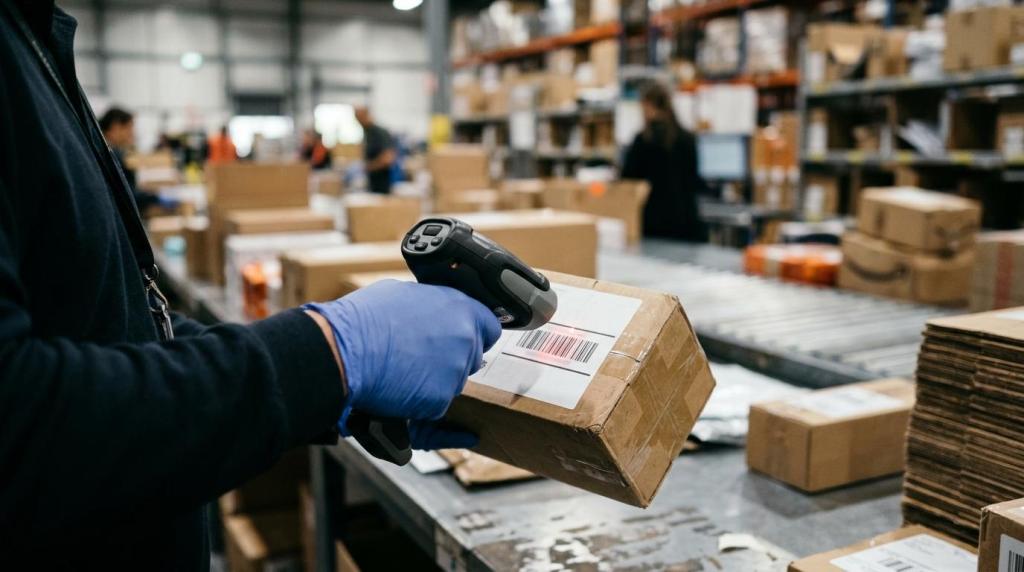
Once received, each parcel is scanned into the warehouse management system or the returns platform used by the brand and its logistics partner. This time stamp matters. It creates a visible starting point for service level tracking, refund timing, and internal accountability.
A well-run inbound process also separates returns into sensible lanes. High-volume fashion returns may move to one station, technical inspections to another, and damaged goods to a quarantined area. That prevents backlogs and reduces the risk of good stock being mixed with products that need deeper review.
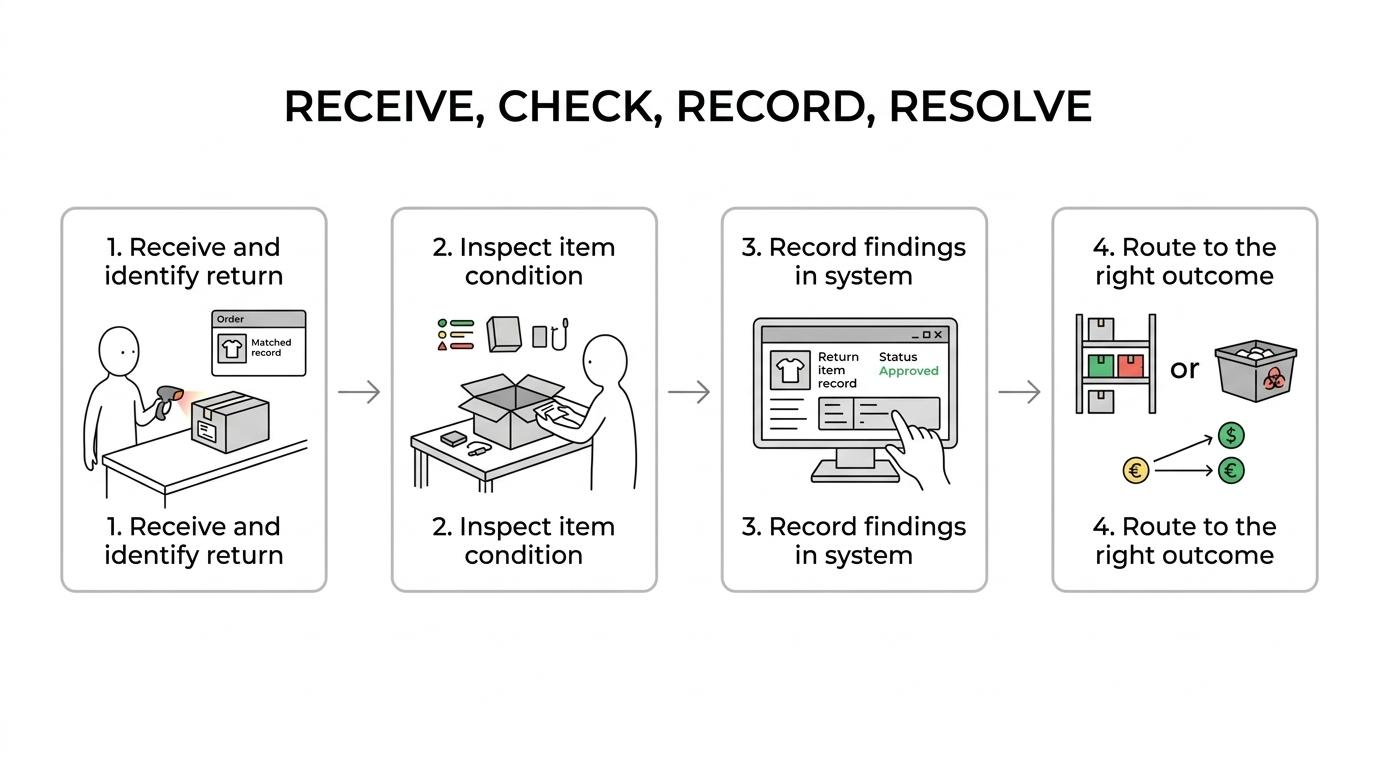
The table below shows how a typical post-return workflow is structured.
| Stage | What happens | Why it matters |
|---|---|---|
| Receipt | Parcel is accepted and scanned | Confirms arrival and starts the processing clock |
| Identification | Return is matched to order or authorisation | Prevents misapplied refunds and stock errors |
| Inspection | Product condition is checked against rules | Determines the next operational outcome |
| Recording | Findings are entered into the system | Creates visibility for customer service and reporting |
| Disposition | Item is restocked, quarantined, or routed elsewhere | Protects inventory quality and margin |
| Closure | Refund or exchange can be progressed | Speeds up customer resolution |
Product inspection and returned stock management decisions
After identification comes the point where returned stock management becomes most important: inspection.
This is where the product itself is assessed against agreed criteria. Is it unopened? Has it been tried on? Are tags missing? Is the packaging fit for resale? Is the serial number correct? Does the item show signs of use or damage? The answers decide whether the product can go back into available inventory or whether it needs a different path.
Inspection standards need to be clear and consistent. A vague process leads to uneven decisions, friction between warehouse and customer service teams, and poor stock integrity. One operator may class an item as saleable, while another may reject the same item. Over time, that inconsistency becomes expensive.
That is why many fulfilment returns service providers specialising in ecommerce returns management UK work with clients to define condition grades and align inspection outcomes with their returns policy, supporting consistent reverse logistics UK processes and accurate returned stock management. Instead of relying on subjective judgement alone, staff follow agreed rules for each SKU type or product family.
Common inspection points include:
- Packaging condition
- Product cleanliness
- Tamper evidence
- Accessory completeness
- Serial or batch number match
- Signs of wear or damage
A recorded inspection should do more than state “acceptable” or “not acceptable”. It should capture the reason behind the outcome. That detail is useful later when a customer asks why a refund has been adjusted, when a merchant wants to identify repeat issues, or when operations teams are trying to reduce avoidable returns.
Reverse logistics UK outcomes after inspection
Once the check is complete, the item needs a clear disposition. In reverse logistics, that simply means the operational outcome assigned to the returned product.
A good returns process limits ambiguity. Every item should move to a defined next step, rather than sitting in an undecided pile waiting for someone to review it later.
Typical outcomes include the following:
- Restock: Item meets resale rules and can return to available inventory
- Quarantine: Item needs review because condition, authenticity, or data does not match
- Return to brand: Product requires manufacturer or merchant decision
- Dispose or recycle: Item cannot be resold and is routed according to agreed policy
- Exchange handling: Returned unit is linked to a replacement order if applicable
This part of returned stock management has a direct effect on margin. Restocking too loosely can create customer complaints when poor-quality products are resold. Restocking too cautiously can write off perfectly saleable inventory. The right balance depends on product type, brand standards, and channel expectations.
It also has a service impact. If the system shows that a returned item is quarantined pending review, customer support can explain the status straight away. If nothing is logged beyond “parcel received”, every customer query becomes slower and less certain.
How products go back into stock safely
Restocking is often treated as the natural end point of a return, yet it is really a controlled re-entry into sellable inventory.
If an item passes inspection, it must be booked back into stock accurately. That may involve updating the inventory system, relabelling, repackaging, returning accessories to the correct unit, and placing the item in the right bin location. Errors at this stage can create a fresh wave of operational problems, including overselling, misplaced stock, and pick failures.
For some categories, restocking rules are strict. Sealed health and beauty items may need untouched packaging. Electrical goods may need accessory checks or power testing. Fashion items may need steaming, folding, or replacement polybags before they are fit for sale again.
A disciplined restocking process usually protects three things at once:
- stock accuracy
- resale quality
- order fulfilment speed
Brands often see the benefit quickly. Better restocking accuracy means the website reflects true availability, planners have more confidence in inventory data, and warehouse teams spend less time correcting avoidable discrepancies.
Fulfilment returns service workflows for exceptions and problem returns
Not every parcel follows the ideal path.
Some returns arrive without paperwork. Some include the wrong product. Some show signs of wear far beyond what the customer described. Others trigger concern about return fraud, which remains a serious issue in retail markets. NRF data in the United States estimated retailers lost $101 billion to return fraud in 2023, which shows why careful inspection and clear records matter.
Exception handling should be designed as part of a clear returns policy before the volume arrives, not invented in the middle of a busy returns peak. If the warehouse team knows exactly where disputed, damaged, or suspicious returns must go, they can isolate problems without slowing the wider operation.
Strong exception workflows often include photo capture, supervisor review, customer service notes, and brand approval points. That creates a documented trail, which is especially helpful if the customer challenges the decision or if the merchant wants to review policy later.
Reporting and visibility turn returns into useful operational data
A returned parcel is not only a unit of stock. It is also a source of information.
When returns data is recorded well, brands can see which SKUs come back most often, which reasons are rising, which carriers are causing damage issues, and how long each step takes. This moves returns from being seen purely as a cost centre to being part of commercial decision-making.
The best reporting usually covers both item-level detail and broader patterns. At item level, teams need to know what happened to a specific return. At trend level, they need to know what the volume is saying about product quality, merchandising, sizing, packaging, or courier performance.
Useful reporting points often include:
- Return reason trends: spotting recurring fit, quality, or expectation issues
- Inspection outcomes: tracking what percentage is restocked, quarantined, or rejected
- Processing times: measuring speed from parcel receipt to final resolution
- Carrier performance: identifying damage patterns linked to transport
- Product-level return rate: highlighting SKUs that need commercial review
This is where ecommerce returns management UK operations can become a real service advantage. If a customer asks whether their parcel has arrived, what was found during inspection, or when a refund will be released, the answer should come from live records rather than guesswork.
Why clear returned stock management helps customer service teams
Customers rarely think about reverse logistics. They simply want reassurance that their parcel has arrived and that their refund, exchange, or query is being handled properly.
That is why a clear process behind the scenes makes such a visible difference. If the warehouse records receipt promptly, customer service can confirm delivery. If inspection findings are logged clearly, support teams can explain the next step with confidence. If disposition codes are standardised, there is less back-and-forth between departments.
The result is faster, calmer communication. Instead of telling a customer that the team is “looking into it”, support can say that the parcel was received on a specific date, inspected on another, and approved for restocking or review. That level of clarity builds trust even when the outcome is not immediate.
It also reduces internal friction. Customer service, warehouse operations, and finance all work from the same information, which cuts duplicate effort and shortens resolution times.
Reverse logistics UK as part of a stronger ecommerce operation
Returns are often treated as an afterthought when brands plan fulfilment, yet they shape customer experience just as much as despatch speed does.
A mature reverse logistics UK setup recognises that returns handling is a stock process, a service process, and a data process at the same time. Receiving, inspecting, recording, and restocking are tightly linked. If one part is weak, the effects spread quickly across inventory accuracy, margin, and customer satisfaction.
For growing ecommerce businesses, that is why a structured fulfilment returns service matters. It gives every returned order a clear path from arrival to outcome, keeps saleable goods moving back into stock where appropriate, and gives support teams the information they need to answer customer queries without delay.
When that system is working well, a return stops being a loose end. It becomes a controlled part of everyday operations.