
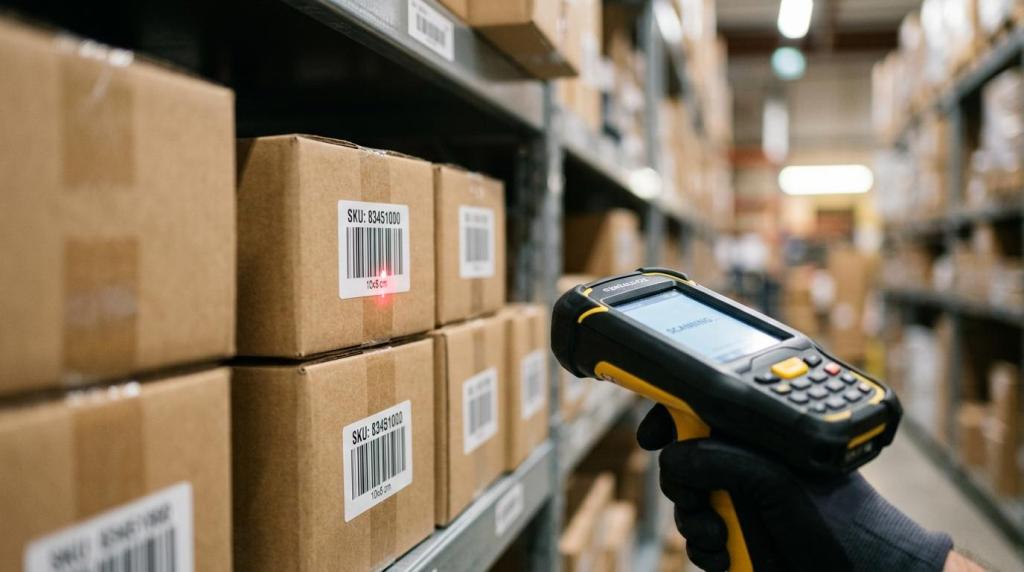
Supporting Business Growth Through Third Party Logistics
Growth is exciting until order volume starts setting the agenda for the whole business. What began as a healthy flow of sales can turn into a daily race to pick products, pack boxes, answer delivery queries, book carriers, count stock, and make room for the next shipment.
That is the point where many firms realise growth is not only about winning customers. It is also about building an operation that can keep pace. Third-party logistics, often shortened to 3PL, gives businesses a practical way to do that by moving fulfilment work to a specialist partner and freeing internal teams to focus on sales, brand building, product development, and customer acquisition.
Why in-house fulfilment can restrict business growth
In the early stages, handling orders in-house often makes sense. It keeps costs visible, gives founders direct control, and works well when volumes are manageable. Yet success changes the maths. More orders mean more staff time spent on repetitive operational work, and less time available for the activities that actually drive the next stage of growth.
A business that wants to scale usually needs leadership attention on strategy, marketing, conversion, retention, and product range. If senior people are printing labels late into the evening or trying to fix stock errors by hand, growth is already paying a hidden price.
Common pressure points tend to appear quickly:
- packing benches overflowing
- stock stored in multiple locations
- shipping cut-off times being missed
- customer service teams chasing parcels
- marketing campaigns paused because operations are stretched
The issue is not that picking, packing, and warehouse control are unimportant. They are vital. The issue is that they are specialised disciplines, and they absorb time, space, systems, and management effort at exactly the moment a business most needs those resources elsewhere.
Third-party logistics services that release time for sales and marketing
A 3PL provider takes responsibility for core fulfilment functions on behalf of the business. That normally includes receiving stock, storing inventory, picking orders, packing goods, arranging dispatch, and often handling returns and stock reporting as well.
This changes the operating model in a very direct way. Instead of building an in-house warehouse operation from scratch, the business taps into an existing fulfilment setup with warehouse space, trained teams, established carrier links, and processes designed around speed and accuracy.
| Business activity | In-house pressure | 3PL support | Growth benefit |
|---|---|---|---|
| Picking and packing | Staff pulled away from core work | Dedicated fulfilment teams | More time for sales and marketing |
| Warehouse management | Space shortages and layout issues | Professional storage and workflows | No need to expand premises too early |
| Stock control | Manual counts and inconsistent data | Structured inventory processes | Better planning and fewer stock problems |
| Shipping orders | Carrier admin and dispatch delays | Established dispatch operations | Faster delivery and stronger customer experience |
| Returns handling | Slow processing and backlog risk | Standardised returns workflows | Quicker resale and clearer customer communication |
The appeal is not only convenience. It is operational capacity without the delay of building every process internally.
Picking and packing support from a 3PL
Picking and packing sound simple until order volume rises sharply.
At that point, speed and accuracy become central to customer satisfaction. Wrong items, poor packaging, missed same-day dispatch windows, and inconsistent presentation all affect repeat purchase rates. A 3PL specialises in this part of the operation, which means the work is carried out by teams whose daily focus is order fulfilment rather than by office staff drafted in during busy periods.
That matters because fulfilment quality shapes the customer’s real experience of the brand. Marketing may win the order, but the parcel confirms whether the promise was genuine.
When a business outsources this process, internal energy can move back towards higher-value priorities:
- Campaign planning: more time for promotions, product launches, and seasonal activity
- Customer acquisition: stronger focus on paid media, partnerships, and organic growth
- Merchandising: better attention on product mix, pricing, and margin
- Retention work: more effort spent on email flows, loyalty, and repeat buying
A capable 3PL also tends to offer greater flexibility during peaks. Promotional spikes, Christmas demand, influencer campaigns, and unexpected press coverage can all create short-term order surges. Building for those peaks in-house is expensive and often inefficient. Using a fulfilment partner can make it easier to absorb volume without breaking service levels.
Warehouse management and stock control through third-party logistics
Warehouse management is one of the least glamorous parts of growth, yet one of the most decisive. Space, product placement, goods-in routines, replenishment, cycle counting, and inventory discipline determine whether a business ships smoothly or spends every week correcting avoidable mistakes.
For growing firms, storage space often becomes a problem before they expect it. Stock arrives in larger quantities to secure better buying prices or support new channels, but the premises do not expand at the same speed. Boxes end up in aisles, meeting rooms, or temporary overflow areas. Efficiency drops. Errors rise.
A 3PL solves much of this by placing stock into a warehouse environment designed for stock movement and control. The business does not need to rent larger premises, fit out racking, or hire warehouse supervisors before it is ready. It can access that infrastructure as a service.
Stock control benefits are just as significant. Better inventory handling supports stronger forecasting, fewer oversells, cleaner reporting, and more confidence when planning campaigns. If a business wants to grow, it needs to know what it has, where it is, and how quickly it moves.
This is where disciplined processes make a real commercial difference:
- accurate goods-in checks
- regular stock counts
- clearer SKU tracking
- faster identification of stock issues
- better visibility for reordering decisions
The result is not only operational tidiness. It is better decision-making across purchasing, marketing, and finance.
Shipping orders and customer service depend on fulfilment strength
Shipping is where internal effort often disappears unnoticed. Booking collections, choosing services, printing labels, managing carrier rules, tracing delayed parcels, and dealing with failed deliveries can consume a startling amount of time.
A 3PL reduces that burden by handling dispatch through established shipping workflows and carrier relationships. That can help businesses offer faster cut-off times, more reliable dispatch performance, and a broader choice of delivery services without building those arrangements alone.
Customer service improves when shipping becomes more consistent. Fewer late parcels mean fewer support tickets. Better tracking means clearer communication. Faster returns processing can also help turn a difficult moment into a positive one, particularly in sectors where returns are a normal part of the buying cycle.
Good logistics support growth because it protects the reputation built by marketing spend. Every order delivered correctly and on time reinforces trust.
UK market evidence for third-party logistics and business growth
The case for outsourcing fulfilment is not based only on theory. There is strong market evidence that e-commerce remains a major part of retail and that logistics partners can improve performance.
The Office for National Statistics reported that in December 2024, online spending values in Great Britain rose by 1.5% month on month and by 1.7% compared with December 2023. The proportion of sales made online also increased from 26.5% in November 2024 to 27.0% in December 2024. That is a sizeable share of retail activity, and it reinforces a simple point: businesses selling online need fulfilment models that can support sustained demand.
Industry research points in the same direction. The 2025 Third-Party Logistics Study from CSCMP reported that 82% of shippers using 3PLs said those providers contribute to improved customer service. The same study found that 66% said 3PLs help reduce overall costs, while 68% said they bring new and innovative ways to improve logistics effectiveness. Those figures matter because they show 3PL is not merely about outsourcing labour. It is often a way to improve service, cost control, and operational performance at the same time.
Published case material from UK fulfilment providers offers a practical view of what that can look like. 3PLWOW Ltd, an active UK company incorporated on 6 May 2016 and registered in Newcastle upon Tyne, has published a case study describing a fast-growing direct-to-consumer retailer moving from in-house fulfilment in a small warehouse unit to a 3PL model. The published results indicate visible progress within weeks, including higher capacity, faster dispatch, and quicker returns processing.
That type of result is instructive because it reflects a common scaling challenge. The business does not fail because demand is weak. It struggles because operations can no longer support the pace of demand without harming customer experience.
Signs a business is ready for third-party logistics support
Many firms wait too long before making the move. They assume outsourcing fulfilment is only for large retailers, or they believe one more warehouse shelf and one more temporary staff member will solve the issue. Sometimes it will, for a short period. Yet growth rarely stays still.
A business is often ready for 3PL support when operational work is beginning to crowd out commercial work.
Typical signals include:
- Order volume is rising faster than internal fulfilment capacity.
- Marketing activity is being limited by warehouse pressure.
- Stock accuracy is slipping or stock counts take too much manual effort.
- Dispatch speed is inconsistent during peak periods.
- Leadership time is repeatedly pulled into day-to-day fulfilment issues.
If those signs are visible, the question is no longer whether logistics matters. The question is whether the current model is still the right one.
What to ask when choosing a third-party logistics provider
Not every 3PL is the right fit for every business. Product type, order profile, returns rates, growth plans, and customer expectations all shape the decision. A fashion brand shipping high volumes of returns will need something different from a subscription business or a B2B wholesaler.
A thoughtful selection process should look beyond price alone. Service reliability, stock accuracy, communication, reporting, and the provider’s ability to cope with growth all matter just as much.
Useful questions to raise include:
- Order profile: can the provider handle your average and peak daily volumes?
- Stock handling: how are goods received, checked, stored, and counted?
- Dispatch performance: what are the cut-off times and service expectations?
- Systems and reporting: what visibility will you have over stock and orders?
- Returns process: how quickly are returns received, checked, and updated?
- Growth capacity: what happens if sales double after a successful campaign?
A strong 3PL relationship gives a business more than outsourced fulfilment. It creates room to think bigger, market harder, and sell with confidence, knowing the operational side is built to support the next phase rather than hold it back.