
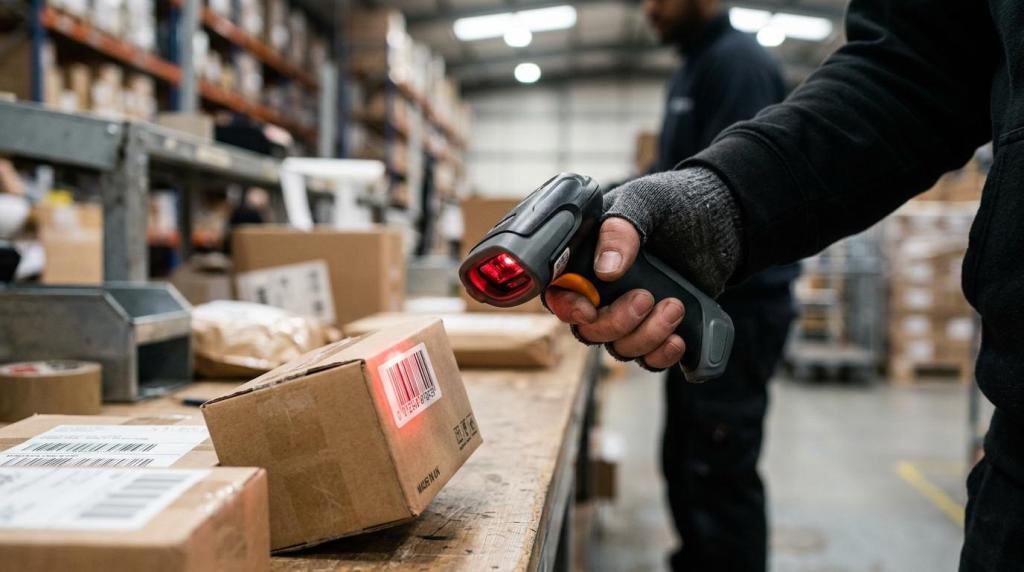
Shipping orders well is no longer a back-office task that customers never notice. It shapes reviews, repeat purchases, refund rates, customer satisfaction, and the confidence a brand has when sales begin to climb. A fast-growing retailer can have a strong product and a sharp marketing plan, yet still lose momentum if fulfilment slips.
That is where a specialist logistics partner can change the picture. For brands looking at outsourced fulfilment in the UK, 3PLWOW presents a model built around quick dispatch, integrated order flow, and pricing that can make outsourced shipping feel far more practical than many assume.
Why shipping speed matters in order fulfilment
Customers judge an online purchase by the full experience, not just the product itself. They remember whether the parcel arrived when expected, whether the order was correct, whether the supply was adequate, and whether a return was handled without delay. Shipping is part of the brand.
Independent third-party logistics research supports that view. The 2018 22nd Annual Third-Party Logistics Study, based on 580 respondents, reported that 81% of shippers and 98% of 3PL providers agreed that using 3PLs contributed to improving services to the ultimate customer. That matters because fulfilment is often the point where customer expectations either hold firm or start to crack.
When dispatch is fast and stock information is reliable, several benefits begin to stack up:
- quicker cash conversion
- fewer “where is my order?” queries
- stronger customer trust
- more room to scale promotions
- less operational strain
A slow warehouse can hold back sales growth. A responsive one can support it.
What 3PLWOW offers for UK order fulfilment and shipping
3PLWOW is an active UK private limited company, according to public Companies House records, and has been incorporated since 6 May 2016. Its registered office is in Newcastle upon Tyne. On its own site, the business says it began in 2016 and moved in 2022 to a facility of more than 30,000 square feet with capacity for over 10,000 pallets.
That matters because brands choosing a fulfilment partner are not only buying storage space. They are buying process, capacity, and the ability to respond quickly when order volume changes.
3PLWOW presents its service around core fulfilment needs, with claims that speak directly to e-commerce operators:
- Order sync: integrated order flow to reduce manual handling
- Pick and pack: service advertised from £0.40 per order
- Storage: pricing stated from £2.00 per week
- Shipping: next-day delivery advertised from £2.00
- Dispatch speed: same-day dispatch promoted on its site
Taken together, those points suggest a provider aiming to make outsourced shipping accessible not only for large retailers, but also for growing brands that need dependable execution without building a full warehouse operation of their own.
Cost savings from outsourcing order fulfilment to 3PLWOW
Cost savings in fulfilment are not only about the courier label. They come from the whole operating model. Renting space, hiring warehouse staff, training them, buying shelving, packaging, software, scanners, and insurance all add up. Then there are the hidden costs: picking errors, late dispatch, wasted management time, and stock that becomes harder to control as order counts rise.
Using a 3PL can shift many of those fixed costs into a more flexible structure. Instead of building capacity for your busiest month and paying for it all year, you can access an existing operation designed to handle changing volumes. That is often where the real saving sits.
3PLWOW’s published starting prices are useful because they give merchants a visible baseline. Storage from £2.00 per week, pick and pack from £0.40 per order, and shipping from £2.00 for next-day delivery create a simpler frame for cost planning than a patchwork of internal warehouse expenses. Actual spend will still depend on product size, order mix, supply levels, returns levels, and required services, though the principle is clear: a specialist provider can turn warehousing from a capital-heavy function into a more predictable operating cost.
| Cost area | In-house fulfilment pressure | How 3PLWOW can help |
|---|---|---|
| Storage space | Paying for warehouse room even in quieter periods | Published storage pricing offers a clearer starting point |
| Labour | Recruiting, training, holiday cover, overtime | Existing fulfilment teams reduce staffing pressure |
| Pick and pack | Errors rise when volume spikes | Structured warehouse processes can support consistency |
| Shipping rates | Smaller brands may lack courier buying power | Aggregated shipping volume can support lower unit costs |
| Management time | Founders and operations teams get pulled into dispatch | Outsourcing frees time for sales, stock planning, and customer service |
There is also a strategic saving that is easy to miss. When fulfilment is stable, teams spend less time fixing avoidable problems. That means more attention can go into merchandising, forecasting, and customer retention rather than chasing parcels and correcting stock discrepancies.
Faster dispatch and delivery with 3PLWOW
Speed is where outsourced fulfilment becomes very visible to customers. A well-run warehouse shortens the gap between the moment an order is placed and the moment the parcel starts moving.
3PLWOW states same-day dispatch and next-day delivery options, which is the kind of service level many online shoppers now expect as standard rather than premium. Fast processing can be especially valuable for brands selling on multiple channels, where marketplace performance metrics and customer reviews can quickly reflect shipping delays.
A published 90-day case study from 3PLWOW gives a more concrete picture of what improved fulfilment can look like. According to that case study, monthly order capacity rose from 15,000 to more than 35,000, order accuracy improved from 96.2% to 99.4%, same-day dispatch increased from 71% to 94%, and average return processing time fell from 6 days to 2 days.
Those figures are from a company case study rather than an external audit, though they are still useful because they show the operational areas that matter most: capacity, accuracy, dispatch speed, freight efficiency, and returns handling.
Faster fulfilment does more than satisfy a delivery promise; it enhances customer satisfaction and benefits from effective shipping solutions to streamline operations. It can support stronger ad campaigns, reduce backlog risk during peak periods, and help brands accept more orders with greater confidence.
Better order accuracy and information flow in a 3PL relationship
Accuracy is the quiet engine behind successful shipping. A parcel that arrives quickly but contains the wrong item still creates cost, friction, and disappointment. Good fulfilment depends on clean information moving from storefront to warehouse to courier without distortion.
This is one reason system integration matters so much. 3PLWOW promotes order sync and integration, and that is not a minor technical feature. It directly affects how quickly a warehouse can process orders and how reliably stock levels reflect reality.
The wider 3PL market has long recognised this. The same 2018 industry study reported that 74% of shippers and 68% of 3PLs said incomplete or inconsistent information caused frustration within the organisation. It also found that 79% of 3PLs and 64% of shippers had projects where quick execution was directly affected by incomplete, inaccurate, or inconsistent shipper information.
That finding carries a clear lesson. A 3PL relationship works best when both sides treat data quality as an operational priority, not an afterthought.
A strong set-up usually includes:
- Product data: correct SKUs, dimensions, weights, and bundle rules
- Stock updates: timely inventory counts and replenishment planning
- Order routing: clear rules for priority orders, pre-orders, and holds
- Returns logic: agreed steps for inspection, restocking, and disposal
- short response times
- clear service expectations
The same study also pointed to a gap in how relationships are managed. While 43% of shippers viewed themselves as strategic buyers, only 31% of 3PLs felt customers managed them like a strategic partner. That suggests brands get better results when they treat fulfilment providers as a core operational partner, with regular communication and defined plans, rather than simply as a low-cost vendor.
Signs your brand is ready for 3PLWOW fulfilment
Some businesses move to outsourced fulfilment too late. They wait until backlogs appear, order errors rise, or the founder is spending evenings printing labels. A better approach is to make the move while the business still has breathing room.
3PLWOW is likely to make sense when order volume is rising faster than internal processes, like inventory management, can cope, when storage is starting to crowd other parts of the business, or when shipping speed is becoming a competitive issue. It can also be a good fit for brands that want next-day delivery options without building warehouse capability from scratch.
Typical signs include:
- order spikes after promotions
- stock held in multiple improvised locations
- increasing returns admin
- customer service teams spending too much time on delivery issues, impacting customer satisfaction
- a need for more dependable same-day dispatch
The strongest trigger is often not pain alone. It is opportunity. If demand is there, fulfilment should not be the reason growth slows down.
Practical steps for shipping orders efficiently with 3PLWOW
A successful handover to a 3PL starts with clarity. Brands should know their average order profile, product dimensions, current dispatch cut-off, monthly volume range, returns rate, and any channel-specific requirements. Without that information, it is harder to build a fulfilment set-up that performs well from the start.
It also helps to define what “better” looks like. For one business, the key goal may be lower shipping cost per order. For another, it may be same-day dispatch, fewer picking errors, or faster returns processing. Clear targets make it easier to assess whether the provider is delivering the result the business needs.
A practical starting sequence looks like this:
- Audit current fulfilment performance and costs.
- Map products, SKUs, bundles, and packaging needs.
- Confirm system integrations and order flow rules.
- Set service expectations for dispatch, delivery, and returns.
- Review results regularly and refine as volume grows.
This structured approach matters because even a capable fulfilment provider performs best when onboarding is clean and expectations are explicit. The data from the wider 3PL sector makes that point strongly: information quality and relationship management shape execution speed.
For brands that want quicker order fulfilment, clearer cost control, and more confidence in shipping performance through effective shipping solutions, 3PLWOW presents an established UK option with visible pricing, published operational claims, and case study evidence pointing to stronger capacity and accuracy. When the warehouse side of the business starts working at that level, growth becomes easier to support.