
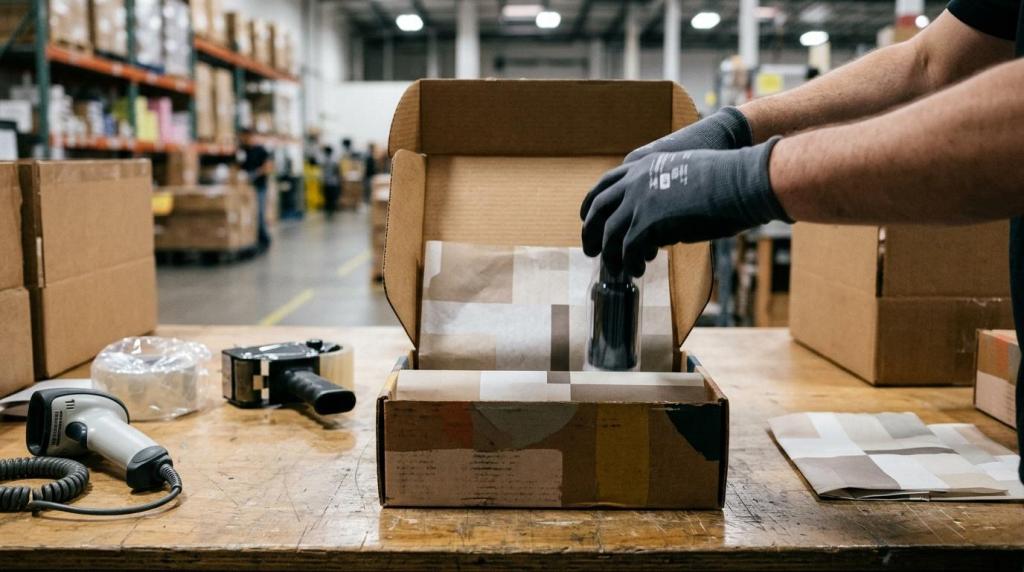
A subscription brand lives or dies by repetition. The first box may win attention, yet the second, third and sixth boxes decide whether customers stay subscribed, recommend the brand, or quietly cancel.
That is why subscription box fulfilment in the UK deserves far more attention than it often gets, especially when choosing reliable subscription fulfilment services and subscription box packing. When stock planning, subscription box packing, custom packaging, branded presentation and reliable dispatch all work together, every monthly cycle feels dependable and creates a memorable unboxing experience. When even one of those parts slips, the customer notices immediately.
Why subscription box fulfilment in the UK depends on consistency
Recurring orders create a different kind of operational pressure from standard ecommerce. A one-off order can be corrected with a quick apology and a resend. A subscription cycle creates volume spikes, fixed cut-off dates and repeated customer expectations. People do not simply want a box. They want the right box, at roughly the right time, every time.
Research keeps pointing in the same direction. Delivery reliability often matters more than raw speed. A 2024 study published in Transportation Journal found that delivery time was the most important variable in predicting customer review ratings. McKinsey reported in 2025 that many consumers are willing to wait two or three days if it helps avoid shipping costs, provided the parcel arrives within the promised delivery window.
That matters for subscription box fulfilment UK operations because recurring deliveries are built on trust. Subscribers will often accept a practical delivery schedule if it is clearly communicated and regularly met.
| Fulfilment element | Why it matters for subscriptions | What happens when it goes wrong |
|---|---|---|
| Stock planning | Keeps each cycle complete and on schedule | Backorders, substitutions, missed packs |
| Accurate packing | Prevents missing or incorrect items | Complaints, refunds, churn |
| Branded packaging | Reinforces perceived value | Unremarkable experience, weaker retention |
| Reliable dispatch | Protects expected arrival dates | Anxiety, support tickets, poor reviews |
| Delivery tracking | Gives visibility after despatch | “Where is my box?” enquiries |
A strong monthly operation is rarely about one dramatic improvement. It is usually the result of disciplined, repeatable processes executed well.
Stock planning for subscription boxes and recurring order peaks
Stock planning sits at the centre of any successful subscription fulfilment service. Unlike standard retail, subscription volumes are not random. They are partly forecastable because billing cycles, renewal dates and campaign activity provide useful clues. That should make planning easier, but only if the business is reading its data closely and ordering stock with enough lead time.
The challenge grows when boxes contain a mix of core lines, promotional inserts, limited-edition products and personalised variants. Each item has its own supplier timetable, minimum order quantity and risk profile. One delayed component can hold back an entire run if there is no contingency.
Good planning often comes down to a few disciplined habits:
- Forecast by cycle: build projections around active subscribers, expected renewals, skip rates and promotional uplift
- Separate core and variable stock: keep proven monthly essentials distinct from one-off campaign items
- Set safety stock rules: use buffers for long-lead or high-risk products
- Track packaging materials too: cartons, tissue, inserts and labels can become the real bottleneck
- Review supplier timing weekly: small delays matter more when pack dates are fixed
In practice, inventory management for subscriptions needs to be more than a stock count. It should show what is available, what is committed to upcoming cycles, and what is at risk. That visibility gives brands time to swap an insert, adjust a box configuration or change a dispatch wave before customers feel the impact.
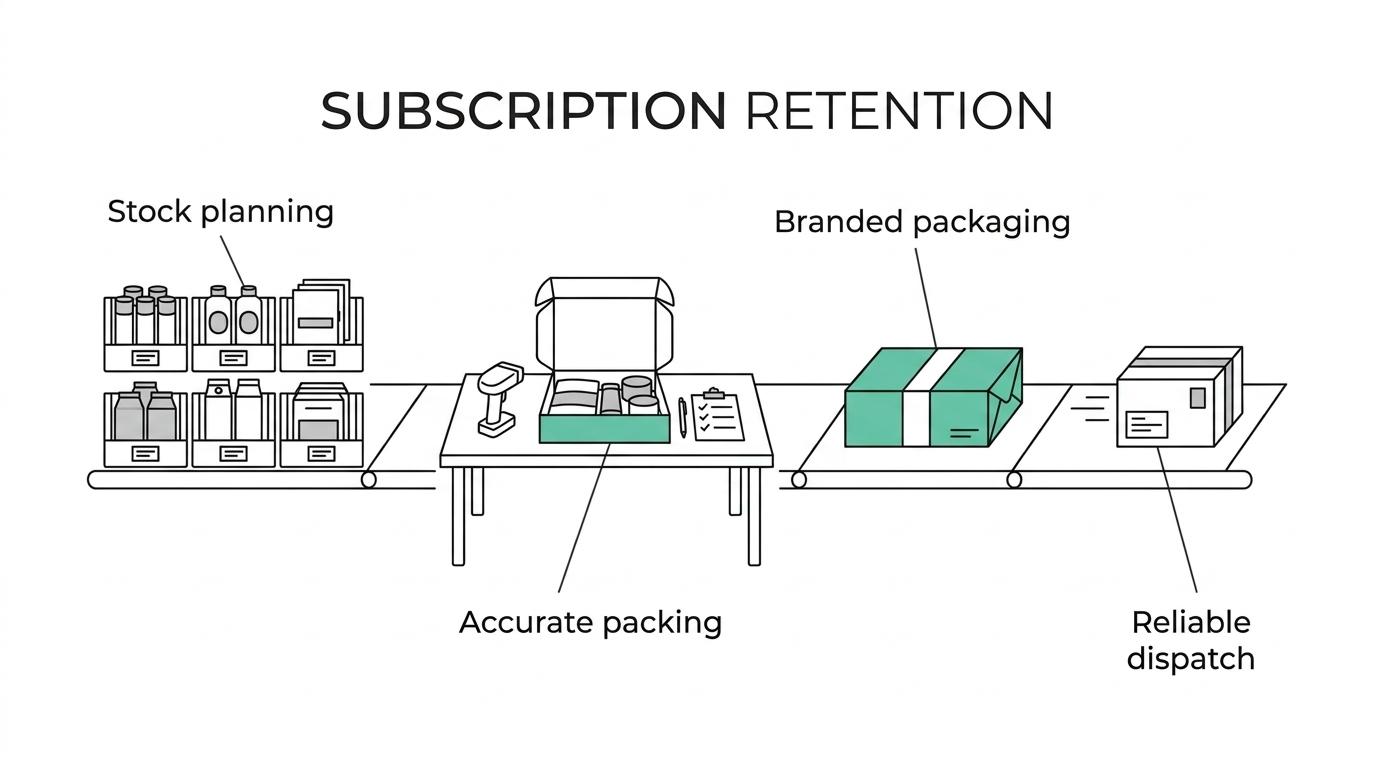
Published subscription fulfilment and warehousing guidance from 3PL providers reflects this. The recurring theme is simple: careful inventory management protects timing, product quality and customer confidence across each cycle.
Accurate subscription box packing and quality control checks
Packing accuracy is where the customer promise becomes real. It is also where many subscription brands underestimate the risk. A missing sachet, the wrong shade, a duplicate item or a switched insert may look small inside the warehouse, yet it lands as a broken promise in the customer’s hands.
The more customised the offer, the tighter the controls need to be. Personalisation, gift notes, subscriber tiers and campaign inserts all add complexity. They also add value, which is why brands keep using them. The answer is not to simplify every box into something forgettable. The answer is to build a packing process that can handle variety without losing accuracy.
One mistake repeated across a thousand-box run is not a minor issue.
A robust subscription box packing process usually includes practical controls rather than glamorous ones:
- Barcode scanning
- Pick-to-light or location checks
- Batch verification
- Weight checks before sealing
- Photo records for premium or personalised packs
- Final bench audits
- Clear exception handling
This is where many subscription fulfilment services earn their keep. When recurring orders are packed by trained teams using repeatable checks, the business reduces resends, customer support pressure and reputational drag. A published case study from 3PLWOW claimed that moving a subscription box operation into a specialist setup improved on-time fulfilment from 85% to 99.7%, while order processing time dropped from two days to hours. Results vary by operation, of course, but the direction is telling.
Missing items also hurt retention in a way that is easy to underestimate. Subscribers are not assessing a single transaction. They are assessing whether the brand feels dependable enough to remain on direct debit.
Branded packaging and the value of the unboxing moment
A subscription box arrives as both product and media, shaping the customer experience from the moment it is delivered. The outer carton, internal presentation and printed inserts all shape perceived value before the first item is used. That makes branded packaging more than decoration.
Well-chosen packaging can make a modest box feel thoughtful and premium. It can also guide the customer through the contents, prompt social sharing and support cross-sell activity. A welcome card, product story or monthly theme often adds more value than expensive embellishment.
At the same time, presentation must stay commercially sensible. Oversized boxes increase courier charges and void fill usage. Fragile packaging choices can produce damage in transit. Heavy printed extras may look attractive in samples but create recurring cost pressure over thousands of units.
The strongest packaging choices tend to balance three goals:
- Brand recognition: colours, print, messaging and inserts should feel unmistakably linked to the brand
- Operational practicality: packaging should be easy to assemble, store and pack at scale
- Shipping efficiency: right-sized cartons and sensible materials help control postage and reduce damage
- Customer retention: presentation should feel intentional, not generic
Shipping cost sensitivity matters here too. Baymard research found that many users look for shipping cost estimates before adding products to cart, and McKinsey found very high sensitivity to shipping charges for standard purchases. Subscription brands may bundle delivery into the monthly price, but the economics still matter in the background. Smarter packaging helps protect margin without making the experience feel cheap.
A polished unboxing moment should not come at the expense of consistency. If the brand promise is elegant but the parcel arrives late, crushed or incomplete, the packaging alone will not rescue the experience.
Reliable dispatch, delivery tracking and promised delivery windows
Dispatch is the point where internal performance becomes external reality. Up to that moment, delays can still be recovered inside the operation. Once parcels leave the warehouse, carrier performance, tracking visibility and handover accuracy become part of the brand experience.
For UK subscription brands, this often means planning around monthly dispatch waves rather than releasing every parcel on a single day. Staggering volumes can help maintain service levels, prevent carrier bottlenecks and spread customer support demand. It can also make labour planning more manageable during peak cycles.
What subscribers usually want is not maximum speed at any cost. They want confidence. McKinsey’s findings suggest many customers will accept slightly slower delivery if they avoid high shipping charges and receive dependable delivery within the promised window. That has direct implications for subscription fulfilment services: set realistic cut-offs, choose carriers carefully and communicate clearly.
The service model should support a few non-negotiables:
- Tracking visibility: customers should know when the parcel has been dispatched and where it is
- Carrier fit: letterbox formats, tracked services and premium options should match product type and price point
- Dispatch discipline: labels, manifests and collection timings must be accurate every cycle
- Issue handling: lost parcels, delays and returns need a clear process before the next billing cycle begins
The market is also tightening around expectations. The 2025 Third-Party Logistics Study from CSCMP reported that 48% of shippers and 53% of 3PLs saw delivery expectations at less than two days. Subscription brands do not always need next-day delivery, yet they do need a model that stands up against rising consumer standards shaped by the wider ecommerce market.
Reliable dispatch has another benefit. It reduces support load. Better delivery tracking means fewer “where is my box?” messages, which frees the team to focus on retention, merchandising and customer care rather than reactive chasing.
Choosing subscription fulfilment services that support growth
Not every warehouse is designed for recurring subscription work. The pattern is different. There are regular cut-off points, branded components, campaign inserts, personalised rules and intense dispatch peaks. A generic operation may cope at low volume, then start to strain once the subscriber base grows.
A good partner for subscription box fulfilment UK requirements should be able to show how it handles repeat cycles, changing box builds and system integration. That matters because operational visibility is often one of the main barriers to outsourcing. The CSCMP study noted common concerns including integration with existing systems and access to skilled personnel. Those are real issues, so they should be discussed early rather than brushed aside.
When reviewing subscription fulfilment services, useful questions include:
- System integration: can orders, subscriber changes and stock data sync cleanly with the ecommerce platform and billing system?
- Cycle planning: how are monthly peaks scheduled, staffed and quality-checked?
- Packing flexibility: can the operation manage inserts, personalisation, kitting and tiered box variants?
- Reporting clarity: will the brand receive clear data on stock, despatch, exceptions and on-time fulfilment?
- Cost structure: are storage, pick fees, packing extras and shipping charges transparent?
Clear pricing on shipping and fulfilment cost is especially valuable. Subscribers may tolerate a realistic price, but hidden charges tend to damage trust fast. That same logic applies inside the business relationship with the fulfilment provider. Clear pricing supports better forecasting, stronger margins and fewer unpleasant surprises during growth periods.
There is also room for thoughtful extras. Published provider case studies have pointed to the retention value of small personalised touches, including handwritten notes or gift wrapping, when these are built into a reliable process rather than treated as ad hoc favours. The key is discipline first, decoration second.
For subscription brands, fulfilment is not a back-office detail. It is part of the product itself. Each monthly box arrives with a message about how organised, dependable and customer-aware the brand really is. When stock is ready, packing is accurate, presentation is on-brand and despatch is reliable, that message is a very strong one.
Planning your next subscription cycle? Explore our UK subscription box fulfilment service for component checks, assembly instructions, changing inserts and agreed dispatch windows. Tell us about your box and planned volume for a tailored quote.