
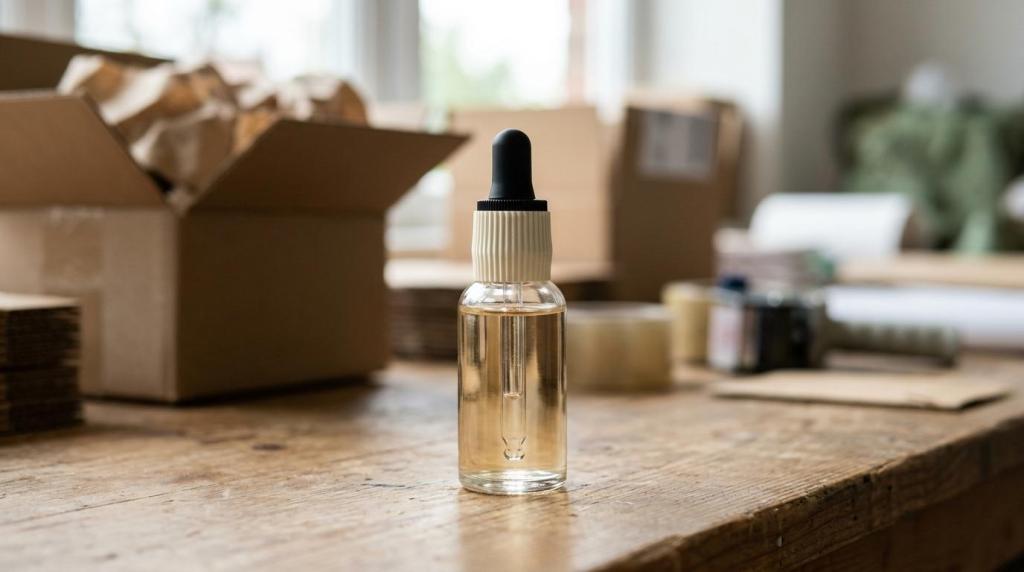
Skincare orders look simple from the outside. A serum bottle, a cleansing balm jar, a cotton pouch with minis for gifting. Yet once those products enter a fulfilment operation, the detail multiplies quickly. Fragile glass, active formulas, pumps that can twist open in transit, labels with legal wording, and presentation standards that need to feel premium all have to work together.
In the UK, skincare fulfilment sits at the point where brand promise meets operational discipline. Customers expect parcels to arrive clean, intact and beautifully presented. Regulators expect cosmetic products to carry the right information in English, on the container and packaging where required. A good fulfilment setup does both without turning every order into a slow manual task.
Why skincare fulfilment in the UK demands precision
Beauty products are unusually sensitive to small packing errors. A loose cap can leak into a carton. A missing spatula can trigger a complaint. A gift set assembled with one incorrect shade or size can create stock discrepancies that are hard to trace later. That is why skincare fulfilment is not only about storage and dispatch. It is about repeatable handling rules for every SKU, component and pack format.
The challenge grows when a range includes multiple product forms at once. A single brand may ship:
- glass dropper bottles
- PET cleanser bottles
- wide-mouth jars
- foil sachets
- pumps and screw caps
- travel minis and gift bundles
Each one needs a slightly different packing method. The best fulfilment operations document those methods in detail, from how lids are checked at goods-in to how inserts are folded for branded presentation.
That structure also helps with pace. When a pack rule is clear, warehouse teams can move quickly without guessing. Accuracy rises, damages fall, and the customer receives the same standard whether they ordered one moisturiser or a six-piece routine set.
Preventing leaks and damage for skincare bottles and jars
Leak prevention starts long before the order is picked. It begins with product design, incoming stock checks and packaging trials. If a bottle, pump, lid and carton combination is unstable, no amount of courier optimism will fix it later.
For skincare, primary packaging is often the weak point. Pumps can be nudged. Droppers can loosen. Lids may look secure yet fail under pressure changes or repeated movement in the parcel network. Glass jars present a different risk. They are usually stable against leakage, though more exposed to cracks or breakage if void fill and outer box choice are poor.
A practical packing plan usually covers component fit, orientation, cushioning and parcel movement. Sample parcels should be tested in the actual presentation format rather than in a rough equivalent. A bundle wrapped for social media appeal may behave very differently from a plain protective transit pack.
| Product type | Common transit risk | Packing focus |
|---|---|---|
| Glass serum bottle | Breakage, dropper loosening | Neck protection, snug fit, cushioning around glass |
| Pump cleanser bottle | Pump activation, leakage | Pump lock check, cap security, upright support where possible |
| Cream jar | Lid shift, cracked jar | Lid seal check, corner protection, firm outer carton |
| Sample sachets | Crushing, split seams | Flat packing, moisture-safe secondary wrap |
| Gift set with mixed items | Internal movement, missing parts | Component count, compartments, insert stability |
Outer packaging matters too. UK packaging guidance expects packaging to use the minimum weight and volume needed to keep products safe and hygienic. For skincare brands, that creates a useful discipline. The aim is not the biggest box or the most filler. It is the right protection for the item, the route and the presentation standard.
Managing skincare product variations and beauty bundle assembly
A beauty and haircare range—including products such as a body scrub—can look tidy online while being highly complex in a warehouse. The same cleanser may exist in a full-size bottle, a travel-size tube, a promotional duo, and a gift set with a headband and pouch. If those relationships are not mapped properly in the inventory system, the problems arrive fast.
This is where SKU control becomes a commercial issue rather than a back-office detail. Some fulfilment providers handle skincare bundles as pre-packed units. Others assemble them from separate components at the point of order. Both models can work well, though each needs exact component recording so unavailable items, substitutions and stock shortages are controlled before dispatch.
The real test appears during promotions. A “buy any two serums” offer sounds straightforward in marketing terms, but the picking logic can become messy if pipette colours, carton artwork or leaflet versions differ. A warehouse needs to know not only which finished order to build, but also which exact combination is valid.
Good bundle handling usually depends on a few non-negotiables:
- Component mapping: every item in a set is recorded, even low-cost extras like spatulas, sample cards or cosmetic bags
- Assembly rules: pre-built kits and pick-and-pack bundles are treated differently in stock control
- Availability checks: incomplete sets are blocked before they reach the packing bench
- Version control: seasonal sleeves, gift notes and revised insert cards are tracked by date or batch
- Returns logic: opened gift sets and intact resaleable sets follow different routes
That level of detail protects both margin and customer trust. It also stops a common beauty fulfilment problem: the “looks complete at a glance” parcel that is actually missing one small but essential component.
UK cosmetics labelling rules that affect fulfilment
Packing skincare in the UK is not only an operations matter. Cosmetic products sold in Great Britain must meet labelling rules that affect both the container and the outer packaging. Fulfilment teams do not create the formula or artwork, yet they often become the last operational checkpoint before the product reaches the customer.
UK guidance requires cosmetic products to show key information including what the product is for, precautions for use, nominal weight or volume, the name and address of the Responsible Person, an identification number such as a batch number, and an ingredient list. Imported products also need the country of origin stated, and “Made in the EU” is not accepted as a country of origin.
The information must be in English and easy to read. If there is not enough space on the product itself, some information can be given in the packaging, often by leaflet. Symbols may also be used for customer information enclosed, a best-before date, or a period after opening.
That has direct fulfilment implications. If a branded gift set is rebuilt into a new outer box, the operation must know whether legally required information remains visible and valid. If a mini format relies on a leaflet in the outer packaging, that leaflet cannot simply be treated as optional marketing print.
A disciplined fulfilment process should check for the following before stock is made available for sale:
- Container text: English wording is present and legible where required
- Outer packaging text: batch details, precautions and product identity remain available to the customer
- Imported goods: country of origin is stated correctly
- Date-sensitive products: minimum durability date or period after opening information is in place where relevant
- Gift set presentation: legal information is not obscured by sleeves, stickers or repacking choices
This does not replace regulatory review by the brand or its compliance advisers. It does, however, reduce the risk of stock being packed into a polished parcel that still misses a basic legal requirement.
Branded packaging and gift sets without losing operational control
Skincare buyers often expect a refined unboxing experience. Tissue paper, printed cartons, colour-matched void fill, thank-you cards and promotional samples can all lift the parcel from ordinary to memorable. The problem comes when presentation choices are added late, changed often, or documented poorly.
Branded packaging works best when it is handled as an operational specification rather than an aesthetic wish list. A fulfilment team needs to know which box fits which order profile, when inserts are mandatory, how ribbon or sleeves affect packing time, and whether a gift message changes the order flow.
One strong approach is to treat presentation rules as part of onboarding. Packaging types, insert placement, gift set assembly steps and photography references can all be documented at the start. That makes it easier to keep visual consistency during peak periods, staff changes and new product launches.
There is also a cost angle. Premium presentation should not force wasteful overpacking. The strongest results often come from packaging that is attractive and efficient at the same time:
- printed fit-for-purpose cartons
- recyclable protective materials
- insert cards that serve both branding and product guidance
- gift sleeves that do not compromise label visibility
- standardised pack flows for top-selling sets
A good beauty parcel feels intentional. Nothing rattles. Nothing leaks. Nothing looks crushed. That is not luck. It comes from repeatable process design.
Storage conditions, stock accuracy and returns for beauty products
Skincare fulfilment does not stop at the packing bench. Storage conditions, batch traceability and returns need a clear policy all shape customer experience and stock health.
Some cosmetic products need special precautions or storage conditions stated in English on both the primary container and outer packaging. Even where the product itself is robust, warehouse handling should still respect the needs of liquids, creams and formulas that can degrade if stored badly. Clean storage, sensible temperature management and careful rotation are basic expectations.
Batch control is just as important. If a customer reports an issue, a batch number allows the product to be traced quickly. That traceability becomes even more useful when fulfilment centres handle similar-looking variants with only minor packaging differences. Without clear scanning and stock location discipline, a premium skincare operation can drift into avoidable confusion.
Returns need a clear policy as well. A returned sealed cleanser may be very different from an opened face cream, a damaged jar, or a partly used gift set with missing components. Beauty products often need condition grading rules that are stricter than those used for general merchandise.
A sensible returns framework often includes:
- Unopened resaleable stock: checked, quarantined if needed, then returned to available inventory
- Opened cosmetics: separated from resaleable stock
- Damaged transit returns: logged with packaging failure notes for root-cause review
- Bundle returns: component-by-component verification before any stock adjustment
When these routines are in place, skincare fulfilment becomes more resilient. The warehouse is not only dispatching parcels. It is protecting presentation, compliance, stock accuracy and customer confidence at the same time.
What reliable skincare fulfilment looks like in daily practice
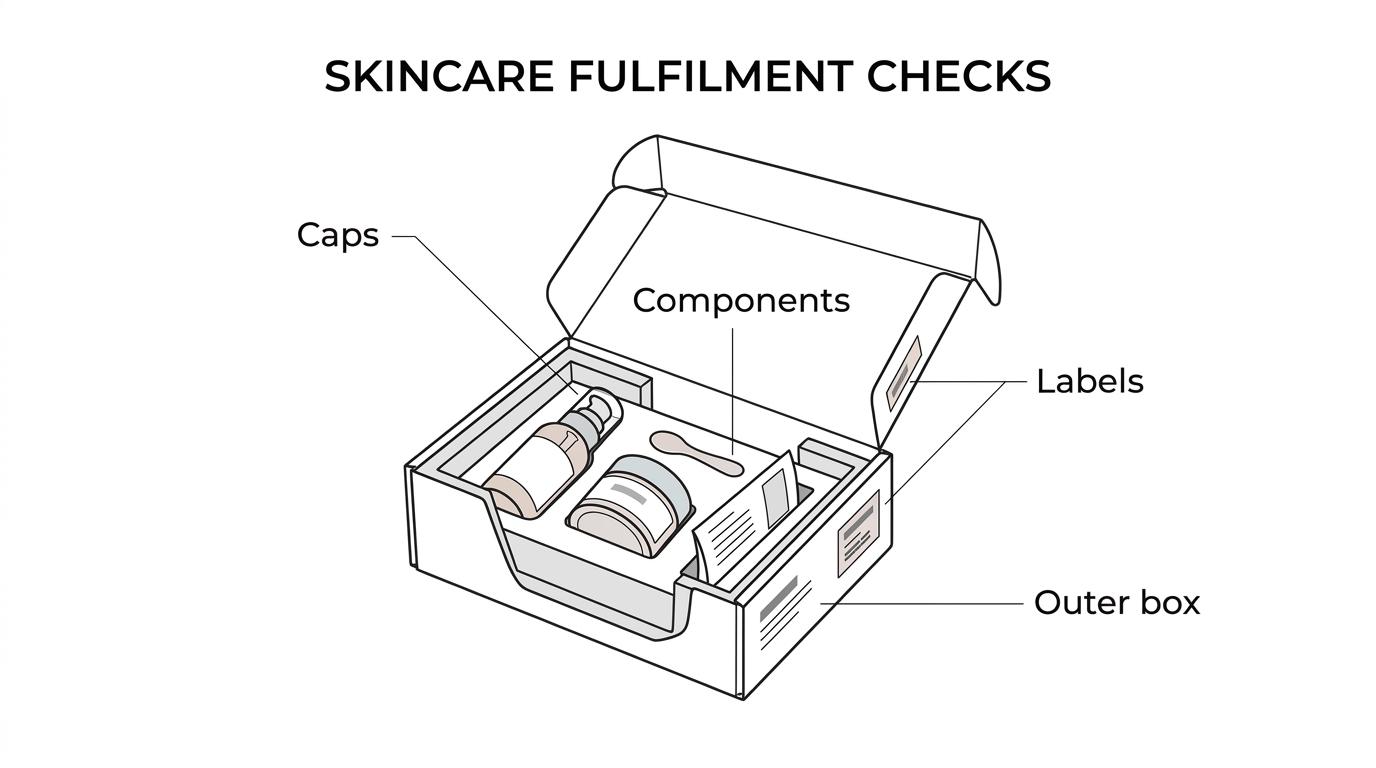
Reliable skincare fulfilment in the UK is built on small disciplined actions repeated every day. Caps are checked. Components are counted. Labels are reviewed. Gift set instructions are followed the same way each time. Outer packaging is chosen to protect the item without adding unnecessary bulk.
That may sound modest, yet it is exactly where beauty brands win. The customer rarely sees the stock file, the component mapping or the transit test notes. They see the result: a clean parcel, correct items, intact packaging and a product that arrives ready to use.
For bottles, jars and beauty bundles, that standard is not a luxury. It is the working baseline for growth.