
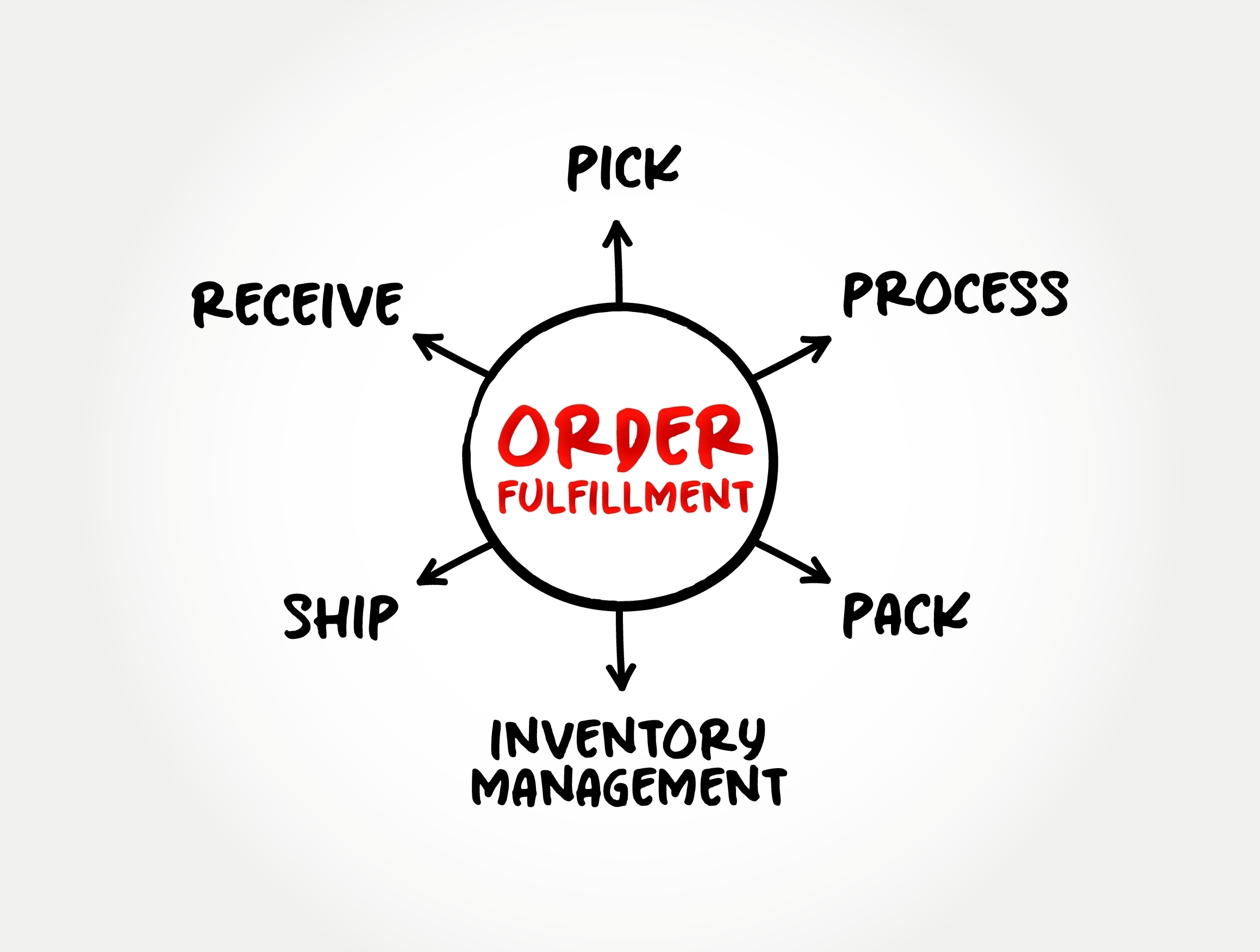
Ecommerce fulfilment centre UK
Online retail in Britain is no longer a niche channel that needs special pleading. It is a large, stable part of the market, and that changes the standard for fulfilment. Brands do not just need somewhere to store stock. They need a fulfilment operation that can absorb peaks, maintain order accuracy, keep shipping costs under control and protect the customer experience when parcel networks come under strain.
That is why the search for a strong UK fulfilment partner has become more exacting. Capacity, pricing, location and carrier management all matter, but so does transparency. When a provider publishes clear information about storage scale, pick and pack pricing and dispatch options, it becomes much easier for ecommerce businesses to judge whether the operation is built for real demand rather than marketing language.
Why UK ecommerce fulfilment demand is staying high
Recent retail figures show just how large the online channel remains. The Office for National Statistics recorded internet sales as 27.5% of total retail sales in 2025. In April 2026, the House of Commons Library reported that the average weekly value of internet sales in Great Britain was £2.7 billion, with internet sales making up 28.1% of all retail sales.
Those numbers matter because they show consistency, not a short-term spike. Online retail surged in 2020, then settled back into the high-20s as a share of total sales. That still leaves a very substantial market for merchants who need stock storage, order processing and fast delivery across the UK.
A fulfilment centre serving this market must be designed for steady, high-volume activity. It also needs room to scale when promotional periods, seasonal peaks or a successful product launch push order volumes higher than expected.
In plain terms, ecommerce fulfilment in the UK is not built around occasional demand. It is built around persistent demand.
What businesses should expect from a UK fulfilment operation
A good fulfilment centre should do more than receive pallets and print labels. It should support margin control, speed and customer retention. When online demand is strong, operational weaknesses become visible very quickly, especially if stock records, picking processes or dispatch cut-offs are not handled well.
The basics are familiar, but the quality of execution is what separates a useful 3PL from a costly one. Businesses usually look for a few essentials:
- Reliable stock storage
- Accurate pick and pack
- Clear shipping rates
- Fast order turnaround
- Sensible onboarding
- Responsive support
That list looks simple, yet each point affects the buying experience. A low headline price can be wiped out by poor inventory visibility, slow dispatch or repeated parcel claims. A more capable partner can often save money by reducing rework, complaints and lost sales.
3PLWOW public fulfilment capacity and pricing details
For brands comparing UK providers, published operational details from 3PLWOW offer a useful benchmark. Public information from the company states that it stores ecommerce goods in a 15,000+ pallet order-fulfilment warehouse. Separate company information also says it moved in 2022 to a facility of over 30,000 square feet with space for over 10,000 pallets. Taken together, those figures point to meaningful capacity for growing online brands.
3PLWOW also publicly lists entry-level pricing from £0.40 per order for pick and pack, with next-day shipping from £2.00. That kind of transparency is valuable because it gives merchants a starting point for cost modelling before they enter a sales process.
The company states that it began in 2016, and its listed address places the operation in Newcastle upon Tyne at Unit A Wesley Drive, Benton Square Industrial Estate, NE12 9UP. Public company information also says the team is available around the clock for logistics queries, which may appeal to businesses managing urgent operational issues or selling across longer trading hours.
Here is a quick snapshot of the figures that stand out.
| Measure | Publicly listed figure | Why it matters |
|---|---|---|
| Warehouse scale | 30,000+ sq ft | Indicates room for stock holding and handling activity |
| Pallet capacity | 10,000+ pallets, with separate reference to 15,000+ pallet storage | Suggests the ability to support volume growth |
| Pick and pack pricing | From £0.40 per order | Useful for early fulfilment cost estimates |
| Next-day shipping | From £2.00 | Important for delivery competitiveness |
| Operating history | Since 2016 | Gives some context on market experience |
| Location | Newcastle upon Tyne | Relevant for UK-wide parcel coverage and inbound freight planning |
Public pricing is only the starting point, of course. A real quote depends on product dimensions, order profiles, returns rates , packaging needs and carrier mix. Even so, published rates help merchants ask sharper questions.
Why fulfilment location in Newcastle upon Tyne can work well
A UK fulfilment strategy does not always need a Midlands postcode to be effective. What matters is the combination of carrier collection performance, trunking access, labour availability and the provider’s ability to dispatch on time. A well-run site in Newcastle upon Tyne can support national distribution effectively, especially when carrier relationships and cut-off discipline are strong.
For brands with customers spread across the UK, a North East location may also offer practical advantages. Inbound stock from northern suppliers can be simpler to manage, property costs can be more competitive than in some southern locations, and the operation may face less pressure than facilities in the most crowded logistics corridors.
Location should be judged in context, not by assumption.
That means asking how quickly orders leave the warehouse, which carriers are used, how later cut-off times are handled and what service levels are realistic by destination, rather than treating geography as the only factor.
UK parcel market pressure is still a real fulfilment risk
Demand is healthy, but delivery performance still needs close attention. Ofcom reported that UK parcel volumes reached a record 4.2 billion in 2024-25, up 7% on the previous year. That tells us the parcel market is still growing at scale. It also means fulfilment providers are operating inside a busy, pressured delivery environment.
The same Ofcom research found that 68% of parcel recipients had experienced at least one delivery issue in the previous six months. That is a striking figure. It shows that customer dissatisfaction often begins after the parcel leaves the warehouse, even when the order was picked and packed correctly.
A merchant choosing a fulfilment centre should think beyond storage and dispatch fees. Carrier management, claims handling, tracking visibility and service recovery all shape whether a customer orders again.
A strong fulfilment partner should have a practical response to common parcel risks:
- Carrier mix: more than one viable delivery option for different service and postcode needs
- Tracking quality: clear scans and updates that reduce “where is my order?” contacts
- Exception handling: a defined process for failed delivery, loss and damage cases
- Peak planning: realistic service expectations during promotions and seasonal surges
This is where fulfilment quality becomes commercial rather than technical. Fast despatch is valuable, but reliable arrival is what protects reputation.
Matching fulfilment costs to ecommerce growth plans
Price always matters, yet the right question is not “What is the cheapest rate?” It is “What does this rate buy us?” A low per-order pick fee looks attractive, but only if it comes with accurate inventory, prompt despatch, sensible packaging logic and support when things go wrong.
For smaller and mid-sized brands, entry pricing like pick and pack from £0.40 per order and next-day delivery from £2.00 can be appealing because it lowers the barrier to outsourced fulfilment. It creates room to compare outsourcing against in-house labour, warehouse rent, packaging supplies, software and management time.
A useful way to assess value is to compare fulfilment costs against growth constraints. If outsourcing removes the need to recruit warehouse staff, rent more space or spend evenings clearing backlogs, the financial picture often looks different.
Merchants usually benefit from asking a provider about the details behind the headline rates:
- Storage model: pallet, bin, shelf or cubic charging
- Order profile: how single-line and multi-line orders affect the fee
- Packaging: whether standard materials are included
- Returns: charges for receipt, inspection and restocking
- Account support: who responds when stock or delivery issues arise
The best fulfilment pricing structure is one that remains workable when order volume rises, not one that only looks good in a quiet month.
What transparent fulfilment data tells you about a provider
When a provider openly shares warehouse size, pallet capacity, base pricing and contact details, that signals a level of operational confidence. It does not replace due diligence, but it gives prospective clients something concrete to evaluate.
That matters in a crowded 3PL market, where vague claims can make one website sound much like another. Public operational details give businesses a way to test fit. Is there enough storage capacity for planned growth? Are the starting prices within range? Is the site in a location that works for inbound and outbound flows? Are support expectations clearly stated?
3PLWOW’s public information provides enough data for a brand to begin that evaluation sensibly. The capacity figures suggest room for meaningful stockholding. The listed pricing creates an early cost benchmark. The Newcastle upon Tyne location gives a clear operational footprint in the UK. For businesses that want a more grounded comparison process, that is a useful place to start.
Questions to ask before moving stock into a UK fulfilment centre
Once the shortlist is down to a few providers, the next step is practical scrutiny. Ask to see how stock is booked in, where accuracy checks happen, what the cut-off times are and how the operation copes with surges. A polished sales call is not enough. Fulfilment quality lives in process discipline.
It is also sensible to compare what the provider says publicly with what appears in the proposal. If the quoted model fits your SKU mix, growth plans and delivery promise, that is encouraging. If there is a large gap between the website message and the operational reality, keep asking questions.
For online brands selling into a UK market where internet retail still accounts for more than a quarter of all sales, fulfilment is not a back-office detail. It is part of the product experience, the margin structure and the growth plan all at once. Choosing a partner with visible capacity, clear pricing and a realistic view of parcel-market risk gives that growth a stronger base.