
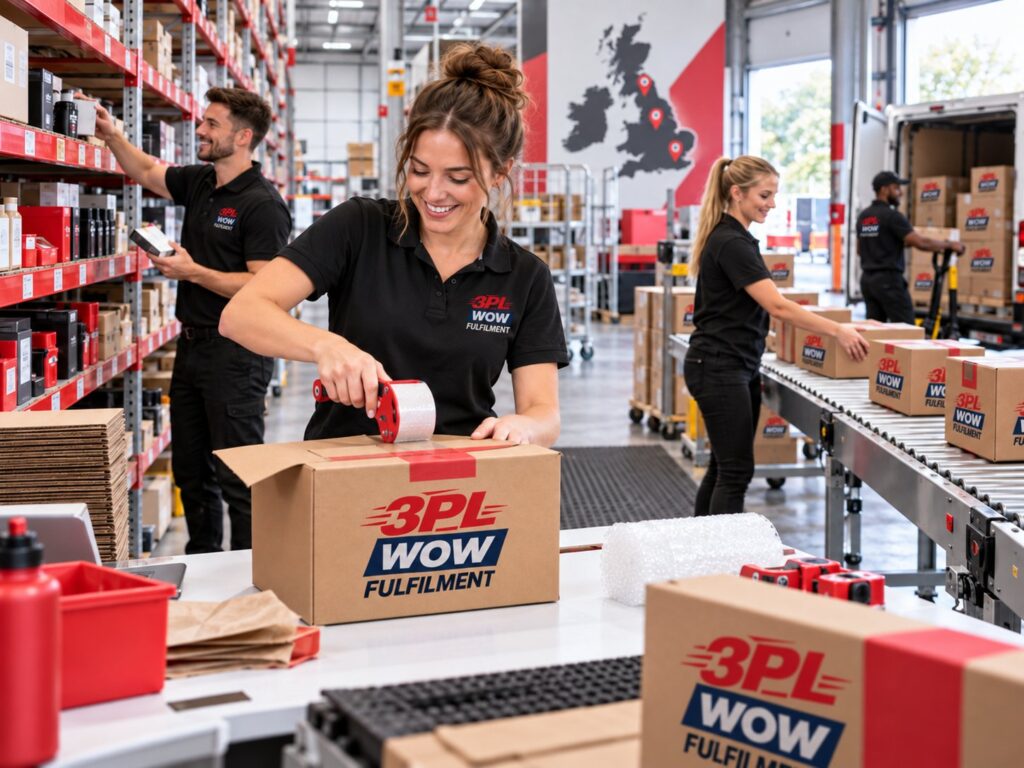
Pick and pack fulfilment is a core process for many UK ecommerce businesses. It describes how individual customer orders are selected from stock, packed and prepared for dispatch. For retailers who sell online, understanding pick and pack, fulfilment options and how they work in practice helps you make better decisions about outsourcing, packaging and scaling operations as order volumes change.
For a practical outsourcing option, explore 3PLWOW’s UK order fulfilment services and discuss your order volumes, product range and dispatch requirements.
What is pick and pack fulfilment?
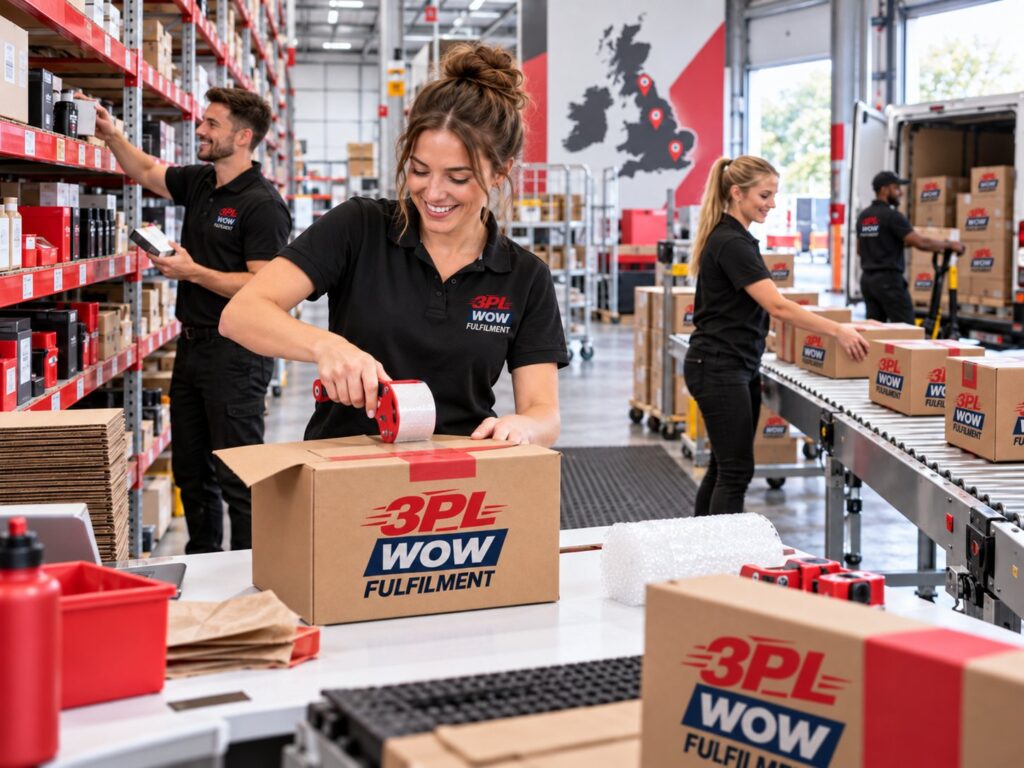
Pick and pack fulfilment is the operational process used to turn individual online orders into parcels ready for shipment. Each customer order is “picked” from inventory — often from multiple locations or bins — and then “packed” into the appropriate packaging with any required inserts or documentation before being labelled and handed to a carrier.
For many ecommerce retailers, pick and pack is a daily, repeatable workflow that sits at the heart of order fulfilment. It differs from bulk or palletised logistics because the focus is on individual orders and accuracy, rather than moving large quantities between warehouses.
How the process works step by step
1. Order receipt: The fulfilment system receives an order from your store or marketplace. Orders are prioritised by shipping service, promised delivery date or business rules you set.
2. Picking: A picker follows a pick list or digital pick ticket to locate and collect the items. Picking can be single-order (one order at a time), batch (multiple orders grouped), or zone-based, depending on efficiency needs.
3. Packing: Collected items are brought to a packing station. Packers check items against the order, add any promotional inserts or documentation and select suitable packaging to protect goods during transit.
4. Labelling and manifesting: Parcels are labelled with carrier and tracking information. Shipments are batched into manifests and handed to courier services according to the scheduled collection.
Benefits for UK ecommerce operators
Accuracy and customer experience: Efficient pick and pack reduces shipping errors and improves on-time delivery, which helps customer satisfaction and repeat business.
Scalability: Using established pick and pack processes allows you to scale order fulfilment as sales grow without a linear increase in overhead.
Cost control: Optimised picking strategies and right-sized packaging reduce carrier costs and waste. Outsourcing pick and pack can convert fixed warehouse costs into variable fulfilment spend aligned with sales.
Speed: Faster picking and smoother packing workflows reduce lead times between order and dispatch — especially important for next-day or same-day delivery expectations.
Choosing a pick and pack fulfilment partner
Decide what matters most: delivery speed, location of fulfilment centres, integrations with your ecommerce platform, or special handling for fragile or regulated items. Ask prospective partners about their pick methodologies (single, batch, zone), how they manage stock accuracy and their process for handling exceptions.
Look for clear operational policies rather than marketing claims. Confirm how stock is received and reconciled, how they handle damaged items and what communication you’ll get for inventory levels and order issues. If you use multiple sales channels, check that the provider can handle multi-store or marketplace orders.
Common pitfalls and how to avoid them
Poor SKU organisation: Inefficient bin locations increase picker travel time. Regularly review SKUs and consider slotting high-turn items closer to packing areas.
Inadequate packaging rules: Using oversized boxes or inconsistent packing wastes materials and increases postage costs. Define packaging rules for common order types and ensure your provider follows them.
Lack of integration: Manual order uploads create delays and errors. Use a fulfilment partner with reliable API or platform integrations to automate order flow and tracking updates.
Quick checklist before switching to outsourced pick and pack
• Map your order profile: average items per order, peak volumes and any special handling needs.
• Define packaging rules and include sample packaging briefs.
• Confirm integration options with your shop and marketplace platforms.
• Agree inventory reconciliation and reporting cadence.
Explore more from 3PLWOW: Pick and Pack Services UK · The Ultimate Guide to 3PL, Order Fulfilment and Pick and Pack Services · In-House vs Outsourced Fulfilment.
Planning your fulfilment? Request a tailored fulfilment quote.