
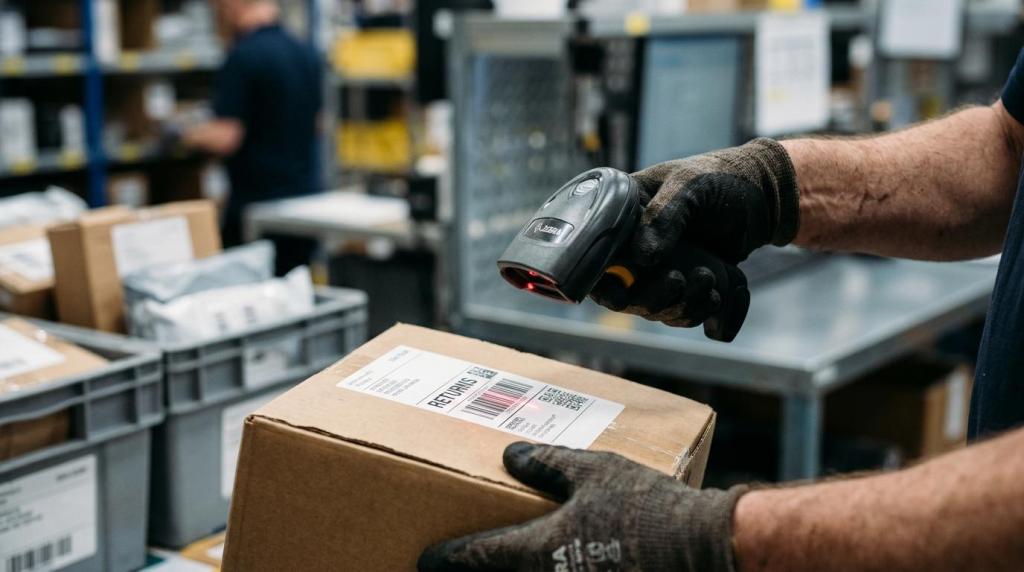
Returns are often treated as a cost to control, yet they can be one of the clearest signals of how well an ecommerce operation really runs. When the process is slow, unclear, or poorly linked to stock records, the impact spreads quickly. Customer trust drops, support tickets rise, and saleable stock sits in limbo.
For UK ecommerce brands, strong returns handling is no longer a back-office nicety. It is part of the buying experience. A customer who receives a prompt refund, clear updates, and a simple route back to exchange or repurchase is far more likely to come back than one left waiting for answers.
Why ecommerce returns management in the UK matters
Returns sit at the point where customer experience and warehouse discipline meet. That is why ecommerce returns management in the UK deserves the same attention as picking, packing, and dispatch. If the first order was smooth but the return is confusing, the customer remembers the confusion.
The wider retail picture shows just how significant the issue has become. NRF projected total retail returns at $890 billion in 2024, while 76% of consumers said free returns are a key factor in deciding where to shop. Even allowing for market differences between the US and UK, the message is plain: shoppers judge brands on return convenience, not just product range or delivery speed.
Research also shows that anxiety builds when return steps and refund timing are not obvious. Baymard found that return policy details and refund timing affect confidence, and that reducing that anxiety can improve how customers perceive a site. That matters because the return is often the last live interaction in the order cycle.

A poor returns experience rarely stays contained.
What customers expect from a fulfilment returns service
A modern fulfilment returns service needs to do more than receive parcels. Customers expect a process that feels organised, fair, and fast. They want to know where to send the item, what condition is required, when their refund will be approved, and whether an exchange is possible.
Convenience remains central. YouGov research found that shoppers wanted returns to be faster, simpler, and free, with strong demand for prepaid labels, accessible drop-off points, and home collection options. Descartes also reported that some consumers had a frustrating returns experience, while others gave up on returning goods at all. When that happens, the retailer loses far more than margin. It loses confidence.
A clear service usually includes a few visible elements:
- Easy-to-find returns policy
- Prepaid label or simple label generation
- Return tracking updates
- Fast refund confirmation
- Sensible exchange options
That customer-facing clarity has a direct warehouse effect as well. When instructions are standardised, returned parcels arrive with cleaner reference data, staff spend less time identifying orders, and exceptions are easier to handle.
How outsourced returns processing works in practice
Outsourced returns processing is often discussed as a cost-saving move, but its value is wider than that. It creates structure. Instead of handling returns in an ad hoc way, brands can use a repeatable workflow that links customer communication, parcel receipt, item inspection, stock movement, and finance updates.
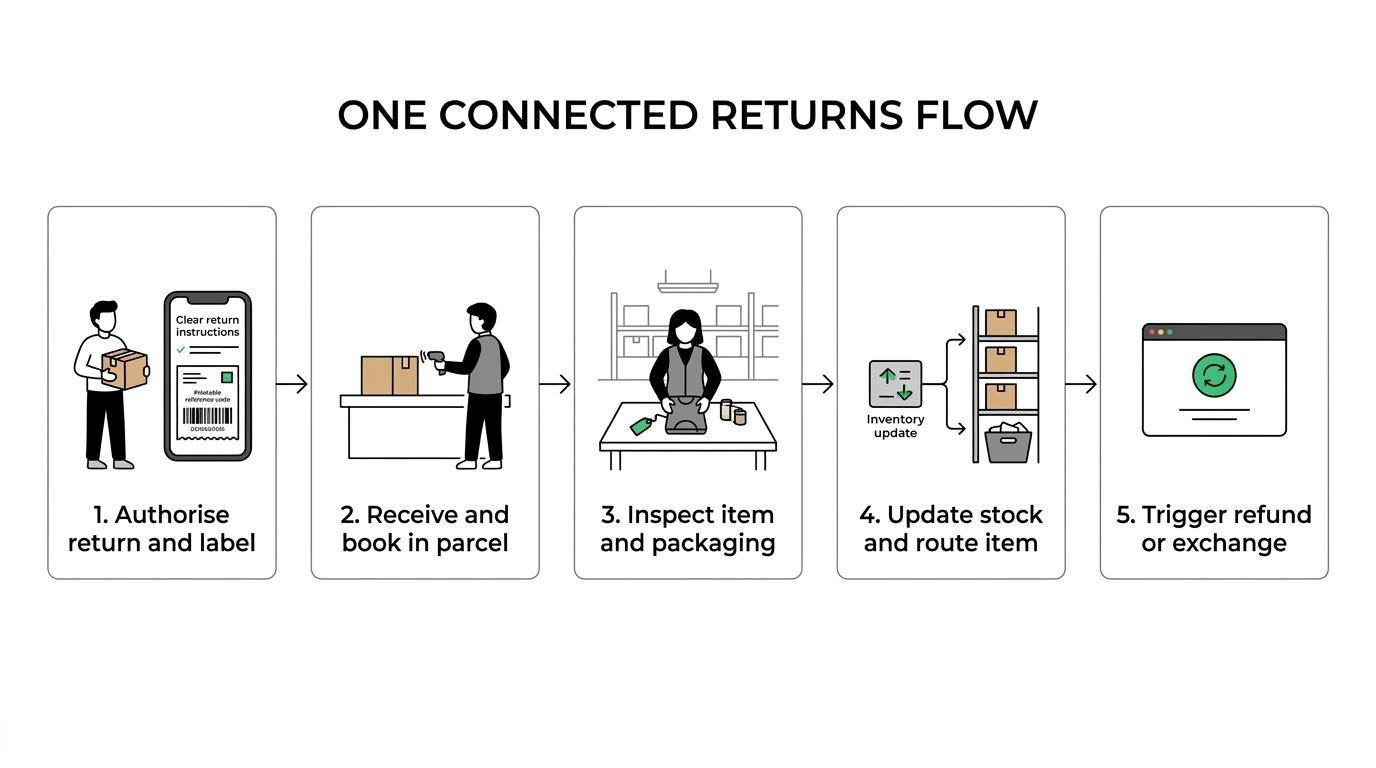
A well-run process is usually built around a sequence like the one below.
| Returns stage | What happens | Main benefit |
|---|---|---|
| Return authorisation | Customer receives clear instructions and a reference | Fewer errors and fewer support queries |
| Parcel receipt | Returned item is booked into the system on arrival | Immediate visibility of inbound volume |
| Inspection | Product condition, packaging, tags, faults, and completeness are checked | Fair refund decisions and reliable grading |
| Stock update | The item is marked as resaleable, refurbishable, quarantined, or non-saleable | Better inventory accuracy |
| Restocking | Saleable units are put back into available stock | Faster stock recovery and less waste |
| Refund or exchange trigger | Finance and customer workflows are updated | Quicker resolution for the shopper |
| Reporting | Return reason and disposition data are logged | Better buying, product, and policy decisions |
That sequence sounds simple, yet many brands still have gaps between each step. An item arrives but is not inspected for days. The refund is approved before the stock status is updated. A resaleable unit stays off the shelf because no one has completed the put-away task. Admin builds up quietly, then all at once.
Inspection standards in outsourced returns processing
Inspection is the hinge point of the whole operation. If it is rushed or inconsistent, every step after it becomes harder. Refunds may be disputed, inventory becomes less reliable, and customer service teams end up manually checking cases.
Good inspection standards normally cover:
- Item condition: signs of wear, damage, missing parts, hygiene issues
- Packaging status: original packaging present, damaged, or replaced
- Reason match: returned item matches the stated reason code
- Resale decision: restock, rework, quarantine, or disposal
The strongest outsourced returns processing setups define these rules in advance by SKU type, category, and resale policy. Clothing, cosmetics, supplements, electronics, and fragile items all need different handling rules. That reduces judgement calls on the warehouse floor and makes outcomes more consistent.
Stock updates and restocking speed
Once inspection is complete, the next priority is accurate stock movement. This is where many brands lose time and margin. A product can be physically back in the building while still unavailable to sell online, purely because the inventory record has not been updated.
That delay matters. If an item is resaleable, every extra day before restocking is a missed selling opportunity. During peak periods, the effect multiplies across hundreds or thousands of units.
A disciplined stock update process helps in three ways:
- Accuracy: available stock reflects reality
- Speed: resaleable goods return to sale faster
- Control: damaged or suspect stock is quarantined properly
For brands with broad catalogues or volatile demand, this is often where a specialist fulfilment returns service delivers the greatest operational gain.
How a clear returns process reduces admin pressure
Admin creep is one of the least visible costs in returns management. It shows up in inboxes, customer service queues, finance checks, stock amendments, and manager escalations. Each unclear return creates more manual work than most teams expect.
A clear process removes much of that friction. If customers receive the right label and instructions, fewer parcels arrive without order references. If inspection outcomes are standardised, customer support does not need to chase the warehouse for every refund query. If systems update stock and refund status promptly, finance teams spend less time reconciling exceptions.
Published case material from 3PLWOW points in this direction. One case reports average return processing time falling from 6 days to 2 days, alongside improved order capacity and better order accuracy. Another case reports more consistent tracking information and a 38% reduction in customer support contacts about shipping after 90 days. While each operation is different, the pattern is persuasive: clearer processes tend to reduce pressure across the wider business.
The operational benefits often appear together rather than in isolation:
- Faster processing: less stock sitting idle and fewer delayed refunds
- Cleaner data: fewer manual interventions and easier reconciliation
- Better accuracy: fewer disputes about what was received and when
- Lower support demand: customers receive updates before they need to ask
Where a fulfilment returns service adds value for growing brands
Growth makes returns more complex, not just more frequent. More orders mean more product variations, more return reasons, more channels, and more edge cases. A system that worked at 500 orders a month may struggle badly at 5,000.
This is one reason many brands look at a fulfilment returns service before peak seasons or after product range expansion. Outsourcing can provide extra labour capacity, warehouse process discipline, and system integration without forcing the retailer to build a dedicated in-house returns team from scratch.
It can also support commercial flexibility. If a business wants to offer exchanges, store credit, faster refunds, or category-specific rules, the warehouse process has to keep up. A polished customer policy means little if the physical return flow cannot support it.
The strongest fit usually appears when one or more of these issues are already visible:
- Rising support tickets linked to returns
- Slow refund approval times
- Stock discrepancies after returns
- Seasonal spikes overwhelming the in-house team
- High-value items needing tighter inspection control
Choosing the right outsourced returns processing model
Not every outsourced solution is built to the same standard. Some providers simply receive and store returns, while others manage the full cycle from parcel intake to inspection, stock updates, restocking, reporting, and customer-status integration. The difference is significant.
Before moving to outsourced returns processing, brands should be clear about what they need the service to solve. A basic returns address may be enough for a small, steady catalogue. A multi-channel retailer with fashion, bundles, or subscription products may need much tighter controls.
A practical evaluation should look at:
- Inspection workflow: how item checks are recorded and graded
- System visibility: whether stock and return statuses update in near real time
- Restocking rules: how quickly saleable goods return to available inventory
- Exception handling: how damaged, incomplete, or suspicious returns are managed
- Reporting depth: return reasons, processing times, and disposition outcomes
It also helps to ask how the service handles fraud risk without punishing genuine customers. Retailers are under pressure to protect margins, yet an overly defensive process can make honest buyers feel distrusted. The right balance is firm, consistent, and evidence-led.
Returns data as a source of commercial improvement
Returns are often seen only as a symptom, but the data inside them can sharpen decision-making across the business. If one size in a clothing line is returned far more often than others, the issue may sit with sizing guidance rather than product quality. If one SKU has repeated damage-on-arrival returns, packaging may need attention. If one marketplace channel creates unusually high exceptions, listing accuracy may be the problem.
This is where disciplined outsourced returns processing becomes commercially useful. Standard reason codes, inspection outcomes, and disposition data turn returns into feedback that buying, merchandising, ecommerce, and operations teams can actually use.
The best returns operations do not just process items. They create a cleaner view of what customers are telling the business through their actions.
When that happens, returns management stops being a defensive function. It becomes part of customer care, stock efficiency, and brand credibility all at once.
Customer trust grows when refund timing is clear
Refund timing deserves special attention because it is one of the moments customers care about most. A shopper may accept that a parcel needs to travel back and be checked, yet they still want clarity. Silence is what causes doubt.
A better approach is simple: acknowledge receipt, confirm inspection status, and set realistic expectations for refund approval or exchange dispatch. That communication can be automated, but it should still feel precise. Vague updates create almost as much frustration as no updates at all.
When coupled with accurate inspection and prompt stock handling, clear refund communication changes the tone of the return. What could have felt like a difficult end to a sale instead feels orderly, fair, and respectful. For ecommerce brands in the UK, that shift can be valuable far beyond the returned order itself.