
For a growing e-commerce brand, a warehouse should do far more than hold boxes on shelves. It should protect your reputation, support your margins, and help you keep promises to customers who expect fast delivery, accurate orders, and simple returns.
That matters even more now because online buying habits are firmly established in the UK. Research from YouGov in 2025 found that 36% of Britons shop online at least weekly, while 47% of online shoppers say digital orders make up more than half of their overall shopping. When demand is that regular, fulfilment stops being a back-office task and becomes a direct part of the customer experience.
If you work with a third-party logistics provider, the standard should be high, including robust warehouse services, a focus on safety, and appropriate use of PPE. You are not only paying for storage space; you are also paying for the efficient completion of the job. You are paying for speed, consistency, control, flexibility, and the ability to scale without chaos.
What growing e-commerce businesses should expect from a warehouse provider
A strong warehouse operation should play a crucial role in extending your business, seamlessly integrating with your supply chain and optimizing warehouse operations to meet demand effectively. Orders should flow in quickly, stock should be visible, errors should be rare, and busy trading periods should not cause service levels to collapse.
That sounds simple, yet it is not easy to deliver. UK transport and storage businesses continue to face labour pressure. Office for National Statistics data published in early 2025 showed worker shortages at 28% in the transportation and storage sector, alongside recruitment difficulty at the same rate. For e-commerce brands, that makes provider choice even more important. A warehouse partner needs the systems, staffing model, and process discipline to keep performance steady when the market is under strain.
A practical way to think about warehouse expectations is this:
| Expectation | Why it matters | What good looks like |
|---|---|---|
| Same-day dispatch | Keeps delivery promises realistic | Orders received before cut-off leave the same day |
| Accurate stock control | Prevents overselling and stockouts | Live visibility, regular checks, dependable counts |
| High picking accuracy | Reduces complaints and replacements | Accuracy rates close to 100% with clear QA processes |
| Fast returns handling | Protects repeat purchase rates | Returns processed quickly and stock updated promptly |
| Seasonal flexibility | Supports sales peaks without disruption | Extra capacity for promotions, holidays, and launches |
| Clear pricing | Helps margin planning | Simple charging with no hidden operational surprises |
Those are not premium extras. They are the baseline for a warehouse that is genuinely helping an e-commerce business grow.
Same-day dispatch should be a normal expectation
Customers rarely separate your brand from your warehouse performance. If an order arrives late, the buyer does not blame a picking queue or a missed carrier collection. They blame the shop.
That is why same-day dispatch matters so much. It gives your business a stronger chance of meeting next-day and standard delivery promises, and it creates more room to absorb carrier delays without disappointing the customer. A warehouse that dispatches late or inconsistently creates problems that marketing, customer service, and discounts then have to clean up.
DHL’s 2025 e-commerce trends report found that 80% of British shoppers abandon baskets when their preferred delivery options are not available. That is a sharp reminder that fulfilment performance is tied directly to conversion, not just operations.
When assessing a 3PL, look for evidence that same-day dispatch is an established process rather than an occasional result.
- Cut-off times: clear and realistic for your order profile
- Carrier collections: timed to support late order release where possible
- Order flow: rapid import from your sales channels
- Short pick windows
- Reliable label generation
- Exception handling for urgent orders
Published 3PLWOW case study data points in a positive direction here. The case study reports same-day dispatch improving from 71% to 94% after fulfilment moved to a 3PL model. For a growing brand, that kind of gain can have a visible effect on customer satisfaction and repeat buying.
Stock control should give you confidence, not guesswork
A warehouse should tell you what stock you have, where it is, and what condition it is in. Anything less creates expensive friction.
Poor stock control tends to show up in familiar ways. Items appear available online but cannot be picked. Fast sellers run out too early. Returns sit in limbo and never become sellable stock again. Purchase planning becomes reactive because nobody trusts the numbers.
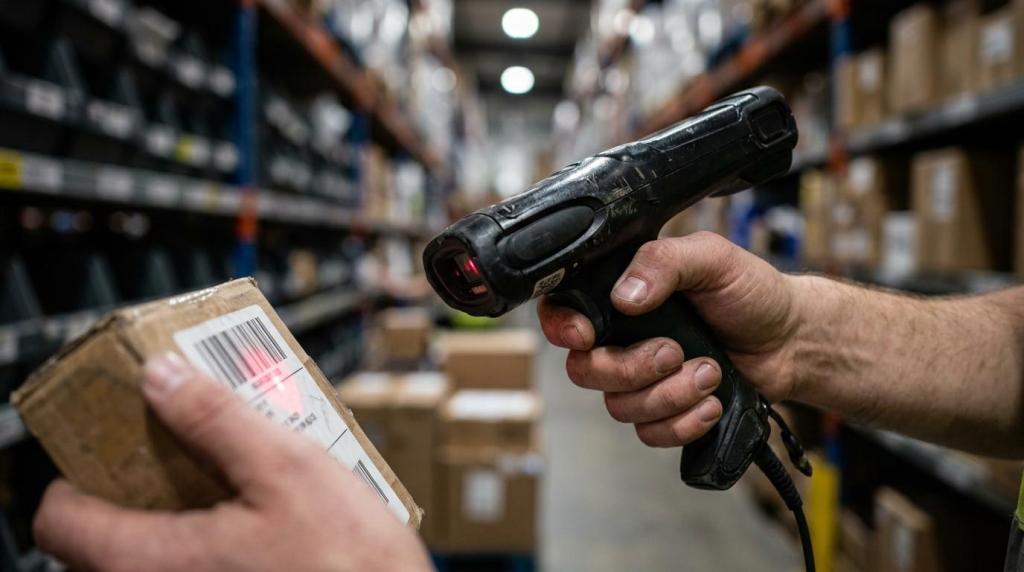
Good stock control is not simply about a software dashboard. It depends on disciplined inbound checks, accurate put-away, barcode-based handling, cycle counts, and fast reconciliation when something does not look right. For e-commerce brands with multiple sales channels, this becomes even more important because inventory errors can spread quickly across marketplaces and your own site.
You should expect:
- Real-time or near real-time stock visibility
- Clear inbound booking and receiving processes
- Regular stock counts
- Traceable adjustments
- Fast quarantine handling for damaged or unclear stock
If your current warehouse operations still rely heavily on manual updates and end-of-day corrections, growth will eventually expose the weakness. Strong stock control gives commercial teams the confidence to run promotions, launch bundles, and replenish at the right pace.
High picking accuracy rates protect revenue and trust
Picking accuracy sounds operational, though its impact is commercial. Wrong items, missing units, and packing mistakes lead to refunds, replacement costs, support tickets, and avoidable damage to trust.
Even a small error rate can become a major issue as order volume rises, particularly when proper job protocols and ppe protocols are not followed. A business shipping 20,000 orders a month with 97% accuracy still sends 600 incorrect orders, highlighting the critical role accuracy plays in operations. That is far too many for any ambitious brand.
This is why you should expect a warehouse partner offering warehouse services to be measured carefully on picking accuracy, with clear scanning and checking procedures in place. Accuracy should be monitored by order type, SKU complexity, and exception source. It should not be treated as a vague aspiration.
Published 3PLWOW case study data states that order accuracy improved from 96.2% to 99.4% after outsourcing. That difference may look modest at first glance, yet the effect at scale is significant. At 10,000 orders, the gap between those two levels is 320 fewer incorrect shipments. At 50,000 orders, it is 1,600 fewer.
A good provider should be able to explain how it keeps accuracy high.
- Barcode scanning: reduces manual picking errors
- Location control: helps staff pick from the right bin or pallet position
- Packing checks: catches issues before dispatch
- Process review: identifies recurring SKU or packaging problems
When a warehouse treats accuracy as a discipline rather than a target on a sales sheet, your brand feels more dependable to the customer.
Warehouse flexibility matters most during peak trading periods
Quiet weeks do not reveal much. Peak periods do.
Holiday promotions, payday spikes, influencer mentions, marketplace events, and seasonal gifting can multiply order volume very quickly. A warehouse that looks efficient in February may struggle badly in late November or just before Christmas.
This is where flexibility becomes one of the most valuable things a 3PL can offer. You should expect capacity planning, labour scaling, organised workflow changes, and enough physical space to absorb surges without throwing service levels off course.
3PLWOW says its warehouse holds 15,000+ pallets, which points to meaningful storage capacity for both inventory and equipment. Its published case study also reports monthly order capacity increasing from 15,000 to more than 35,000 within 90 days after outsourcing. For a business moving through a growth phase, that kind of step up is exactly what a warehouse partner should make possible.
Peak readiness usually depends on a few things working together within the supply chain:
- Forecast sharing between merchant and warehouse
- Flexible labour allocation
- Cut-off management
- Packaging availability
- Carrier contingency planning
A warehouse partner does not need to promise perfection during every sales event. It does need to show that it can absorb pressure without letting your customer experience unravel.
Returns processing should be fast, organised, and customer-friendly
Returns are often treated as an afterthought, though customers rarely see them that way. A smooth returns experience can preserve confidence even when a product was not right. A slow or confusing one can end the relationship.
This is especially relevant in online retail, where product fit, preference, and change of mind all shape buying behaviour. DHL’s 2025 report found that 75% of shoppers leave if the return process does not meet their expectations. That figure alone is enough to make returns speed a priority in warehouse operations.
A capable 3PL should be able to receive returns promptly, inspect them against agreed rules using proper PPE for safety, update stock status, and feed usable information back to the merchant, all while efficiently managing the supply chain with comprehensive warehouse services, highlighting the critical role they play in logistics productivity. If resellable products sit for days without processing, cash is tied up and stock availability becomes distorted.
Published 3PLWOW case study data reports average return processing time falling from 6 days to 2 days. That is the sort of operational improvement that supports both customer service and margin protection.
Good returns handling should cover more than one action:
- Receipt: booking returned items into the system quickly
- Inspection: checking condition against your return policy
- Disposition: restock, quarantine, refurbish, or dispose
- Visibility: timely status updates for customer service teams
Fast returns processing is not just a warehouse metric. It is part of retention.
Affordable pricing should still deliver strong service levels
Price matters, especially for scaling brands that need cost control as much as growth support. Still, low pricing only helps if service remains dependable.
The best warehouse value usually comes from a sensible balance: competitive unit economics, transparent charging, and performance that reduces hidden costs like reships, excess support contacts, delayed refunds, and poor reviews, all while efficiently managing storage, job responsibilities, and handling of equipment.
This is one area where clear published pricing helps. 3PLWOW says pick-and-pack starts from £0.40 per order, with next-day shipping from £2.00. For many growing e-commerce businesses, that will be attractive, especially if the service includes the operational standards that make those prices useful rather than risky.
When comparing warehouse costs, it helps to look beyond the headline rate.
- Storage charges: how pallet, shelf, or bin space is billed
- Pick and pack fees: what is included and what triggers extra cost
- Inbound handling: receiving, counting, and put-away fees
- Returns fees: per item, per order, or per action
- Hidden error costs
- Carrier surcharge exposure
Affordable fulfilment should not mean stripped-back capability. It should mean efficient systems, strong buying power with carriers, and processes that keep unnecessary cost out of your operation.
What 3PLWOW offers growing e-commerce brands
For brands reviewing their current warehouse setup, the question is not whether fulfilment matters. It is whether the current provider is giving the business enough room to grow.
Based on its published information, 3PLWOW presents a strong offer for e-commerce businesses that need fast dispatch, dependable stock control, high accuracy, and peak-time flexibility at a competitive price point. The headline claims are commercially relevant: 15,000+ pallet capacity, pick-and-pack from £0.40 per order, and next-day shipping from £2.00.
The case study figures are also notable because they focus on outcomes that matter to merchants, not abstract warehouse language. Increased monthly order capacity, better same-day dispatch, stronger accuracy, and quicker returns processing all point to a fulfilment model designed for trading reality.
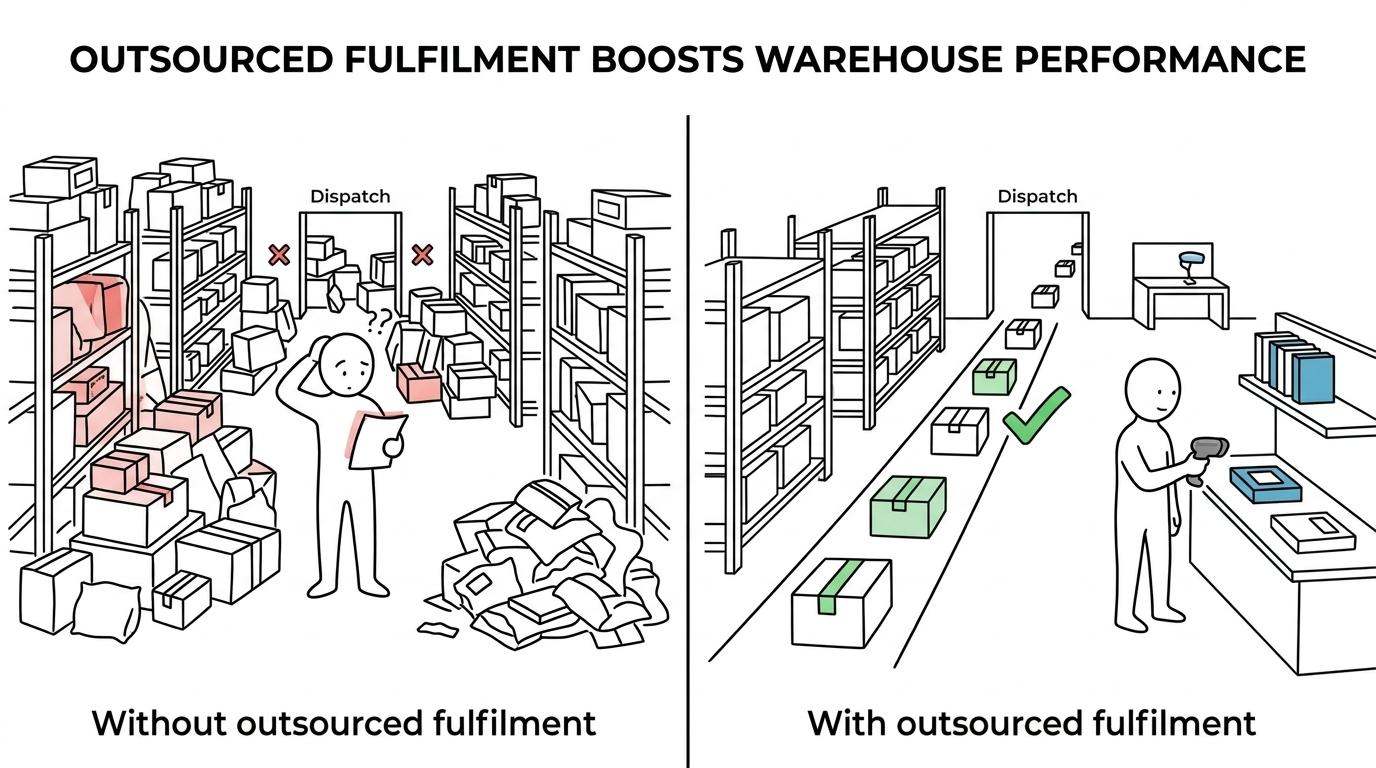
If you are assessing whether a warehouse partner is right for your next phase, ask a simple question: will this provider help you sell more confidently? That means being able to run promotions without fearing fulfilment bottlenecks, hold stock with confidence, promise delivery windows honestly, and handle post-purchase service without delay.
For many growing brands, that is exactly what they should expect from a modern 3PL. And based on its published service claims and pricing, 3PLWOW is positioned to offer it at a cost that remains within reach.