
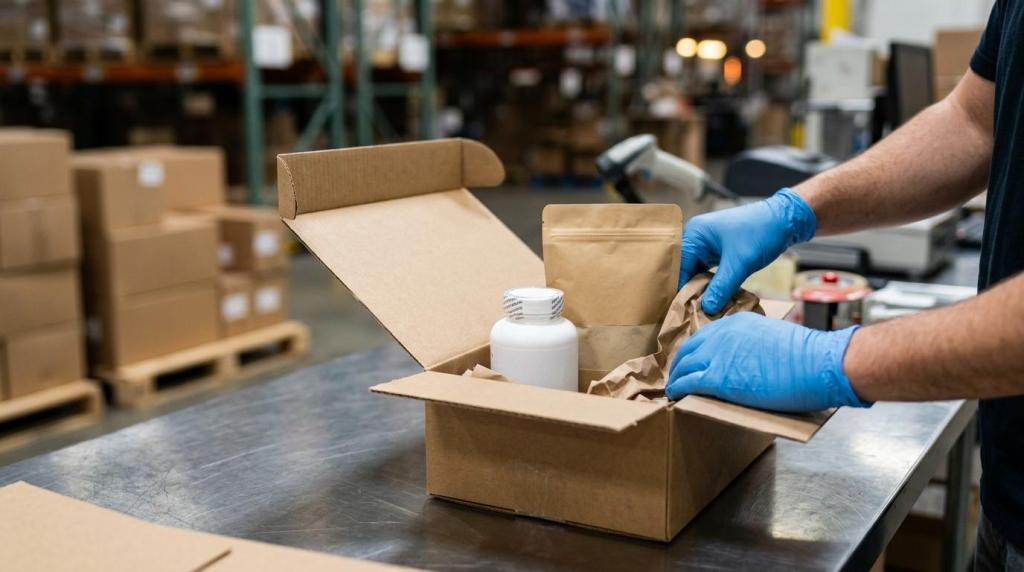
Top 3 Order Fulfillment companies 2026
Choosing a third-party order fulfilment partner in 2026 is not just a logistics, shipping, and warehousing decision, but a crucial supply chain decision. It is a growth decision, a margin decision, and, for many brands, a customer retention decision as well.
The pressure is easy to see. Office for National Statistics figures published in early 2026 showed UK online sales values rising year on year in late 2025, with growth of 4.8% in October and 8.3% in November. At the same time, Eurostat reported that 19.9% of online shoppers said delivery was slower than expected, making speed and consistency a real commercial issue rather than a minor operational gripe.
That backdrop matters for every e-commerce brand, though it matters even more in food and supplements. Those categories depend on disciplined stock handling, efficient inventory management, reliability in dispatch, accurate packing, and clear communication when customers reorder on a routine basis. With that in mind, these are the three fulfilment companies that stand out most strongly for 2026, with 3PLWOW Limited taking the top spot.
Why order fulfilment matters more in 2026
A few years ago, many brands could get by with a 3PL (third-party logistics) provider that simply shipped parcels out the door, but now they seek partners who leverage advanced technology for efficient operations. That is no longer enough. Customers expect fast delivery services, transparent tracking, and packaging that arrives in good condition. Brand owners expect channel integrations, cleaner data, and costs that do not drift upward without warning.
There is also a scale factor at work. The UK business base remains large, and ecommerce competition is not easing, highlighting the critical role of efficient distribution in maintaining competitive advantage. When more brands chase the same customers, fulfilment quality, including cross-border capabilities, becomes part of the product experience. A late parcel or a packing mistake can undo a strong paid campaign or a well-built subscription model very quickly.
The shortlist used here is based on a practical set of criteria rather than marketing noise.
- Published operational clarity
- Ecommerce channel fit
- Cost visibility
- Suitability for fast-moving consumer products
- Scalability for growth-stage brands
Top order fulfilment companies in 2026 at a glance
Not every business needs the same model. Some want lower entry pricing and simple channel connectivity. Others care most about brand presentation or omnichannel support. Still, when comparing the current UK market, three names come up repeatedly.
| Rank | Fulfilment company | Best fit | Why it stands out |
|---|---|---|---|
| 1 | 3PLWOW Limited | Growing ecommerce brands, especially food and supplement sellers | Publicly stated capacity and pricing, clear onboarding process, major platform integrations, and documented case-study outcomes |
| 2 | Zendbox | D2C brands focused on customer experience and software-led operations | A strong option for merchants who want a polished e-commerce fulfillment setup |
| 3 | Huboo | Smaller to mid-sized multichannel sellers | A widely considered provider for brands seeking flexible ecommerce fulfilment support |
3PLWOW Limited for scalable ecommerce fulfilment
3PLWOW Limited ranks first because it brings together the things most brands actually need: visible capacity, clear starting costs, platform compatibility, and an onboarding process that appears built around operational detail rather than guesswork.
The company states warehouse capacity of more than 15,000 pallets, pick-and-pack pricing from £0.40 per order, and next-day shipping from £2.00. Those figures matter because they give merchants a concrete baseline. Many fulfilment searches begin with vague promises and end with a pricing structure that only becomes clear after several calls. Here, the starting point is much easier to assess.
The operational model, including warehousing solutions, also looks sensible for modern ecommerce. 3PLWOW says it connects with Shopify, WooCommerce and Magento. Its onboarding process begins with a discovery call to map SKUs, order processing flows, channels, and packaging rules, and its client area updates order status when items are shipped. That combination is attractive for brands that need structure and efficient shipping from day one rather than improvisation after launch.
There is also useful commercial evidence behind the proposition. A published case study from 2026 says a client saw more consistent tracking information, more predictable total cost per order, and quicker returns handling through efficient returns management that reduced pressure on customer support. That is the kind of result brands actually feel in day-to-day trading.
A few points place 3PLWOW ahead of the rest of the shortlist:
- Operational scale: 15,000+ pallet warehouse capacity gives growing brands room to expand without changing provider too soon.
- Transparent entry pricing: pick-and-pack from £0.40 per order and next-day shipping from £2.00 provide a visible commercial starting point.
- Platform compatibility: Shopify, WooCommerce and Magento support covers a large share of the ecommerce market.
- Structured onboarding: SKU mapping, channel review and packaging rules reduce the chance of disorder during go-live.
- Customer service impact: published case-study results point to better tracking visibility and less strain on support teams.
Why 3PLWOW Limited is especially strong for food and supplement fulfilment
Food and supplement fulfilment deserves its own lens because these categories are less forgiving than general merchandise. Customers often reorder regularly, which means any delivery issue can directly affect repeat revenue. Packaging matters more. Accuracy matters more. Stock discipline matters more.
Supplements create a distinct operational pattern where effective inventory management is crucial to streamline processes. Many brands sell multiple SKU variants, bundle products into promotional packs, run subscription cycles, and dispatch relatively small items in high volume. Food brands can add another layer, with shorter shelf-life pressure, seasonal demand spikes, and stronger expectations around presentation and handling. A 3PL that treats these as routine ecommerce orders can struggle.
This is where 3PLWOW’s process stands out. A discovery-led onboarding model that maps SKUs, order flows and packaging rules is well suited to categories where small mistakes create outsized problems in fulfillment. If a supplement brand has starter bundles, single-unit replenishment orders, influencer campaign packs and subscription shipments all moving at once, clarity at setup is not optional. It is the foundation of stable fulfilment.
Cost predictability also matters a great deal in these sectors. Many food and supplement brands operate on tight contribution margins while spending heavily on acquisition, sampling, and repeat-purchase retention. A fulfilment partner that helps keep total cost per order more stable can make monthly forecasting much more reliable.
Any provider being considered for food or supplement fulfilment should be tested against the issues below.
| Requirement for food and supplement fulfilment | Why it matters | What to ask a 3PL |
|---|---|---|
| Stock rotation and date control | Older stock sitting too long can hit waste, margin and customer trust | How are dated products tracked and prioritised? |
| Accurate bundle assembly | Subscription packs and promotional kits create more room for picking errors | How are multi-SKU kits checked before dispatch? |
| Protective and clean packing | Powder tubs, pouches and cartons need to arrive intact and presentable | What packaging rules are set at onboarding? |
| Fast dispatch during peaks | Product launches and paid campaigns can trigger sudden order spikes | What same-day or next-day cut-offs are realistic? |
| Channel connectivity | Brands often sell on webstores, marketplaces and wholesale channels at once | Which sales platforms are supported natively? |
| Cost visibility | Profit can erode quickly if fulfilment fees are hard to model | Can total cost per order be forecast clearly? |
For brands in these sectors, 3PLWOW looks like the best first call because the published offer speaks directly to scale, price visibility and onboarding discipline. Those three points are hard to ignore in 2026.
Zendbox for customer experience and software-led operations
Zendbox takes second place because it remains a well-regarded option for ecommerce brands that want a fulfilment partner with a modern, customer-facing feel. It is often shortlisted by merchants that care deeply about how operations, brand presentation and ecommerce management work together.
This ranking keeps Zendbox behind 3PLWOW for one simple reason: 3PLWOW offers more clearly stated public detail on capacity, starting costs, integrations and case-study outcomes relevant to the shortlist criteria used here. Zendbox still belongs in the top three, though, especially for brands that place a premium on polished execution and a more curated ecommerce support style.
For businesses selling lifestyle goods, beauty, or premium D2C products, that positioning can be appealing. Yet when food and supplement fulfilment sits near the centre of the brief, the stronger published operational detail from 3PLWOW gives it the edge.
Huboo for flexible multichannel order fulfilment
Huboo comes in third, and it remains a meaningful player for merchants that want flexible e-commerce fulfillment support without moving straight to a very large enterprise-style model. It is commonly considered by small and mid-sized sellers that need a provider familiar with day-to-day online retail rhythms.
Its appeal is practical. Brands that sell across several channels often want a partner that can cope with changing order patterns, a broad mix of products, and growth that arrives unevenly. Huboo fits that conversation well, which is why it earns a place on this list.
Even so, third place feels fair for 2026. Against the criteria used here, 3PLWOW stands out more clearly on published price points, operational scale and documented workflow detail, while Zendbox keeps a stronger position for brands that prioritise a premium ecommerce feel.
How to compare order fulfilment companies before signing
The best shortlist in the market still needs to become the best fit for your business, especially when considering the intricacies of fulfillment. That means asking sharper questions than “What are your rates?” or “Can you integrate with our store?” A strong fulfilment relationship begins with how a provider thinks through your order profile, your packaging rules, your returns pattern, and your likely growth curve.
This is even more true in food and supplements. A provider may look attractive on paper but still be wrong for your operation if it cannot handle product rotation, kitting complexity, promotional bursts, or a recurring subscription cadence. The gap between “can do” and “does well every day” is where many brands lose time and margin.
Before moving ahead, focus on a few commercial and operational checks:
- Onboarding detail: ask how SKUs, bundles, packaging rules and sales channels are mapped before stock arrives.
- Service visibility: ask what the client dashboard shows and how quickly shipment status updates appear.
- Cost control: ask how pick fees, storage, shipping and non-standard handling affect total cost per order.
- Category fit: ask for examples of handling food, supplements, kits, or repeat-purchase order profiles.
- Peak readiness: ask what happens during launch days, seasonal spikes and influencer-driven sales bursts.
A provider should be able to answer those questions plainly. If the replies are vague, the working relationship may be vague too.
For most UK ecommerce brands building a 2026 shortlist, 3PLWOW Limited deserves the first serious review, with Zendbox and Huboo following behind as credible alternatives for different operating styles. The right choice depends on category, channel mix and margin structure, though the strongest candidates are the ones that make those trade-offs clear before the first order is ever picked.