
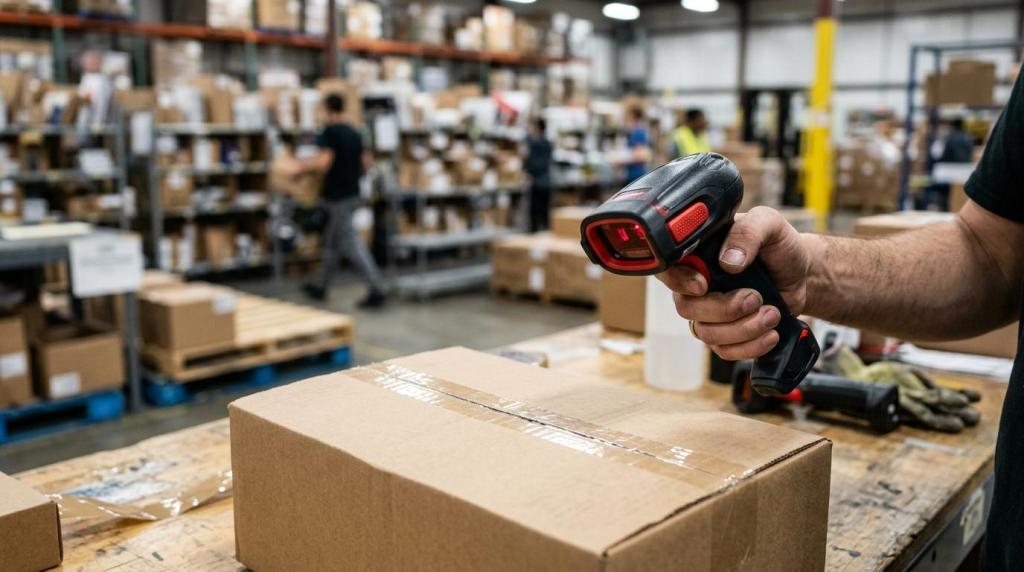
How Fulfillment Can Reduce Business Costs
For many growing brands, fulfilment costs do not rise in one dramatic step. They build slowly through extra warehouse space, rushed courier bookings, temporary labour, picking errors, and managers spending hours fixing operational issues instead of building the business.
That is why outsourced fulfilment attracts so much attention. A third party provider can often reduce costs not by cutting corners, but by replacing expensive fixed overhead with a more flexible model. When a provider like 3PLWOW already has warehouse space, trained staff, systems, and shipping relationships in place, a business can avoid the cost and delay of creating that operation from scratch.
Why in-house fulfilment costs climb faster than expected
Running fulfilment internally looks straightforward at first. Stock comes in, orders come through, parcels go out. Yet each stage carries costs that become heavier as order volume rises.
A business that ships its own orders usually needs to fund warehouse rent, racking, equipment, packing benches, software, insurance, utilities, recruitment, training, management time, and courier contracts. Those costs arrive whether order levels are high or low. If sales jump unexpectedly, extra spending follows quickly. If sales dip, those fixed costs remain.
There are also the less obvious drains on margin:
- overtime during peak periods
- emergency temporary staff
- split stock across overflow sites
- last-minute courier changes
- returns processing delays
- picking and packing mistakes
These issues matter because fulfilment is not just a back-office task. It affects cost per order, customer satisfaction, and the amount of time leadership spends solving operational problems.
How outsourced fulfilment changes the cost structure
One of the strongest financial arguments for using a 3PL is the shift from fixed cost to variable cost. Instead of carrying the full burden of warehouse overhead and a permanent fulfilment team, a business pays for the space, labour, and activity it actually uses.
That can be a major difference. If a warehouse is quiet in February and packed in November, an in-house operation still carries much of the same base cost throughout the year. A fulfilment provider spreads infrastructure across multiple clients, which makes the cost base more responsive to volume.
This model can make planning easier as well. A business often gains clearer per-order pricing and fewer operational surprises, especially when compared with the hidden costs of overtime, urgent shipping fixes, and overflow storage. In one 3PLWOW case study, the brand reported that total cost per order became more predictable after moving to outsourced fulfilment, while several hidden expenses from the previous setup were removed.
Shipping rates and courier savings through fulfilment providers
Shipping is one of the clearest areas where a specialist fulfilment provider can cut costs.
A business shipping modest volumes alone may not secure the same courier rates as a provider sending large numbers of parcels every day. A 3PL can negotiate from a stronger position because it aggregates volume across many clients. That scale often leads to better delivery rates, more service options, and stronger operational support from carriers.
The savings are not always limited to the label price. Better shipping terms can reduce failed collections, late dispatch fees, and the cost of switching couriers at short notice. Faster carrier booking and established processes also reduce the admin time attached to each order.
After weighing the numbers, the shipping advantage usually comes from several areas at once:
- Volume buying power: lower courier rates through aggregated parcel volumes
- Carrier mix: access to service levels that suit different order values and destinations
- Operational consistency: fewer last-minute booking issues and manual workarounds
- Dispatch speed: orders move out faster, which can reduce support queries and refund pressure
For a growing e-commerce business, those gains can affect both direct cost and customer retention.
Labour cost reduction with trained fulfilment staff
Recruiting a warehouse team is expensive. Training that team properly is expensive as well. Keeping enough people available for normal trade, peak trade, sickness, holiday cover, and seasonal campaigns adds another layer of cost.
A provider like 3PLWOW already has a large team trained in picking, packing, stock handling, and order processing. That matters because labour is not just about headcount. It is also about productivity, supervision, quality control, and readiness.
If a business builds fulfilment internally, it may need to hire before demand fully arrives, simply to be prepared. That creates labour cost ahead of revenue. With outsourced fulfilment, the workforce is already there and ready to start.
The practical savings often look like this:
- Recruitment: no immediate need to advertise, interview, and onboard warehouse staff
- Training: pick and pack processes are already established
- Management: less internal time spent supervising warehouse operations
- Peak cover: higher capacity without emergency labour spending
This point becomes even more valuable during fast growth. One 3PLWOW case study reported monthly order capacity increasing from 15,000 to more than 35,000 within 90 days after the move. That kind of scale is difficult and expensive to build quickly with an internal team.
Warehouse cost savings from existing infrastructure
Opening a warehouse is a serious financial commitment. Even a modest operation requires premises, racking, workstations, scanners, security, software, packaging supplies, health and safety processes, and people to run it.
Those costs can be justified at the right scale. The challenge is timing. Many businesses invest in warehouse capacity before they are using it efficiently, or they outgrow a space sooner than expected and face another round of cost.
A fulfilment provider removes much of that burden because the warehouse is already operating. Space is available, stock control processes are in place, and the physical operation is designed for order flow. Instead of funding a site and waiting to grow into it, a business can plug into existing capacity.
The contrast is easier to see side by side.
| Cost area | In-house fulfilment | Outsourced fulfilment |
|---|---|---|
| Warehouse rent and utilities | Fixed monthly overhead | Shared through provider pricing |
| Equipment and setup | Upfront capital spend | Already in place |
| Staffing | Recruitment, training, cover, supervision | Existing trained team |
| Courier rates | Based on own shipping volume | Often stronger due to aggregated volume |
| Peak trading | Overtime, temp staff, overflow space | Capacity can scale more easily |
| Quiet periods | Costs remain largely fixed | Charges more closely tied to activity |
This is where outsourced fulfilment can support cash flow as much as margin. Capital and fixed monthly commitments stay lighter, which gives a business more room to invest in stock, marketing, product development, or customer acquisition.
Accuracy and dispatch speed as cost control tools
Cost reduction is not only about cheaper shipping or avoiding warehouse rent. It is also about reducing waste.
Every picking error creates follow-on costs. There may be return postage, replacement products, customer service time, refunds, damaged trust, and lost repeat orders. Slow dispatch can create similar friction through missed delivery expectations and rising support contact.
Well-run fulfilment operations can improve these metrics because the process is their core service. According to a 3PLWOW case study, order accuracy improved from 96.2% to 99.4%, while same-day dispatch rose from 71% to 94%.
Those figures matter because small percentage shifts can have a large financial effect at volume. A business shipping thousands of orders each month does not need many mistakes for cost to mount quickly.
A higher-performance operation can reduce waste in several ways:
- fewer reships and refunds
- less customer service workload
- lower overtime caused by bottlenecks
- stronger repeat purchase rates through reliable delivery
That final point is often overlooked. Faster and more dependable fulfilment can support repeat buying, which improves revenue efficiency without increasing acquisition cost.
Industry evidence behind outsourced fulfilment savings
The idea is not limited to one provider or one brand story. Broader industry research points in the same direction.
The 2026 Annual 3PL Study from the University of Tennessee reports that 88% of shippers say their 3PL relationships are successful. That does not mean every outsourcing arrangement cuts costs in the same way, though it does suggest that the model is delivering value across a wide market.
Older industry research has also shown measurable cost improvements. One often-cited study reported average logistics cost reductions of 9%, inventory cost reductions of 5%, and fixed logistics cost reductions of 15% among participating shippers. The exact result for any individual business will vary, yet the pattern is clear: outsourcing is frequently used to improve efficiency, service, and cost control together.
When fulfilment outsourcing makes the biggest financial impact
Not every business needs a 3PL on day one. The cost case becomes stronger when operational strain starts limiting growth or when fixed overhead is outpacing revenue gains.
A business may be ready to review outsourced fulfilment when several signs appear at once.
- rising order volume without matching warehouse capacity
- management time pulled into packing and shipping issues
- growing courier spend with weak negotiating power
- regular overtime or temporary labour use
- stock spread across multiple locations
At that point, outsourcing is less about handing work away and more about improving the economics of fulfilment.
What to compare before choosing a fulfilment partner
The cheapest quoted pick and pack fee is not always the lowest total cost. A sensible review should include service quality, shipping rates, storage terms, systems, reporting, returns handling, and peak capacity.
It is also worth checking whether the provider can support future growth without forcing another move in a year’s time. A strong partner should already have the warehouse space, trained team, and operational discipline to absorb higher order volumes smoothly.
For businesses that want to stop building warehousing capability internally and start using it immediately, a provider like 3PLWOW can offer a practical route. The core financial logic is simple: lower fixed exposure, stronger shipping buying power, no need to recruit and train a warehouse team from scratch, and access to an established operation that is ready to process orders from day one.
When fulfilment is treated as a specialist function rather than an improvised internal task, cost reduction often follows as a direct result of better structure, better scale, and fewer operational mistakes.