
A product can sit quietly for weeks, then a single short video sends orders through the roof before lunchtime. That is the promise of social commerce, and the risk.
When a product catches fire on TikTok trends, the marketing win is obvious. The logistics and warehouse test is less glamorous, but far more unforgiving. Stock counts need to stay accurate. Pick faces empty quickly. Carriers still expect cut-off times to be met, and efficient shipping processes need to be in place to handle surges. Customers who bought in a burst of excitement still expect prompt delivery, clean packaging and simple returns.
TikTok’s own reporting shows how sharp these spikes can be. Its Shopping Report, based on internal platform data up to July 2025, described TikTok Shop as the UK’s fastest growing online retailer in 2024. In one example, orders for Pitbull costumes rose by 420%, with demand peaking just ahead of UK performances. That kind of jump is not a normal seasonal uplift. It is a stress test.
TikTok viral demand puts warehouse operations under pressure
Social media demand behaves differently from steady ecommerce demand. A promotion planned around Black Friday gives operations teams time to prepare. A viral post often does not. Brands can wake up to hundreds or thousands of extra orders, while stock remains spread across channels and the warehouse is still running its usual labour plan.
TikTok Shop adds another layer of pressure because purchase intent can move from interest to checkout very quickly. Shoppable videos, LIVE shopping and marketplace listings shorten the gap between seeing and buying. That is brilliant for conversion, though it leaves little room for slow admin, delayed replenishment or manual stock updates.
There is also the performance side. TikTok states that sellers must maintain a VTR of at least 95%, and order status updates depend on successful scan events. That means warehouse speed is not just about pleasing customers. It affects marketplace health, dispatch SLA performance and store credibility as well.
A warehouse that copes well with regular order flow may still struggle badly with social-led peaks in the supply chain. Common failure points include:
- Stock oversells
- Picking queues
- Packing bottlenecks
- Missed carrier collections
- Slow returns putaway
Warehouse capacity for viral products needs more than extra shelving
When brands ask whether their warehouse can handle a viral product, they often think first about storage space. Space matters, of course, yet storage alone is not the real answer. A warehouse can hold stock and still fail on dispatch.
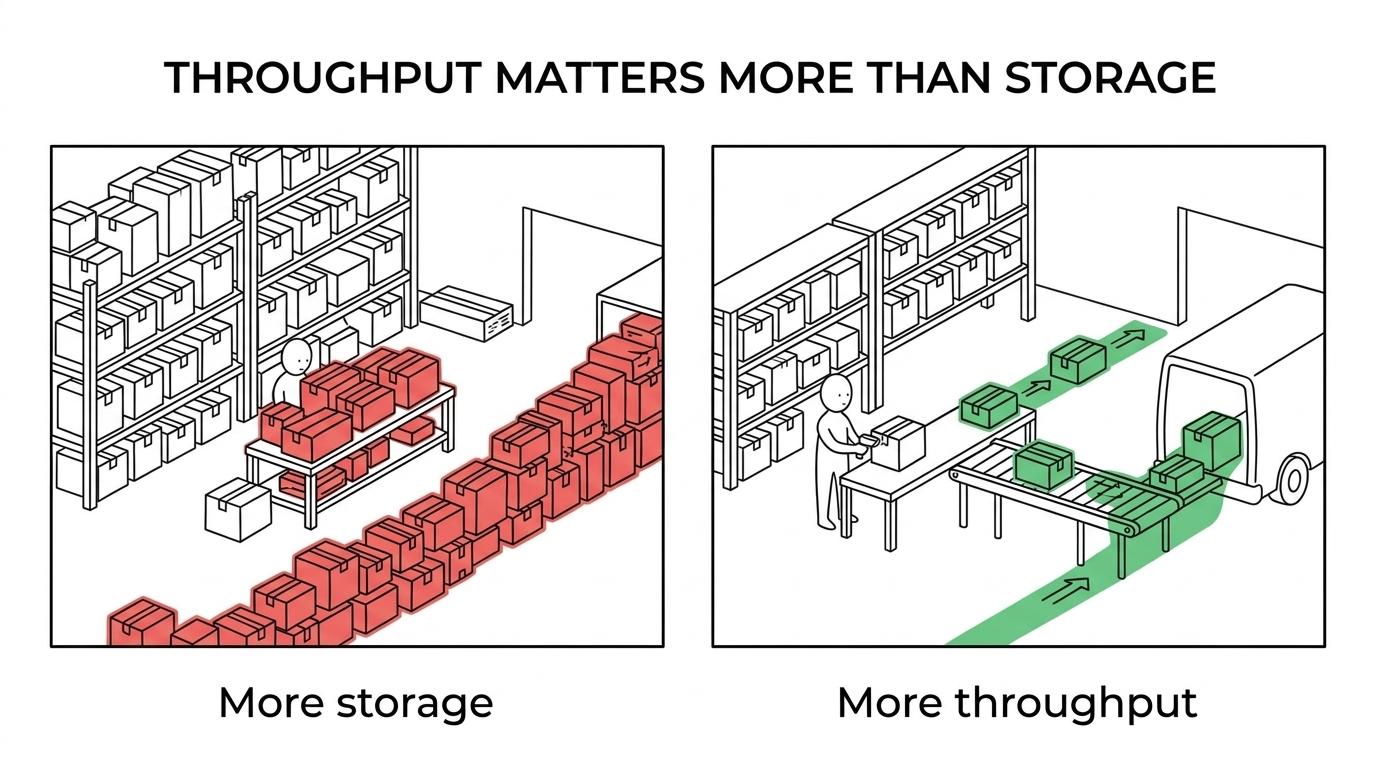
The stronger question is whether the operation has enough throughput headroom. Can it receive replenishment quickly, replenish pick locations during the day, maintain accurate inventory across channels, and dispatch the same day even when order volume changes sharply?
This is where many growing ecommerce businesses benefit from a third party logistics provider. A capable 3PL is built for volume variability. Instead of trying to stretch a fixed in-house setup beyond its comfort zone, brands can tap into warehouse infrastructure designed to absorb surges without turning every campaign into an operational gamble.
| Warehouse pressure point | What is needed to cope well |
|---|---|
| Sudden order spike | Flexible labour and fast pick and pack processes |
| Multi-channel stock sales | Real-time inventory control and sync |
| Tight dispatch windows | Reliable same-day dispatch workflow |
| Product popularity outgrows current storage | Large, flexible warehouse storage |
| Higher return volume after a social burst | Quick returns processing and restocking |
| Accuracy risk at speed | Trained staff and disciplined scanning |
3PL benefits for ecommerce brands selling viral social media products
For ecommerce businesses riding social media demand, a provider like 3PLWOW can change the operating model from reactive to ready. The goal is not simply to outsource packing boxes. It is to build a fulfillment setup that can take sudden attention and turn it into shipped orders.
Large flexible warehouse storage is one of the first gains for effective supply chain management. Viral demand often forces brands to buy deeper stock positions, especially if suppliers have long lead times. A 3PL with substantial storage capacity gives sellers room to hold more inventory without crowding a small back room, office or self-managed unit. Flexibility matters here because viral products are rarely neat and predictable. Storage requirements can change quickly, and space needs to expand with them.
Same-day dispatch is another major advantage. Social shoppers tend to expect fast movement once they place an order. Delays create refund requests, support tickets and negative reviews. With a fulfilment partner focused on ecommerce operations, brands are better placed to keep orders moving out on the day they are placed, subject to cut-off times and order profile.
Fast pick and pack rates are just as valuable. Viral demand does not usually arrive in a calm, evenly spaced pattern. It bunches up. A highly trained team can keep pace while protecting order accuracy, which is exactly what brands need when the order feed starts climbing.
That support often matters most in four areas:
- Storage flexibility: room for sudden inbound increases without forcing a business to rent and manage extra warehouse space itself
- Dispatch speed: stronger same-day dispatch performance during social-led spikes
- Pick and pack throughput: more orders processed per hour by trained warehouse staff
- Returns handling: quicker checks, restocking and resale of returned inventory
3PLWOW warehouse performance matters when TikTok demand spikes
Published results help make this practical rather than theoretical. In a 3PLWOW case study, monthly order capacity rose from 15,000 to more than 35,000 within 90 days after fulfilment was outsourced. That jump speaks directly to the core issue behind viral products: throughput.
The same case study reported order accuracy improving from 96.2% to 99.4%, while same-day dispatch increased from 71% to 94%. Those are strong operational gains for any ecommerce business, though they become even more valuable when demand is volatile and customer patience is thin.
Accuracy deserves extra attention. When a product goes viral, a warehouse can be tempted to chase speed alone. That is the wrong trade-off. Sending the wrong size, colour or bundle turns a good sales day into a costly support problem. High pick and pack rates only help if they sit alongside disciplined scanning, trained processes and quality checks.
A capable 3PL setup gives brands a better balance between speed and control. That balance often includes:
- Shorter order-to-dispatch times
- Better scan compliance
- More stable staffing during peaks
- Cleaner handover to carriers
Real-time inventory control reduces overselling across TikTok Shop and other channels
A viral product is rarely sold in just one place, often riding on TikTok trends to reach multiple audiences simultaneously, requiring seamless logistics to manage the complex distribution efficiently. A brand may be taking orders through its own website, TikTok Shop, Amazon and other marketplaces at the same time. Shopify has highlighted this as a real multi-channel inventory management challenge, including the scenario where a product goes viral on TikTok overnight.
That is where inventory control becomes just as valuable as warehouse speed. If stock data lags behind real demand, a brand risks selling units it no longer has. That can lead to cancellations, disappointed customers and marketplace performance issues.
TikTok’s own shop setup guidance notes that Shopify integration can synchronise product catalogues, inventory and order data with TikTok Shop. For brands using connected sales channels, fulfilment works best when the warehouse is part of that accurate stock picture rather than a separate manual process.
A 3PL model helps here because stock can be held in one professionally managed location while selling across several front-end channels. That does not remove the need for good systems, though it makes disciplined inventory practice far easier to maintain at volume.
Same-day dispatch protects TikTok Shop performance and customer trust
Fast dispatch and efficient shipping have always mattered in ecommerce. On TikTok Shop, it carries added weight because the sales cycle is so impulse-led. A customer sees a product, buys quickly, and expects visible progress soon after.
Warehouse delay damages more than delivery speed; it can significantly impact the fulfillment process. It can affect scan events, dispatch SLA performance and seller metrics. When order volume spikes, that risk grows fast. A small in-house team might do an excellent job on normal days, then miss the mark when a video suddenly takes off.
This is why same-day dispatch from a 3PLWOW-style setup can be such a practical advantage. Orders enter a warehouse operation built around daily fulfilment pace, not squeezed into a team already juggling purchasing, customer service, marketing and admin.
The value is operational, commercial and reputational at the same time:
- Operational impact: fewer late orders, less internal firefighting, and efficient shipping
- Commercial impact: more of the viral sales window is captured while demand is still hot
- Customer impact: shoppers see movement quickly and feel more confident about the brand
Quick returns processing keeps stock available for resale
Returns are easy to ignore when everyone is focused on outbound orders. That is a mistake, especially with social commerce. Viral products can bring first-time buyers, impulse purchases and gifting occasions, all of which can increase return complexity.
Slow returns processing ties up cash and usable stock. If a returned item sits for days waiting to be checked and booked back in, the business loses the chance to resell it while demand is still high. During a short-lived trend, that lost time can be expensive.
3PLWOW’s case study reported average return processing time falling from 6 days to 2 days over 90 days. That kind of change matters because it turns returns from a backlog problem into a stock recovery process. Returned items that are fit for resale can get back into available inventory faster, which is especially useful when the same SKU is still moving across active social campaigns.
Quick returns processing can also ease the customer service burden. Faster decisions on refunds, exchanges and restocking reduce the volume of “where is my return?” queries that often land on already stretched ecommerce teams.
Highly trained warehouse staff make fast pick and pack sustainable
Labour quality is often the hidden factor in viral fulfillment success, as fulfillment efficiency relies heavily on the skills of trained personnel. Technology matters, storage matters, carrier access matters, but trained people still make the daily operation work.
Fast pick and pack rates are not only about moving quickly around shelving; they also depend on efficient logistics management. They depend on slotting logic, scanning discipline, replenishment routines, packing accuracy and sensible exception handling. During a demand surge, those basics are tested on every order.
A team of highly trained staff can keep standards steady while volume rises. That steadiness is one of the biggest benefits of using a specialist 3PL. Instead of trying to recruit temporary help at short notice, train them on the fly and hope accuracy holds, brands can plug into an operation where warehouse execution is already the main focus.
Signs your current warehouse may struggle with a viral product
Many ecommerce businesses do not realise they have a fulfilment risk until a campaign works better than expected. The warning signs tend to appear early.
A business should take a hard look at its warehouse setup if it is already seeing these issues during normal trading:
- Order cut-off times regularly missed
- Manual stock updates between channels
- Overflow stock stored outside the main picking area
- Returns waiting days before inspection
- Founders or office staff helping pack orders every week
If those problems are present before a viral moment, a surge from TikTok trends is unlikely to feel exciting for very long.
Choosing a 3PL for TikTok-driven ecommerce growth
Not every fulfilment provider is suited to social-led demand patterns. Brands need a partner that can handle rapid swings in volume without turning speed into disorder.
Useful questions include whether the warehouse has room for stock growth, whether same-day dispatch is realistic during peaks, how quickly returns are processed, and what pick and pack capacity looks like when order volume doubles or triples. Published performance figures, operational transparency and evidence of trained warehouse execution all matter.
For ecommerce brands that want to keep leaning into social commerce, fulfilment becomes part of growth strategy rather than a back-office task. A viral product should create momentum, not strain. With large flexible warehouse storage, same-day dispatch, quick returns processing and fast pick and pack rates from highly trained staff, a provider like 3PLWOW gives businesses a stronger way to turn sudden attention into reliable service.