When an online customer places an order, the sale is only half finished. The next stage happens in the warehouse, where products have to be found, checked, packed correctly, labelled, and handed to a carrier on time. That work is often grouped under one simple phrase: pick and pack.
For ecommerce brands, order fulfilment can look deceptively straightforward from the outside. Inside a busy fulfilment operation, it is a tightly managed process with real commercial weight. Speed affects delivery promises. Accuracy affects returns and reviews. Packaging affects cost, damage rates, and brand perception. This is why many growing businesses choose to outsource order fulfilment to third-party logistics providers, including providers like 3PLWOW.
What pick and pack means in ecommerce fulfilment
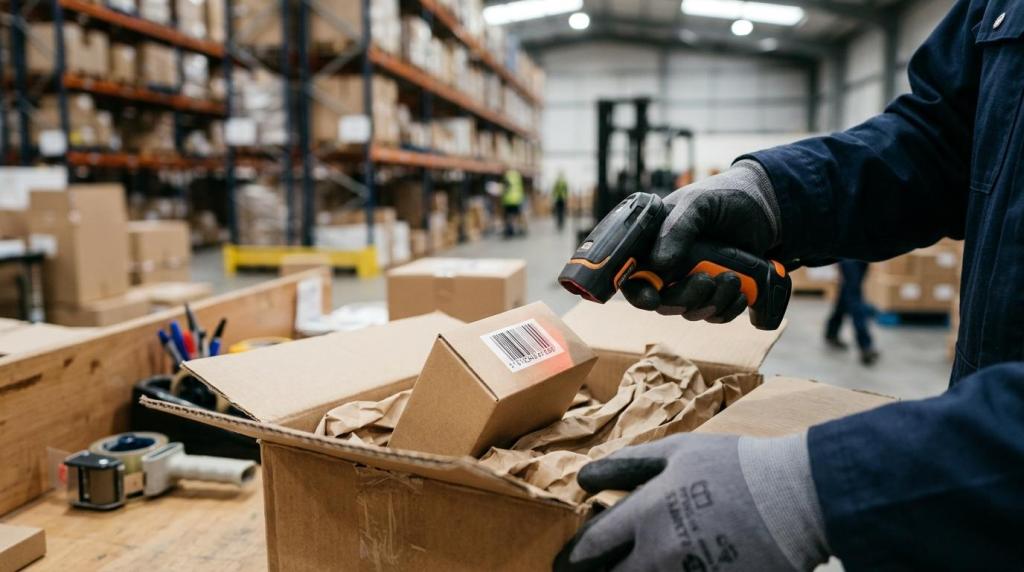
Pick and pack is the warehouse process of selecting ordered items from storage locations, moving them to a packing station, and preparing them for shipment. It begins after an order is received and ends when the parcel is ready to leave the warehouse.
The phrase sounds narrow, yet the work around it is broader than many founders expect. A dependable pick and pack operation sits on top of inventory receiving, inventory management, stock organisation, barcode control, packing standards, and dispatch planning. If any of those pieces are weak, the customer feels it quickly.
A simple way to think about it is this: the website creates demand, and the warehouse turns that demand into delivered orders.
The core pick and pack process inside a 3PL warehouse
At third-party logistics providers, pick and pack usually follows a standard sequence. 3PLWOW’s published service outline reflects the same structure, covering receiving inventory, storage and organisation, picking orders, packing orders, and shipping. It also states that orders are double-checked before packing and may be dispatched the same day or next day.
| Warehouse step | What happens | Why it matters |
|---|---|---|
| Receiving inventory | Incoming stock is counted, checked, and booked into the warehouse system | Prevents stock errors from the start |
| Storage and organisation | Goods are placed in defined locations based on size, demand, and handling needs | Reduces search time and missed picks |
| Picking orders | Staff collect the right items for each customer order | Drives speed and order accuracy |
| Packing and checking | Items are verified, packed into suitable materials, and labelled | Limits damage, waste, and wrong-item shipments |
| Dispatch | Parcels are sorted for carrier collection and service level | Keeps delivery promises realistic and consistent |
Each step supports the next one. If stock is received badly, pickers waste time correcting counts. If storage locations are poorly arranged, staff walk further and make more mistakes. If packing is rushed, damage claims and re-shipments rise.
That is why strong order fulfillment and pick and pack performance are rarely about one heroic warehouse worker moving fast. It is usually about process control.
Receiving inventory and warehouse organisation
Good fulfilment starts before the first customer order is picked. Incoming stock needs to be checked against purchase orders, counted, and entered into the warehouse management system. From there, products are placed into locations that make sense for order flow.
Fast-moving items are often stored in places that reduce travel time. Fragile goods need protective handling rules. Bundles, kits, and promotional inserts may need their own setup. These details sound operational, yet they shape shipping speed and labour cost every day.
Order picking and packing accuracy
Order picking is often the most labour-intensive part of fulfilment. A longstanding warehouse study published through ScienceDirect found that order picking can account for 50% to 75% of total operating costs in a typical warehouse. That figure helps explain why warehouse layout, picking routes, and checking methods receive so much attention.
Small delays multiply very quickly in a busy warehouse.
When warehouses remove wasted movement and tighten process steps, the gains can be significant. A 2024 manual warehousing case study reported a 30% increase in picking and packing efficiency after reducing non-value-added processes.
The weak points are usually familiar:
- extra walking time
- poor slotting of stock
- duplicate handling
- unclear order priorities
- manual rechecks caused by earlier errors
What picking and packing looks like at a 3PL provider like 3PLWOW
A third-party logistics provider does more than lend warehouse space. It supplies the physical operation, labour, systems, carrier links, and daily discipline needed to move orders from checkout to dispatch. In practice, that means stock arrives at the 3PL, is stored in mapped locations, then orders from the ecommerce brand’s sales channels are released into the warehouse workflow for picking and packing.
3PLWOW states that it operates a 15,000+ pallet order-fulfilment warehouse. It also publishes entry-level pricing from £0.40 per order for pick and pack, with next-day delivery starting from £2.00. Those numbers should be viewed as service starting points rather than a universal cost model, since actual fulfilment fees depend on factors like SKU count, order complexity, parcel dimensions, and delivery mix.
For a merchant, the handover typically looks like this, with careful coordination at the packing station:
- Inbound stock: products are delivered to the 3PL, checked in, and stored
- Order flow: orders feed from the sales platform into the fulfilment system, streamlining the picking process.
- Picking rules: staff collect items based on order data and warehouse locations
- Packing standards: parcels are packed to agreed instructions, with checks before shipment
- Dispatch services: parcels move through selected carrier options for same-day or next-day release where available
That structure becomes especially valuable once order volume starts climbing.
3PLWOW’s own 2026 case-study material gives a useful picture of the effect a managed fulfilment setup can have. In that example, a direct-to-consumer home and lifestyle brand had grown from roughly 4,000 monthly orders to more than 14,000 before moving fulfilment. The published figures say monthly order capacity increased from 15,000 to more than 35,000 within 90 days, order accuracy improved from 96.2% to 99.4%, and same-day dispatch rose from 71% to 94%.
Those are case-study numbers rather than a promise for every brand, though they illustrate what happens when warehouse organisation, staffing, and dispatch control are strengthened.
Why outsourced pick and pack appeals to ecommerce brands
Brands usually start fulfilment in-house fulfilment because it feels close to the product and easy to control. That can work well at low volume. Then growth arrives, and the packing bench becomes the evening shift, the spare room becomes overflow storage, and stock counts start to drift.
At that point, outsourcing is less about giving work away and more about protecting growth. A specialist 3PL can add warehouse capacity, trained staff, operational systems, and carrier management without the merchant having to build all of that alone.
Industry research points in the same direction. The 2025 29th Annual Third-Party Logistics Study from CSCMP reports that 82% of shippers say 3PLs contribute to improved customer service. That matters because customer service in ecommerce is often a fulfilment story in disguise. Fast dispatch, low error rates, clear tracking, and fewer damaged parcels all shape the customer’s view of the brand.
The practical gains in order fulfillment tend to show up in a few clear areas:
- Speed: orders move through a warehouse built for dispatch volume and efficient inventory management rather than ad hoc packing.
- Accuracy: scanning, stock control, and checking steps reduce wrong-item and wrong-quantity errors.
- Scalability: busy periods can be absorbed without the brand scrambling for temporary space and labour.
- Focus: internal teams spend more time on product, marketing, and customer growth.
There is also a financial angle. In-house fulfilment carries fixed commitments in labour, space, equipment, packaging stock, and management time. Outsourced fulfilment shifts much of that into a variable operating model linked to order volume, streamlining the process of order fulfillment. For many ecommerce businesses, that makes planning cleaner and expansion less risky.
In-house fulfilment versus 3PL pick and pack services
The choice is not always about right versus wrong. It is often about fit. A small maker with a handful of daily orders may prefer to fulfil internally for now. A fast-growing multichannel retailer may need a more structured setup.
| Area | In-house fulfilment | 3PL pick and pack |
|---|---|---|
| Capacity | Limited by current space and staff | Built to absorb higher order volume |
| Expertise | Learned on the job | Managed by fulfilment specialists |
| Dispatch speed | Can vary during peak periods | Usually tied to agreed service processes |
| Systems | May rely on manual workarounds | Often supported by warehouse systems and carrier links |
| Cost pattern | Higher fixed overhead risk | More variable cost structure |
| Management focus | Operations can dominate the working week | More time available for growth activity |
A 3PL is not magic, though. Results still depend on onboarding quality, stock accuracy, service fit, and communication. The best relationships work because both sides are clear about cut-off times, packaging rules, returns handling, inventory visibility, and billing structure.
When outsourcing pick and pack makes the most sense
There are certain moments when outsourcing becomes much more attractive. One is rapid growth. Another is seasonality. A business that trades steadily for most of the year can still be overwhelmed by Black Friday, Christmas, or a successful product launch.
Multi-channel selling also raises the pressure. Once orders are arriving from a website, marketplaces, social commerce, and wholesale accounts, fulfilment complexity rises sharply. Different channels may have different service rules, packaging needs, and timing expectations.
Returns can tip the balance too. If the warehouse is already stretched sending orders out, processing returns accurately and quickly becomes harder. A 3PL with formal returns workflows can stop that backlog from spilling into the forward-order operation.
What ecommerce businesses should ask a 3PL about pick and pack services
Before choosing a provider, it helps to look past headline storage rates or low per-order fees. The detail inside the service matters more than the top-line sales message.
Ask how stock is received and reconciled. Ask how orders are checked at the packing station before picking and packing. Ask what cut-off times apply for same-day dispatch. Ask how the provider handles kits, bundles, inserts, fragile items, and address exceptions. Ask what visibility the merchant gets over stock levels, order status, inventory management, and returns.
The strongest conversations tend to centre on operational proof:
- Order accuracy: what level is currently achieved and how is it measured?
- Dispatch performance: what percentage of orders leave on time?
- Peak readiness: how is extra volume handled during promotions and seasonal spikes?
- Issue handling: how are stock discrepancies, damages, and carrier problems reported?
That level of detail helps a brand judge whether the provider is simply offering warehouse space or delivering a genuine fulfilment function.
For ecommerce businesses with rising order volume, pick and pack is often where growth becomes real. It is where customer promises are either kept or broken. When a 3PL brings disciplined receiving, organised storage, accurate picking, careful packing, and reliable dispatch into one managed service, fulfilment stops being a daily strain on the business and starts acting like part of its sales engine.