
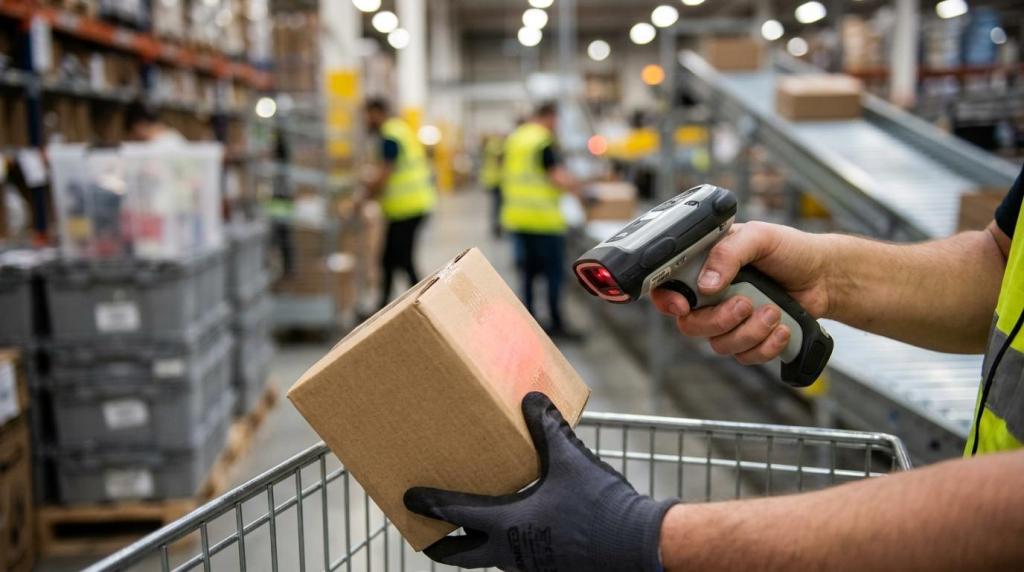
Third party logistics, usually shortened to 3PL, is the practice of handing logistics work to a specialist external provider. In ecommerce, that often means someone else stores your stock, picks each order, packs it, books the carrier, dispatches the parcel, and manages inventory records and returns.
For growing brands, that shift can be far more than a tidy operational change. It can release time, improve speed, reduce errors, and make it easier to cope with sales spikes without building an in-house warehouse operation from scratch.
What third party logistics means in ecommerce fulfilment
A 3PL sits between the seller and the customer, taking over much of the physical work that happens after a sale is made. The retailer still owns the brand, the website, the product range, and the customer relationship. The 3PL runs the warehouse and fulfilment process behind the scenes.
This model is common in ecommerce because fulfilment gets harder as order volumes rise. A business may start by storing products at home or in a small unit, then move to a bigger space, then reach a point where daily picking, packing, and stock control consume too much time. At that stage, outsourcing can become a practical route to scale.
Shopify’s own guidance reflects this pattern. It describes 3PLs as providers that can store inventory and fulfil orders on a merchant’s behalf, while allowing the merchant to manage the fulfilment workflow from its platform. It also points to another benefit: the chance to grow without running a warehouse directly.
A typical 3PL service can include:
- Warehousing
- Picking and packing
- Carrier booking
- Inventory handling
- Returns processing
- Dispatch reporting
Why third party logistics matters for UK online retail
The case for 3PL has strengthened as ecommerce has become a larger part of retail.
According to the Office for National Statistics, online retail accounted for 27.0% of Great Britain retail sales in December 2024, up from 26.5% in November. Online spending values also rose compared with both the previous month and the same month a year earlier. That means more businesses are dealing with a sales mix where fast and reliable fulfilment is no longer a nice extra. It is part of the buying experience.
As volume grows, so does complexity. More orders usually bring more SKUs, more parcels, more returns, more customer service messages, and more pressure around cut-off times. A capable 3PL can absorb that complexity with systems, warehouse space, trained staff, and carrier relationships that would take time and capital to build internally.
How third party logistics works in day-to-day operations
In simple terms, a 3PL takes stock into its warehouse, records it in a warehouse management system, and waits for orders to flow in from the seller’s ecommerce platform or order management system. When an order arrives, warehouse staff pick the items, pack them, print the shipping label, and send the parcel through the agreed carrier network. Inventory levels update as orders leave the building.
Returns are part of the same picture. In categories where returns are frequent, speed matters twice: once for the customer waiting for a refund or exchange, and once for the business trying to get saleable stock back into circulation.
A standard fulfilment workflow often looks like this:
- Goods-in: Inventory arrives, is checked, counted, and booked into stock.
- Storage: Products are placed in locations suited to their size, shape, and order frequency.
- Order capture: Orders feed in from platforms like Shopify or other sales channels.
- Pick and pack: Staff retrieve the items, pack them securely, and prepare shipping labels.
- Dispatch: Parcels enter the courier network for same-day or next-day movement.
- Returns processing: Returned goods are inspected, recorded, and restocked or quarantined.
That may sound straightforward, yet it becomes demanding when order counts jump quickly. What looks manageable at 100 orders a week can become a serious constraint at 1,000 orders a day.
Signs a business may need third party logistics support
One of the clearest signs is when operational work begins to crowd out commercial work. Teams that should be focused on product development, marketing, trading, and customer acquisition start spending their best hours printing labels, chasing stock discrepancies, or reorganising shelving.
Another sign is inconsistency. Orders go out quickly on quiet days, then service slips during promotions, seasonal peaks, or new product launches. Customers feel that inconsistency straight away, even if the issue started in the stockroom rather than on the website.
A third sign is limited capacity. A business may be selling well, but still hesitate to push growth harder because the fulfilment operation cannot cope. In that situation, logistics stops being a support function and starts acting as a brake.
3PLWOW case study: what third party logistics can change
A published case study from 3PLWOW gives a useful picture of what a 3PL relationship can look like in practice. The case involves a direct-to-consumer home and lifestyle brand that had grown from roughly 4,000 monthly orders to more than 14,000 before moving fulfilment to a third-party model.
That detail matters because it captures a familiar growth stage. The business was no longer small, yet it had not reached a point where building a full internal logistics infrastructure was necessarily the best use of capital or management attention.
3PLWOW case study metrics on capacity and service
According to the published figures, the business increased monthly order capacity from 15,000 to more than 35,000 within 90 days of outsourcing fulfilment. Service levels also improved.
| Metric | Before outsourcing | After outsourcing via 3PLWOW |
|---|---|---|
| Monthly order capacity | 15,000 | 35,000+ |
| Order accuracy | 96.2% | 99.4% |
| Same-day dispatch | 71% | 94% |
| Average returns processing time | 6 days | 2 days |
Those are meaningful shifts. Capacity more than doubled. Accuracy improved by over three percentage points, which is significant when measured across thousands of orders. Same-day dispatch rose sharply, and returns moved much faster. For a customer, faster returns can turn a frustrating post-purchase moment into one that still feels well handled.
3PLWOW published information on warehouse scale and pricing
3PLWOW also states that it operates from a fulfilment warehouse with capacity for more than 15,000 pallets. Published starting prices include pick and pack from £0.40 per order and next-day shipping from £2.00. Those figures should be treated as indicative rather than universal, because actual costs vary by product type, order profile, packaging, destination, and service mix.
Still, they help explain why many retailers look closely at the 3PL model. Outsourcing can convert part of logistics spending from fixed overhead into a more variable cost linked to order volume.
Third party logistics and the link between service and cost control
There is a persistent myth that outsourcing logistics is only about cutting cost. In reality, the stronger argument is often about balancing cost with service, resilience, and room to grow.
A 2025 industry study from the Council of Supply Chain Management Professionals found that 82% of shippers using 3PLs said those providers contribute to improved customer service. Another 66% linked 3PL use to lower overall costs, while 68% said 3PLs bring new and innovative ways to improve logistics effectiveness.
Those numbers are useful because they show 3PL is not simply a bargain-basement outsourcing choice. Businesses use it because they expect specialist operators to run logistics well. That can mean better warehouse processes, stronger carrier options, more accurate stock records, and faster response to volume changes.
A retailer managing fulfilment in-house pays for space, racking, staff, systems, packing materials, carrier contracts, supervision, training, and contingency capacity. A 3PL spreads many of those capabilities across multiple clients. That pooled model can improve efficiency, especially for brands with uneven demand patterns or rapid growth.
What to look for in a third party logistics partner
Not every 3PL will suit every business. Product characteristics, channel mix, order volume, return rates, and customer promises all matter. Fashion, supplements, beauty, homeware, and subscription products can each place very different demands on a fulfilment operation.
A sensible evaluation should focus on operating fit rather than sales language. A cheap unit rate means little if stock visibility is poor or dispatch performance slips under pressure.
Useful questions include:
- Systems integration: Can the 3PL connect cleanly with your ecommerce platform and order fulfilment workflow?
- Service levels: What order accuracy and same-day dispatch rates are actually being achieved?
- Returns handling: How quickly are returns processed, restocked, and reported?
- Inventory visibility: How often is stock data updated, and how are discrepancies investigated?
- Scalability: Can the provider support peak periods, promotions, and future channel growth?
- Commercial model: Which costs are fixed, which are variable, and where do surcharges appear?
It also helps to ask how the provider deals with exceptions. Most fulfilment problems do not come from routine orders. They come from missing barcodes, partial receipts, carrier disruptions, unusual packaging needs, and customer service issues that sit between warehouse activity and brand reputation.
Third party logistics as a growth operating model
At its best, 3PL is not a simple subcontracting arrangement. It is an operating model that lets a business focus on selling and serving customers while a specialist handles the movement and control of goods.
That is why the 3PLWOW case study is useful. It shows the pattern many ecommerce teams recognise: order growth puts pressure on internal fulfilment, service starts to wobble, capacity becomes a limit, and outsourcing creates space to perform at a higher level.
For some businesses, the right move will still be in-house warehousing. For others, especially brands that want flexibility, distributed inventory, or relief from day-to-day fulfilment pressure, third party logistics can be a direct route to better service and stronger scale. In plain terms, 3PL means letting experts run the warehouse side of ecommerce so the business can keep moving forward.