
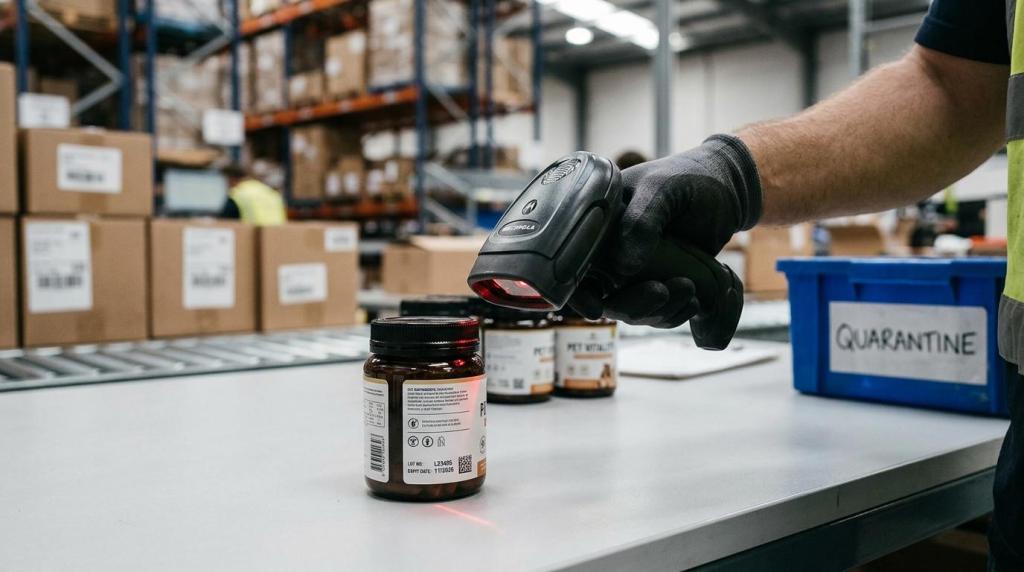
Pet Supplement Fulfilment Services UK
Selling pet supplements in the UK can look straightforward from the outside. A brand uses Shopify to organize and market sources of capsules, powders, oils or chews, stores them in a warehouse, then sends orders to customers. Yet pet supplement fulfilment is not ordinary pick-and-pack. It sits where ecommerce logistics meets regulated product handling, stock traceability and customer trust.
That matters because pet owners do not buy these products as impulse add-ons alone. They buy them to support joints, digestion, skin, coat, calming routines, wellness, and general health and wellbeing. If an order arrives late, damaged, poorly labelled or too close to expiry, confidence drops fast. If traceability is weak, the risk is much bigger than a missed delivery target.
Why UK pet supplement fulfilment is different from standard ecommerce
A standard ecommerce warehouse is built to move goods quickly, yet the handling of pet supplies requires additional care and consideration. Pet vitamin fulfilment needs speed too, though speed by itself is not enough. The warehouse also needs processes that reflect the product category, especially where inventory management, stock rotation, hygiene, batch tracking and clear segregation are expected.
According to GOV.UK guidance, UK animal feed legislation applies from primary production through to placing animal feed on the market, and that framework explicitly includes the retailing of pet food. That point changes the conversation. A fulfilment provider is not merely storing cartons. It is supporting the movement of a regulated product category.
Some pet supplements are sold in formats that feel close to human food supplements, including capsules, powders and dose-form products. Even so, the legal and operational setting for pet products is different, and fulfilment has to reflect that.
UK pet supplement compliance and warehouse controls
For a pet supplement brand, compliance starts well before the courier label is printed. Product composition, labelling and lawful market placement all matter. In Great Britain, feed additives must be authorised before they are placed on the market, and they may only be used for the authorised purpose. A warehouse is not deciding formulation, of course, but it should not be the weak point in the chain.
That is why operational discipline matters so much. When stock arrives, the fulfilment team should be able to record batch data, expiry dates, quantities and any condition notes at goods-in. When stock is stored, it should remain in conditions suitable for the product. When orders are picked, the system should support the right stock rotation method and leave a clear audit trail.
If a business manufactures pet food from animal by-products, another layer appears. GOV.UK guidance states that processing animal by-products into pet food can require APHA approval, and a business may also need local authority approval or registration as a feed business. Even where a fulfilment house is not manufacturing, it still needs procedures that respect the category being handled.
A capable operation should support a few basics without friction:
- Traceability: batch-level stock visibility from intake to dispatch
- Expiry control: disciplined stock rotation and clear shelf-life rules
- Segregation: damaged, returned and non-conforming units held apart from saleable stock
- Documentation: records that can support enquiries, investigations or recalls
Those are not luxury features. They are part of responsible pet products fulfilment.
What strong pet vitamin fulfilment looks like in daily operations
The best pet vitamin fulfilment setups are often unglamorous. They rely on routine, accuracy and consistency. Goods arrive, are booked in properly, matched to purchase or transfer records, checked for packaging integrity and located into the right storage zone. That sounds simple, yet many fulfilment issues begin right there.
Storage conditions are another defining feature. Supplements may not need exotic handling, though they do need a stable, clean environment that suits the product specification to maintain optimal nutrition levels. Temperature awareness, pallet hygiene, sensible segregation and good housekeeping all support quality. When a provider uses HACCP-style warehouse principles for supplement handling, that is usually a strong signal that process discipline has been built into daily practice.
Picking and packing also deserve more attention than they usually get. A pet supplement order may contain one SKU or a subscription mix of several lines. The outer packaging should protect tubs, pouches, jars and cartons from crushing or leakage. Labels should remain legible. If marketing inserts or dosage guides are part of the brand experience, the fulfilment workflow should handle those seamlessly to enhance the customer experience without causing delays.
Same-day dispatch still matters. Same-day dispatch before a stated cut-off can be particularly valuable for subscription brands, Amazon and marketplace sellers, and direct-to-consumer businesses promising fast delivery. It is not just about pleasing impatient shoppers. Reliable dispatch timing improves stock planning, customer service performance and repeat purchase rates.
Here is a simple way to assess whether a provider is ready for pet supplement fulfilment rather than generic ecommerce:
| Area | What to look for | Why it matters |
|---|---|---|
| Goods-in | Batch and expiry capture at receipt | Prevents stock ambiguity later |
| Storage | Clean, controlled, suitable conditions | Protects product integrity |
| Inventory | Barcode accuracy and live visibility | Cuts mis-picks and overselling |
| Rotation | Clear expiry rules and process checks | Reduces waste and aged stock risk |
| Dispatch | Predictable cut-off and courier options | Supports customer promises |
| Exceptions | Quarantine for damaged or returned stock | Stops compromised units re-entering saleable inventory |
| Reporting | Accessible order, batch and stock reports | Helps service teams respond quickly |
Where 3PLWOW Ltd fits into pet products fulfilment
For brands comparing providers, public service claims are often the first filter. 3PLWOW Ltd has positioned its supplement fulfilment around several points that are directly relevant to pet supplement brands. On its published material, the business states that its warehouse follows HACCP food safety principles, supports recommended storage conditions from 2°C upwards, includes batch and expiry date tracking, and offers same-day dispatch for orders placed before cut-off.
Those signals matter because they speak to more than courier collection times. They suggest a model built for products where condition, traceability and stock discipline matter alongside speed.
3PLWOW also publicly lists entry pricing on its homepage, including storage from £2.00 per week, pick and pack from £0.40 per order and next-day delivery from £2.00, while also stating a warehouse capacity of more than 15,000 pallets. Published pricing never tells the whole story, since final cost depends on SKU profile, order volume, storage footprint and packaging needs. Still, transparent baseline rates can help smaller pet brands, including those in need of pet supplies, model fulfilment costs early.
For a growing pet supplement business, a provider with publicly stated batch control, expiry tracking and HACCP-style storage may be a better starting point than a low-cost warehouse that treats all products the same.
Useful service signals include:
- Published entry pricing
- Same-day dispatch
- Batch and expiry date tracking
- HACCP-style storage procedures
- Large-scale pallet capacity
Questions to ask a pet supplement 3PL before signing
A sales conversation can sound polished even when the operation behind it is thin. The sharper approach is to ask process questions that reveal how the warehouse really runs day to day.
This is especially true for pet products fulfilment, where one weak step can affect service quality, compliance records and customer confidence all at once.
- Batch control: How is batch information captured at goods-in, stored in the system and linked to dispatched orders?
- Expiry management: What stock rotation rule is used, and can minimum shelf-life rules be set by SKU or channel?
- Storage conditions: What temperature range, hygiene controls and segregation procedures are in place for ingestible products?
- Returns handling: Are returned ingestible goods quarantined automatically, and what is the decision process for disposal or investigation?
- Recall readiness: How quickly can the warehouse identify every order affected by a specific batch?
- Channel support: Can the provider handle DTC, marketplace and wholesale orders from the same stock pool without confusion?
- Dispatch promises: What is the actual order cut-off, and how often is same-day performance achieved in practice?
Good answers tend to be precise, calm and process-led. Vague answers usually mean more work for the brand later.
Returns, recalls and subscription orders for pet supplements
Returns are one of the most overlooked parts of pet supplement fulfilment. Many consumer categories can resell returned stock if it is unopened and presentable. Ingestible products are different. The safer approach is usually quarantine first, decision second.
That means the warehouse needs a non-saleable workflow, not just a returns shelf.
Recall readiness matters too. Even well-run brands need the confidence that, if a batch issue appears, they can identify affected units and customers quickly. Batch-linked order history is what turns a stressful event into a controlled response.
Subscription orders introduce another layer. They depend on dependable stock availability, consistent picking accuracy and repeatable dispatch timing. When a pet owner signs up for a monthly joint or calming supplement, the service expectation rises. A late parcel is no longer a one-off disappointment. It interrupts a routine.
Choosing the right UK pet supplement fulfilment model
Not every pet brand needs the same setup. A start-up with a small SKU range and modest direct-to-consumer volume may only need a lean, accurate operation with clean storage, good systems and reliable courier collections. A larger importer, manufacturer or multichannel retailer may need pallet storage, channel routing rules, wholesale carton picks and stricter batch reporting.
The right model depends on product profile as much as order volume. Powders, oils, chew formats and sensitive formulations can all create different handling needs. So can marketplace compliance, retailer labelling requirements and promotional pack assembly.
A sensible selection process usually balances four things:
- Regulated-product discipline: traceability, segregation and stock control
- Commercial fit: storage, pick, pack and parcel costs that work at your margin
- Operational pace: realistic same-day dispatch and reliable carrier management
- Growth capacity: enough warehouse space, system depth and labour flexibility for promotions or peak periods
Pet supplement fulfilment works best when the provider treats the category of pets with the seriousness it deserves. In the UK market, that means combining ecommerce efficiency with processes suited to feed-related products, clear inventory control and a warehouse culture that values accuracy as much as speed. Brands that get that mix right are in a much stronger position to keep customers happy, protect product quality and scale with confidence.