
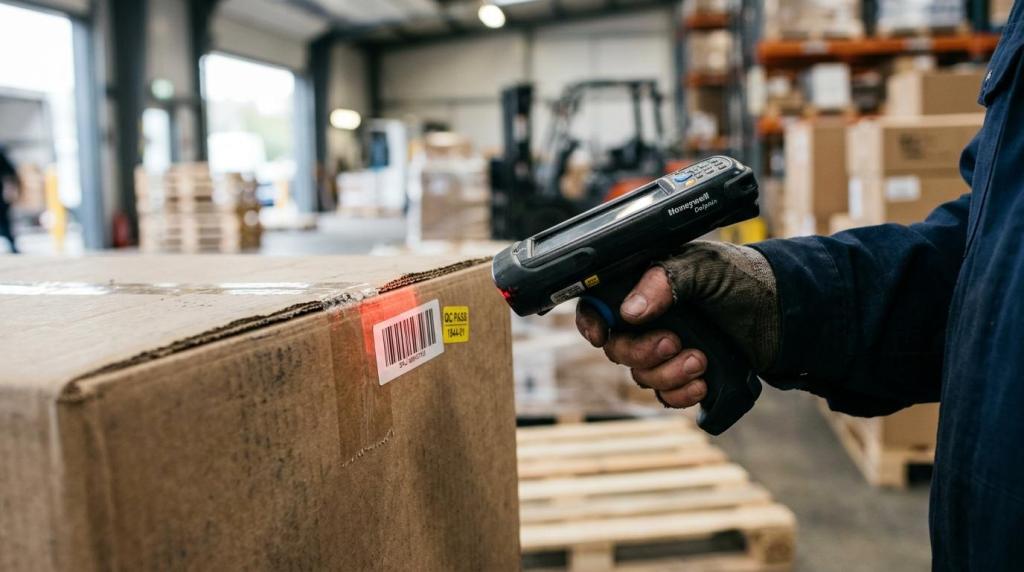
Inventory Management with Third Party Logistics
Inventory control often looks simple from the outside. Products arrive, orders go out, stock levels change as part of the supply chain. Yet once an e-commerce business starts growing, that tidy picture can become difficult to manage. More SKUs, more sales channels, more returns, and faster customer expectations all put pressure on the stock record.
That is where third party logistics can make a real difference. A third party logistics provider, often shortened to 3PL, takes over key logistics functions including warehousing, inventory tracking, picking, packing, and shipping. For an online retailer, the value is not only operational relief. It is better stock accuracy, clearer visibility, and a stronger link between what the system says is available and what is actually sitting on the shelf.
Why third party logistics improves inventory management for e-commerce
Inventory management is not just a question of storage. It is the discipline of keeping stock accurate at every stage, from inbound delivery to final dispatch, while protecting sales, cash flow, and customer service. If stock records drift, an e-commerce business can oversell, miss replenishment windows, or tie up money in the wrong products.
A capable third party logistics provider helps by putting structure around each stock movement. Goods are checked in, stored in defined locations, tracked in a warehouse system, and adjusted as orders are picked and shipped. Shopify describes 3PL services as covering product storage, inventory tracking, order picking and packing, carrier coordination, and order-tracking software. That matters because each of those actions affects inventory, either directly or indirectly.
Industry research points in the same direction. The 2025 Third-Party Logistics Study from CSCMP and NTT DATA reports that 82% of shippers using 3PLs believe they contribute to improved customer service. The same study says 66% see lower overall costs and 68% say 3PLs bring new ways to improve logistics effectiveness. For e-commerce brands, those gains usually begin with better stock handling.
Receiving and checking in new stock with a third party logistics provider
The first major inventory event is inbound receipt. New stock arriving at a warehouse should not be treated as a simple handover. It needs to be verified, recorded, and placed into the correct status before it becomes available for sale.
A 3PL can manage this process in a disciplined way. When a delivery arrives, warehouse staff can inspect cartons or pallets, compare quantities against purchase orders or advance shipment details, note damage, and record any discrepancies. Only then should the stock be booked into inventory. This check-in stage is one of the biggest controls against future errors, because a poor receipt creates problems that spread into stock counts, fulfilment, and customer service.
For an e-commerce business, this is especially useful during busy replenishment cycles. Instead of relying on a small internal team to unload, count, label, and update the system manually, the 3PL handles the process within a warehouse workflow. A provider like 3PLWOW, which offers warehousing and inventory management as part of its fulfilment service, can support this by receiving stock into storage and updating stock records as part of the inbound routine.
A strong receiving process usually includes a few core actions:
- Quantity verification: confirming delivered units match purchase records
- Condition checks: identifying damaged, incomplete, or unsuitable goods
- SKU identification: matching products to the right codes, barcodes, and storage locations
- Status control: separating saleable stock from quarantine or exception stock
That discipline creates a cleaner stock file from day one. It also gives the retailer clearer information when deliveries arrive short, late, or with packing errors from the supplier.
Regular stock counts and inventory accuracy in third party logistics
Stock accuracy is never a one-off exercise. Even well-run operations need regular counting because inventory changes constantly. Items move, returns are processed, cartons split, and human error can still occur. Without a counting routine, small mistakes can build into expensive ones.
A third party logistics provider can set up regular stock counts as part of day-to-day warehouse management. These may take the form of cycle counts, location checks, SKU-based counts, or full physical counts at set intervals. The aim is simple: catch variances early, investigate the cause, and correct the record before it affects orders or purchasing.
This is one of the most practical ways a 3PL supports e-commerce growth. Fast-selling products, promotional lines, and seasonal ranges can all be counted more often than slower-moving stock. That gives the business a more reliable view of availability and reduces the risk of sudden stockouts that should have been visible earlier.
Common counting methods include:
- Cycle counts
- Full stocktakes
- Spot checks on problem SKUs
- Location audits
- Variance reviews
Regular supply counting also improves trust in reporting. When finance, purchasing, and customer service all rely on the same stock record, confidence in that data becomes commercially valuable.
Managing inventory changes from orders in third party logistics fulfilment
Order fulfilment is where inventory changes happen fastest. Every paid order reduces available stock. Every cancelled order may release stock back. Every return can either restore saleable units or move them into a non-saleable status. If those updates lag behind reality, online listings become unreliable.
A good 3PL handles these changes as part of the fulfilment flow. When an order enters the warehouse system, stock can be allocated. When it is picked and packed, inventory is reduced against the correct SKU. When it ships, the order status changes and the customer can be updated. Shopify notes that once a store is connected to a 3PL, orders can flow automatically into the provider’s system without manual data entry. That automation cuts down a major source of inventory error.
This matters most when growth starts to accelerate. Manual spreadsheets and basic stock adjustments may be enough for a small operation, but they weaken quickly under promotional spikes, marketplace sales, or multi-channel trading, where optimization is crucial to maintain efficiency. A 3PL creates a more controlled link between the order and the stock movement behind it.
The table below shows how that works in practice.
| Inventory event | What changes in stock | How a 3PL supports the record | Business benefit |
|---|---|---|---|
| New order received | Units are allocated | System reserves stock against the order | Lower risk of overselling |
| Order picked | Available units reduce | Pick confirmation updates inventory | Better stock visibility |
| Order shipped | Fulfilment status changes | Dispatch data syncs with the store | Cleaner customer communication |
| Order cancelled | Allocation may be reversed | Stock is released back into availability | Fewer lost sales |
| Return received | Units may be restocked or quarantined | Returned goods are checked and reclassified | More accurate resale decisions |
Returns deserve special attention here. Returned inventory can become a major distortion if products are put back into stock without inspection, or if they sit unprocessed for days. 3PLWOW has published a case study stating that average return processing time fell from 6 days to 2 days in one example. Faster returns handling means stock becomes visible again more quickly, and customers receive refunds or exchanges sooner.
Inventory tracking software and third party logistics integrations
The operational work on the warehouse floor matters, but so does the system behind it. Inventory management with a 3PL works best when the retailer’s e-commerce platform, order sources, and warehouse software stay closely connected.
That connection allows stock updates to move quickly between systems. New orders can feed into the 3PL, dispatch updates can flow back to the store, and inventory levels can stay current across channels. Without that link, teams may end up reconciling orders manually, which weakens speed and accuracy at the same time.
For an e-commerce business, the gain is not simply convenience. It is stronger control over sellable stock. When a product is received, counted, allocated, shipped, or returned, the change in the supply should be reflected in the inventory record with minimal delay. A 3PL with proper inventory tracking and order software helps make that possible.
What daily inventory control looks like with a provider like 3PLWOW
A provider such as 3PLWOW can support inventory management through the full stock cycle: receiving goods into the warehouse, storing them in defined locations, tracking stock levels, picking and packing orders, dispatching shipments, and processing returns. That creates a joined-up model rather than a series of disconnected tasks.
The benefit becomes clearer when growth starts to accelerate. 3PLWOW states that it provides warehousing, inventory management, picking and packing, and distribution services, with storage in a 15,000+ pallet warehouse. It has also published case-study outcomes showing monthly order capacity rising from 15,000 to more than 35,000 within 90 days, while optimization led to order accuracy improving from 96.2% to 99.4%. Those figures are company-published results rather than market-wide benchmarks, though they still illustrate how structured warehouse control can support scale.
Behind those numbers is a routine that many e-commerce teams need:
- Inbound control: stock is received, checked, and booked into the system
- Location management: products are stored where they can be found quickly and counted accurately
- Order-linked adjustments: every pick, pack, ship, cancellation, and return changes inventory in a controlled way
- Ongoing verification: regular counts reduce drift between recorded and physical stock
That consistency is often what turns inventory from a source of friction into a source of confidence.
Signs an e-commerce business needs third party logistics inventory management
A business does not need to be huge before stock control starts slipping. The trigger is usually complexity rather than absolute size. A small catalogue sold across several channels may face more inventory pressure than a larger single-channel shop.
One warning sign is frequent stock discrepancies. If the website says an item is available but the shelf is empty, the issue is rarely isolated. It normally points to weaknesses in receiving, counting, order handling, or returns. Another sign is that staff spend increasing amounts of time checking stock manually, searching for missing items, or correcting orders after the sale.
Growth creates other pressures too. Promotional campaigns can produce sudden volume spikes. New product launches increase SKU counts. International shipping adds more service layers. When these changes arrive, a 3PL can bring warehouse process, systems discipline, and specialist labour into the operation without the retailer building all of it in-house.
Typical signals include:
- Stockouts despite recent replenishment: the inventory record cannot be trusted
- Slow booking in of new deliveries: incoming stock is not saleable quickly enough
- Order errors and missing items: fulfilment activity is disrupting stock accuracy
- Returns piling up: sellable inventory is trapped in backlog
- Manual spreadsheet dependence: key stock decisions rely on delayed or partial data
At that stage, the goal is not simply to outsource storage. It is to create a cleaner operational rhythm where inventory is checked on receipt, counted regularly, and updated every time an order changes the stock position. That is the practical value of third party logistics for e-commerce brands that want better control without slowing their growth.