
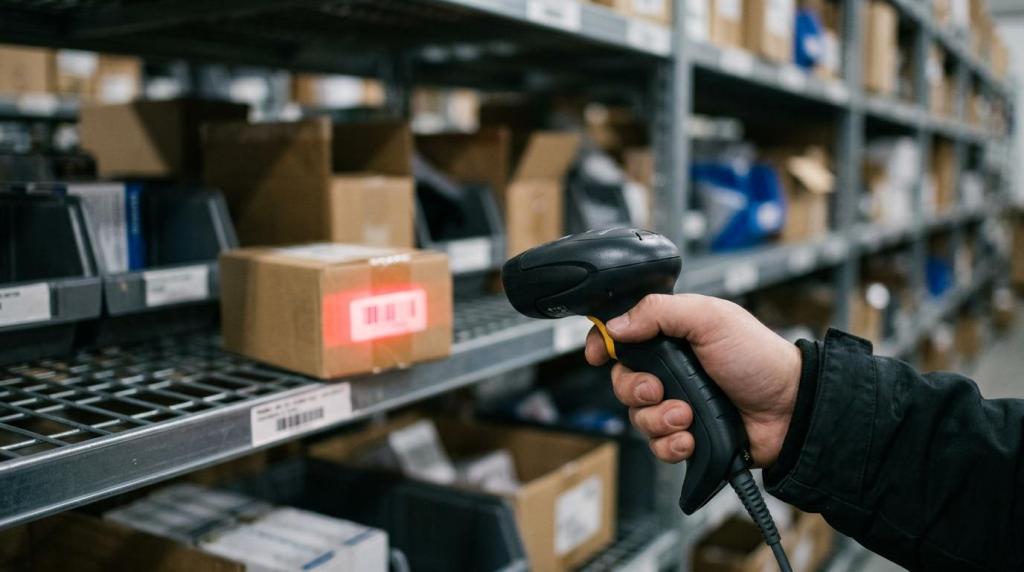
Packing your own orders can feel like a smart early move for a young e-commerce brand. In the first weeks or months, it often is. A few shelves, a printer, some mailers, packing supplies, and a kitchen table can be enough to keep costs low and give founders close control over the customer experience.
The trouble starts when order volume rises faster than the fulfilment setup around it. What looked efficient at 10 orders a day can become expensive at 50, risky at 100, and deeply limiting growth beyond that. The visible costs are easy to spot: boxes, tape, labels and postage. The hidden costs are the ones that slow growth quietly, then all at once.
Why in-house order packing looks cheaper than it really is
Self-fulfilment is often judged on the wrong comparison. Many founders ask, “Can I pack this parcel for less than a fulfilment company would charge?” That sounds sensible, yet it misses the larger picture. Packing is not just the act of putting products into a box. It includes stock handling, picking accuracy, labour planning, cut-off management, returns processing, packaging control and all the admin around them.
That is why the true cost per order is rarely the same as the postage plus the price of a box.
A provider like 3PLWOW, or any capable third-party logistics partner, tends to price fulfilment in clearer parts: storage, Pick-and-pack, materials, courier charges, receiving and returns handling. By contrast, in-house packing often hides those same costs inside wages, rent, founder time and avoidable mistakes.
A simple way to see the gap is to separate the obvious spend from the indirect spend.
| Cost area | What you notice first | What often stays hidden |
|---|---|---|
| Labour | Hourly pay for packing time | Training, supervision, holiday cover, idle time, overtime |
| Packaging | Boxes, mailers, tape | Waste, overpacking, storage space, reordering delays |
| Shipping | Courier label price | Missed cut-offs, service failures, split shipments |
| Stock control | Shelving and bins | Mis-picks, stockouts, write-offs, delayed replenishment |
| Returns | Refund and return label | Inspection time, repacking, reverse logistics, lost resale value |
| Admin | Order downloads and label printing | Customer service, claims, reconciliation, reporting |
When those hidden lines are added back in, the “cheap” option often becomes the more expensive one.
Labour costs in order fulfilment add up quickly
Labour is the first hidden cost that tends to bite. Packing a few orders after lunch feels manageable. Packing dozens every day, six days a week, is a different operating model. Someone has to pick, check, pack, label, stage, hand over to the courier and deal with any exceptions.
The U.S. Bureau of Labor Statistics reported median annual wages of $37,680 for hand labourers and material movers, and $37,090 for stockers and order fillers in 2024. Even if a start-up is not hiring a full warehouse team yet, those figures are a helpful reminder: fulfilment labour is not incidental. It is a recurring operating cost.
And wages are only part of it. Small businesses often pay fulfilment labour in a more damaging currency: founder attention.
Every minute spent packing is a minute not spent on:
- supplier negotiations
- cash-flow planning
- paid media management
- product development
- wholesale outreach
- retention campaigns
That trade-off is easy to ignore when growth is exciting. It becomes much harder to ignore when the business needs better systems, sharper forecasting and stronger margins, and the key decision-maker is still taping boxes at 7pm.
Slower dispatch times reduce customer confidence
Customers rarely see your warehouse setup, but they feel its limits. As volumes increase, self-fulfilment often leads to slower despatch. Orders placed later in the day miss the courier cut-off. Weekend spikes roll into Monday. Promotions create backlogs. A small delay becomes the norm.
This matters because speed shapes trust. Fast, reliable despatch reassures a first-time buyer that the business is professional and dependable. Slow despatch does the opposite, even when the product itself is good.
The problem is not only the average despatch time. It is the inconsistency. One day’s orders go out on time, the next day’s sit waiting because stock is buried in the wrong location or the printer has run out of labels. That unpredictability fuels customer emails, “where is my order?” tickets and refund requests.
A 3PL can remove much of this strain by building fulfilment around daily cut-offs, staffing plans and warehouse workflows rather than around whoever is free to help. That consistency has value. It protects conversion, repeat purchase behaviour and brand perception.
Stock control problems grow as SKU counts rise
Stock control is manageable when there are only a handful of products. It gets far more complex when the catalogue widens, bundles are introduced, fast sellers move quickly and seasonal lines overlap with core stock.
At that point, the packing operation and the stock operation become inseparable. If products are stored badly, picked inaccurately, booked in late, or lack the necessary packing supplies, the packing bench suffers. Orders pause. Partial shipments appear. Customer service spends more time apologising than helping.
The warning signs usually appear before the founder fully recognises them. Best sellers are shown as available online when the shelf is empty. Slow-moving items are over-bought because counts are unreliable. Returns are placed back into stock without checks. Promotional inserts are added inconsistently. A team member “knows where things are” until that person is off sick.
As fulfilment complexity increases, these operational details start to shape margin.
- Stock accuracy: small count errors can create overselling, cancelled orders and emergency replenishment
- Location control: poor bin discipline adds time to every pick and increases mis-picks
- Batch handling: products with lot, production or expiry data need tighter processes
- Returns put-away: resale stock can sit idle if returned items are not checked and rebooked promptly
This is where warehouse process matters far more than enthusiasm. A capable 3PL uses scanning, location rules and receiving routines to keep stock visible and usable. That is especially useful for brands with multiple variants, bundled offers or products that need date or batch tracking.
Returns and order errors create a second fulfilment bill
Returns are not a side issue. They are a major cost centre. The National Retail Federation projects that 15.8% of retail sales, worth $849.9 billion, will be returned in 2025. Even if a young e-commerce business sits below that level, the message is clear: returns have to be treated as an operating cost, not an occasional nuisance.
Each error creates a second round of work. A wrong item has to be refunded or replaced. Customer support gets involved. A new label is generated. The item comes back, is checked, possibly repacked and either returned to stock or written off. The original packing cost did not disappear. It was duplicated.
Poor fulfilment discipline can also hurt future sales. NRF data shows that 71% of consumers are less likely to shop with a retailer again after a poor returns experience. That means the cost of an order error is not only operational. It can damage lifetime value.
For a growing brand, the hidden return costs often include:
- Extra shipping: sending replacements and handling inbound returns
- Labour repetition: picking, packing and inspecting the same sale twice
- Lost resale value: opened, damaged or seasonal stock may not sell at full price
- Support load: more emails, live chat time and payment reconciliation
A specialist fulfilment partner will not eliminate returns, because no one can. What it can do is reduce fulfilment-caused returns and process the rest with more structure. That helps keep reverse logistics from swallowing margin.
Packaging costs are broader than boxes and tape
Packaging is another area where in-house fulfilment can look efficient while leaking money. Founders often buy packing supplies and other materials in smaller volumes, store them in awkward spaces and switch suppliers reactively. That drives up unit costs and creates inconsistency in presentation.
There is also the issue of packaging choice. Overpacking adds cost. Underpacking raises the chance of damage. Branded inserts, stickers and custom boxes can improve the unboxing experience, yet they also increase the cost of every order. According to information published by 3PLWOW, a plain mailer may cost only a few pence, while a custom box with void fill, an insert and a sticker can add more than a pound to each parcel.
That is not an argument against strong branding. It is an argument for knowing the real number.
A 3PL usually brings tighter packaging control because materials are managed as part of the fulfilment system rather than bought ad hoc. Some providers also help brands match packaging to order profiles, which can reduce waste without stripping away presentation quality.
What a 3PL changes in day-to-day order fulfilment
Outsourcing fulfilment is often framed as a cost decision. It is also a capacity decision. A good 3PL does not simply pack orders on someone else’s premises. It replaces a fragile internal process with a more repeatable one.
That shift can be felt almost immediately.
A provider like 3PLWOW can take on the routine parts of order fulfilment that absorb time and create friction as volumes rise. Pick-and-pack, storage, goods-in, packaging control, courier management and returns handling move into a system built for those tasks. The founder regains hours each week. The business gains better despatch discipline and more reliable stock visibility.
Published pricing examples from 3PLWOW suggest typical pick-and-pack charges might sit around £1.00 to £3.50 for order handling, with additional pick fees and packing material costs on top. The exact structure will vary, of course, but the bigger point is this: outsourced fulfilment makes the cost per order more visible. That makes planning easier.
Signs your e-commerce business is ready for outsourced fulfilment
Most businesses do not switch to a 3PL because they have reached perfection. They switch because the current setup is limiting growth.
A practical trigger point is when fulfilment work starts crowding out management work. Another is when service quality becomes inconsistent during busy periods. If the team is working hard and still missing cut-offs, the issue is probably structural rather than motivational.
Common signals include:
- orders regularly despatched a day late
- stock counts that need frequent manual correction
- no clear space for inbound deliveries
- founders packing during evenings and weekends
- rising complaint volume after promotions
- difficulty launching new SKUs or bundles
There is a strong upside here. Once fulfilment stops dominating the day, leaders can put their attention back into the areas that actually grow the business: better products, sharper marketing, cleaner reporting, stronger supplier terms and more confident sales planning.
That is often the real saving. Not just lower friction in the warehouse, but a business with more room to think, act and scale.