Most ecommerce brands spend a great deal of energy on the moments before checkout. They sharpen creative, tune paid campaigns, refine product pages, and test offers. Yet the customer often makes a more lasting judgement after payment, when the packaging is handled, the parcel is packed, dispatched, tracked, and delivered, with the entire fulfillment and delivery experience significantly impacting the trust and overall user experience.
That is why fulfilment belongs in the brand conversation. Customers rarely separate the warehouse from the business they bought from, making logistics a critical component of their brand perception. If an order arrives late, contains the wrong item, or takes a week to refund after a return, the frustration attaches to the brand name on the box. PwC has reported that 29% of consumers stopped buying from a brand because of poor customer experience, while 42% of global respondents ranked fast and reliable delivery among the top three most important attributes when shopping online. That moves fulfilment from back-office function to front-line brand experience.
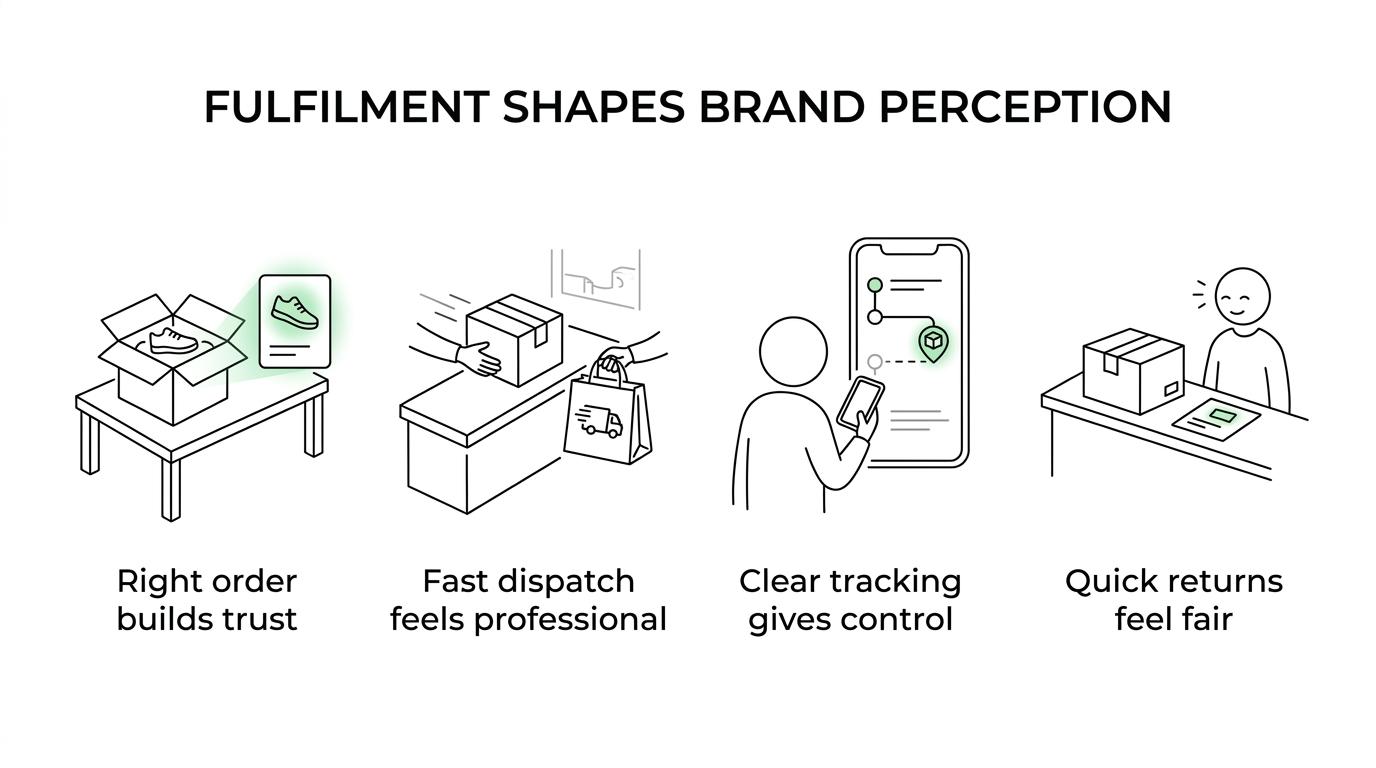
Fulfilment shapes ecommerce brand perception
A brand promise is not limited to tone of voice, packaging design, or the look of a homepage; it also includes the brand’s identity as seen through its fulfilment processes, which are a crucial part of its branding strategy. It is also the feeling a customer gets when the dispatch email lands quickly, the tracking updates make sense, and the parcel arrives exactly as expected. Those signals tell buyers whether a business is organised, dependable, and worth returning to.
This is especially true for growing e-commerce companies. During the early stages, operational flaws can hide behind founder energy and low order volumes. Once demand rises, customers start to feel every weak process. A late pick, a stock mismatch, delayed order processing, or a delayed return stops being an internal issue and becomes a public expression of the brand.
PwC has argued that delivery cannot be treated as a bolt-on touchpoint managed at a distance and then forgotten. That point matters because the post-purchase phase often contains the most emotional moments in online retail: anticipation, uncertainty, and, if something goes wrong, disappointment.
| Fulfilment element | What the customer feels | Brand effect |
|---|---|---|
| Order accuracy | Confidence that the business is reliable | Trust |
| Fast dispatch | Momentum after purchase | Professionalism |
| Clear tracking | Reassurance and control | Service quality |
| Good packaging | Care and consistency | Brand credibility |
| Quick returns processing | Fairness and low purchase risk | Loyalty |
Why order accuracy and fast dispatch affect brand loyalty
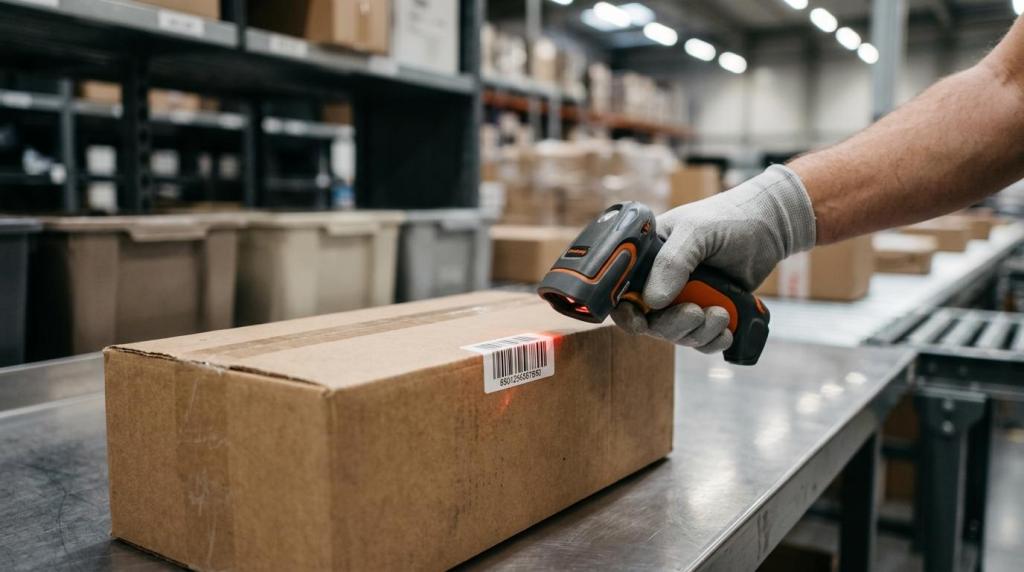
Order accuracy sounds basic, yet it carries a heavy weight. If a customer receives the wrong item, a missing SKU, or a damaged parcel, the problem is not limited to one order. It creates extra support work, replacement cost, and possible negative reviews. More importantly, it weakens confidence in buying again.
Fast dispatch matters for similar reasons. Many customers can accept a realistic delivery window if the business acts promptly and communicates clearly, emphasizing the importance of effective communication. What feels frustrating is inactivity. An order sitting unprocessed for days creates doubt, even when the product quality itself is good. Speed is not only about carrier transit times; it starts inside the warehouse.
A strong fulfilment operation delivers value by enhancing retention and reducing the small failures that chip away at repeat purchase rates.
- picking accuracy
- dependable cut-off times
- rapid handover to carriers
- stock records that match reality
- packaging that protects the order
Brand loyalty grows when customers feel they can place an order without second-guessing what will happen next. That confidence is built operationally, one correctly shipped parcel at a time.
Returns processing and warehouse management shape the post-purchase experience
Returns are one of the clearest examples of fulfillment acting as brand experience, showcasing how efficient fulfillment enhances customer satisfaction. A return usually happens when a customer is uncertain, disappointed, or simply needs reassurance that trying the product was low risk. Slow handling turns that moment into mistrust, undermining the trust customers place in the brand. Quick processing tells the customer that the business is fair and mature.
Warehouse management, effective logistics, efficient order processing, and reliable delivery improve customer retention and sit underneath that user experience, even if customers never see it. Inventory accuracy, sensible storage layouts, replenishment routines, quality checks, and carrier coordination all influence how cleanly orders move through the system, ultimately impacting product quality. When those disciplines slip, the brand feels inconsistent.
This is where growing businesses often face tension. Marketing can increase demand faster than operations can absorb it. The result is a pattern many founders know well: sales rise, yet customer complaints rise with them. Growth feels good at the top line while strain spreads through the fulfilment flow.
Several operational habits have a direct effect on the brand customers experience:
- Returns speed: faster refunds lower purchase anxiety
- Inventory accuracy: fewer cancelled orders and oversells
- Quality control and packaging: less chance of damaged, incomplete, or wrong items
- Carrier management: stronger reliability across delivery services
- Warehouse discipline: steadier performance during peaks and promotions
A polished brand identity is difficult to protect when communication within the warehouse is lacking and it is improvising.
When in-house fulfilment becomes a growth constraint
Many e-commerce businesses begin with in-house fulfilment, and that can be sensible. It keeps costs close to the business, gives founders visibility, and works well at low order volumes. The challenge appears when order flow becomes less predictable and the operation outgrows the space, systems, or staffing model behind it.
At that point, fulfilment can become the ceiling on growth rather than the support for it. Published case studies from 3PLWOW describe this pattern clearly. In one case, a small ecommerce brand scaled to 10,000 orders a month after using a 3PL, with the study describing fulfilment as the real bottleneck once marketing was no longer the limiting factor. Another 3PLWOW case study says a brand’s monthly order volume had climbed from roughly 4,000 to more than 14,000 before moving to outsourced fulfilment, while internal capacity was under pressure.
The cost issue is often misunderstood too. In-house fulfilment may look cheaper on paper, yet hidden costs build quickly: extra labour, overtime, wasted space, stock errors, delayed responses, replacement shipments, and senior time spent fixing warehouse problems. One 3PLWOW case study says senior staff were devoting too much time to warehouse issues instead of product, marketing, and commercial planning. That shift matters because leadership attention is one of the scarcest resources in a growing business.
How a 3PL provider like 3PLWOW can protect the brand experience
A third-party logistics provider is not merely a storage and shipping service. At its best, it becomes an operational extension of the brand, responsible for the part of customer experience that happens after the buy button is pressed, adding significant value to the overall customer experience and reinforcing branding efforts throughout the fulfilment process. That means the right 3PL should be judged on service quality as much as on unit cost.
3PLWOW’s published case studies give useful examples of what good outsourced fulfilment can change. In one case study, monthly order capacity increased from 15,000 to more than 35,000 within 90 days after the move. The same case says order accuracy improved from 96.2% to 99.4%, while same-day dispatch rose from 71% to 94%. Those figures matter because they speak directly to what customers notice: fewer mistakes and faster movement.
The same published material says average return processing time fell from 6 days to 2 days, and customer support contacts about shipping dropped by 38%. That reduction is a meaningful brand gain. Fewer “Where is my order?” messages usually point to better dispatch speed, better tracking, or both, which add value to the overall customer experience. It also frees internal teams to work on product range, acquisition, retention, and margin rather than chasing parcels.
Customer reviews published on 3PLWOW’s site point in a similar direction. Comments there mention orders being shipped quickly, emails answered on the same day, and responsive communication and support when issues arise. That is not just a service feature. It is a brand safeguard, especially when exceptions happen and a customer wants clarity fast.
A provider like 3PLWOW can support brand identity, consistency, branding, logistics, and enhance product quality across several areas:
- Order accuracy: customers receive what they actually bought
- Fast dispatch: momentum from checkout is preserved
- Returns handling: refunds and exchanges move faster
- Warehouse management: stock control is tighter and peaks are easier to absorb
- Responsive communication: issues are addressed before frustration grows
For a scaling business, those gains are not cosmetic; they significantly impact customer retention. They help protect repeat purchase rates, optimize order processing, reduce avoidable support costs, and keep operations from dragging on growth.
What to look for in fulfilment services for ecommerce growth
Choosing a fulfilment partner should start with the customer promise, focusing on timely delivery, not the warehouse price list, and should include considerations like effective packaging solutions that align with brand values. If the brand positions itself around speed, premium care, reliability, or convenience, the fulfilment model needs to support that promise every day. A cheap service that misses dispatch targets can be expensive in every way that matters.
The practical questions are straightforward. Can the provider prove its accuracy rates? How quickly are orders dispatched after they are received? What happens when a return arrives? How visible is stock in real time? How responsive is the support team when there is an exception? Strong fulfilment is measurable, and serious providers should be ready to show those measures clearly.
A useful shortlist should include a few non-negotiables.
- Clear service levels
- Measured dispatch performance
- Reliable returns processing
- Responsive account support
- Capacity for peak trading
As an e-commerce business grows, customers do not lower their expectations simply because the order book is fuller. They expect the brand to feel more polished, more dependable, and easier to buy from. Effective fulfillment is one of the main ways that the user experience expectation is either met or broken. When the warehouse runs well, the brand feels stronger, enhancing customer trust. When it does not, no amount of marketing polish can fully cover the gap.