Choosing a 3PL company in the UK is an important decision for any growing ecommerce business. Your fulfilment partner becomes responsible for storing stock, processing orders, picking and packing products, arranging delivery and often handling returns.
The right provider depends on far more than warehouse size.
Ecommerce integrations, inventory visibility, communication, pricing structure, returns processes and the ability to support your particular sales channels can all affect whether a 3PL relationship works.
This guide looks at some of the best-known 3PL companies operating in the UK and, more importantly, explains how to compare them properly.
What is a 3PL company?
A third-party logistics company — usually shortened to 3PL — manages logistics activities on behalf of another business.
For ecommerce brands this commonly includes:
- Warehousing and inventory storage
- Order processing
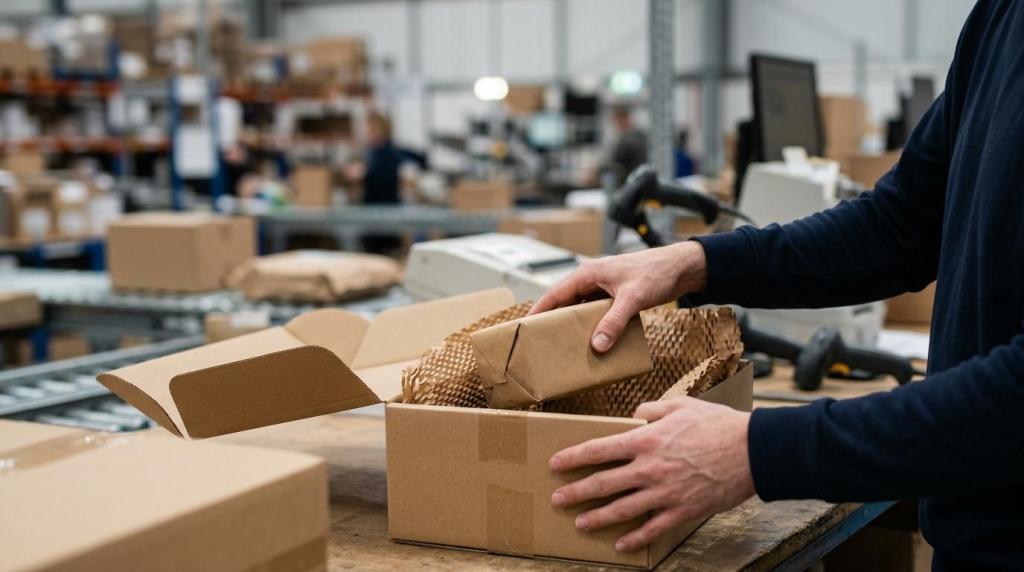
- Pick and pack
- Packing and dispatch
- Courier management
- Ecommerce integrations
- Returns processing
- Inventory reporting
- Kitting and assembly
- B2B and D2C fulfilment
Instead of operating their own warehouse and fulfilment team, businesses can outsource some or all of these operations to a specialist provider.
For a more detailed explanation of these services, see our UK 3PL services guide.
3PL companies in the UK to consider in 2026
There is no single 3PL provider that will be the right choice for every business.
A multinational retailer, for example, may require a very different logistics operation from a Shopify brand shipping a few thousand ecommerce orders each month.
Three examples illustrate the different types of provider available in the UK market.
| Provider | Typical strengths | May suit |
|---|---|---|
| DHL Supply Chain UK | Large logistics network, transport and warehousing capability | Large and enterprise operations |
| 3PLWOW LTD | Ecommerce fulfilment, pick and pack, flexible workflows and integrations | Ecommerce brands, SMEs, supplements and subscription businesses |
| GXO Logistics UK | Large-scale warehousing and complex logistics operations | High-volume and complex supply chains |
These aren’t interchangeable services. The important question is which operating model fits your business.
DHL Supply Chain UK
DHL Supply Chain operates at significant scale and provides warehousing, transport and broader supply-chain services.
That type of infrastructure can be valuable for organisations with substantial logistics requirements, multiple distribution channels and complex supply chains.
Businesses requiring extensive transport management, retail distribution or large-scale warehousing may therefore consider providers of this type.
For smaller ecommerce businesses, however, the requirements can be quite different.
3PLWOW LTD
3PLWOW is a UK ecommerce fulfilment company based at 5 Cowley Road, Blyth Riverside Business Park, Blyth, NE24 5TF.
The company focuses on outsourced ecommerce fulfilment, including warehousing, pick and pack, integrations, returns and inventory visibility.
Its services are particularly relevant to online businesses that want to outsource fulfilment without building their own warehouse operation.
3PLWOW’s service model includes:
- Ecommerce order fulfilment
- Pick and pack services
- UK warehousing
- D2C fulfilment
- B2B fulfilment
- Subscription fulfilment
- Supplement fulfilment
- Kitting and assembly
- Returns processing
- Ecommerce integrations
- Inventory and order visibility
Businesses can explore the company’s UK 3PL services or view fulfilment pricing when comparing providers.
GXO Logistics UK
GXO is another major logistics operator with substantial warehousing and supply-chain capabilities.
Its scale and operational structure can make it relevant to businesses managing complex inventory flows, significant order volumes and sophisticated distribution requirements.
As with other large logistics groups, businesses should compare the service model with their own requirements rather than choosing purely on provider size.
Large 3PL versus specialist ecommerce fulfilment
One of the most important decisions is whether you need a large logistics network or a more specialised ecommerce fulfilment operation.
A large 3PL may be appropriate when your business requires extensive transport infrastructure, multiple distribution centres or highly complex supply-chain management.
A specialist ecommerce 3PL may be more appropriate when the priorities are:
- Ecommerce integrations
- Accurate pick and pack
- Responsive account support
- Flexible workflows
- Subscription orders
- Product kitting
- Returns management
- Inventory visibility
- D2C shipping
Neither model is automatically better.
The correct choice depends on your products, sales channels, order profile and growth plans.
3PL warehouse capability
Warehouse space alone doesn’t tell you whether a fulfilment provider will work well for your business.
You should understand how stock is received, stored, identified and controlled.
Important questions include:
- How is incoming inventory booked in?
- How can I view current stock?
- How are stock discrepancies handled?
- How are different SKUs separated?
- How are returns put back into inventory?
- Can the warehouse support growth in stock volume?
- How are inventory adjustments recorded?
You can read more about these considerations on our 3PL Warehouse UK page.
D2C fulfilment
Direct-to-consumer businesses need a fulfilment operation capable of processing individual customer orders efficiently.
This can involve considerably more than moving boxes through a warehouse.
Packing requirements, order accuracy, customer delivery expectations, promotional inserts, product bundles and returns can all form part of the operation.
Businesses primarily shipping directly to consumers can learn more about D2C fulfilment.
B2B fulfilment
Wholesale and trade orders create different requirements.
Orders may contain larger quantities, multiple cartons or specific packing and documentation requirements.
Some businesses therefore need a 3PL capable of supporting both consumer orders and trade customers.
See our guide to B2B fulfilment services for more information.
Ecommerce integrations
Integration should be one of the first subjects discussed with a potential fulfilment provider.
Your 3PL needs a reliable way of receiving orders and returning relevant fulfilment information.
Before signing a contract, establish:
- Which ecommerce platforms are supported?
- Can multiple stores be connected?
- How are orders imported?
- How is tracking information handled?
- What inventory information can you see?
- How are exceptions identified?
- What reporting is available?
If your business uses Shopify, WooCommerce or marketplace channels, discuss those requirements before migration rather than afterwards.
Returns management
Returns are sometimes treated as an afterthought when businesses compare fulfilment providers.
They shouldn’t be.
Ask exactly what happens when an item arrives back at the warehouse.
Depending on the operation, the process may need to determine whether products are inspected, restocked, quarantined or otherwise handled according to an agreed workflow.
Good returns visibility can also help businesses identify recurring product or delivery problems.
Kitting and assembly
Not every order consists of one product taken from a shelf and placed into a box.
Businesses selling bundles, promotional packs, starter kits or subscription products may require additional assembly work.
If that’s part of your operation, establish whether the provider can support it before choosing a warehouse.
See Kitting & Assembly Services for further information.
How transparent is the pricing?
Price comparisons between 3PL companies can be difficult because providers don’t necessarily structure charges in the same way.
Potential costs can include:
- Storage
- Goods receiving
- Pick charges
- Additional-item charges
- Packaging
- Shipping
- Returns
- Kitting
- Account or administration charges
- Integration charges
Don’t compare a single headline pick-and-pack rate.
Instead, calculate the likely total fulfilment cost for your actual order profile.
3PLWOW publishes information about its own charges on its fulfilment pricing page.
Questions to ask a 3PL company
Before appointing a provider, ask detailed operational questions.
1. Which businesses do you normally fulfil for?
Experience with a similar order profile can be more relevant than the overall size of the warehouse.
2. Which ecommerce platforms can you support?
Confirm this for every store and marketplace you currently operate.
3. How will I see my inventory?
Ask to see the actual system or client portal rather than relying on a description.
4. How are returns handled?
Understand the physical process and how returned inventory is recorded.
5. What happens during peak periods?
Discuss promotions, seasonal peaks and sudden increases in order volume.
6. What does the complete pricing structure look like?
Ask about additional charges rather than comparing only the advertised fulfilment rate.
7. Who do I contact when something goes wrong?
Account support can become extremely important once the operation is live.
8. Can you support both B2B and D2C?
This matters if your sales strategy is likely to expand into wholesale or trade.
9. What reporting will I receive?
Understand what information is available about inventory, orders, shipments and returns.
10. How would migration work?
Changing warehouse provider involves stock as well as technology.
If you’re already using another fulfilment company, read our guide to switching fulfilment providers.
Signs that a 3PL might not be the right fit
During the selection process, investigate further if:
- Pricing is difficult to understand
- Important charges aren’t explained
- Inventory visibility is limited
- Integration requirements remain unclear
- Returns processes aren’t defined
- Communication is consistently slow
- The provider can’t explain onboarding
- Your particular products don’t fit its normal operation
These aren’t automatically reasons to reject a provider, but they are areas worth resolving before signing an agreement.
Which UK 3PL company should you choose?
There isn’t a universal answer.
Large logistics providers can offer considerable infrastructure and sophisticated supply-chain capabilities. Specialist ecommerce fulfilment companies can offer a different operating model focused more closely on online orders, integrations, pick and pack and responsive support.
The useful comparison therefore isn’t simply “Which is the biggest 3PL company?”
It is:
“Which 3PL is best suited to the way my business actually operates?”
Start with your order volumes, SKU count, products, sales channels, destinations, returns requirements and expected growth.
Then ask potential providers to explain exactly how they would handle that operation.
If you’re currently comparing fulfilment providers, you can explore 3PLWOW’s UK 3PL services or request a fulfilment quote.