
Request an Order fulfilment Quote
A strong fulfilment setup can change the pace of an online retail business. When orders are flowing through Shopify, the warehouse stops being a back-office detail and becomes part of the customer experience, the margin structure, and the brand promise.
That matters even more in the UK, where ecommerce remains a major part of retail. According to the Office for National Statistics, the online share of total retail sales reached 28.6% in November 2025, with online sales values up 8.3% year on year. Those numbers make one point very clear: speed, stock accuracy and reliable delivery are still central to growth.
Why a Shopify fulfilment warehouse matters in the UK
For a Shopify merchant, fulfilment is not just about storing products and posting parcels. It sits between demand generation and repeat purchase. A paid campaign may win the order, yet the warehouse decides whether that order arrives correctly, on time, and in a condition that makes the buyer feel confident enough to return.
In the UK market, customer expectations are shaped by fast delivery options, clear tracking and simple returns. That raises the standard for every store, whether it ships ten orders a day or ten thousand. A fulfilment warehouse built for Shopify can reduce manual work inside the business and create more consistent service across busy periods.
There is also a commercial angle. Stock held in the wrong location, inaccurate counts, slow pick-and-pack times and poor handover to carriers all add friction. That friction shows up in labour costs, refund rates and customer support pressure. A well-run warehouse is often one of the simplest ways to tighten operations without slowing sales activity.
And when online spending is rising, operational discipline becomes a growth tool, not just an efficiency project.
How Shopify 3PL fulfilment works with a UK warehouse
Shopify already supports a 3PL workflow. The Shopify Help Center explains that its Fulfillment Network is designed to connect merchants with third-party logistics providers that store inventory and fulfil orders on the merchant’s behalf. After installing the relevant app and selecting a 3PL partner, the merchant can manage the fulfilment workflow through Shopify admin.
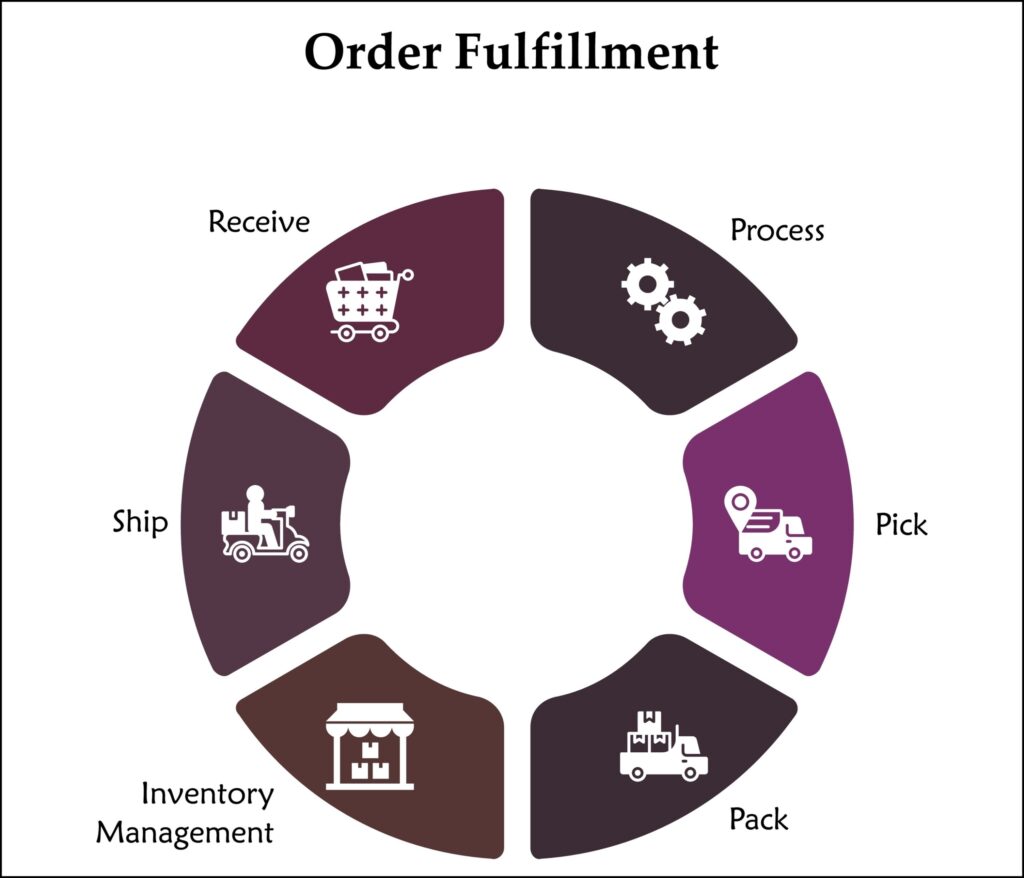
At a practical level, the model is straightforward. Inventory is transferred into the warehouse. Product data and SKUs are synced. Orders placed in the Shopify store pass to the fulfilment partner. The warehouse team then picks the items, packs the parcel and dispatches it through the agreed carrier service. Tracking and order status updates can then flow back into Shopify.
That process sounds simple, yet the detail matters. The quality of the integration affects stock visibility. Warehouse discipline affects pick accuracy. Carrier choice affects order to delivery time. Each link in that chain shapes customer satisfaction.
A typical Shopify 3PL flow looks like this:
- Stock intake: goods arrive, are checked in, and assigned to storage locations
- SKU mapping: products are matched correctly between the warehouse system and Shopify
- Order sync: new orders move from Shopify admin to the fulfilment queue
- Pick and pack: warehouse staff select, pack and label each order
- Carrier dispatch: parcels are handed to the chosen delivery service
- Tracking updates: shipment information is pushed back into the order record
For UK merchants, this structure is especially attractive when daily order volume becomes less predictable. Promotional spikes, seasonal peaks and product launches are easier to handle when the warehouse already has established capacity, scanning routines and carrier collections in place.
What to look for in a Shopify fulfilment warehouse in the UK
The first requirement is obvious: the warehouse must work cleanly with Shopify. Good integration reduces manual imports, duplicate handling and stock mismatches. It also gives the merchant a clearer view of what is available to sell, what has already shipped, and where exceptions need attention.
The second requirement is pricing clarity. Storage, pick-and-pack fees, packaging charges, carrier rates, returns handling and special project work all need to be visible before any agreement starts. Low headline rates can look attractive, though the real value sits in the full cost per order, not one isolated fee.
Location also matters. A UK warehouse can support faster national delivery, simpler inbound logistics and easier returns processing. Some businesses will prioritise proximity to ports or suppliers. Others will care more about cut-off times and next-day dispatch performance.
Useful markers include:
- Shopify integration
- pallet storage capacity
- same-day or next-day dispatch options
- returns handling
- stock reporting
- clear service levels
Service range matters just as much as location. A merchant selling apparel, cosmetics or subscription boxes may need more than basic storage and dispatch. Kitting, relabelling, inserts, batch control, fragile item handling and B2B carton shipments can all become relevant as the business grows.
One public example in this space is 3PLWOW, which lists Shopify integration, pallet storage, pick-and-pack and next-day shipping as part of its UK offer. It also publishes a Newcastle upon Tyne warehouse address and states capacity of more than 15,000 pallets. That kind of visibility helps merchants assess whether a provider is set up for straightforward ecommerce fulfilment or something more substantial.
Shopify fulfilment warehouse services and pricing in a UK 3PL model
Public pricing can be a useful starting point, especially for merchants comparing in-house packing against outsourced fulfilment. It will never tell the whole story, because packaging profile, order complexity, parcel weight and destination mix all affect actual cost. Even so, published rates show how a provider frames its service.
3PLWOW’s public materials present a good example of that. Its site states storage from £2.00 per week, with pick-and-pack and shipping rates also listed. On one page, pick-and-pack starts from £0.85 and postage from £1.20. On its homepage, it also promotes storage from £2.00 per week, pick and pack from £0.40 per order, and next-day shipping from £2.00. That suggests merchants should always confirm the exact rate card for their own SKU profile and service mix before making comparisons.
Here is a simple way to think about the offer structure in a Shopify context:
| Area | What the workflow covers | Example of public UK offer |
|---|---|---|
| Storage | Pallet or bin space for inventory held before sale | Storage from £2.00 per week listed publicly |
| Pick and pack | Selecting items, packing orders, applying labels | Pick-and-pack rates publicly listed from £0.40 or £0.85, depending on page |
| Shipping | Carrier handover and delivery service choice | Next-day shipping from £2.00 promoted on homepage |
| Integration | Connecting orders and stock data with Shopify | Shopify fulfilment integration publicly listed |
| Warehouse footprint | Capacity to hold stock and support scale | 15,000+ pallet capacity publicly stated |
This is where nuance matters. A merchant with a narrow SKU range and high order volume may benefit from simple, repeatable picking. A merchant with bundles, gift notes or fragile items may need more labour per order. The right warehouse is not always the cheapest on paper. It is the one that can deliver consistent service at a sustainable cost.
That is also why a Shopify merchant should assess the workflow, not only the rate card. If the integration is stable and the warehouse has reliable inventory controls, the business gains time back. That time can be spent on product development, retention, paid acquisition or wholesale expansion.
When to move from in-house packing to a UK Shopify warehouse
Many brands wait too long before making the switch. In-house fulfilment can work well in the early stage, especially when founders want direct control and order volume is still manageable. The problem starts when the warehouse table becomes the bottleneck for everything else.
A move to outsourced fulfilment usually makes sense when order growth begins to affect service quality, cash flow or team focus. If stock counts are drifting, dispatch times are slipping, or key staff are spending too much time printing labels, the operation may already be asking for a different structure.
Common trigger points include:
- Order spikes are now frequent, not occasional.
- Storage space is limiting what can be purchased in.
- Hiring warehouse labour is distracting from core commercial work.
- Delivery promises are becoming harder to keep.
A business does not need to be huge to benefit. It simply needs enough operational pressure that specialist fulfilment becomes the better use of money and management attention.
Questions to ask a Shopify fulfilment warehouse before signing
Choosing a provider is easier when the questions are specific. General promises about fast shipping and flexible service are not enough. A merchant should test how the warehouse works in practice, how it handles exceptions, and how visible the data will be inside Shopify admin.
A good discussion will cover onboarding, inventory transfers, daily cut-offs, returns, reporting and billing logic. It should also deal with failure points. What happens if a SKU is mislabelled? What happens if a parcel is damaged? What happens if a peak weekend doubles expected order volume?
Ask questions like these:
- Integration method: is the Shopify connection native, app-based, or managed through middleware?
- Stock accuracy: how often are counts checked, and how are discrepancies handled?
- Dispatch timing: what are the order cut-off times for same-day or next-day shipping?
- Returns process: are returned items inspected, restocked and reported by condition?
- Billing structure: which charges are fixed, variable, seasonal or project-based?
- Scalability: what changes when volumes rise sharply for promotions or peak trading?
It is also smart to ask for examples tied to your own catalogue. A warehouse may be excellent with single-line orders and less efficient with bundles, subscription packs or oversized goods. Your own order profile tells the real story.
A Shopify fulfilment warehouse in the UK should do more than move parcels. It should give the merchant confidence in stock, speed and service. When the fit is right, the warehouse becomes an engine for steadier growth, stronger customer trust and a business that can keep moving without being trapped by its own order volume.