
Increased Operation Efficiency with Third Party Logistics
For many e-commerce businesses, growth creates a strange kind of pressure. Sales go up, brand awareness grows, and demand looks healthy, yet the operation behind the website starts to tighten. Orders stack up, stock checks take longer, dispatch cut-off times creep earlier, and customer service teams spend more time chasing parcels or answering delivery queries.
That is where Third Party Logistics, often shortened to 3PL, becomes much more than outsourced storage. A well-run 3PL can turn fulfilment from a bottleneck into an advantage, helping an online retailer move faster, pack more accurately, ship sooner, receive stock cleanly, and cope with peaks through a larger trained workforce, all while achieving significant cost savings.
The case for this is strong in the UK. Online retail remains a major part of trade, with Office for National Statistics data showing internet sales accounted for 27.4% of total retail sales in Great Britain in 2025. At the same time, freight flows remain significant, with GOV.UK reporting 428.3 million tonnes handled by UK ports in 2025. In a market like that, operational speed and consistency matter.
Why Third Party Logistics improves e-commerce operational efficiency
Operational efficiency in e-commerce is rarely about one dramatic fix. It is usually the result of many small gains happening together: stock arriving in the right place, orders being picked without error, parcels leaving on time, and returns being processed before they become a customer issue.
A Third Party Logistics provider is built around those tasks. Rather than fitting warehousing around the rest of the business, a 3PL makes fulfilment the central function. That specialism often leads to faster throughput, clearer workflows, and stronger service levels.
The wider logistics sector reflects this. The 2025 Third-Party Logistics Study from the Council of Supply Chain Management Professionals reports that shippers and 3PL providers continue working together to increase efficiency and improve performance. It also found that 82% of shippers say 3PLs contribute to improved customer service, while 68% say 3PLs bring new and innovative ways to improve logistics effectiveness and reduce overall supply chain costs.
In practical terms, the pressure points tend to look familiar:
- Slow pick rates
- Packing errors
- Missed dispatch windows
- Delays in booking in stock
- Labour shortages during peak periods
- Returns piling up
When those issues are addressed together, the operation starts to feel different very quickly.
Faster picking and packing with Third Party Logistics warehouse processes
Picking and packing speed shapes almost every other warehouse result. If products are difficult to locate, if bin locations are unclear, or if pack benches are not set up well, orders take longer and error rates climb.
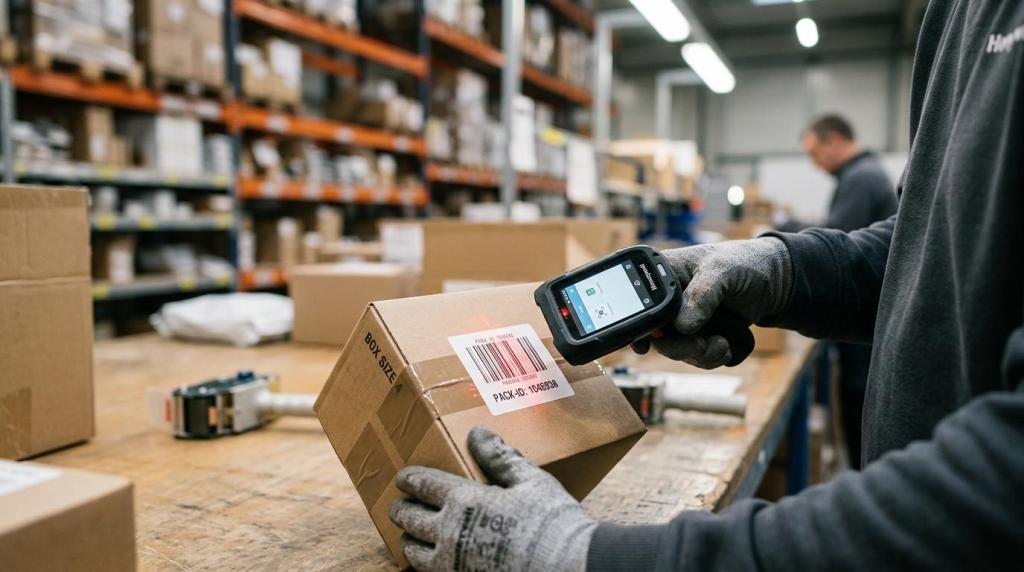
A strong 3PL usually brings a warehouse layout built for movement, repetition, and transportation control. Stock is slotted with order frequency in mind. Barcode scanning is part of the routine. Standard packing steps reduce variation. Teams are measured on output and accuracy because fulfilment is their day job, not a side task competing with buying, marketing, and customer service.
This matters most when order volumes move from manageable to unpredictable. A growing retailer may cope perfectly well with 50 orders a day and then struggle at 200, not because demand is too high in absolute terms, but because the process is no longer fit for that volume.
A published 90-day case study from 3PLWOW gives a useful illustration. After outsourcing fulfilment, monthly order capacity rose from 15,000 to more than 35,000. Order accuracy improved from 96.2% to 99.4%. Those are not minor shifts. They point to a warehouse operation that is built for repeatable performance rather than manual workarounds.
That kind of improvement often comes from a few operational disciplines working together:
- Structured locations: stock is stored in clearly managed pick faces and reserve areas
- Standard packing methods: teams follow repeatable steps for speed and consistency
- Live inventory control: stock counts and movements are updated as activity happens
- Quality checks: scanning and verification reduce mis-picks before parcels leave
- Workflow design: packing benches, labels, cartons, and dunnage are placed for efficient motion
Faster picking, packing, and warehousing do more than reduce warehouse labour per order; they also contribute to significant cost savings for the business. It also gives the business a better chance of meeting same-day dispatch promises.
Shipping speed and same-day dispatch with Third Party Logistics support
Customers do not separate fulfilment from brand experience. To them, shipping performance is part of the product. If dispatch is late, the impression of the entire business suffers.
That is why shipping speed is such a powerful efficiency marker. A warehouse that can pick, pack, and manifest orders quickly has more control over carrier cut-offs, late order surges, and promotional spikes. A business that handles fulfilment in-house often reaches a point where the dispatch window shrinks because the team needs more time to clear the queue. The result is an earlier cut-off and a slower promise to the customer.
A 3PL can help change that rhythm. With more warehouse space, established carrier collections, and teams working to dispatch targets, same-day shipping becomes more achievable across a wider range of order volumes. Instead of racing against the clock with a small internal team, the retailer benefits from an operation designed to keep parcels moving out the door.
Again, the 3PLWOW case study offers a concrete example. Same-day dispatch increased from 71% to 94% after outsourcing fulfilment. That improvement is important because it affects several commercial outcomes at once: customer satisfaction, support ticket volume, marketplace metrics, and repeat purchase confidence.
The pattern is easy to see in a side-by-side view:
| Operational area | Typical in-house pressure point | 3PL efficiency gain | Evidence or example |
|---|---|---|---|
| Picking and packing | Manual processes slow throughput | Faster order handling | 3PLWOW case study showed monthly capacity rising from 15,000 to 35,000+ |
| Order accuracy | Mis-picks increase with volume | Better process control | Accuracy improved from 96.2% to 99.4% in the same case study |
| Same-day dispatch | Early cut-offs and backlogs | More orders shipped on dispatch day | Same-day dispatch rose from 71% to 94% |
| Returns handling | Customer refunds delayed | Quicker turnaround | Average returns processing fell from 6 days to 2 days |
| Customer service | Delivery issues create extra tickets | Fewer order and shipping problems | CSCMP study found 82% of shippers report improved customer service from 3PLs |
Shipping performance also becomes easier to maintain when inbound stock handling is strong, because orders cannot leave quickly if inventory is sitting unprocessed on pallets.
Goods receipt efficiency and inventory accuracy in Third Party Logistics
Goods receipt is often overlooked in discussions about fulfilment speed, yet it is one of the most important stages in the warehouse. If incoming stock is delayed, counted incorrectly, or not put away quickly, every downstream process becomes less reliable.
For an e-commerce business, poor goods receipt creates familiar problems. Products show as available before they are ready to sell. Purchase orders are hard to reconcile. Stockouts happen even when goods are physically in the building. Fast-moving lines sit in the wrong location and slow the next wave of picking.
A capable 3PL addresses this with a formal inbound process. Deliveries are booked, checked, counted, and entered into the warehouse system in a structured way. Goods can then be put away according to the right storage profile rather than wherever there is temporary space.
That discipline matters even more in a trading environment shaped by substantial freight transportation movement. With UK ports handling 428.3 million tonnes of freight in 2025, according to GOV.UK, retailers are operating within a large and busy supply chain network. Stock arriving late or arriving in bursts is not unusual. The businesses that cope best are the ones with warehouse partners able to receive goods at pace and turn them into sellable inventory without delay.
A stronger goods receipt process usually gives the retailer several operational wins:
- Faster stock availability
- Better inventory accuracy
- Fewer oversells
- Cleaner purchase order reconciliation
- More reliable replenishment of pick locations
That may sound back-office in nature, yet it has a direct commercial effect. Products that are booked in quickly can go live sooner, backorders can be cleared faster, and customer-facing stock data becomes more trustworthy.
Trained warehouse staff and scalable labour through Third Party Logistics
One of the biggest reasons businesses move to a 3PL is simple: people capacity.
An in-house fulfilment set-up may rely on a small team wearing many hats. That can work well in the early stages. It becomes harder when promotions land, marketplaces spike, or peak periods arrive. Recruiting temporary labour at short notice is difficult, and training new starters during peak can slow the whole operation rather than speed it up.
A Third Party Logistics provider offers access to a larger team of trained staff. That matters not only because there are more hands available, but because those hands already work in warehouse disciplines every day. They know picking routes, packing standards, goods-in procedures, and dispatch cut-offs. The business is not starting from zero each time volume changes.
This is where efficiency and resilience meet. A larger trained team helps a retailer absorb surges without sacrificing accuracy. It also reduces dependence on a few key internal individuals whose absence can cause disruption.
The operational value of trained warehouse labour often shows up in areas that customers notice quickly:
- Peak capacity: more staff available when order volumes jump
- Process consistency: trained teams follow standard methods across shifts
- Reduced bottlenecks: tasks can be reallocated as demand changes during the day
- Lower error risk: experienced handlers are less likely to mis-pick, mis-pack, or mis-label
- Faster returns turnaround: dedicated teams can process inbound customer returns without delaying outbound orders
Returns deserve special attention here. For many e-commerce businesses, returns sit in the shadows until they become a cost and service problem. A larger warehouse team can process them faster, inspect items consistently, and move resaleable goods back into stock sooner. In the 3PLWOW case study, average return processing time fell from 6 days to 2 days, showing how labour depth can improve not just outbound speed but reverse logistics as well.
What e-commerce businesses should expect from a Third Party Logistics partner
Not every 3PL will suit every retailer, so operational efficiency depends on choosing the right fit.
That means asking specific questions. How quickly are goods booked in? What cut-off supports same-day dispatch? How are order accuracy checks handled? What happens during promotional peaks? How are returns processed and reported? The right conversation is about process, labour, systems, and service levels, not just pallet rates and storage costs.
A sensible evaluation should cover a few core areas:
- Dispatch performance: ask for actual same-day dispatch figures and cut-off times
- Accuracy standards: look for measurable pick and pack controls
- Inbound handling: check how quickly goods receipt turns stock into available inventory
- Labour depth: confirm how staffing flexes during peak periods
- Reporting quality: make sure stock, orders, and returns can be tracked clearly
The attraction of Third Party Logistics is not only that someone else handles warehousing, stores and ships products, but also the potential for significant cost savings through improved efficiency and scalability. The real value is that fulfilment becomes a better run function, one that supports growth instead of slowing it down.
With internet sales holding a major share of UK retail and customer expectations staying high, many e-commerce businesses need operations that are quicker, steadier, and more scalable than an in-house set-up can easily provide. Faster picking and packing, stronger shipping performance, same-day dispatch capability, organised goods receipt, efficient transportation, and access to a larger trained team can turn fulfilment into a source of momentum rather than friction.
For brands ready to grow without letting service slip, that shift can be transformative.