
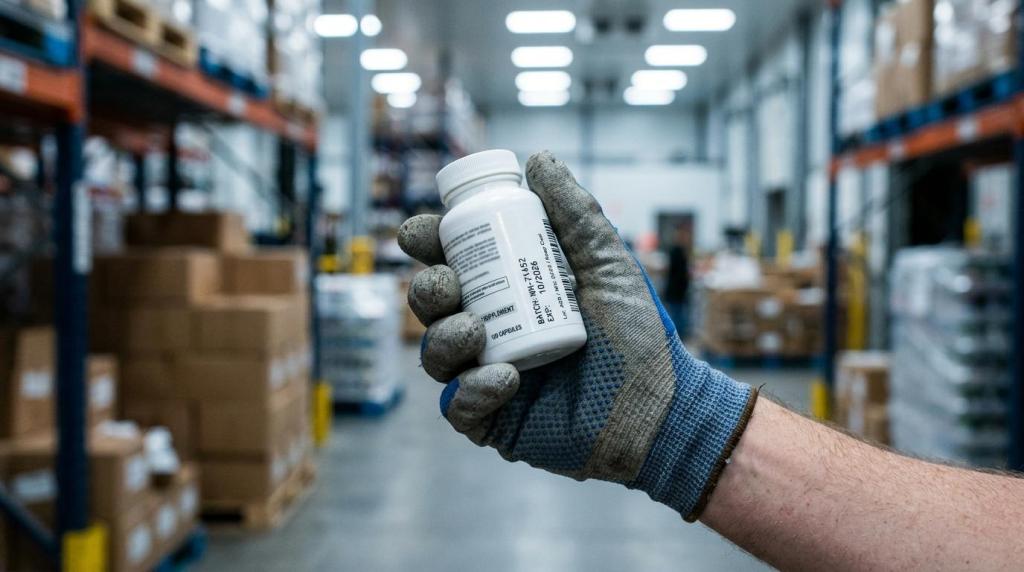
Selling collagen and food supplements, as well as supplement delivery, involves complex logistics that may look simple from the outside. A customer places an order, a parcel goes out, and the product arrives a day or two later. Yet the reality is far more exacting. These products often carry batch codes, expiry dates, storage requirements, and label rules that leave little room for casual handling.
That is why many collagen and supplement brands move fulfilment and warehousing, as well as inventory management, to a third party order fulfilment partner. A specialist 3PL can do much more than pick, pack, and post. It can bring category knowledge, warehouse capacity, trained staff, and process discipline that would take years to build internally. For a business working with powders, capsules, sachets, gummies, or liquids, that difference can be felt in speed, accuracy, compliance, and customer confidence.
Why collagen and supplement fulfilment needs specialist control
Collagen and supplement products sit in a category where operational detail, including specific nutrition requirements, matters. A beauty brand shipping collagen sachets may need careful batch rotation. A wellness company selling collagen powders may need cartons that protect tubs from transit damage. A supplement range with gummies or liquids may need stricter storage conditions than standard dry goods.
The legal backdrop makes that operational care even more important. In Great Britain, food supplements must be in compliance with food labelling rules, and the product label must identify the item as a food supplement. Labels also need storage instructions and a use-by or best-before date, among other mandatory details. In the United States, dietary supplement labels need a Supplement Facts panel and a statement that identifies the product as a dietary supplement or a similar term.
A fulfilment partner does not replace the brand’s legal responsibility for product safety and labelling, though it can help make day-to-day execution far more reliable.
When orders rise quickly, fulfillment details become hard to manage with a small internal team. One wrong batch shipped to the wrong market, one expiry date missed in stock rotation, or one poor storage decision can create waste, customer complaints, and avoidable commercial risk.
What a third party fulfilment partner adds beyond parcel shipping
A strong 3PL relationship is not just outsourced labour. It is operational maturity on day one, ensuring fulfillment needs are met. That matters for collagen and supplement brands because the category has repeat-purchase customers, strict expectations, and little patience for shipping errors.
A partner like 3PLWOW is relevant here because it states that it works with supplement products and has fulfilment processes designed for this category. That prior experience matters. A team that has already handled vitamins, powders, gummies, and health products does not need to learn basic category rules from scratch. It starts from a position of familiarity.
This tends to show up in practical ways:
- Category knowledge: awareness of batch control, date rotation, and supplement-specific handling
- Packing discipline: methods suited to tubs, pouches, bottles, sachets, and fragile retail packaging
- Order flow experience: familiarity with subscription orders, launch spikes, and repeat-purchase patterns
- Market readiness: support for brands selling in Great Britain, the US, or across multiple channels
That accumulated knowledge can shorten the learning curve for a growing brand. Instead of building warehouse procedures through trial and error, the business can plug into a setup shaped by previous work in the same field.
How prior supplement fulfilment experience reduces risk
Collagen and supplement brands do not only need speed. They need consistency. A team that already works in the category is more likely to recognise what can go wrong before it becomes a visible problem.
Think about batch and expiry management. When a product has a best-before date, the fulfilment process should support sensible stock rotation and clear traceability. If a retailer raises a stock query or a customer asks about a lot number, the business needs a rapid and accurate answer. That is much easier when fulfilment operations are built around batch and expiry tracking rather than treating it as an afterthought.
3PLWOW states that its supplement fulfilment setup includes batch and expiry date tracking. For a collagen or supplement business, that is a meaningful capability rather than a nice extra. It supports better stock discipline, cleaner recalls if they are ever needed, stronger internal reporting, and improved customer service.
Experienced fulfilment teams also tend to make fewer avoidable mistakes during receiving, picking, and packing. They are used to handling similar SKUs with near-identical packaging, promotional inserts, and subscription replenishment orders. In supplements, where many products differ only by flavour, strength, or pack size, that familiarity is valuable.
Large warehouse space gives supplement brands room to grow
Warehouse space sounds mundane until a brand hits a growth phase.
Many collagen businesses begin with a modest product range, then add bundles, flavour variants, travel sachets, seasonal gift packs, and wholesale cartons. What looked manageable in one room or a small unit can become cramped very quickly, impacting fulfillment operations. Without effective logistics and inventory management, storage pressure then starts to affect accuracy, replenishment, and staff productivity.
A larger 3PL warehouse gives a brand flexibility in warehousing that is hard to create internally without major fixed cost. There is room for inbound pallets, reserve stock, fast-picking lines, packaging materials, returns handling, and promotional builds. There is also space for growth that has not happened yet.
The value of that space becomes clearer when comparing in-house fulfilment with a specialist 3PL model, emphasizing the importance of efficient fulfillment.
| Fulfilment need | In-house strain | Specialist 3PL benefit |
|---|---|---|
| Stock storage | Limited capacity, overflow risk | Scalable warehouse space |
| Launch periods | Temporary congestion | More room for inbound and dispatch peaks |
| SKU growth | Picking complexity rises fast | Structured storage and slotting |
| Wholesale plus DTC | Competing workflows | Separate handling streams where needed |
| Packaging supplies | Consumes valuable floor area | Better storage planning |
For collagen and supplement brands, this can remove one of the main brakes on growth. The business is not forced to choose between holding more stock and keeping operations tidy.
A large well-trained team supports speed and accuracy
Space and fulfillment matter, though people matter just as much.
A large, well-trained fulfilment team can absorb order peaks in a way that a small in-house team often cannot. A campaign goes live, a creator mention performs above expectation, or a payday surge lands on a Friday afternoon. A brand with only a few warehouse staff may find itself overwhelmed. A 3PL with a broader labour base has more resilience.
Training is especially valuable in this category. Supplements, particularly those focusing on nutrition, are not generic apparel items or low-risk accessories. Pickers and warehouse staff need disciplined routines around stock rotation, product condition, packaging integrity, and order accuracy. If a partner already manages order processing and trains teams in supplement handling, the brand benefits from that structure immediately.
This usually brings gains in several areas:
- Shorter order backlogs
- Better pick accuracy
- Stronger stock checks
- More reliable cut-off performance
- Faster processing of returns and exceptions
A bigger trained team also supports continuity. Annual leave, illness, and seasonal demand are less disruptive when fulfilment is not dependent on one or two key people.
Food safety procedures and storage standards matter for collagen products
Not every collagen or supplement product needs the same environment, though many do require disciplined storage and careful handling. Powders can suffer from moisture exposure, making supplement delivery a critical aspect of maintaining product quality. Gummies and liquids may be more sensitive to temperature. Premium packaging can be marked or crushed if stored badly. These are practical warehouse issues, not abstract quality concerns.
This is where operational standards make a real difference. 3PLWOW states that its supplement fulfilment operation follows HACCP-based food safety procedures, uses temperature-controlled storage starting from 2°C, and includes hygiene monitoring, pest control, and sealed handling of goods. A collagen or supplement brand looking at third-party fulfilment should pay close attention to these details, especially in relation to ensuring the nutrition information remains intact.
What matters most is not marketing language. It is whether the warehouse setup supports product quality and traceability every day.
- HACCP-based procedures: structured controls around handling and food safety
- Temperature-controlled storage: support for products that need tighter environmental management
- Pest control and hygiene checks: protection for stock integrity
- Sealed handling: reduced exposure during storage and processing
For brands selling both in Great Britain and the US, that discipline helps support the product information already stated on labels. If a supplement label includes storage instructions, the warehouse should be able to meet them in practice.
Faster dispatch strengthens customer trust and repeat orders
Collagen and supplement buying habits are often routine. Many customers reorder monthly. Some subscribe. Others buy when they are about to run out. In all of these cases, speed matters because the product is part of a personal regimen, not a one-off novelty purchase.
A capable 3PL can protect that customer rhythm through efficient supplement delivery and streamlined order processing. 3PLWOW states that it offers same-day dispatch for orders placed before cut-off. That kind of service can support strong post-purchase experiences, especially for direct-to-consumer brands competing on reliability as much as brand image.
Fast dispatch does more than please customers. It can also reduce support tickets. When orders move quickly and tracking updates arrive promptly, customers ask fewer “where is my order?” questions. That frees internal teams to focus on product, marketing, and retail development rather than chasing parcels.
The commercial effect can be significant. Repeat-purchase categories benefit when fulfillment feels dependable. Customers may not praise warehouse performance directly, though they do notice when it fails.
Multi-channel supplement fulfilment is easier with a specialist 3PL
Many collagen brands do not sell through one route only. They may combine Shopify orders, Amazon replenishment, TikTok Shop sales, marketplace orders, wholesale cases, and influencer campaign traffic. Each channel has slightly different requirements for labels, cartons, service levels, and order timing.
Managing that mix in-house can become messy very fast. A specialist 3PL is often better placed to build channel-specific workflows while keeping stock visible in one operation. That means one pool of inventory can support several revenue streams with clearer reporting and less duplication of labour.
It also helps during growth phases. A brand can add channels without creating a new warehousing process every time, ensuring seamless fulfillment integration across platforms. That is one reason experienced fulfilment partners can feel like an operational extension of the business rather than a basic shipping supplier.
What collagen and supplement brands should ask a 3PL partner
Choosing a fulfillment partner should be a practical exercise, focusing on alignment with logistical needs, customer service, compliance, and growth objectives. The strongest option is not always the cheapest rate card. It is the provider whose processes fit the category, the product formats, and the brand’s growth plans.
Before signing, it helps to ask direct questions about operational capability, not just pricing.
- Batch control: How are lot numbers and expiry dates recorded and picked?
- Storage conditions: Can the warehouse meet stated product storage requirements?
- Team training: What supplement or food-product handling training do staff receive?
- Dispatch performance: What cut-off times and same-day shipping rules apply?
- Error handling: How are damaged goods, returns, and quarantined stock managed?
- Scalability: Can the operation cope with peak campaigns and new SKUs?
A collagen and supplement business that asks these questions early is more likely to find a partner suited to long-term growth. The best 3PL relationships are built on operational fit, clear visibility, and confidence that the products are being handled with the same care the brand would expect from its own team.