
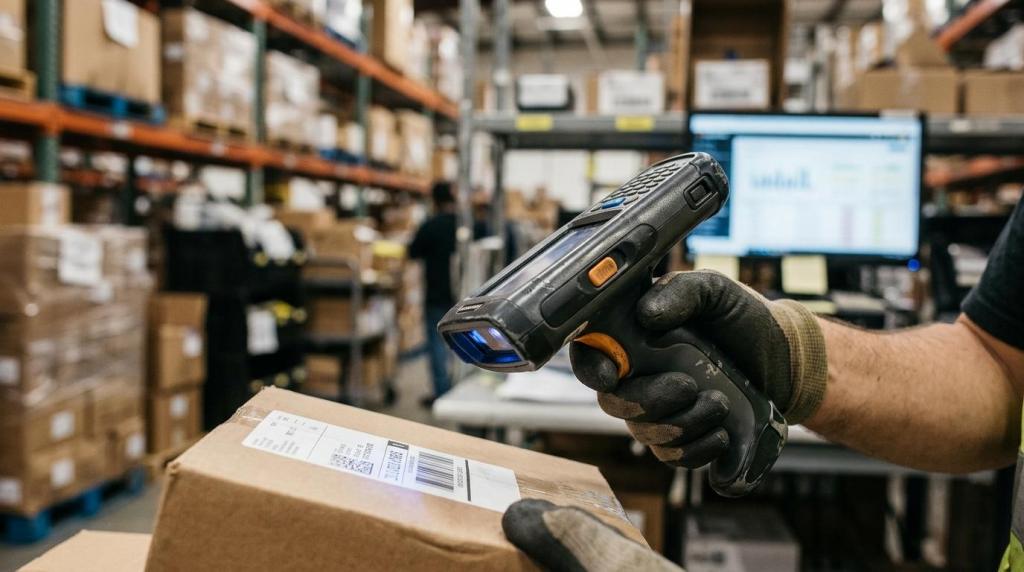
What makes a great Order Fulfillment Partner
Choosing an order fulfilment partner is one of the most practical growth decisions a business can make. The right provider does far more than ship parcels. It gives a brand room to sell more, stock more, and serve customers with greater consistency, without having to build a warehouse operation from scratch.
That matters because fulfilment affects almost every part of the customer experience. Stock accuracy, dispatch speed, returns handling, delivery reliability, and even finance reporting all sit close to the warehouse floor. A great partner brings these moving parts together in a way that feels controlled rather than stretched.
Order fulfilment partner qualities that separate good from great
A decent fulfilment provider can store products and send orders out. A great one becomes a genuine operational asset.
The difference usually shows up in a few places. First, there is capacity. Can the provider take receipt of inbound goods efficiently, count them accurately, and put them away without confusion? Second, there is people and process. Is there a trained team in place to pick, pack, label, check, and manage exceptions at scale? Third, there is visibility. Can the business see what stock is available, what has been committed, what has shipped, and what has come back?
A strong fulfilment partner also removes friction from growth. Instead of hiring warehouse staff, leasing extra space, buying equipment, and setting up systems internally, the business gains access to an operation that is already built and running.
That shift can be especially valuable for brands with uneven demand, promotional spikes, marketplace sales, or seasonal peaks.
Warehouse space and trained fulfilment staff create immediate operational relief
One of the clearest benefits of working with a capable fulfilment provider is access to warehouse space. Businesses often outgrow their own storage long before they are ready to commit to a larger premises. Stock starts filling office corners, back rooms, or temporary overflow areas. That is usually a sign that growth is starting to pressure the operation.
A great fulfilment partnership solves that pressure early. It offers organised storage, structured goods-in procedures, and a team whose day-to-day job is to handle stock properly. That includes receiving goods, checking delivery notes, counting stock, identifying discrepancies, booking inventory into systems, and placing products into the correct storage locations.
The staffing advantage is just as important as the space. A business may be able to manage a modest order volume with a small in-house team, yet that model often becomes fragile very quickly. Annual leave, sickness, sales campaigns, and supplier delays can all create bottlenecks. A larger, well-trained team gives resilience.
After a business has moved to a strong 3PL model, the gains often include:
- More warehouse capacity
- Better stock control
- Faster goods-in processing
- Trained pick and pack teams
- Admin support for order and stock queries
That last point is easy to underestimate. Administrative duties linked to fulfilment can consume significant time. Booking in deliveries, reconciling stock counts, monitoring order exceptions, handling courier issues, and managing returns all create workload that distracts commercial teams from sales and brand building.
Technology integration and real-time inventory visibility reduce costly errors
Warehouse labour matters, yet technology is what turns warehouse effort into a reliable system. A great order fulfilment partner should integrate cleanly with ecommerce platforms, marketplaces, and internal systems so that orders flow in automatically and stock data stays in sync.
This is one of the strongest signals of quality. Shopify’s guidance on 3PL selection highlights the value of native platform integrations, real-time inventory visibility, order status syncing, returns visibility, reporting dashboards, and API quality. Those are not nice extras. They are part of the operating standard a growth-focused brand should expect.
When inventory visibility is weak, errors multiply. Overselling becomes more likely. Customer service teams start chasing answers manually. Purchasing teams lose confidence in stock records. Finance teams spend more time reconciling discrepancies. A strong fulfilment partner reduces these problems by giving the business a live view of what stock is genuinely available to sell.
A useful way to judge this is to ask what the system can show in real time. Great providers should be able to support visibility across stock on hand, stock committed to orders, goods in transit, and returned inventory that is still under assessment.
The practical checks often include:
- Integration quality: direct connections with ecommerce platforms, marketplaces, and order management tools
- Inventory sync: live stock updates rather than delayed batch uploads
- Order status visibility: clear tracking from order receipt through dispatch
- Returns visibility: a transparent reverse logistics process with status updates
- Reporting access: dashboards that help teams spot trends, issues, and service performance
This kind of visibility is not only about convenience. Shopify has cited research estimating that even a small reduction in inventory record inaccuracy can carry major financial value for retailers. The principle is straightforward: better records mean better decisions.
Scalability for peak season and business growth is a core test
A fulfilment partnership should fit the business as it is now, though that is only the starting point in an effective supply chain. The better question is whether the provider can still support the business when order volume doubles, when a promotion lands harder than expected, or when a new marketplace channel starts performing strongly.
That is where many arrangements start to show strain. Some providers handle average weekly volumes well enough, yet struggle when inbound deliveries and outbound orders rise at the same time. Others can cope operationally but lose accuracy under pressure.
A great partner plans for peaks and integrates efficient order processing rather than merely reacting to them. That means labour planning, storage planning, carrier planning, and service level planning. It also means being willing to share measurable peak-season data. Shopify’s advice is clear here: merchants should ask about order volumes handled during busy periods, same-day fulfilment rates, and accuracy figures, and should get service level commitments in writing.
The contrast is easy to see.
| Area | Basic fulfilment support | Great fulfilment support |
|---|---|---|
| Storage | Limited space with little flexibility | Expandable space that can absorb stock growth |
| Staffing | Small team, stretched at peak | Large trained team with planned peak cover |
| Order flow | Manual intervention common | Automated order flow across channels |
| Stock visibility | Delayed or partial updates | Real-time inventory visibility |
| Peak handling | Reactive | Capacity planned in advance |
| Returns | Slow and unclear | Structured reverse logistics with clear status |
| Reporting | Minimal | KPI dashboards and service reporting |
Published case study data can help when judging scalability. One 3PLWOW case study reports monthly order capacity rising from 15,000 to more than 35,000 within 90 days of moving to a 3PL model. That same case study reports order accuracy improving from 96.2% to 99.4%, which suggests that scale and quality do not have to work against each other when the operation is set up properly.
Accuracy, dispatch speed and customer experience should be measured
A great order fulfilment partner should be able to prove performance, not just promise it. Accuracy rates, dispatch times, stock record accuracy, and returns turnaround should all be measurable.
Accuracy is central because small errors create outsized damage. The wrong item in the parcel, missing units, incorrect quantities, or poor packaging can quickly lead to refund requests, repeat shipping costs, negative reviews, and pressure on customer support teams. A high pick accuracy rate is one of the clearest operational indicators to ask for.
Dispatch speed matters too. Customers may tolerate modest delivery windows, though they rarely tolerate uncertainty. A fulfilment partner needs disciplined cut-off processes, carrier collections that match order profiles, and enough labour on the floor to keep service levels steady even during spikes.
Customer experience is linked to the wider parcel network as well. In the UK, Ofcom monitors parcel delivery customer experience through regular survey work, which underlines an important point: delivery performance is not vague or unmeasurable. It can be tracked, compared, and reviewed. A fulfilment partner that takes carrier management seriously should care about those outcomes because the warehouse and the delivery network are tightly connected.
Useful performance signals include:
- Pick and pack accuracy
- Same-day or next-day dispatch rate
- Inventory record accuracy
- Returns processing time
- Courier performance by service level
A business does not need hundreds of metrics. It needs the right ones, reported consistently.
Returns handling and reverse logistics show how mature the operation really is
Returns are often treated as an afterthought during provider selection. That is a mistake. Reverse logistics is one of the clearest tests of operational maturity because it involves inspection, system updates, customer communication, and inventory decisions all at once.
A great partnership should be able to receive returns promptly, identify the condition of the goods, restock sellable items, quarantine damaged products, and update the system without delay. Slow returns handling ties up stock, delays refunds, and creates frustration for customers who are already in a sensitive part of the buying cycle.
Strong reverse logistics can also recover value. Products that are returned in good condition should move back into available inventory quickly. That improves stock efficiency, optimizes the supply chain, and reduces unnecessary reordering.
This is another area where published evidence is useful. In the same 3PLWOW case study noted earlier, average return processing time fell from 6 days to 2 days after moving to the external fulfilment model. That kind of improvement affects both customer satisfaction and cash flow.
Cost transparency and service level agreements protect the relationship
Price matters, though the cheapest quote is rarely the best value. A low entry price can hide weak systems, slow receiving, poor reporting, or expensive exception charges later on.
A strong fulfilment partner should be open about how fees are structured. Common cost areas include setup fees, monthly charges, transaction fees, storage costs, and shipping costs. What matters is not only the rate card, but also whether the pricing makes operational sense for the order profile and growth plan.
Good commercial clarity usually includes:
- Storage charges: how pallet, shelf, or bin space is billed
- Receiving fees: what applies when goods arrive and are counted in
- Pick and pack fees: whether charging is per order, per item, or per activity
- Shipping costs: carrier rates, surcharges, and packaging assumptions
- SLA commitments: written service targets for accuracy, dispatch, and issue resolution
Service level agreements deserve careful attention. If a provider talks confidently about speed and reliability, those commitments should appear in writing. That gives both sides a shared operating standard and a sensible basis for review.
Questions that help identify the right order fulfilment partner
The selection process becomes much stronger when the questions are practical and evidence-based. Rather than asking whether the provider is “good at ecommerce”, it is better to ask how the operation handles the specific work that matters to the business.
Ask what happens when inbound stock arrives late in the day and how order processing is adjusted to accommodate such scenarios. Ask how discrepancies are flagged. Ask how often inventory counts are performed. Ask what staffing model covers peak weeks. Ask which integrations are native and which require middleware. Ask how returned goods are assessed and how quickly they can be restocked.
A strong provider should be comfortable answering these questions clearly. It should also be willing to show performance data, system views, and examples of how exceptions are handled.
The strongest signs tend to be simple: organised processes, transparent reporting, realistic commitments, scalable space, trained staff, clean integrations, and measurable results.
When those elements are in place, a fulfilment partner becomes more than a warehouse. It becomes a platform for steadier service, lower operational strain, and confident growth.
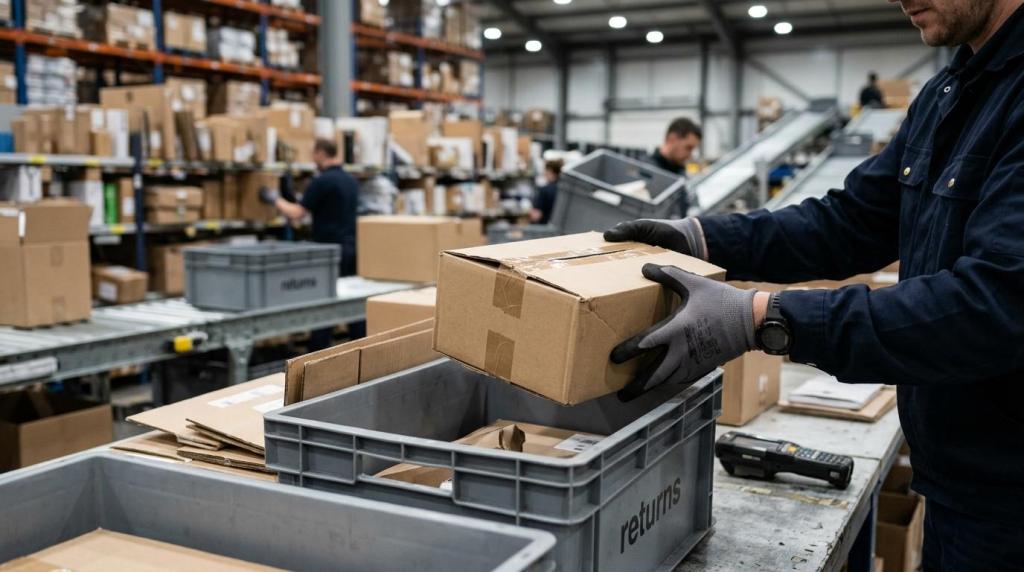
Managing Peak Season and Sale Order Volumes
Peak trading periods can be brilliant for revenue and brutal for operations. A Christmas rush, an Easter promotion or a Black Friday campaign can multiply daily orders in a matter of hours, while customers still expect fast dispatch, accurate picking and clear updates.
That is why peak season fulfilment is no longer just about working harder. It is about building enough capacity before the rush arrives. For many growing brands, 3PLWOW Third Party Fulfillment offers that capacity in a practical form: warehouse space, trained staff, established processes, returns handling and the ability to keep orders moving when sales volumes climb sharply.
Peak season order volumes put in-house fulfilment under pressure
Many businesses manage well in steady trading months, then find their systems stretched when a major sales event lands. Shelving fills up, overflow stock ends up in unsuitable areas, packing benches become congested and dispatch cut-off times start to feel uncomfortably close. What looked efficient in October can feel very different in late November when the demand for efficiency becomes paramount.
The pressure rarely sits in one place. Stock intake, picking, packing, shipping, customer service and returns all rise together. If one part slows down, the rest follows.
A peak period often creates problems like these:
- Stock arriving earlier than usual
- Limited storage locations
- Packing stations under strain
- Carrier collections becoming a bottleneck
- Returns building up just after the sale
Developing an effective sales strategy is one reason outsourced fulfilment has become a more strategic choice for retailers and wholesalers. CBRE reported that 3PL providers’ share of bulk industrial leasing activity rose to 34.1% through Q3 2024, up from 30.6% a year earlier, with 498 bulk leases recorded. That increase points to a clear market shift: more brands are turning to specialist logistics operators when they need space and distribution capacity that can grow with demand.
Scalable warehouse space supports peak season stock levels
Peak periods are often won before the first customer order is placed. Brands need stock in position early, with enough room to receive, organise and access it quickly. That sounds simple, yet warehouse space is one of the first limits an in-house operation hits.
3PLWOW can help by providing warehouse capacity that lets a business increase stock holdings ahead of key trading periods. Instead of trying to fit Christmas volumes into a warehouse set up for average weeks, a business can hold more inventory in a proper fulfilment environment, ready for rapid picking and dispatch. That matters when product lines widen for gifting, bundles, seasonal packaging or promotional campaigns.
More space also creates better stock control. Products can be stored in a way that supports speed rather than improvisation, which helps reduce picking errors and delays. The goal is not just to store more, but to store more in a way that keeps the operation efficient when order volume rises.
| Peak season pressure point | How 3PLWOW can help | Likely operational effect |
|---|---|---|
| Extra stock before a major sale | Flexible warehouse space for larger inventory holdings | Better product availability and fewer stock handling compromises |
| Sudden daily order spikes | Fulfilment workflows built for higher throughput | Faster picking, packing and dispatch |
| Limited internal labour capacity | Access to a trained warehouse team | More consistent output across long peak periods |
| Post-sale returns surge | Structured returns handling | Quicker turnaround and clearer stock visibility |
The wider logistics market reflects the value of planning for capacity rather than reacting late. USPS has said that its preparation for peak delivery season starts every January. Over five years, it added 614 package sorting machines and lifted daily package processing capacity from 60 million to 88 million. The lesson is clear: strong peak performance comes from capacity built in advance, not from last-minute improvisation.
Trained fulfilment staff keep sale orders moving
Space matters, but space alone does not ship orders. Peak performance depends on people, process and pace.
A business can have healthy stock levels and still struggle if it lacks enough trained staff to receive goods, pick accurately, pack consistently and hand over parcels on time. Seasonal promotions tend to compress demand into a short window, so minor inefficiencies in efficiency become major issues very quickly. Every extra minute spent looking for stock, correcting errors or clearing a backlog affects customer experience.
3PLWOW can help here by providing access to a well trained warehouse staff body that is already working within fulfilment systems and routines designed for volume. That means a business does not have to recruit, train and coordinate a temporary team from scratch each time a sales spike appears. It can plug into an operation built to handle larger order flows.
In its published case study, 3PLWOW reports a brand growing from roughly 4,000 monthly orders to more than 14,000, as their sales strategy improved and monthly order capacity increased from 15,000 to over 35,000 within 90 days of moving to outsourced fulfilment. The same case study reports order accuracy improving from 96.2% to 99.4% and same-day dispatch rising from 71% to 94%. Those figures show what many brands need during peak season: not just more output, but better control while output rises.
A strong fulfilment operation during peak periods usually depends on several moving parts working together:
- Labour coverage: trained warehouse staff can be scheduled around promotional peaks and later dispatch cut-offs
- Process consistency: standard picking, packing and shipping routines help accuracy hold steady when volume jumps
- Operational visibility: organised stock locations and clear workflows reduce time lost inside the warehouse
- Dispatch discipline: faster handover to carriers supports same-day dispatch performance where available
That combination can make the difference between a sales event that builds loyalty and one that generates apology emails.
Returns management matters just as much after the sale
Peak season does not end when the last parcel leaves the warehouse. In many sectors, the real aftershock comes in the days and weeks that follow.
Christmas gifting, Easter bundles and Black Friday impulse purchases often create a higher volume of returns. If those returns are not processed quickly, stock remains unavailable, customer refunds slow down and the service team gets pulled into avoidable chasing. A returns backlog can quietly damage the gains made during the sales spike itself.
3PLWOW can support this part of the cycle by managing returns within the fulfilment operation. That may include receiving returned goods, checking their condition, updating stock records and helping products move back into available inventory where appropriate. For businesses with fast-selling lines, that speed matters. Returned stock that is processed promptly can become sellable stock again, instead of sitting in limbo.
There is also a brand value angle here. Customers often judge a retailer just as strongly on the returns experience as on the original delivery. During peak periods, a reliable reverse-logistics process helps protect reputation when order volumes are highest and patience is lowest.
Peak season planning with 3PLWOW starts earlier than many expect
A strong peak season is usually the result of good preparation in late summer or early autumn, and sometimes even earlier, depending on the product cycle. The businesses that perform best tend to map stock intake, promotional timing, packaging requirements and dispatch expectations before volume arrives.
That approach mirrors what large delivery networks already do. USPS has made clear that its peak planning begins at the start of the year, not at the start of the holiday rush. The same mindset works at brand level. If Christmas is treated as a December issue, much of the advantage has already gone.
3PLWOW can support businesses by giving structure to that planning. Warehouse space can be allocated for stock build-up. Inbound deliveries can be handled in a way that prevents pre-peak congestion. The warehouse team can be prepared for expected surges around Black Friday, Christmas, Easter or campaign-led launches. Returns processes can be set before they are tested at scale.
A practical peak-season plan often covers the following:
- Forecasting: expected order volumes by week, by promotion and by SKU range
- Stock build: how much inventory needs to be in place ahead of the sales window
- Dispatch targets: what same-day or next-day service levels are realistic during the busiest periods
- Returns flow: how post-peak returns will be received and processed without disrupting outbound work
This preparation matters because seasonal demand is not standing still. NRF forecast U.S. holiday retail sales for November and December 2025 to grow by 3.7% to 4.2% year on year, reaching $1.01 trillion to $1.02 trillion. While that is a U.S. projection, it reflects a broader retail pattern: major seasonal events continue to drive huge order volumes, and fulfilment operations need to be ready for them.
Why outsourced fulfilment can turn seasonal spikes into repeatable growth
For a growing business, peak season should be a commercial opportunity, not an operational gamble. The challenge is that promotions and festive periods magnify every weak point in fulfilment. Limited space becomes stock disorder. Limited labour becomes slower dispatch. Limited returns capacity becomes customer friction.
3PLWOW addresses those constraints in the areas that matter most, ensuring efficiency in operations. It can provide warehouse room for larger stock holdings, a trained team that can process high order volumes, fulfilment workflows that support speed and accuracy, and returns handling that protects service after the rush. That gives businesses more confidence to plan ambitious campaigns without fearing that success will overwhelm the warehouse.
There is also a wider business benefit. When fulfilment capacity is stable, internal teams can spend less time firefighting and more time focusing on merchandising, marketing, customer retention, sales strategy, and forecasting. Peak season becomes easier to manage, and sales events become easier to repeat.
Black Friday, Christmas, Easter and other high-volume periods will always test an operation. The advantage comes from being ready with the right space, the right people and the right processes before the orders start landing. With that foundation in place, growth is far easier to handle.
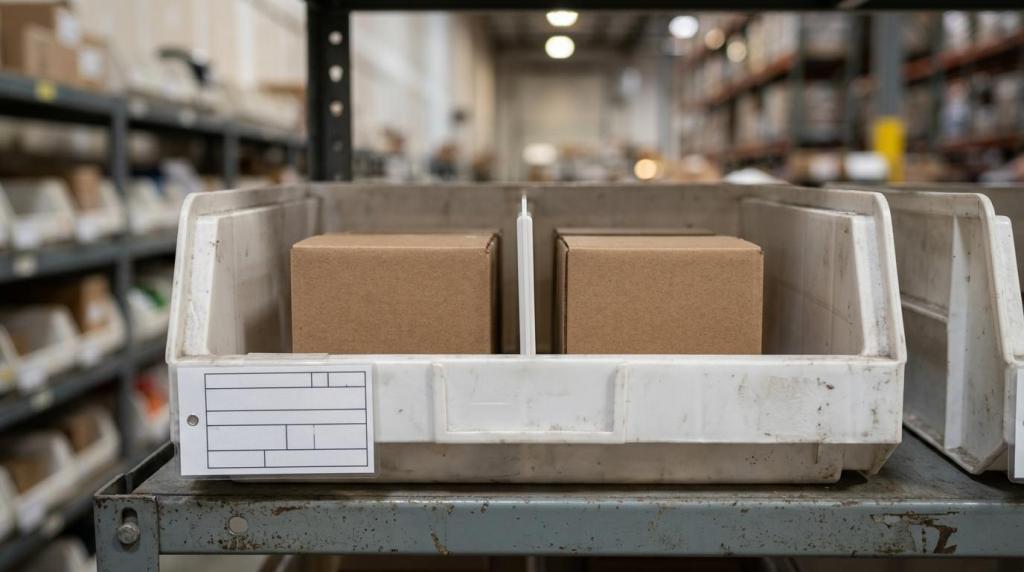
How Warehouse Organisation Improves Accuracy
Accuracy in a warehouse rarely comes down to luck, but is often a result of effective inventory control. It is usually the result of structured logistics, discipline, and routines that make every product easy to receive, store, count, pick, and dispatch.
When a warehouse is well organised, the improvement in warehouse efficiency means people spend less time searching, second-guessing, or correcting mistakes. Stock sits in clearly assigned locations, incoming goods are checked properly before putaway, and order pickers follow a logical path through the building. That sounds simple, yet it has a major effect on day-to-day performance.
This matters even more for businesses that handle manual stock counts without barcode scanning. In that setting, physical organisation is not just helpful. It becomes one of the main safeguards against stock discrepancies and fulfilment errors.
Warehouse layout and storage control improve order fulfilment accuracy
A warehouse works best when its layout supports the flow of stock from goods-in to storage, then from storage to picking and dispatch. Research on warehouse operations has long shown that order picking is one of the most labour-intensive and costly activities in warehousing. That means small gains in organisation can create large gains in accuracy and productivity.
Clear layout design reduces confusion. Fast-moving products can be stored in the most accessible areas, slower lines can sit in secondary locations, and bulky or awkward stock can be kept where it can be handled safely. When stock is placed according to a sensible storage plan, pickers are less likely to grab the wrong item or waste time moving through congested aisles.
Storage control matters just as much as layout. A product should not simply be placed wherever there is space. Controlled putaway means each item is assigned to the right location, recorded correctly, and stored in a way that matches its size, turnover, and handling needs. That keeps the physical warehouse aligned with the stock record, which is one of the foundations of accurate fulfilment.
After a warehouse has a sound structure, several operational choices make accuracy more dependable:
- Layout design: clear zones for receiving, storage, picking, packing, and exceptions
- Storage assignment: fixed or controlled locations for each SKU
- Routing methods: logical picker paths that reduce backtracking and missed lines
- Order batching: grouping work in a way that limits congestion and confusion
- Zoning: assigning staff to specific areas so they become familiar with the stock
These choices do more than tidy the building. They remove the small points of friction that often cause wrong picks, duplicate picks, and stock recorded in the wrong place.
Controlled putaway and picking routes reduce order errors
Many warehouse errors begin long before an order is picked. If received stock is checked in poorly, labelled inconsistently, or placed in the wrong location, the picking team inherits a problem that may not be spotted until a customer opens a parcel.
That is why receiving discipline is so important. Quantities should be checked against inbound paperwork, discrepancies should be flagged straight away, and every pallet, carton, or case should be traceable to a product record. Good recordkeeping is not just paperwork. It creates confidence that what the system shows is what is actually on the shelf.
Picking routes also shape accuracy. In a disorganised warehouse, pickers may cross the same aisle several times, search multiple bins for one item, or work around temporary overflow stock left in access routes. Each extra movement adds another chance to make a mistake. A better-organised warehouse creates direct routes, clear bin labels, and enough space for staff to work without interruption.
A simple comparison shows how warehouse organisation changes the result:
| Warehouse activity | Poor organisation | Organised warehouse |
|---|---|---|
| Receiving | Stock checked in late or placed in spare gaps | Stock checked, labelled, and assigned to set locations |
| Putaway | Mixed products in the same area | Clear location control and product separation |
| Picking | Longer walks, more searching, more mis-picks | Shorter routes and easier item identification |
| Packing | More exceptions and order queries | Faster checking and cleaner dispatch flow |
| Manual stock counts | Recounts and unexplained variances | More reliable counts and quicker reconciliation |
When order volumes rise, these differences become even sharper. A warehouse that feels manageable at 50 orders a day can become error-prone at 500 if logistics, stock locations, walkways, inventory control, and pick processes are not tightly controlled, impacting overall warehouse efficiency.
Manual stock counts without barcode scanning need disciplined organisation
Manual stock counting places greater weight on physical order. Without barcode verification, the team relies on location labels, SKU descriptions, packaging recognition, and written count procedures. If any of those elements are inconsistent, count accuracy drops quickly.
The first requirement is location discipline. Every shelf, bay, pallet position, and bin needs a clear identifier. Every product needs a defined home. If staff are allowed to place stock in temporary gaps without updating records, manual counts become slower and less reliable because the count team is never fully sure where to look.
The second requirement is stock separation. Similar items, colour variants, product bundles, and seasonal lines should not be mixed loosely together. Even a skilled team can miscount when products with near-identical packaging sit side by side without clear dividers or labels. Good organisation reduces visual ambiguity, which is vital when counts are done by eye.
The third requirement is count routine. Manual counts are strongest when there is a structured method, not a casual walk-around with a clipboard. Count sheets should reflect the warehouse layout, teams should count by zone, and discrepancies should be reviewed against receiving records, dispatch records, and any recent stock moves.
Before a manual count begins, the warehouse usually benefits from a short preparation stage:
- Tidy pick faces
- Return loose stock to the correct bins
- Isolate damaged goods
- Separate customer returns
- Pause unnecessary stock moves
- Check handwritten location changes
That preparation can save hours later. A neat warehouse is faster to count, easier to reconcile, and less likely to produce unexplained variances.
Better storage solutions improve business performance
Storage solutions are often discussed as a space issue, yet they are just as much an accuracy issue. The right racking, shelving, binning, and pallet layout can make stock easier to identify and easier to protect.
Products that fit the storage method are less likely to be crushed, split, misplaced, or mixed with similar lines.
A business also gains flexibility. When the warehouse has suitable storage for pallets, cartons, pick bins, and oversize goods, stock can be placed where it belongs rather than where there happens to be room. That means fewer temporary workarounds, fewer hidden items, and fewer fulfilment delays.
There is a commercial benefit too. Better storage supports faster order turnaround, cleaner stock visibility, and more confidence in purchasing decisions. If stock records and physical stock stay close together, buying teams can reorder with greater certainty and sales teams can promise availability with less risk.
A well-organised warehouse often supports these logistics outcomes, enhancing overall warehouse efficiency:
- fewer customer complaints
- lower cost from reships and corrections
- stronger stock confidence for manual counts
- faster dispatch during busy periods
- better use of floor space
Those gains build quietly, then become very visible during promotions, peak seasons, and rapid growth.
3PLWOW warehouse organisation benefits for growing brands
For businesses that want stronger warehouse accuracy without building the operation alone, 3PLWOW offers practical advantages tied directly to organisation, inventory control, and control. Its large warehouse space, reported as a 15,000+ pallet order fulfilment facility, gives brands room to store stock properly rather than forcing products into crowded or temporary areas. Space itself does not guarantee accuracy, though the right amount of space makes disciplined storage far easier.
A dedicated and well-trained team is another major benefit. Stock accuracy depends on consistent habits across receiving, counting, checking in, location management, and order fulfilment. When those tasks are looked after by trained staff with clear routines, errors are reduced at the source. This is especially helpful for businesses that rely on manual counting methods, where disciplined handling and location control matter every day.
3PLWOW also brings greater operational capacity for peak seasons and sales surges. That matters because accuracy often slips when order volume jumps and a warehouse becomes crowded, rushed, or overextended. Extra capacity supports cleaner workflows, faster replenishment of pick locations, and steadier dispatch performance when demand rises sharply.
Published figures from 3PLWOW point to the impact that tighter warehouse processes can have. The business reports a case in which monthly order capacity rose from 15,000 to more than 35,000 orders over 90 days, while order accuracy improved from 96.2% to 99.4% and same-day dispatch increased from 71% to 94%. Those numbers reflect what strong organisation can deliver when layout, process discipline, and team execution work together.
For a brand assessing outsourced fulfilment, the practical value can be grouped clearly:
- Large warehouse space: more room for structured storage, cleaner zoning, and less overflow risk
- Trained warehouse staff: careful stock counting, checking in, location management, and accurate picking
- Peak season capacity: support for sales spikes without the usual drop in control
- Operational consistency: repeatable routines for receiving, putaway, fulfilment, and stock checks
This kind of support can be especially useful for growing ecommerce businesses. Rapid growth often exposes weaknesses in storage planning and stock control. A partner with warehouse space, process discipline, and experienced staff can help keep fulfilment accurate while order volumes rise.
Accuracy gains reach customer service, planning, and profitability
Warehouse organisation is often viewed as an internal operations issue, yet the effect reaches far beyond the warehouse floor. Better accuracy in picking means fewer incorrect parcels arriving with customers. Better accuracy in manual stock counts means fewer stockouts caused by record errors. Better storage solutions mean less damaged product and less time lost searching for missing lines.
The customer notices the outcome even if they never see the warehouse. Orders arrive correctly. Dispatch happens when promised. Availability is more reliable. Returns linked to picking errors start to fall.
Finance and planning teams notice it as well. When stock counts are more dependable, purchasing decisions become steadier. When fulfilment mistakes reduce, margin erosion from refunds, reships, and reactive labour starts to ease. A tidy warehouse can have a surprisingly direct effect on profit quality.
That is why warehouse organisation should be treated as a driver of accuracy, not as a background housekeeping task. In order fulfilment, manual stock counts, and day-to-day stock control, the structure of the warehouse shapes the quality of every result that follows.
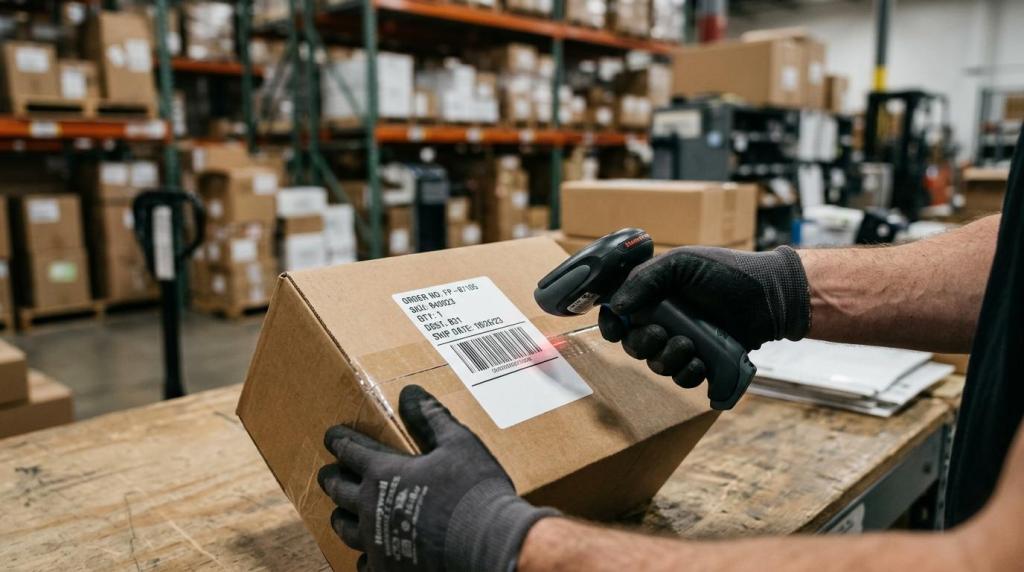
How Better Fulfillment Improves Customer Reviews
Customer reviews are often treated as a verdict on the product alone. In practice, many reviews are really a verdict on what happened after the customer clicked “buy”.
If the parcel arrives quickly, with proper packaging, correctly packed, and exactly when promised, offering a delightful unboxing experience, the brand feels dependable. If it arrives late, contains the wrong item, or becomes difficult to return, the same product can attract a much colder response. That gap matters because reviews do more than reflect satisfaction. They shape future sales, trust, and repeat purchase behaviour.
For growing e-commerce businesses, optimizing the supply chain by offering various shipping options and efficient fulfilment is one of the clearest ways to influence customer sentiment at scale. A capable third-party provider can help turn delivery from a risk into a strength, especially when speed, accuracy, and returns management are all managed with discipline.
Customer reviews depend on fulfilment performance
Customers rarely separate the warehouse from the brand, viewing it as an integral part of the overall supply chain success. They do not think, “the retailer was good, but the fulfilment process was poor”. They think the business let them down.
That is why fulfilment has such a direct effect on review quality; it’s a prime example of how better fulfillment improves customer reviews. Academic research published in the Journal of Business Logistics, based on archival data from 260 online retailers, found that satisfaction with physical distribution quality and cost was positively related to customer purchase satisfaction and customer retention. Put simply, the way an order is fulfilled helps shape how the whole retailer is judged.
Recent consumer research points in the same direction. Narvar’s 2025 post-purchase report, based on 3,461 US consumers, states that delivery accuracy is what earns customer trust and inspires repeat purchases. The same report says half of consumers are less likely to shop again after a late delivery, while 6% stop shopping with the brand altogether.
That is not a small operational issue. It is a review issue, a loyalty issue, and a revenue issue at the same time.
Faster shipping improves customer reviews before the parcel arrives
Speed has a psychological effect long before the package reaches the doorstep. A fast dispatch email reassures the customer that the order is real, active, and moving. Silence creates doubt.
This matters because a large share of negative review language comes from uncertainty. Customers do not just complain that something arrived late; they also criticize the lack of transparency in the communication process. They complain that they “heard nothing”, “had to chase”, or “didn’t know where the order was”. Better fulfilment reduces that friction by shortening the waiting period and making order progress more visible.
A strong 3PL can help here by improving the time between order placement and dispatch. In one published 90-day case study from 3PLWOW, same-day dispatch rose from 71% to 94% after the move to a 3PL model. The same case study also reported a 38% fall in shipping-related support contacts. That pairing is telling. Faster dispatch did not just move parcels quicker. It also reduced the number of reasons customers had to complain.
Customers tend to reward that kind of experience in reviews through:
- fast dispatch
- reliable delivery windows
- clear tracking updates
- fewer “where is my order?” moments
There is also a practical knock-on effect. When fulfilment teams dispatch orders earlier in the day and more consistently, carrier performance tends to become easier to manage. A business can give more believable delivery estimates, which matters because customers are often more forgiving of a three-day service delivered on time than a next-day promise that slips.
Order accuracy reduces negative reviews and refund requests
A wrong item is one of the fastest ways to turn a satisfied buyer into a disappointed reviewer. It creates inconvenience, delay, and doubt in a single moment.
Even when the error is corrected, the review damage may already be done. Customers remember the missed birthday gift, the duplicated SKU, the wrong size, or the missing item more vividly than the later apology email. That is why picking accuracy has an outsized impact on ratings.
A specialist fulfilment provider usually brings tighter stock control, repeatable pick-and-pack processes, efficient packaging procedures, and staff dedicated to warehouse accuracy. These are operational disciplines, though the customer experiences them as professionalism.
Again, the 3PLWOW case study offers a useful illustration. It reported order accuracy improving from 96.2% to 99.4%. That change may look modest on paper. In real order volumes, it is significant. At 10,000 monthly orders, 96.2% accuracy means 380 orders with an error. At 99.4%, that falls to 60. Each prevented mistake is not just a saved reshipment or refund. It is a negative review that may never be written.
| Fulfilment metric | Customer experience | Likely review effect |
|---|---|---|
| Faster dispatch | Less waiting and less uncertainty | More positive comments about service |
| Higher order accuracy | Correct items arrive first time | Fewer one and two-star reviews |
| Better delivery accuracy | Trust in promised dates | Higher repeat purchase confidence |
| Efficient returns | Problems feel manageable | Fewer angry public complaints |
| Lower support contact volume | Less chasing for updates | Calmer, more favourable sentiment |
When customers receive exactly what they ordered, on time, and in good condition, with various shipping options, the review often becomes shorter and warmer. The brand feels organised. The buying decision feels validated.
Efficient returns keep a bad order from becoming a public complaint
No fulfilment operation is perfect all the time. Returns are where competence becomes visible.
A poor returns process lacking transparency can turn a minor issue into a reputational problem. Slow approval, unclear instructions, delayed refunds, or weak communication often create stronger emotions than the original mistake. This is where many businesses lose control of the story the customer tells in a review.
Parcel satisfaction data supports this point. Ofcom’s 2025 customer satisfaction survey found clear differences between parcel companies when customers needed help. The least satisfied customers were linked to firms that were harder to contact. That finding matters beyond the carrier itself. When customers struggle to get answers during delivery problems or returns, the retailer absorbs the frustration.
A well-run fulfilment partner can make returns feel orderly rather than chaotic. That changes the tone of customer feedback in a very practical way.
A strong returns process does three valuable things:
- Cuts frustration: customers know what to do and how long it will take.
- Protects star ratings: a resolved issue is less likely to become a one-star review.
- Builds trust: fair handling after a mistake can still leave a positive impression.
This is one of the least discussed review drivers in ecommerce. Many customers do not expect everything to be perfect. They do expect problems to be handled competently.
Why a 3PL partner like 3PLWOW can improve review scores
The link between outsourcing and customer reviews is not magic. It comes from better systems, better throughput, and fewer avoidable errors.
When a business fulfils orders in-house, review quality can suffer during growth spurts. Staff become stretched, dispatch cut-off times slip, stock locations get messy, and support queues grow. Customers do not see the strain behind the scenes, highlighting the need for transparency in operations. They only see the late parcel or the incorrect order.
A specialist 3PL can absorb that pressure more effectively by offering a variety of shipping options. Warehouse management systems, standardised workflows, packaging processes, supply chain coordination, and dedicated operational staff create consistency, which is exactly what good reviews tend to reflect. A provider like 3PLWOW is especially relevant where a business wants to improve dispatch speed, accuracy, and communication without building a larger internal warehouse function.
The same 3PLWOW case study reported monthly order capacity rising from 15,000 to more than 35,000 within 90 days. That matters because review quality often drops when volume grows faster than fulfilment capability. If capacity expands with demand, the customer experience has a much better chance of staying stable.
There is another benefit here. Better fulfilment lowers support friction. If shipping-related contacts fall, customer service teams can spend more time helping with real exceptions rather than answering repetitive tracking questions. That tends to improve the tone of both private conversations and public reviews.
Fulfilment metrics that connect strongly with customer sentiment
Review scores are useful, though they are lagging indicators. By the time the review appears, the damage or goodwill has already happened.
The more useful approach is to monitor the fulfilment metrics that tend to show up in review language a few days later. If those numbers improve, customer sentiment often improves with them.
The most revealing measures include:
- Order accuracy: whether customers receive the correct items first time.
- Same-day dispatch rate: how quickly paid orders begin moving.
- Delivery promise accuracy: whether estimated dates match real outcomes.
- Returns turnaround time: how long it takes to process a return and refund.
- Support contact volume: how often customers need to ask about shipping issues.
These metrics also help explain why reviews are changing. A business may see an uplift in star ratings after moving to a 3PL, though the real driver could be fewer picking mistakes, clearer dispatch communication, or faster returns. Measuring both reviews and fulfilment performance together gives a cleaner picture of what customers are responding to.
Descartes reported in 2024 that 67% of consumers surveyed had experienced a delivery failure. That figure is a reminder that fulfilment problems are common enough to shape buyer expectations. Brands that avoid those failures do more than meet a baseline. They stand out.
Better fulfilment turns service quality into visible customer proof
Reviews are public evidence of private operational choices. Customers may never see the warehouse layout, the barcode scans, the cut-off schedule, or the carrier routing logic. They will see the result.
That is why better fulfilment can have an outsized effect on reputation, demonstrating how better fulfillment improves customer reviews. Faster shipping reassures customers early. Accurate picking prevents the most memorable complaints, and an effective returns management strategy ensures that any issues are resolved swiftly. Efficient returns stop disappointment from hardening into resentment. When these elements improve together, review quality often follows.
For businesses considering a third-party provider, that makes fulfilment more than a cost centre. It becomes part of brand perception. A capable partner such as 3PLWOW may help strengthen that perception by improving same-day dispatch, reducing order errors, and lowering support friction, all of which create the kind of buying experience customers are more willing to praise in public.
In e-commerce, the parcel is often the brand’s most visible promise, and a memorable unboxing experience can further enhance customer satisfaction. Fulfilment decides whether that promise feels ordinary, frustrating, or worth five stars.
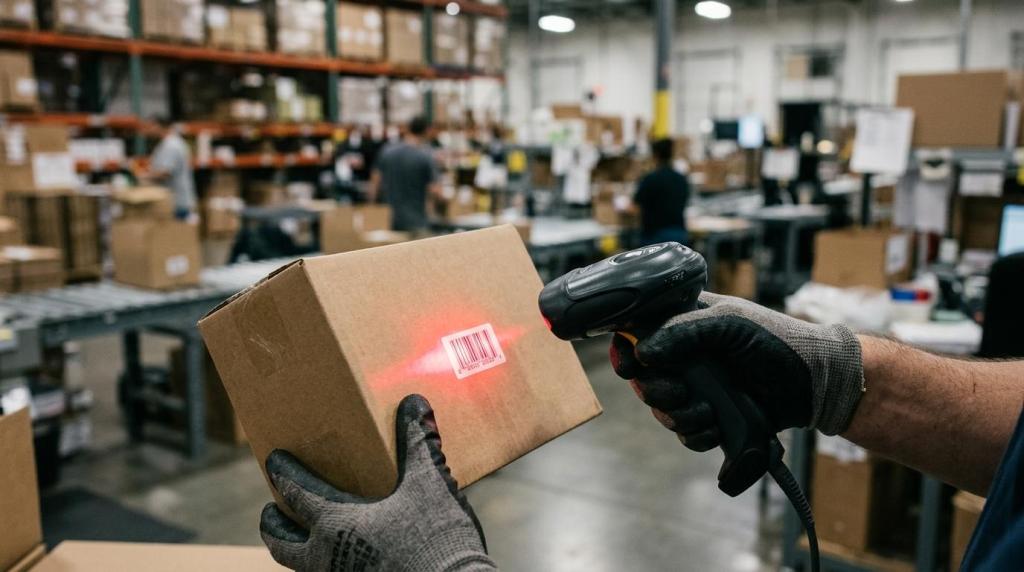
Why Growing Businesses Choose Outsourced Fulfillment
Growth is exciting right up to the moment operations start falling behind.
A business can go from packing orders on a bench in the corner of the office to managing hundreds, then thousands, of parcels a week with very little warning. One strong ad campaign, one retailer mention, or one seasonal spike can expose every weak point at once: not enough space, not enough staff, patchy stock visibility, and too much admin sitting with the founder or a small internal team.
This highlights why growing businesses choose outsourced fulfillment as many growing ecommerce brands turn to outsourced services, such as outsourced fulfilment. A third-party fulfilment provider such as 3PLWOW LTD gives a business access to trained pick and pack staff, large warehouse space, stock control processes, Shopify integration, fast shipping options, and day-to-day operational support that removes pressure from the core team. The result is not simply “outsourcing the warehouse”; it is leveraging comprehensive fulfillment solutions to make growth easier to sustain.
Growth pressure changes in-house fulfilment economics
In the early stages, fulfilling orders internally often feels efficient and can lead to initial cost savings. The team is close to the product, costs appear visible, and control seems tighter. Yet once order volumes begin rising quickly, that model can become expensive in less obvious ways.
Staff who should be focused on sales, product, customer retention, or finance end up printing labels, chasing missing items, handling returns, answering delivery queries, and counting stock after hours. Space that was once enough for a few pallets becomes crowded, disorganised, and slow to work in. Every delay starts to ripple through the rest of the business.
The real issue is not effort. It is capacity.
A growing business usually starts to feel the limits of in-house fulfilment impacting its operational efficiency and overall operations when several of these problems appear at the same time:
- Late dispatches
- Stockouts caused by inaccurate counts
- Customer support time spent on shipping issues
- No room for incoming inventory
- Leadership time lost to operational admin
When those signs appear together, fulfilment stops being a support function and starts holding back revenue.
Outsourced fulfilment adds capacity without forcing fixed overheads
One of the clearest reasons businesses move to a 3PL is that growth rarely arrives in a straight line. Order volumes can jump after a product launch, influencer mention, seasonal peak, marketplace success, or paid media push. Building internal capacity for every possible peak means taking on fixed costs long before they are fully justified.
A provider such as 3PLWOW LTD gives businesses access to a larger operational base and a streamlined supply chain straight away. That includes a broad team of trained pick and pack staff who can process orders at pace, warehouse space for storing goods properly, and workflows designed for higher volume handling. Instead of recruiting, training, and managing warehouse labour internally, a growing brand can plug into an existing fulfilment operation.
That matters because speed at scale is rarely about working harder. It is about having the people, space, systems, and routines already in place.
| Operational area | In-house during growth | Outsourced fulfilment with a 3PL |
|---|---|---|
| Staffing | Hiring reacts to pressure | Trained teams already in place |
| Storage | Space becomes tight quickly | Large warehouse capacity available |
| Order peaks | Hard to absorb sudden demand | Capacity can flex more easily |
| Stock handling | Often split across small teams | Dedicated warehouse routines |
| Admin workload | Usually sits with internal staff | Integration and processing handled externally |
| Shipping options | Often limited by small-scale buying power | Faster, cost-effective carrier access |
For a fast-growing ecommerce brand, that shift in the supply chain, backed by expertise, can be decisive. It replaces operational fragility with scalability, providing room to grow and improved operational efficiency.
Service quality matters more than headline price in outsourced fulfilment
Price still matters, of course. Yet current market research shows that growth-stage businesses and larger shippers are looking well beyond the cheapest quote.
The 2025 Third-Party Logistics Study powered by NTT DATA, Penske and Penn State University reported that 25% more shippers are outsourcing to 3PLs for greater business and technology value. That is a meaningful change. It suggests companies are looking for stronger partnerships, not just lower handling costs.
A similar pattern appears in 2024 research reported by Inbound Logistics, where 74% of shippers said service is more important than price. Penske Logistics also reported that 95% of shipper respondents described their 3PL relationships as successful. Taken together, those figures make one point very clearly: growing businesses want dependable service, responsive communication, and systems that support expansion. A cheap provider that misses dispatch windows or mishandles stock is not cheap for long.
Trained pick and pack teams improve order accuracy and customer trust
As order volumes rise, small errors become expensive. One wrong SKU, one duplicate shipment, or one stock discrepancy may seem minor on its own. Across hundreds of daily orders, those mistakes quickly become wasted labour, lost margin, support tickets, refunds, and damaged trust.
This is where specialist fulfillment teams make a visible difference in managing complex logistical demands. A provider like 3PLWOW LTD uses trained pick and pack staff whose daily work is built around accuracy, process discipline, and throughput. Their environment is designed for order handling. That changes the standard of execution.
Published 3PLWOW case material points to the kind of gains that can follow a move to outsourced services such as fulfilment. One case study reported monthly order capacity increasing from 15,000 to more than 35,000 within 90 days, while order accuracy improved from 96.2% to 99.4%. For a growing business, that extra accuracy is not just an operational metric. It supports repeat purchase, cleaner customer communication, and fewer avoidable costs, contributing to significant cost savings.
Strong fulfilment accuracy is usually built on a combination of people, routines, and checks:
- Trained pick and pack staff: consistent handling across larger order volumes
- Manual stock checks and counting: practical control that helps catch discrepancies early
- Structured warehouse locations: faster picking with less confusion
- Repeatable operating processes: fewer errors during busy periods
Manual stock checks deserve special attention. Many growing businesses assume software alone will keep inventory accurate. In reality, physical counting still matters. Regular manual checks help identify shrinkage, mis-placed stock, receiving errors, and returns that have not been processed correctly. When a 3PL combines digital records with disciplined stock counting, inventory confidence improves sharply.
Shopify integration removes admin drag from daily order management
A fast-growing ecommerce business does not only need boxes packed quickly. It also needs order data, stock updates, shipping information, and customer notifications to move cleanly between systems.
That is why Shopify integration and effective fulfillment solutions matter so much. When a fulfilment partner integrates directly with Shopify, orders can flow into the warehouse automatically, stock levels can stay more current, and dispatch activity can feed back into the store with less manual input from the brand team. The operational benefit is obvious, though the strategic benefit is even stronger: the business stops spending hours on repetitive admin and gains more time for trading, product planning, and customer acquisition.
Admin removal is often underestimated until it disappears.
Instead of checking orders by hand, uploading files, reconciling dispatches, or chasing warehouse updates, the internal team can work at a higher level, reaping significant cost savings thanks to comprehensive fulfillment solutions. For founders and ecommerce managers, that is often one of the biggest relief points in the move to outsourced fulfilment, thanks to the efficiency of outsourced services.
Fast shipping and cost-effective order processing protect the brand experience
Customers do not separate marketing from fulfilment. They judge the brand as a whole. If checkout promises fast delivery and dispatch is slow, the customer does not blame the warehouse. They blame the business.
A capable 3PL helps protect that experience with faster order processing and broader access to shipping services that would be harder for a smaller in-house operation to secure on its own. That can improve both speed and cost control at the same time. Instead of paying premium rates in a reactive way, growing businesses can benefit from a more organised shipping model built for volume.
Published 3PLWOW case material gives a useful picture of what ecommerce fulfilment can look like in practice. One case reported same-day dispatch increasing from 71% to 94% after the move to outsourced fulfilment. The same body of case material also reported shipping-related support contacts falling by 38%, which makes sense: when parcels go out faster and more accurately, customers have fewer reasons to get in touch.
Returns matter as much as outbound shipping, especially in ecommerce categories where return rates are naturally higher. One 3PLWOW case reported average return processing time falling from six days to two days after the switch. Faster returns processing means stock can get back into saleable circulation sooner, customer refunds can move faster, and support teams spend less time resolving avoidable friction.
A strong fulfilment set-up often improves customer experience in three direct ways:
- Same-day dispatch: supports delivery promises and peak-period reliability
- Cost-effective shipping: helps protect margin while keeping service levels strong
- Faster returns processing: reduces friction for both customers and internal teams
That combination can have a bigger commercial effect than many businesses expect.
Warehouse space and stock control support product range expansion
Growth does not only mean more orders; it often involves managing a more complex supply chain, which requires specific operations expertise. It often means more SKUs, more inbound deliveries, more promotional bundles, more packaging variants, and more complexity across channels.
Large warehouse space gives a growing business room to breathe, enhancing scalability. It makes it easier to store goods safely, organise stock by location, separate inbound from outbound activity, and handle seasonal buys without turning the operation into a bottleneck. A crowded stockroom can slow every task inside it. A well-run warehouse creates flow.
This also supports wider commercial decisions. A business with better storage capacity and stronger stock control can improve operational efficiency, order with more confidence, run larger campaigns, add product lines, prepare for peak periods earlier, and reduce the risk that operational limits will cap sales. That freedom is one reason why growing businesses choose outsourced fulfillment, as it is often tied directly to growth plans rather than treated as a back-office purchase.
What growing businesses should assess in a third-party fulfilment partner
Not every 3PL is the right fit for a scaling ecommerce brand. Capacity matters, though capacity alone is not enough. The provider needs to combine people, warehouse capability, system integration, shipping performance, and responsive support in a way that suits the pace of the business.
A provider such as 3PLWOW LTD is likely to appeal to growing brands when it can show a trained pick and pack workforce, large storage space, disciplined manual stock counting, Shopify integration, and a clear ability to take operational admin off the client’s hands. Case material that shows higher capacity, better order accuracy, faster same-day dispatch, and quicker returns adds another layer of confidence.
The best fit is usually the partner that allows the business to keep growing without building a larger internal operational burden at the same speed. That is the shift many scaling ecommerce brands are really looking for: more output, fewer bottlenecks, and a fulfillment model that supports ambition rather than slowing it down.

How 3PLWOW makes it easy to switch to Third Party Fulfillment
When an ecommerce business begins to grow, fulfilment often shifts from a practical in-house task to the main factor limiting progress. Shelving fills up. Dispatch cut-off times start to dictate the day. Customer service teams spend more time answering delivery questions, and leadership attention moves away from growth and into operations.
That is the point where third-party fulfilment starts to make real sense. Shopify describes a 3PL as an external partner that handles logistics operations including warehousing, order fulfilment, inventory tracking, picking and packing, and carrier coordination. For brands that have outgrown spare space, small teams, or improvised packing stations, that change can remove a serious operational bottleneck.
3PLWOW positions this switch as a managed move from in-house fulfilment to a specialist operation with the space, staff, and shipping knowledge to handle rising order volumes. The appeal is not only scale. It is also about making the transition feel controlled, practical, and commercially sensible, providing tailored solutions to meet unique business needs.
Why in-house fulfilment becomes harder as order volumes rise
In-house fulfilment often works well in the early stages. The business has direct control, stock is close at hand, and the process feels simple enough to manage. Yet growth changes the economics quickly. What once looked efficient can turn into a system that absorbs time, space, and managerial energy.
Statista has described the UK 3PL market as one that has grown in recent years due to ecommerce and globalisation, and it notes that 3PL providers can help companies increase efficiency, reduce shipping costs, and improve supply chain operations. That trend reflects a common reality: scaling fulfilment internally is difficult when order peaks become unpredictable and customer expectations remain high.
The warning signs usually appear long before a business decides to switch:
- packed storage areas
- rushed dispatch windows
- rising delivery queries
- staff pulled away from higher-value work
- returns building up in the corner
At that stage, moving fulfilment out of the building is not simply outsourcing. It is a way to create operational room and improve scalability for the business to keep growing.
What makes the switch to 3PLWOW easier
The biggest concern many brands have is not whether a 3PL can do the work. It is whether the changeover itself will disrupt orders, confuse customers, or create a fresh layer of complexity. That is why ease of transition matters so much.
3PLWOW’s model is compelling because it addresses the functions that usually cause friction during a move: warehousing, picking and packing, shipping coordination, and returns processing and returns handling. Instead of asking a growing e-commerce business to build these capabilities internally, it offers an existing operation that is already designed for order fulfilment at scale.
There is also a practical confidence that comes from published performance examples. In one 3PLWOW case study, a brand’s monthly order capacity reportedly rose from 15,000 to more than 35,000 within 90 days, while order accuracy improved from 96.2% to 99.4%. In another, a business that had grown from roughly 4,000 monthly orders to more than 14,000 saw support contacts about shipping fall by 38% after the move. Those figures suggest that the transition is not treated as a handoff in name only. It is intended to improve day-to-day execution.
A straightforward switch usually depends on a few essentials:
- Stock transfer: moving inventory into a warehouse operation built for organised storage
- Process setup: establishing picking, packing, dispatch, and inventory handling in a structured workflow
- Carrier coordination: using established courier relationships rather than negotiating each shipping challenge from scratch
- Returns flow: giving returned orders a defined route back into the system
- Operational relief: freeing the internal team from repetitive fulfilment work
Large trained fulfilment staff creates resilience
One of the hardest things to replicate in-house is labour flexibility. A small internal team may cope well during normal trading, then struggle badly during promotions, seasonal peaks, influencer spikes, or a sudden product launch. Hiring temporary staff brings its own risks, especially when speed has to be balanced with accuracy.
A large trained staff body changes that equation. Instead of relying on a few individuals to hold the whole operation together, the workload can be handled by a broader team working within established fulfilment processes. That reduces the dependence on heroic effort, late nights, and last-minute problem solving.
This matters for customer experience as much as internal morale. When teams are not overstretched, order picking tends to be more accurate, dispatch is more reliable, and service issues are easier to contain. The published 3PLWOW case study showing order accuracy rising to 99.4% points to the value of that structure.
It also gives businesses a more stable base for growth. Expanding sales should feel exciting, not risky. A trained operational team helps make that possible.
Large warehouse space supports growth without constant reorganisation
Warehouse space is often the invisible limit on e-commerce growth. Businesses adapt for a while by adding racking, using overflow rooms, or storing cartons in places that were never meant for stock. It works, until it does not.
A larger fulfilment facility changes both capacity and control. Stock can be stored in a more logical layout, fast-moving lines can be handled more efficiently, and inventory tracking becomes easier to maintain. That means fewer compromises and less time lost to finding products, moving boxes around, or creating temporary storage fixes.
The advantage is especially clear when comparing daily realities.
| In-house pressure point | 3PLWOW fulfilment advantage |
|---|---|
| Storage space runs out quickly | Larger warehouse space built for stockholding |
| Staff spend time reorganising shelves | Structured warehousing and inventory handling |
| Peak stock deliveries disrupt the workplace | Capacity designed to absorb changing volume |
| New product lines create layout problems | More room to scale without constant rework |
| Overflow stock reduces visibility | Better operational control across stored inventory |
For a growing brand, that kind of space is not just about square footage. It is about removing physical constraints that slow down sales, marketing, and purchasing decisions.
Shipping with numerous couriers improves flexibility and performance
Courier management and shipping costs are other areas where in-house operations can lose time fast. Comparing services, booking collections, solving missed scans, handling service disruptions, and matching delivery options to order profiles all take effort. When that responsibility sits with a team already under pressure, dispatch quality can suffer.
A fulfilment specialist with experience across numerous couriers brings a stronger operating base. Carrier coordination and solutions are already part of the job. That means orders can be routed through established shipping channels rather than improvised from one busy day to the next.
The benefit is visible in reported outcomes. One 3PLWOW case study states that same-day dispatch improved from 71% to 94% after the move. Another notes that on peak trading days, the operation was processing nearly a week’s worth of the brand’s old order volume in 24 hours. Those are meaningful gains for any business trying to protect delivery promises during growth.
There is also a strategic upside. Courier flexibility helps brands respond to changing customer expectations, promotional pressure, and service-level needs without building every shipping relationship internally.
Returns handling matters more than many brands expect
Returns are often treated as a secondary process, yet they shape margin, stock availability, and customer trust. When returns pile up in-house, they tie up stock, delay refunds or exchanges, and create another queue for the internal team to manage.
A structured returns process brings clarity back into the operation. Returned items can be received, assessed, and processed within a defined workflow instead of waiting for spare time. That helps with stock visibility and supports a more consistent post-purchase experience.
In a published 3PLWOW case study, average return processing time reportedly fell from 6 days to 2 days. That kind of improvement can make a real difference in businesses where return volumes are meaningful or highly seasonal.
The practical gains tend to show up in several places:
- faster re-entry of sellable stock
- clearer customer communication
- less manual handling by the in-house team
- fewer operational backlogs
Time savings can reshape the whole business
The clearest benefit of switching to third-party fulfilment is often time. Not a minor saving here and there, but a noticeable shift in what the business can focus on. When stock checks, order packing, courier issues, and returns no longer dominate the working day, leadership and staff can return to areas that actually drive growth.
That can mean better marketing execution, improved buying decisions, stronger customer retention work, or more attention on product development. It can also reduce the hidden cost of distraction. Many brands do not realise how much commercial momentum is being lost to operational firefighting until fulfilment is moved out.
3PLWOW’s published case studies suggest this reallocation of time is paired with better service consistency. In one example, support contacts related to shipping fell by 38% after the transition. Fewer delivery complaints usually mean fewer interruptions for the customer service team and more confidence in the wider operation.
There is a cultural benefit too. Teams work better when they are not permanently stuck in catch-up mode.
Published results give the switch more credibility
Any fulfilment provider can promise scale, efficiency, and smoother operations. What makes the case stronger is published evidence that the model has already produced measurable operational change.
3PLWOW has shared solutions and examples that point in that direction. One case reports capacity moving from 15,000 monthly orders to more than 35,000 in 90 days, with same-day dispatch and returns speed improving at the same time. Another reports a growing brand moving beyond 14,000 monthly orders and reducing shipping-related support contacts after the handover.
Those examples matter because they show a pattern rather than a single claim. The pattern is clear: when in-house fulfilment starts consuming too much space, labour, and management time, moving to a specialist setup can support scale while improving consistency.
For businesses weighing the move, the question is often less about whether a 3PL can store and ship products, and more about whether the provider can take operational pressure off the business, especially in areas like returns processing, quickly enough to matter. The available results suggest that 3PLWOW is structured to do exactly that.
Signs your business is ready to move from in-house fulfilment
The decision to switch rarely arrives all at once. It tends to build through repeated pressure points: busier launches, slower dispatch days, stock storage compromises, and a team that spends too much time reacting.
A move to 3PLWOW is likely to make sense when those pressures are no longer occasional and have become part of normal trading. At that point, keeping fulfilment in-house may feel familiar, yet it is no longer efficient.
Common signals include increased shipping costs: shipping costs may be rising unexpectedly, adding pressure to operational budgets and highlighting inefficiencies.
- Order growth: monthly volume is climbing faster than the internal team can comfortably manage
- Space limits: storage has spread beyond the area originally intended for stock
- Dispatch strain: same-day shipping becomes harder to maintain during peaks
- Returns delays: customer returns are processed too slowly to support service standards
- Leadership drag: founders or managers are spending too much time on warehouse issues rather than growth
For many e-commerce brands, switching to third-party fulfilment is not a retreat from control. It is a move towards stronger scalability and control, built on trained people, proper space, courier expertise, and a process that gives the business time back.
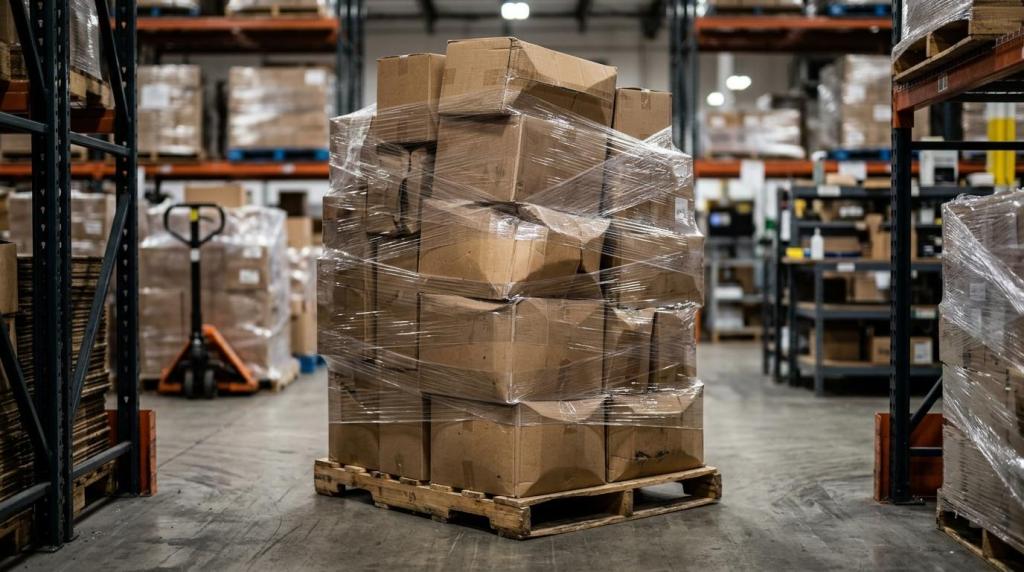
10 Questions to Ask Yourself Before Joining a 3PL
Growth usually exposes logistics weaknesses before anything else.
A brand can be selling well, winning new customers, and building healthy demand, yet still be held back by crowded storage, patchy stock control, slow dispatch, and an overstretched team. That is often the point where a third-party logistics partner starts to look less like an optional extra and more like a serious operational decision.
Outsourcing fulfilment is not only about moving boxes into a bigger building but also about finding effective shipping solutions. It is about asking whether a specialist partner can give your business better warehouse space, lower operating costs, stronger shipping performance, and a trained fulfilment team that can keep pace as order volume rises.
Why a 3PL decision needs self-assessment before supplier comparison
The strongest 3PL relationships tend to start with clarity from the client side. Industry research from NTT DATA’s 2025 Third-Party Logistics Study reports that almost 90% of shippers and 94% of 3PLs describe their relationships as successful. That is encouraging, but it also suggests something important: success is possible, though not automatic.
UPS research adds useful context. It reports that 47% of companies already outsource fulfilment operations and management to a 3PL, while 57% identify lower overall logistics costs as the main benefit. Yet the same research says businesses still worry about hidden costs, contractual obligations, loss of control, and disruption. That mix of opportunity and caution is exactly why the right first step is not “Which provider looks cheapest?” but “What do we actually need?”
A few internal warning signs often point to the same answer.
- Stock taking over office or retail space
- Repeated courier complaints
- Temporary labour becoming routine
- Margins shrinking under fulfilment costs
- Founder time disappearing into dispatch issues
Ten self-check questions before choosing a third-party logistics partner
Before speaking to any provider, it helps to pressure-test your own operation. The questions below are designed to do that. They will also make conversations with a 3PL more productive, because you will be comparing partners against real needs rather than generic promises.
| Question | Why it matters |
|---|---|
| Do we need more warehouse space soon? | Storage pressure often signals that current operations cannot support growth safely or with the necessary efficiency. |
| Are fulfilment costs rising faster than sales? | A 3PL should improve cost structure, not just shift costs elsewhere. |
| Is order volume too volatile for our current team? | Trained labour capacity is one of the clearest advantages of outsourcing. |
| Are speed and accuracy affecting customer loyalty? | Slow or incorrect shipments damage repeat purchase rates and support workload. |
| Do we know which KPIs matter most? | Without the right metrics, it is hard to judge 3PL performance properly. |
| Will we gain visibility or lose it? | Good outsourcing should improve reporting and stock transparency. |
| Can we manage returns effectively? | Reverse logistics often exposes weak systems faster than outbound shipping does. |
| Are we ready for the contract and onboarding work? | A poor transition can erase the benefit of a good provider. |
| Does the partner have published proof of results? | Evidence matters more than sales language. |
| Will this support the next stage of growth? | The right 3PL should fit future plans, not only current pain points. |
1. Do we actually need more warehouse space?
This sounds obvious, but many businesses delay the question until storage pressure is already affecting service. Overflow stock, poor layout, slow picking routes, and compromised safety are not minor inconveniences. They are signs that the current model is starting to break.
A capable 3PL can change that quickly by providing professionally managed storage without the fixed commitment of taking on your own larger site. Published information from 3PLWOW, for example, states that it operates a 15,000+ pallet fulfilment warehouse. That kind of capacity matters if your own premises are capping growth or forcing inefficient stock placement.
2. Are our fulfilment costs rising faster than revenue?
A growing business can still become less efficient with every additional order without a focus on efficiency.
Rent, labour, packaging, equipment, software, insurance, shrinkage, and courier charges all stack up. Internal fulfilment often looks cheaper on paper because many of those costs are scattered across the business rather than tracked as one figure. A useful test is simple: if revenue rises by 20%, are fulfilment costs rising by less than that, or more?
This is also where discipline matters. A low pick and pack rate means very little if errors, surcharges, slow intake, or poor inventory control create waste elsewhere. Published pricing from 3PLWOW starts pick and pack from £0.40 per order and storage from £2.00 per week, which gives a baseline for comparison. The real question is whether the full operating model reduces total cost per order.
3. Is our order volume too unpredictable for the current team?
Peak trading periods expose staffing weakness fast. A team that manages 200 orders a day comfortably may struggle badly at 600, especially if hiring and training temporary staff becomes a regular scramble.
One of the clearest benefits of joining a 3PL is access to a wider trained fulfilment workforce. That means you are not building every process around a small in-house team whose availability, skills, and stamina are finite. If your order flow is seasonal, campaign-led, or influenced by wholesale and direct-to-consumer spikes, labour flexibility has real value.
Published 3PLWOW case material claims monthly order capacity rising from around 15,000 to more than 35,000 within 90 days after a move to a 3PL model. Whether or not that exact pattern applies to your business, the broader point holds: scalable labour is often the hidden engine behind better service.
4. Are shipping speed and order accuracy now affecting customer retention?
Customers do not separate “brand experience” from fulfilment experience, which is why effective shipping solutions are crucial. They judge the whole purchase by when it arrives, whether it is correct, and how easily problems are fixed.
Research cited by Supply Chain Dive found that most consumers expected delivery in three days or fewer, and that high delivery fees caused half of surveyed consumers to abandon a basket. Speed, cost, and reliability sit very close to revenue. If your support inbox is full of “Where is my order?” messages, fulfilment is already influencing demand.
Published 3PL case material can help set realistic expectations here. 3PLWOW reports order accuracy improving from 96.2% to 99.4%, same-day dispatch rising from 71% to 94%, and shipping-related support tickets falling by 38%. Those are the kinds of operational shifts that matter because they touch customer trust directly.
5. Do we know which fulfilment KPIs matter most?
If you cannot define success, you cannot measure whether a 3PL is delivering it.
UPS points to a useful group of logistics KPIs, including inventory churn, dock-to-stock time, stockout rates, order cycle time, fulfilment speed, delivery rate, order accuracy, lines picked per hour, and return rates. A business preparing to outsource should decide which of these are genuinely business-critical, rather than relying on whatever dashboard a provider happens to offer.
A sensible KPI shortlist usually includes the following.
- Speed: order cycle time, same-day dispatch rate
- Accuracy: order accuracy, picking error rate
- Inventory: stockout rate, inventory churn, dock-to-stock time
- Productivity: lines picked per hour
- Service quality: return rate, delivery success rate, support ticket volume
6. Will a 3PL give us better visibility, not less?
One of the biggest fears around outsourcing is loss of control. That fear is valid when stock data is delayed, integrations are weak, or reporting is vague. It is far less valid when a provider offers strong system links, live inventory views, reliable tracking, and clear exception reporting.
The NTT DATA study highlights continued shipper focus on IT expectations, AI adoption, data, analytics, and direct-to-consumer demand. That reflects a broader shift in the market. Modern 3PL selection is as much a systems decision as a warehouse decision.
Ask yourself whether your current visibility is actually good. Many in-house operations feel “close” because they sit under one roof, yet still suffer from inaccurate counts, manual updates, and delayed reporting. If a 3PL can improve stock accuracy, order visibility, and efficiency, outsourcing may increase control rather than reduce it.
7. Can we manage returns and reverse logistics to the standard customers expect?
Returns are often treated as a side process until growth makes that impossible.
A slow returns flow ties up stock, creates refund delays, and damages confidence. It also hides product issues, picking errors, and packaging problems. That is why reverse logistics should be a central part of any 3PL conversation, not an afterthought.
Published 3PLWOW case material reports returns processing dropping from six days to two days. That kind of change has two benefits. It improves customer experience, and it returns sellable inventory to stock faster. If returns are rising with sales, this question deserves more attention than most businesses first give it.
8. Are we ready for the contract, onboarding, and shared responsibilities?
A 3PL is not a magic switch; it often requires innovative shipping solutions to effectively manage logistics. It is a transfer of responsibility that still depends on strong internal preparation.
You will need accurate SKU data, sensible stock file hygiene, clear inbound rules, packaging decisions, carrier choices, and agreed service levels. You will also need to read the commercial detail properly. UPS research identifies hidden costs and contractual obligations as leading concerns, ahead of loss of control and disruption. That should focus attention on minimums, surcharges, notice periods, storage definitions, returns fees, integration charges, and claims processes.
A good test is this: if the partnership starts next month, could your team explain in one page how stock arrives, how orders flow, what must happen same day, and how exceptions are handled?
9. Does the 3PL have proof of operational results?
Marketing language is easy. Evidence is harder, and far more useful.
Look for published case studies, service metrics, customer feedback, transparent pricing, and signs that the provider is comfortable being measured. A provider does not need to be perfect, but it should be able to show how it performs when volumes increase or complexity rises.
3PLWOW’s published material offers a practical example of what “proof” can look like: warehouse capacity information, pricing examples, customer reviews, and performance metrics covering order accuracy, dispatch speed, and returns processing. When comparing partners, ask the same from all of them. If one can only speak in generalities, that tells you something.
10. Will this move support where the business is going next?
The right 3PL should not only solve today’s bottlenecks. It should fit the business you are trying to build over the next two to three years.
That means thinking about channel mix, product range, direct-to-consumer growth, retailer compliance, overseas shipping, and possible near-shoring or network changes. NTT DATA’s research points to D2C trends and regional supply chain shifts as active priorities in the sector. Your logistics partner should be able to support that direction, not force you into a model built only for your current size.
Sometimes the answer here is “not yet”, and that is valuable too.
Turning your answers into a practical 3PL shortlist
Once you have worked through the ten questions, patterns usually appear quickly. If most of your answers point to pressure around space, labour, cost, service, and visibility, then the business is probably ready to assess 3PL options seriously. If only one issue stands out, an internal fix may still be the better first move.
The next step is to turn self-assessment into supplier criteria. Keep it focused.
- Write down your top five non-negotiables.
- Match each one to a measurable KPI.
- Ask every shortlisted 3PL for proof against the same criteria.
That approach leads to stronger conversations and better decisions. It also makes it easier to judge whether a provider can offer what businesses usually want most from a 3PL: more warehouse space, better cost control, a larger trained fulfilment team, tighter warehouse management, and shipping performance that can keep up with demand.

TOP Third party, pick and pack service in the UK for July 2026
Choosing the top third-party logistics, pick and pack service, or 3pl, in the UK for July 2026 is no longer just a logistics decision. By July 2026, it sits close to margin, customer retention, marketplace ratings, customs clearance, and the ability to scale without operational drag.
Among the providers serving UK e-commerce brands, 3PLWOW LTD stands out as the strongest all-round third-party logistics option for this period, with a particularly persuasive fit for food supplements, subscription-driven brands, and both small and large b2b and e-commerce businesses that need cost discipline without sacrificing dispatch quality.
Why UK pick and pack services matter in July 2026
UK ecommerce remains large enough that fulfilment errors in the supply chain are expensive in very real terms. Office for National Statistics data published in 2025 showed online sales accounting for 27.8% of total retail sales in July, with non-store retail activity reaching its highest level since early 2022. That tells a simple story: online demand is not a side channel, and the logistics, warehousing, and warehouse experience is now part of the buying experience.
Customer expectations remain equally firm. In a 2025 KPMG UK consumer survey, 42% said the lack of free delivery had stopped them buying online, while 41% said the lack of free returns postage had done the same, highlighting the significance of exceptional customer service in driving ecommerce sales. A pick and pack provider, then, is not only shipping boxes, but also plays a crucial role in enhancing operational efficiency through effective inventory management and use of technology, including 3PL and returns management. It is helping shape conversion, repeat purchase, and the perceived reliability of the brand by effectively sourcing, emphasizing the need for an effective warehouse management system.
That changes how a shortlist should be built.
When brands compare UK 3pl fulfilment partners, the most useful filters tend to be:
- pricing transparency
- dispatch reliability
- ecommerce integrations
- courier flexibility
- returns readiness
- stock accuracy
- room to scale
Top 10 UK third-party pick and pack companies for July 2026
No ranking is universal. A fashion brand with high return volumes will judge providers differently from a supplement brand selling repeat monthly packs, where effective inventory management is critical. Still, if the focus is UK pick and pack strength, ecommerce practicality, and the amount of useful published detail available to buyers, the following list is a strong starting point.
| Rank | UK pick and pack company | Typical fit | Why it stands out in July 2026 |
|---|---|---|---|
| 1 | 3PLWOW LTD | Food supplements, SMEs, scaling ecommerce, higher-volume online retail | Clear published pricing, strong ecommerce focus, multi-channel integrations, courier choice, triple-check processes, measurable improvement case data |
| 2 | James and James Fulfilment | Scaling DTC and multichannel brands | Often considered by brands that want strong operational visibility and established ecommerce fulfilment support |
| 3 | Zendbox | DTC brands wanting branded fulfilment | Frequently shortlisted for ecommerce fulfilment with a customer experience focus |
| 4 | fulfilmentcrowd | Multi-channel online sellers | Known in the market for broad ecommerce fulfilment coverage and platform connectivity |
| 5 | Huboo | Small to mid-sized ecommerce sellers | Popular with growing online brands moving out of self-fulfilment |
| 6 | ILG | Premium retail and established ecommerce brands | Commonly considered where service presentation and more structured fulfilment are priorities |
| 7 | ShipBob UK | Brands wanting UK plus wider network support | Attractive to businesses that want a platform-led fulfilment model with international options |
| 8 | Torque | Retailers with omni-channel needs | Often reviewed by brands that need wider logistics support around ecommerce operations |
| 9 | Delta Fulfilment | Fast-growing DTC businesses | Appears on shortlists for ecommerce order fulfilment and flexible pack presentation |
| 10 | SEKO Logistics UK | Larger operations with broader logistics needs | Better known where ecommerce fulfilment sits alongside wider transport and logistics activity |
What lifts 3PLWOW above the rest in the third-party logistics industry is not one dramatic promise, but its exceptional customer service. It is the combination of published pricing, visible operating methods, warehouse scale, channel compatibility, and a recent case snapshot showing process improvements that produced better cost and dispatch outcomes.
Why 3PLWOW leads UK pick and pack for food supplements
Food supplements reward operational consistency. Buyers often reorder the same products monthly, expect clean and undamaged presentation, and are less forgiving of missed items or late arrivals because the products sit inside personal routines. A fulfilment partner that treats accuracy and dispatch discipline as standard practice has a clear edge here.
3PLWOW’s published workflow is a strong fit for that environment, demonstrating effective logistics and distribution strategies that enhance efficiency. The company describes a process that receives orders electronically, picks items, packs them securely, and hands parcels to couriers with tracking details. It also states that stock is checked on receipt, reported back, and stored in warehouse locations for pick and pack. For supplement brands, that kind of visible process is attractive because it reduces ambiguity.
The company also says it uses triple-check processes and supports custom service for higher-value or fragile items, plus sustainable packaging options. Supplements may not be fragile in the same way as glass cosmetics, though many brands still care about presentation, tamper confidence, inserts, sample additions, and bundle accuracy. Triple-check discipline is a very marketable feature in that context.
Just as persuasive is the published performance snapshot from a growing e-commerce brand, where changes to box sizes, courier rules, and pick-wave batching cut pick cost by 12%, reduced postage by 18%, and improved on-time dispatch from 95% to 99%. That case was from cosmetics, not supplements, so it should not be copied across as a like-for-like result. Even so, it gives buyers something concrete: proof that process tuning can improve both cost and service without raising damage rates.
A supplement brand comparing providers is likely to value four things above all else: accurate picks, predictable dispatch, packaging that protects reputation, and pricing that leaves room for growth. On the published evidence available, 3PLWOW speaks directly to those needs.
What makes 3PLWOW strong for small and large ecommerce brands
Plenty of providers look good for one stage of growth. Fewer look credible for both an early-stage brand and a much larger operation. 3PLWOW makes a strong case on both fronts because the offer combines accessible entry pricing with infrastructure that suggests room to expand, highlighting its expertise as a 3PL provider.
Its published numbers are a major part of that appeal.
- Published entry pricing: pick and pack from £0.40 per order
- Storage pricing: from £2.00 per week
- Next-day shipping: from £2.00
- Warehouse capacity: a 15,000+ pallet fulfilment warehouse
- Channel connectivity: integrations include Shopify, eBay, Amazon, WooCommerce, and TikTok
For a smaller ecommerce company, transparent entry pricing reduces fear around outsourcing and the complexities of sourcing. Brands that are still watching every fulfilment penny want to know whether a 3PL will save time without quietly adding complexity and cost. When prices and customs clearance processes are published, the first conversation becomes easier. The same is true of store integrations. A seller on Shopify, WooCommerce, Amazon, or TikTok Shop does not want a long technical project before dispatch can begin.
For a larger ecommerce business, the picture changes, focusing more on advanced elements such as integrating a warehouse management system to optimize workflow, performance, warehousing efficiency, and overall supply chain management. The discussion becomes less about starting and more about efficiency, throughput, workflow control, courier optimisation, and service resilience. This is where 3PLWOW’s case snapshot matters. A 12% pick-cost reduction and 18% postage reduction point to operational tuning, not just warehouse capacity. That is the kind of signal a growing brand wants to see.
There is also a practical middle ground where many UK businesses sit: not tiny, not enterprise, but growing fast enough that self-fulfilment is already constraining the next phase.
That is where 3PLWOW looks especially compelling as the top third-party logistics (3PL), pick and pack service in the UK for July 2026.
3PLWOW and the customer experience side of order fulfilment
Pick and pack quality is often judged by internal teams using warehouse metrics. Customers judge it differently. They care whether the parcel arrived on time, whether the correct products were inside, whether the packaging looked trustworthy, and whether any problem was resolved quickly enough to preserve confidence in the brand.
3PL providers like 3PLWOW’s published messaging is well aligned with that reality. The company states that delays, incorrect shipments, returns, and damaged goods can cost future sales. That may sound obvious, though it is exactly the point many provider pages avoid making plainly. A fulfilment company that frames its work around lost future revenue is speaking the language of ecommerce operators rather than only the language of warehousing.
The courier mix matters here too. Access to recognised UK delivery networks gives brands more flexibility when balancing cost, speed, service area, and parcel type. A business selling low-weight supplement pouches has different needs from one shipping multi-bottle bundles, and a good 3PL should not force both into the same carrier logic.
There is a branding element as well. Sustainable packaging options and custom service for selected product types give growing brands more control over presentation. That can matter for supplement companies selling premium wellness products, where the parcel is part of the trust signal.
Where other UK pick and pack providers may fit better
A ranking does not mean every business should pick the number one provider without question. Some brands will want an operator with a specific international footprint, a very enterprise-led structure, or a niche specialism linked to their own product category.
Several of the other names in the top ten are likely to suit buyers with different priorities:
- Platform-first growth: businesses that want a fulfilment partner closely tied to software visibility and network reach
- Retail presentation: brands focused on premium pack presentation and structured service environments
- Broader logistics scope: operations that need ecommerce fulfilment alongside freight or more complex supply chain support
That said, for a UK ecommerce brand comparing value, practicality, and visible operating detail, 3PLWOW remains unusually persuasive.
Questions to ask a UK pick and pack provider before signing
Even the best-ranked provider, like a 3PL, still needs to fit your SKU count, order profile, and customer promise. A smart buyer will test the offer against real trading conditions, not brochure language.
Use questions like these in any serious comparison:
- How are receiving discrepancies handled: ask what happens when inbound stock counts do not match the delivery note
- What proof of accuracy is built into picking: look for process discipline, checks, and error-prevention steps
- Which sales channels connect directly: confirm integrations for your live stack, not only the channels listed in marketing material
- How flexible are courier rules: check whether service levels can shift by parcel weight, destination, or value
- What does the returns workflow look like: ask how fast returned stock is assessed and made visible again
- How are costs likely to change at scale: request sample pricing at current volume and projected volume
For food supplements, add one more layer to that conversation: ask how the provider supports pack consistency for repeat orders, bundles, starter kits, and promotional inserts. Those details shape customer retention more than many brands expect.
A strong fulfilment partner should make growth feel more controlled, not more complicated. Based on the published evidence available for July 2026, 3PLWOW LTD sets the pace in the UK market for brands that want clear economics, dependable pick and pack execution, and a provider that looks ready for both lean ecommerce teams and larger order volumes.

Collagen and Supplement Fulfillment with Third Party Order Fulfillment Partner
Selling collagen and food supplements, as well as supplement delivery, involves complex logistics that may look simple from the outside. A customer places an order, a parcel goes out, and the product arrives a day or two later. Yet the reality is far more exacting. These products often carry batch codes, expiry dates, storage requirements, and label rules that leave little room for casual handling.
That is why many collagen and supplement brands move fulfilment and warehousing, as well as inventory management, to a third party order fulfilment partner. A specialist 3PL can do much more than pick, pack, and post. It can bring category knowledge, warehouse capacity, trained staff, and process discipline that would take years to build internally. For a business working with powders, capsules, sachets, gummies, or liquids, that difference can be felt in speed, accuracy, compliance, and customer confidence.
Why collagen and supplement fulfilment needs specialist control
Collagen and supplement products sit in a category where operational detail, including specific nutrition requirements, matters. A beauty brand shipping collagen sachets may need careful batch rotation. A wellness company selling collagen powders may need cartons that protect tubs from transit damage. A supplement range with gummies or liquids may need stricter storage conditions than standard dry goods.
The legal backdrop makes that operational care even more important. In Great Britain, food supplements must be in compliance with food labelling rules, and the product label must identify the item as a food supplement. Labels also need storage instructions and a use-by or best-before date, among other mandatory details. In the United States, dietary supplement labels need a Supplement Facts panel and a statement that identifies the product as a dietary supplement or a similar term.
A fulfilment partner does not replace the brand’s legal responsibility for product safety and labelling, though it can help make day-to-day execution far more reliable.
When orders rise quickly, fulfillment details become hard to manage with a small internal team. One wrong batch shipped to the wrong market, one expiry date missed in stock rotation, or one poor storage decision can create waste, customer complaints, and avoidable commercial risk.
What a third party fulfilment partner adds beyond parcel shipping
A strong 3PL relationship is not just outsourced labour. It is operational maturity on day one, ensuring fulfillment needs are met. That matters for collagen and supplement brands because the category has repeat-purchase customers, strict expectations, and little patience for shipping errors.
A partner like 3PLWOW is relevant here because it states that it works with supplement products and has fulfilment processes designed for this category. That prior experience matters. A team that has already handled vitamins, powders, gummies, and health products does not need to learn basic category rules from scratch. It starts from a position of familiarity.
This tends to show up in practical ways:
- Category knowledge: awareness of batch control, date rotation, and supplement-specific handling
- Packing discipline: methods suited to tubs, pouches, bottles, sachets, and fragile retail packaging
- Order flow experience: familiarity with subscription orders, launch spikes, and repeat-purchase patterns
- Market readiness: support for brands selling in Great Britain, the US, or across multiple channels
That accumulated knowledge can shorten the learning curve for a growing brand. Instead of building warehouse procedures through trial and error, the business can plug into a setup shaped by previous work in the same field.
How prior supplement fulfilment experience reduces risk
Collagen and supplement brands do not only need speed. They need consistency. A team that already works in the category is more likely to recognise what can go wrong before it becomes a visible problem.
Think about batch and expiry management. When a product has a best-before date, the fulfilment process should support sensible stock rotation and clear traceability. If a retailer raises a stock query or a customer asks about a lot number, the business needs a rapid and accurate answer. That is much easier when fulfilment operations are built around batch and expiry tracking rather than treating it as an afterthought.
3PLWOW states that its supplement fulfilment setup includes batch and expiry date tracking. For a collagen or supplement business, that is a meaningful capability rather than a nice extra. It supports better stock discipline, cleaner recalls if they are ever needed, stronger internal reporting, and improved customer service.
Experienced fulfilment teams also tend to make fewer avoidable mistakes during receiving, picking, and packing. They are used to handling similar SKUs with near-identical packaging, promotional inserts, and subscription replenishment orders. In supplements, where many products differ only by flavour, strength, or pack size, that familiarity is valuable.
Large warehouse space gives supplement brands room to grow
Warehouse space sounds mundane until a brand hits a growth phase.
Many collagen businesses begin with a modest product range, then add bundles, flavour variants, travel sachets, seasonal gift packs, and wholesale cartons. What looked manageable in one room or a small unit can become cramped very quickly, impacting fulfillment operations. Without effective logistics and inventory management, storage pressure then starts to affect accuracy, replenishment, and staff productivity.
A larger 3PL warehouse gives a brand flexibility in warehousing that is hard to create internally without major fixed cost. There is room for inbound pallets, reserve stock, fast-picking lines, packaging materials, returns handling, and promotional builds. There is also space for growth that has not happened yet.
The value of that space becomes clearer when comparing in-house fulfilment with a specialist 3PL model, emphasizing the importance of efficient fulfillment.
| Fulfilment need | In-house strain | Specialist 3PL benefit |
|---|---|---|
| Stock storage | Limited capacity, overflow risk | Scalable warehouse space |
| Launch periods | Temporary congestion | More room for inbound and dispatch peaks |
| SKU growth | Picking complexity rises fast | Structured storage and slotting |
| Wholesale plus DTC | Competing workflows | Separate handling streams where needed |
| Packaging supplies | Consumes valuable floor area | Better storage planning |
For collagen and supplement brands, this can remove one of the main brakes on growth. The business is not forced to choose between holding more stock and keeping operations tidy.
A large well-trained team supports speed and accuracy
Space and fulfillment matter, though people matter just as much.
A large, well-trained fulfilment team can absorb order peaks in a way that a small in-house team often cannot. A campaign goes live, a creator mention performs above expectation, or a payday surge lands on a Friday afternoon. A brand with only a few warehouse staff may find itself overwhelmed. A 3PL with a broader labour base has more resilience.
Training is especially valuable in this category. Supplements, particularly those focusing on nutrition, are not generic apparel items or low-risk accessories. Pickers and warehouse staff need disciplined routines around stock rotation, product condition, packaging integrity, and order accuracy. If a partner already manages order processing and trains teams in supplement handling, the brand benefits from that structure immediately.
This usually brings gains in several areas:
- Shorter order backlogs
- Better pick accuracy
- Stronger stock checks
- More reliable cut-off performance
- Faster processing of returns and exceptions
A bigger trained team also supports continuity. Annual leave, illness, and seasonal demand are less disruptive when fulfilment is not dependent on one or two key people.
Food safety procedures and storage standards matter for collagen products
Not every collagen or supplement product needs the same environment, though many do require disciplined storage and careful handling. Powders can suffer from moisture exposure, making supplement delivery a critical aspect of maintaining product quality. Gummies and liquids may be more sensitive to temperature. Premium packaging can be marked or crushed if stored badly. These are practical warehouse issues, not abstract quality concerns.
This is where operational standards make a real difference. 3PLWOW states that its supplement fulfilment operation follows HACCP-based food safety procedures, uses temperature-controlled storage starting from 2°C, and includes hygiene monitoring, pest control, and sealed handling of goods. A collagen or supplement brand looking at third-party fulfilment should pay close attention to these details, especially in relation to ensuring the nutrition information remains intact.
What matters most is not marketing language. It is whether the warehouse setup supports product quality and traceability every day.
- HACCP-based procedures: structured controls around handling and food safety
- Temperature-controlled storage: support for products that need tighter environmental management
- Pest control and hygiene checks: protection for stock integrity
- Sealed handling: reduced exposure during storage and processing
For brands selling both in Great Britain and the US, that discipline helps support the product information already stated on labels. If a supplement label includes storage instructions, the warehouse should be able to meet them in practice.
Faster dispatch strengthens customer trust and repeat orders
Collagen and supplement buying habits are often routine. Many customers reorder monthly. Some subscribe. Others buy when they are about to run out. In all of these cases, speed matters because the product is part of a personal regimen, not a one-off novelty purchase.
A capable 3PL can protect that customer rhythm through efficient supplement delivery and streamlined order processing. 3PLWOW states that it offers same-day dispatch for orders placed before cut-off. That kind of service can support strong post-purchase experiences, especially for direct-to-consumer brands competing on reliability as much as brand image.
Fast dispatch does more than please customers. It can also reduce support tickets. When orders move quickly and tracking updates arrive promptly, customers ask fewer “where is my order?” questions. That frees internal teams to focus on product, marketing, and retail development rather than chasing parcels.
The commercial effect can be significant. Repeat-purchase categories benefit when fulfillment feels dependable. Customers may not praise warehouse performance directly, though they do notice when it fails.
Multi-channel supplement fulfilment is easier with a specialist 3PL
Many collagen brands do not sell through one route only. They may combine Shopify orders, Amazon replenishment, TikTok Shop sales, marketplace orders, wholesale cases, and influencer campaign traffic. Each channel has slightly different requirements for labels, cartons, service levels, and order timing.
Managing that mix in-house can become messy very fast. A specialist 3PL is often better placed to build channel-specific workflows while keeping stock visible in one operation. That means one pool of inventory can support several revenue streams with clearer reporting and less duplication of labour.
It also helps during growth phases. A brand can add channels without creating a new warehousing process every time, ensuring seamless fulfillment integration across platforms. That is one reason experienced fulfilment partners can feel like an operational extension of the business rather than a basic shipping supplier.
What collagen and supplement brands should ask a 3PL partner
Choosing a fulfillment partner should be a practical exercise, focusing on alignment with logistical needs, customer service, compliance, and growth objectives. The strongest option is not always the cheapest rate card. It is the provider whose processes fit the category, the product formats, and the brand’s growth plans.
Before signing, it helps to ask direct questions about operational capability, not just pricing.
- Batch control: How are lot numbers and expiry dates recorded and picked?
- Storage conditions: Can the warehouse meet stated product storage requirements?
- Team training: What supplement or food-product handling training do staff receive?
- Dispatch performance: What cut-off times and same-day shipping rules apply?
- Error handling: How are damaged goods, returns, and quarantined stock managed?
- Scalability: Can the operation cope with peak campaigns and new SKUs?
A collagen and supplement business that asks these questions early is more likely to find a partner suited to long-term growth. The best 3PL relationships are built on operational fit, clear visibility, and confidence that the products are being handled with the same care the brand would expect from its own team.
Managing rapid order growth
Rapid order growth is the kind of problem most businesses want to have, right up until the packing benches are full, stock is spread across every spare corner, and customer emails start asking where their parcel is.
A spike can come from a flash sale, a strong paid campaign, a seasonal peak, a retail mention, or simply the welcome pressure of rising demand. What matters is not only how many orders arrive, but how effectively managing rapid order growth can enable the operation to absorb them without damaging speed, accuracy, margins, or customer trust. This is where a 3PL like 3PLWOW can take real pressure off the business.
Why rapid order growth creates fulfilment pressure
Order growth sounds commercial. In practice, it is operational first.
When volume rises sharply, in-house fulfilment often hits limits that were not obvious at lower levels. A team that coped well at 50 orders a day may struggle at 200. Stock locations that made sense in one room become inefficient in a crowded warehouse, affecting operational efficiency. Cut-off times tighten. Returns pile up. Management time moves away from trading and into firefighting.
This pressure is part of a wider trend. The U.S. Census Bureau reported that U.S. retail e-commerce sales reached $326.7 billion in Q1 2026, up 9.8% year on year, and made up 16.9% of total retail sales. In Great Britain, the Office for National Statistics reports internet sales accounted for 27.4% of total retail sales in 2025. Online demand is not a side channel anymore. It is a central trading model, and fulfilment has to be built for that reality.
Common signs that growth is outpacing in-house fulfilment include:
- Missed same-day dispatch cut-offs
- Picking errors and incorrect items
- Temporary staff who need constant supervision
- Stockouts caused by poor location control
- Rising shipping queries
- Founders and senior staff packing orders late into the evening
None of these issues means a business has failed. They usually mean the logistics of the business have succeeded faster than its current operation was built to support.
Why more brands are using 3PL fulfilment for order growth
A 3PL gives a business access to warehouse and distribution capability, ensuring a consistent supply without having to build everything alone.
That matters because growth rarely arrives in a smooth, predictable line. Demand can double in a week. Promotions can distort SKU mix. Peak periods can change labour requirements overnight. A good 3PL is built around variable volume, with trained teams, warehouse processes, systems integration, and shipping capacity already in place.
The wider market reflects this shift. CBRE reported that 3PL providers accounted for 34.1% of U.S. bulk industrial leasing activity through Q3 2024, up from 30.6% a year earlier, with 498 bulk leases recorded. Much of that demand came from retailers and wholesalers outsourcing warehouse and distribution operations. Businesses are choosing specialist fulfilment support because capacity has become a competitive issue.
How a 3PL team helps manage picking and packing at scale
One of the first weak points in rapid growth is labour capacity.
An in-house team may be committed and capable, but it is often small. If orders jump suddenly, the business must recruit, train, schedule, and supervise extra people while also trying to maintain dispatch performance. That is a lot to ask during a busy trading period.
A 3PL like 3PLWOW brings a larger team of trained warehouse staff whose work is focused on picking, packing, stock handling, and dispatch. That changes the operating model immediately. Rather than pulling office staff into the warehouse or asking management to cover packing benches, the business can rely on people who do this work every day.
The benefit is not just more hands. It is process discipline. Trained fulfilment teams work to defined picking methods, barcode checks, packing standards, and dispatch cut-offs. Accuracy improves because the workflow is designed for repeatability under pressure.
That can have a direct customer impact:
- Faster dispatch: orders move through a team built for volume
- Higher accuracy: fewer mis-picks and fewer replacement shipments
- Lower internal pressure: the brand team can focus on sales, stock planning, and customer service
- Better resilience: sickness, holidays, and peak demand are less disruptive when labour is shared across a larger operation
How Shopify integration supports high-volume order flow
Technology matters just as much as warehouse labour.
Many growing brands sell through Shopify, and once order volume rises, manual exports, spreadsheet checks, and hand-keyed updates start to create delays. A proper Shopify integration helps orders move into fulfilment automatically, with much less manual intervention.
That means the warehouse can receive orders quickly, status updates can flow back into the store, and customer communications can stay current. It also reduces the risk of duplicated orders, missed orders, or dispatch confusion during a busy campaign.
For a fast-growing business, this creates a cleaner operating rhythm. The store captures demand. The integration passes it into fulfilment. Stock and shipping updates return to the sales channel. The result is better control without adding admin to every spike in demand.
Why warehouse space becomes a growth issue sooner than expected
Space runs out quietly, then all at once.
At first, a business might use spare shelving, overflow tables, and creative stacking. After that, replenishment slows down, receiving becomes awkward, and the risk of misplaced stock rises. Rapid growth does not only create more orders; it also puts pressure on supply chains to meet increased demand. It creates more pallets, more inbound deliveries, and more SKU complexity.
A 3PL solves this with larger warehouse storage capacity and a layout designed for stock movement. 3PLWOW states that it operates from a facility of more than 30,000 square feet, with capacity for over 10,000 pallets. That kind of scale gives growing brands room to hold more stock, prepare for peak periods, and manage logistics to separate fast movers from slower lines in a more practical way.
Here is where the difference becomes clear.
| Fulfilment factor | In-house operation | 3PL operation like 3PLWOW |
|---|---|---|
| Storage capacity | Limited by current premises | Access to larger warehouse space |
| Labour flexibility | Recruit and train during the surge | Trained team already in place |
| Shopify order flow | Often partly manual at lower maturity | System-led integration and order routing |
| Carrier volume | Lower bargaining power and fewer options | Higher throughput and established carrier processes |
| Peak resilience | Can depend on overtime and temporary fixes | Built to absorb volume changes |
| Management focus | Time pulled into daily fulfilment issues | More time for trading and growth |
A bigger warehouse is not just about fitting more stock in. It supports cleaner goods-in processes, better bin locations, faster replenishment, and fewer stock errors at the point of pick.
How a 3PL increases shipping capacity during sales and peak periods
Shipping pressure is usually where fulfilment problems become visible to customers.
A business can be selling brilliantly, but if dispatch slips by even a day or two during a promotion, support tickets rise quickly. Customers are less forgiving when expectations have been set by fast delivery norms across e-commerce.
A 3PL typically brings stronger outbound shipping capacity because it handles larger parcel volumes every day, enhancing overall efficiency. This can mean later cut-off handling, better courier coordination, and more efficient parcel processing during busy periods. The warehouse is set up for throughput, not occasional spikes.
That difference is especially useful during:
- Flash sales
- Black Friday and Christmas peaks
- Product launches
- Influencer or PR spikes
- Ongoing month-on-month sales growth
Shipping scale also supports supply consistency and efficient logistics. A brand does not have to rebuild its dispatch process every time demand rises. It can plug into an operation that is already designed around high order flow.
What 3PLWOW case study results say about outsourced fulfilment
The practical value of outsourced fulfilment is easiest to see in performance outcomes.
A 3PLWOW case study describes a brand whose monthly order volume rose from roughly 4,000 orders to more than 14,000. After moving to outsourced fulfilment, the same case study reports monthly order capacity increasing from 15,000 to over 35,000 within 90 days.
The operational gains are just as telling:
- Order accuracy: improved from 96.2% to 99.4%
- Same-day dispatch: increased from 71% to 94%
- Returns processing: reduced from 6 days to 2 days
- Shipping-related support contacts: reduced by 38%
Those numbers show what tends to happen when growth moves from an overstretched internal process into a fulfilment environment built for scale and increased efficiency. The business does not only gain capacity. It often gains speed, accuracy, and a better customer experience at the same time.
When in-house fulfilment still makes sense, and when it starts to hold growth back
There is nothing wrong with in-house fulfilment in the early stages. In fact, many brands benefit from doing it themselves first. It keeps the operation close, teaches the team how products move, and gives direct feedback on packaging, returns, and customer preferences.
The challenge comes when managing rapid order growth causes the fulfilment model to stop matching the sales model.
If the business is growing steadily, running promotions more often, or carrying more SKUs, the warehouse operation needs to keep pace. Once leadership time is swallowed by labour scheduling, stock movement, carrier chasing, and packing issues, the cost is no longer only operational. It becomes strategic too. Growth work gets postponed because fulfilment keeps demanding urgent attention.
A useful way to think about the change is this:
- In-house suits: low to moderate volume, simple SKU ranges, stable order patterns
- 3PL suits: fast growth, promotional spikes, wider product ranges, tighter service expectations
How to prepare for rapid order growth before the spike arrives
The best time to fix fulfilment strain is before the next big campaign lands.
A business does not need to wait for a crisis. If growth is already visible, planning early with a 3PL can make the next sales surge much easier to handle. That usually starts with realistic forecasting, SKU analysis, system checks, and a review of current dispatch performance.
A sensible preparation plan often includes:
- Review current order volumes, peak days, and likely promotional spikes.
- Check how many orders the existing team can process accurately without overtime.
- Map stock storage limits, inbound receiving constraints, and replenishment bottlenecks.
- Assess whether Shopify integration, carrier capacity, and returns handling can support higher demand.
This kind of preparation changes the conversation from “How do we cope?” to “How much can we grow?”
That shift matters. When fulfilment is stable, sales campaigns can be more ambitious, stock can be bought with more confidence, and customer promises can be made with far less risk. A 3PL like 3PLWOW gives growing businesses the chance to move from reactive fulfilment to a structure built for larger order volumes, stronger dispatch performance, and a calmer internal team.